
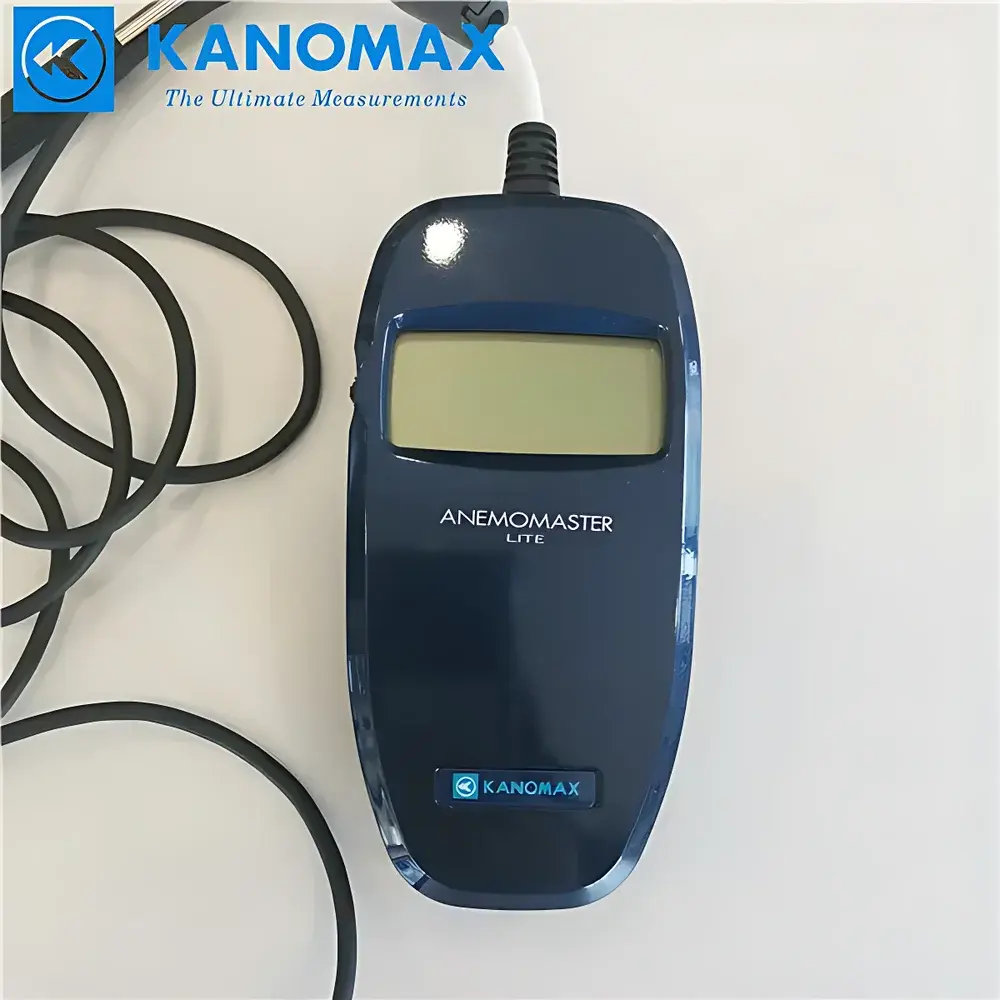
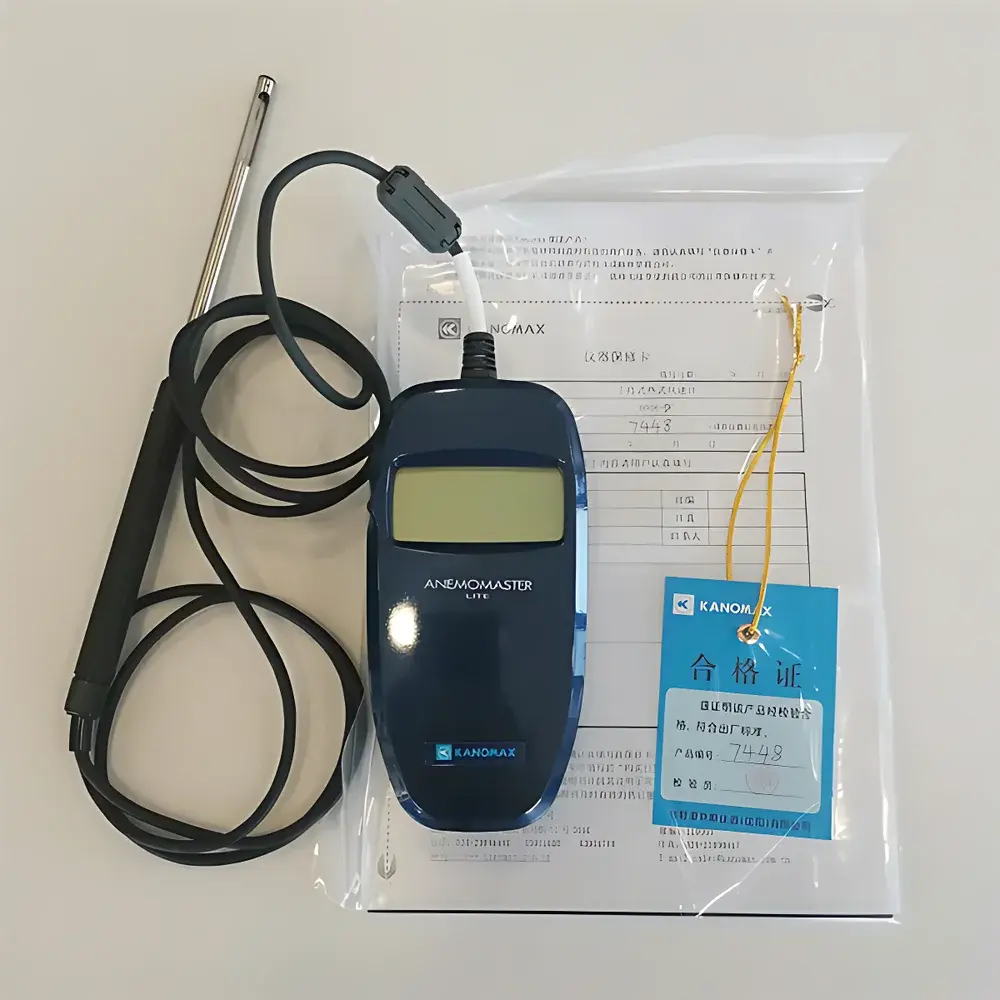
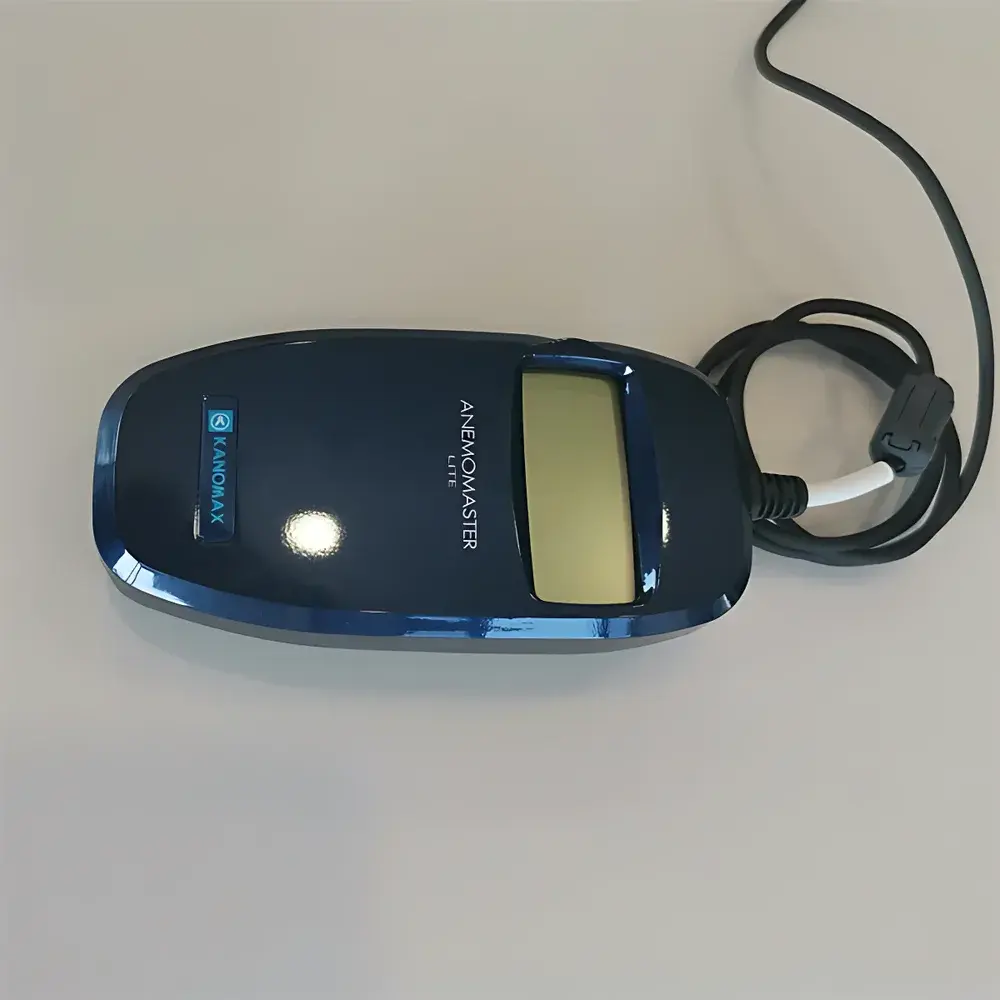
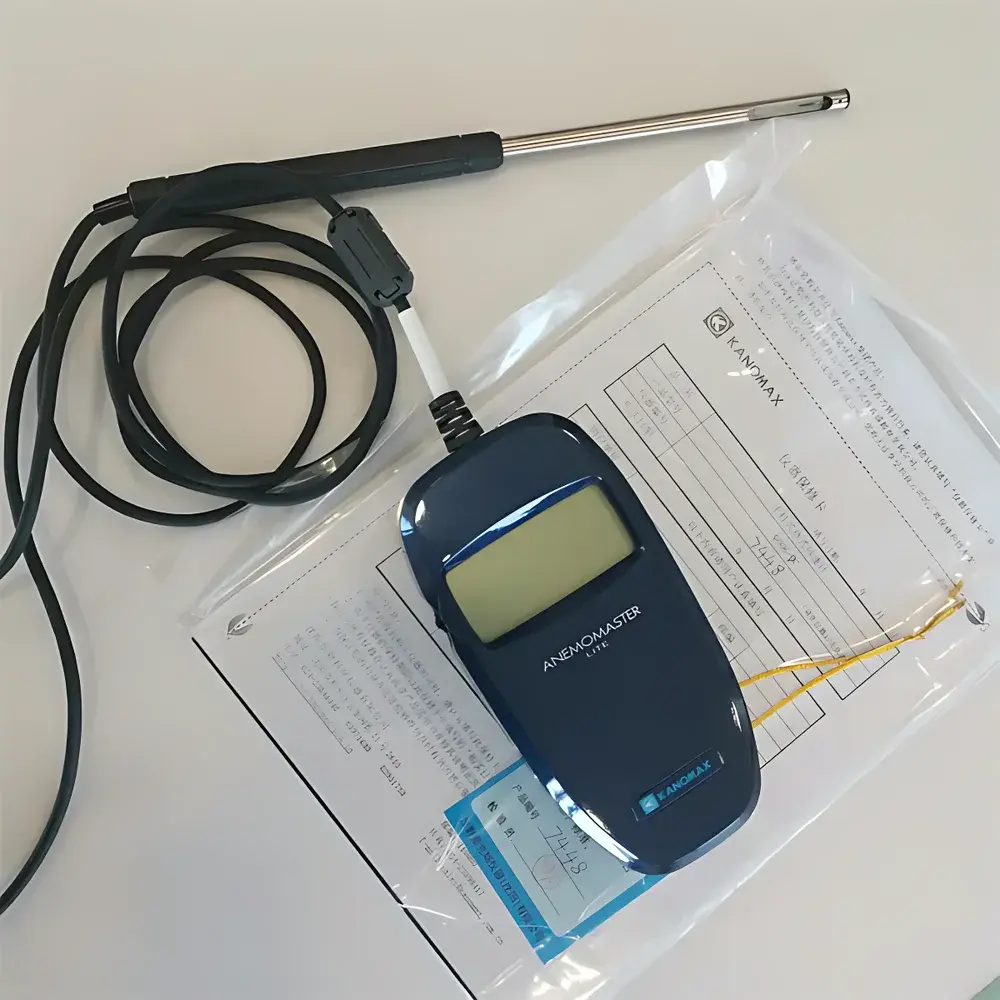
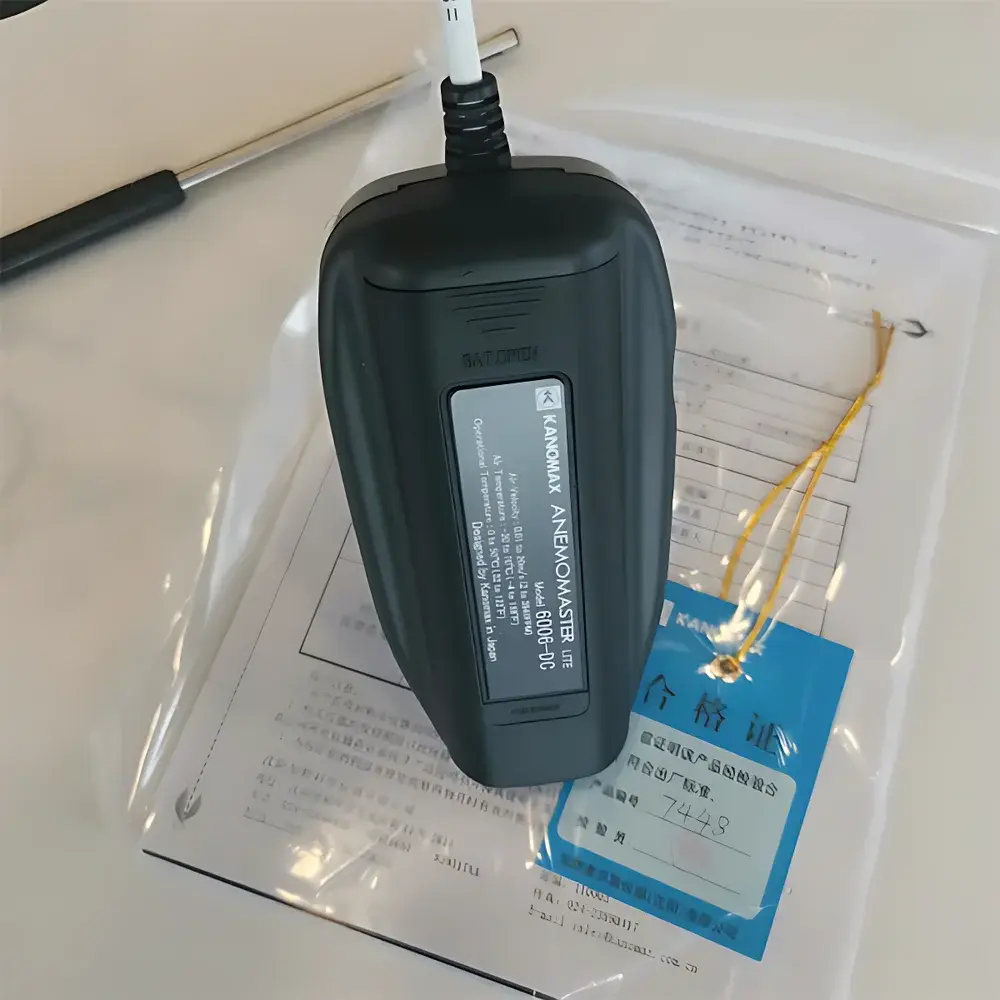
KANOMAX Model 6006 Handheld Thermal Anemometer
| Brand | KANOMAX |
|---|---|
| Origin | Japan |
| Model | 6006 |
| Instrument Type | Thermal Anemometer |
| Measurement Range | 0.01–20.0 m/s |
| Resolution | 0.01 m/s (0–9.99 m/s), 0.1 m/s (10.0–20.0 m/s) |
| Accuracy | ±5% of reading (wind speed), ±1°C (temperature) |
| Operating Temperature | −20–70°C (probe), 5–40°C (main unit) |
| Operating Humidity | 20–85% RH |
| Response Time | <1 s (90% for wind speed at 1 m/s), <30 s (90% for temperature at 1 m/s) |
| Display | Dual-parameter (wind speed + temperature), unit switchable (m/s/°C ↔ fpm/°F), FAST/SLOW averaging, battery level indicator (4-segment), hold function |
| Dimensions (probe) | Ø6.1 mm (Ø10.6 mm at tip) × 205 mm |
| cable | Ø3.3 mm × ~1.5 m |
| Dimensions (main unit) | 60 × 120 × 30 mm |
| Weight | ~180 g (including batteries) |
| Compliance | Designed for ISO/IEC 17025-aligned environmental monitoring workflows, compatible with GLP documentation practices |
Overview
The KANOMAX Model 6006 Handheld Thermal Anemometer is a precision-engineered instrument for quantitative measurement of air velocity and ambient temperature in HVAC commissioning, indoor air quality (IAQ) assessment, cleanroom validation, laboratory ventilation verification, and industrial process airflow characterization. It operates on the constant-temperature anemometry (CTA) principle: a heated thermistor sensor dissipates heat proportional to local convective cooling, enabling direct correlation between thermal loss and fluid velocity. Unlike cup or vane anemometers, the 6006 delivers true low-velocity sensitivity down to 0.01 m/s—critical for laminar flow monitoring, duct traverse surveys, and exhaust hood face velocity verification per ASHRAE 110 and ISO 14644-3. Its compact, ergonomic form factor and integrated dual-parameter display support rapid field deployment without external data loggers or PC connectivity.
Key Features
- Single-button operational interface optimized for glove-compatible use in controlled environments and industrial settings.
- Interchangeable probe design ensures long-term metrological stability; each probe is factory-calibrated and traceable to JIS Z 8000-series standards.
- Wide dynamic range: 0.01–20.0 m/s wind speed with dual-resolution display (0.01 m/s below 10 m/s; 0.1 m/s above), minimizing quantization error across laminar and turbulent regimes.
- Integrated temperature compensation circuitry maintains ±5% reading accuracy across the full operating temperature range (−20 to +70°C probe environment), with enhanced stability (±3% typical) within the 10–40°C reference band.
- Real-time averaging modes: FAST (1-second moving average) for transient airflow capture; SLOW (5-second moving average) for stabilized readings in variable conditions.
- Unit conversion via DIP switch: m/s and °C default; configurable to ft/min (fpm) and °F—supporting compliance with ASHRAE, SMACNA, and EU EN 13779 reporting conventions.
Sample Compatibility & Compliance
The Model 6006 is validated for use with ambient air under standard atmospheric pressure (86–106 kPa). It is not intended for corrosive, particulate-laden, or high-humidity condensing environments without optional protective filters. Probe construction (stainless steel sheath, PTFE-insulated leads) meets IP54 ingress protection for dust and splash resistance. While not intrinsically safe, its low-power operation (<100 mW) and absence of spark-prone components permit use in non-hazardous zones per IEC 60079-0. The device supports traceable calibration records required under ISO/IEC 17025-accredited laboratories and aligns with documentation expectations for FDA-regulated facilities performing HVAC qualification (e.g., Annex 1, EU GMP) and EPA Method 2C pre-test verification.
Software & Data Management
The Model 6006 operates as a standalone field instrument with no embedded memory or USB interface. All measurements are displayed in real time only; data recording requires manual transcription or external logging via analog output (optional accessory). However, its consistent resolution, repeatable response time (<1 s for 90% step response at 1 m/s), and stable zero drift (<0.02 m/s over 8 hours) enable reliable integration into structured QA/QC protocols. Users may incorporate readings into LIMS or electronic lab notebooks (ELN) using standardized templates compliant with 21 CFR Part 11 when paired with audit-trail-enabled documentation systems.
Applications
- HVAC system balancing and TAB (Testing, Adjusting, Balancing) per ANSI/ASHRAE Guideline 12
- Cleanroom unidirectional airflow mapping (ISO 14644-3, Class 5–8)
- Fume hood face velocity verification (OSHA 1910.1200, ANSI/AIHA Z9.5)
- Exhaust stack and duct traverse profiling (EPA Method 2C, ISO 16813)
- Thermal comfort studies (ASHRAE 55, EN 15251)
- Validation of laminar flow cabinets and biosafety cabinets (NSF/ANSI 49)
FAQ
What is the recommended recalibration interval for the Model 6006?
KANOMAX recommends annual calibration against NIST-traceable standards; more frequent verification (e.g., pre- and post-survey) is advised for critical applications such as GMP cleanroom certification.
Can the probe be used in high-temperature ducts exceeding 70°C?
No—the probe’s maximum rated temperature is 70°C. For elevated-temperature applications, consider the KANOMAX Model 6162 (rated to 150°C) with appropriate thermal shielding.
Is the unit suitable for outdoor wind speed measurement?
It is designed for indoor and sheltered semi-outdoor use only; wind turbulence, rain, and solar loading compromise accuracy and probe longevity.
Does the Model 6006 meet FDA 21 CFR Part 11 requirements?
As a non-networked, non-data-logging instrument, it does not inherently comply—but its measurement integrity, repeatability, and documented calibration history support Part 11-compliant data handling when integrated into validated procedural workflows.
How does the temperature compensation circuit improve low-velocity accuracy?
By dynamically adjusting heater current based on ambient temperature feedback, the circuit minimizes thermal drift-induced offset errors—particularly critical below 0.5 m/s where convective heat transfer is most sensitive to ambient thermal gradients.
Related Products







