
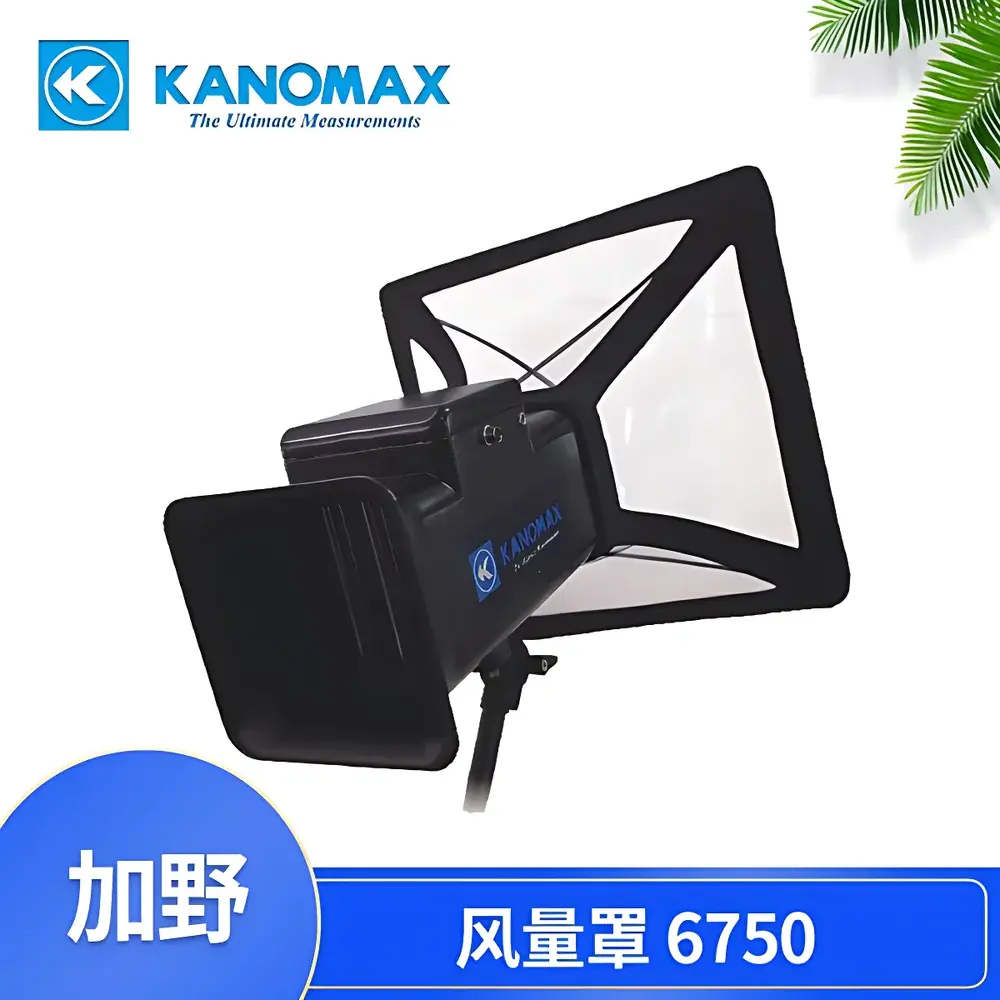
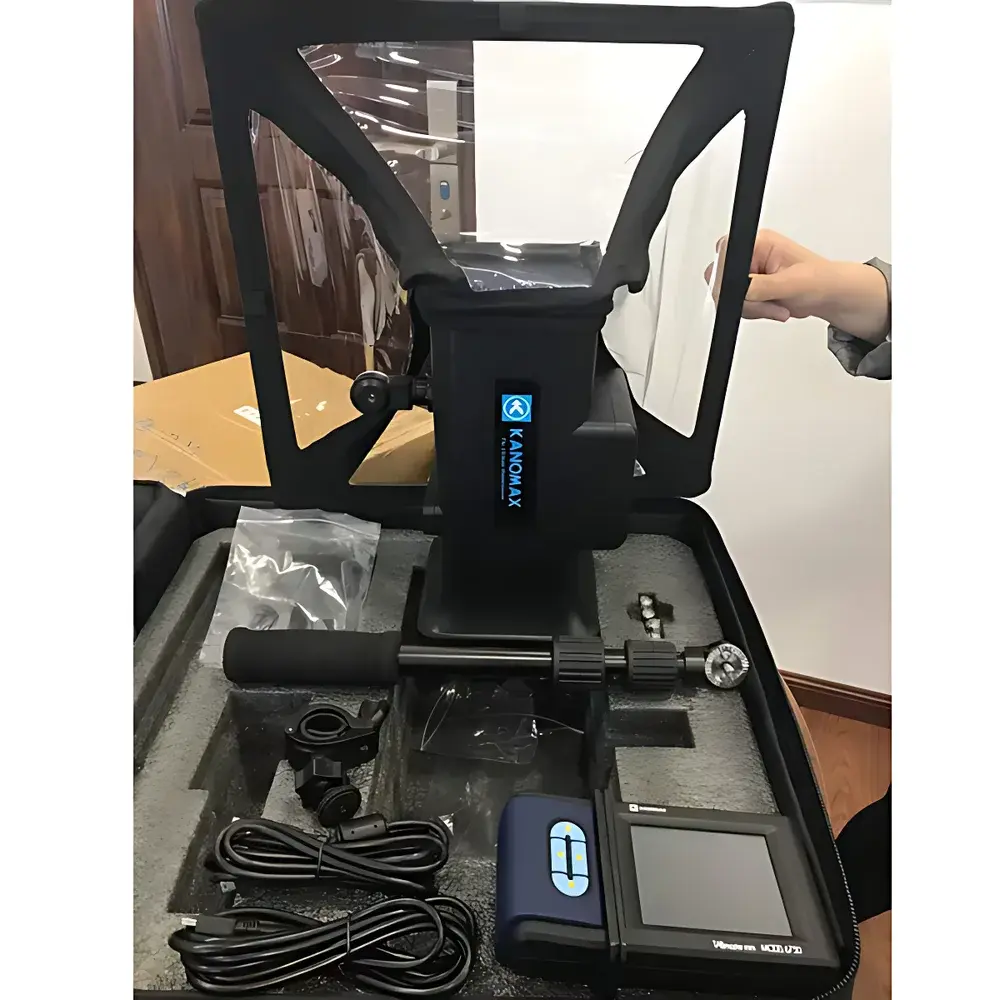
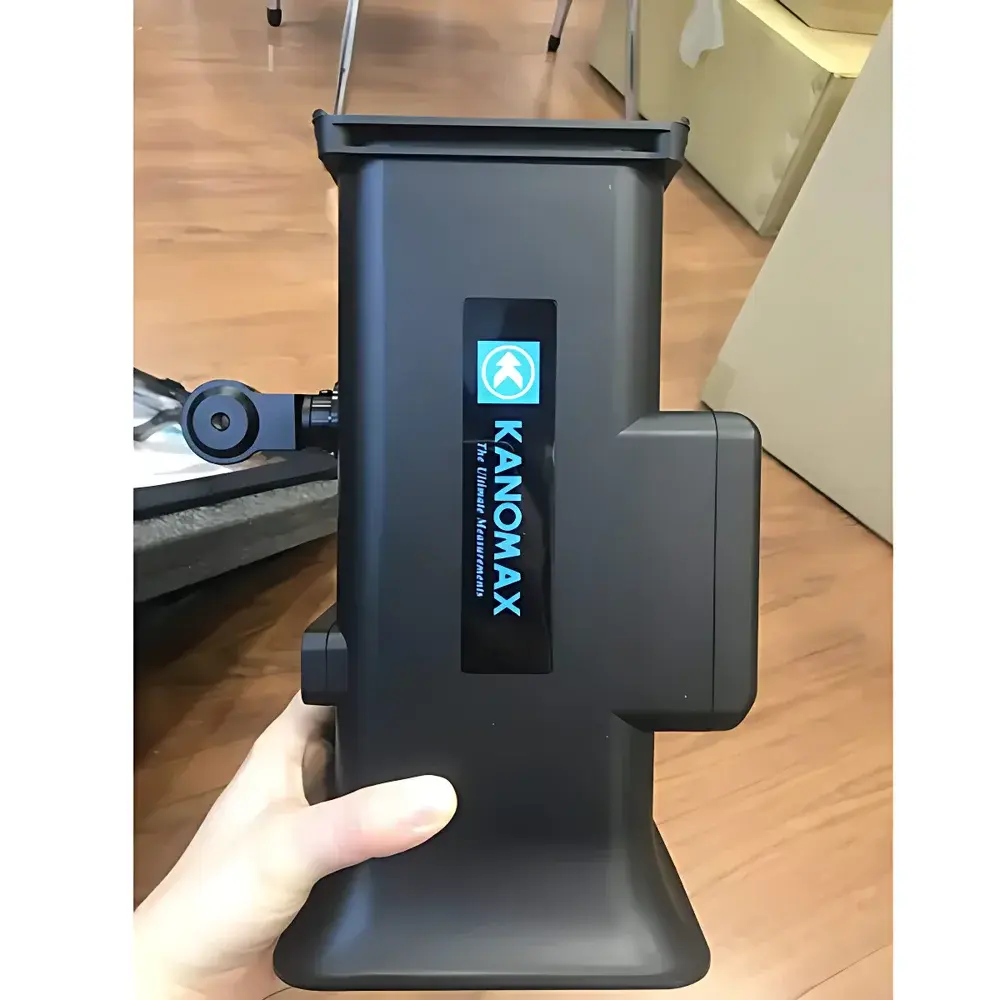
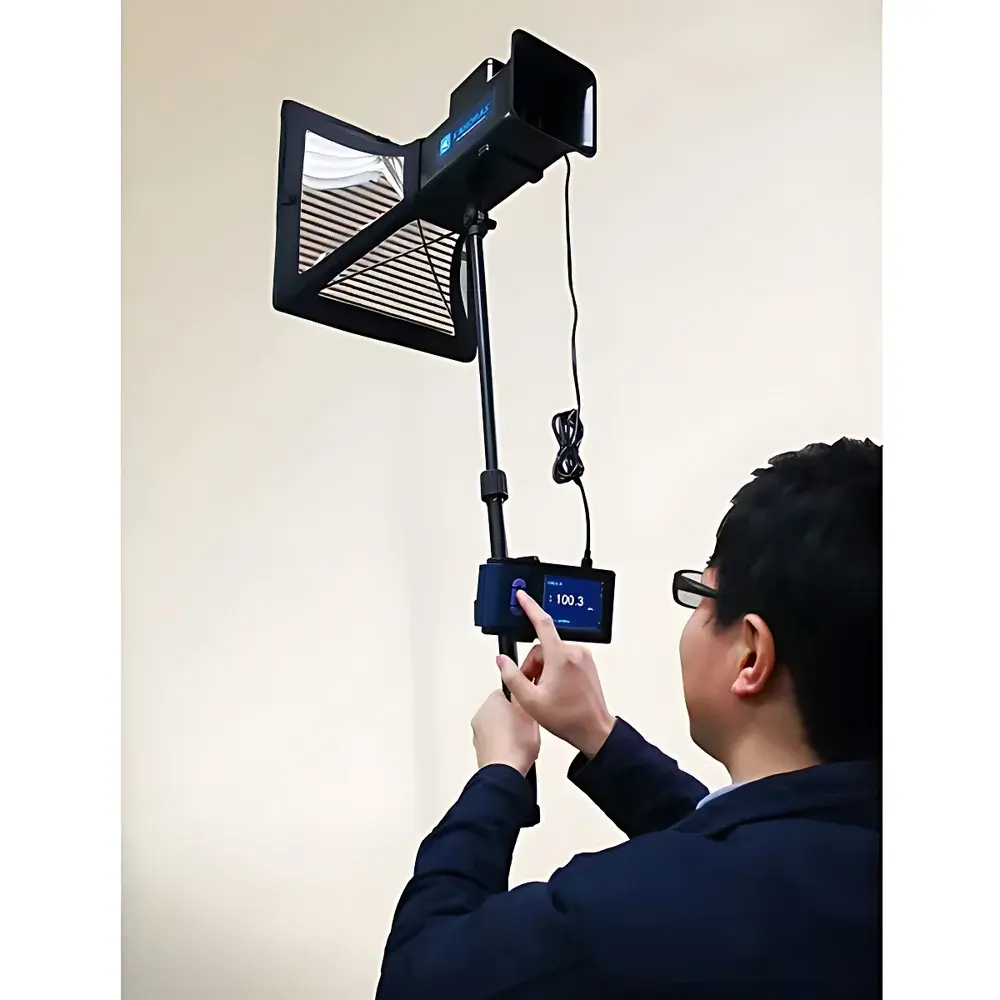
Kanomax 6750 Compact Air Flow Hood
| Brand | Kanomax |
|---|---|
| Origin | Japan |
| Model | 6750+ |
| Resolution | 1 m³/h |
| Measurement Range | ±8–600 m³/h |
| Accuracy | ±(3% of reading + 1 m³/h) for 8–350 m³/h |
| Operating Temperature | 0–50 °C |
| Operating Humidity | 0–100 %RH |
| Display | 160×80 mm color LCD |
| Data Storage | Up to 6,000 records (internal) |
| Communication | Bluetooth v4.0, USB output |
| Power | 4 × AA batteries or AC adapter |
| Battery Life | Approx. 8 hours |
| Dimensions (hood) | 355(W)×355(H)×450(D) mm |
| Hood Aperture | 355×355 mm |
| Weight | 1.5 kg |
Overview
The Kanomax 6750 Compact Air Flow Hood is a portable, handheld volumetric airflow measurement instrument engineered for precision and operational efficiency in HVAC commissioning, balancing, and indoor air quality (IAQ) verification. It operates on the principle of integrated velocity-area measurement: an internal array of calibrated thermal anemometer sensors captures spatially averaged air velocity across the hood’s inlet plane, while the fixed cross-sectional area (355 × 355 mm) enables real-time calculation of volumetric flow rate (m³/h or CFM). Simultaneous temperature measurement (±0.5 °C accuracy) supports enthalpy-based airflow correction where required. Designed for single-operator use in constrained mechanical rooms, ceiling plenums, and cleanroom environments, the 6750 eliminates reliance on multi-point traverse methods—reducing measurement uncertainty associated with operator positioning, probe alignment, and manual data logging.
Key Features
- Compact ergonomic form factor (355 × 355 × 450 mm; 1.5 kg) enabling one-handed operation and access to low-clearance diffusers and grilles.
- True-color graphical LCD (160 × 80 mm) displaying real-time airflow, temperature, battery status, unit selection (m³/h/CFM, °C), and measurement mode indicators.
- Optically transparent front window allows visual confirmation of full sealing between hood and register—critical for minimizing leakage-induced error per ISO 16814 and ASHRAE Guideline 1.
- Glass-fiber reinforced support mast ensures torsional rigidity during field deployment without adding mass or compromising portability.
- Dual-mode data acquisition: local storage of up to 6,000 timestamped records (flow + temp + date/time), plus wireless transmission via Bluetooth 4.0 to iOS/Android tablets or Windows PCs running Kanomax AirFlow Manager software.
- USB interface supports direct data export in CSV format for traceable reporting and integration into building management system (BMS) validation protocols.
Sample Compatibility & Compliance
The 6750 is optimized for measuring supply and exhaust airflow at terminal devices—including diffusers, grilles, registers, VAV boxes, and laminar flow hoods—across commercial, healthcare, and pharmaceutical facilities. Its standardized 355 × 355 mm aperture meets common modular ductwork dimensions and interfaces seamlessly with optional adapter frames (sold separately) for non-standard openings. The instrument complies with fundamental metrological requirements outlined in ISO 5167-4 (differential pressure-based flow standards), ASTM D1896 (air velocity measurement practices), and ASHRAE Standard 111 (instrumentation for HVAC testing). While not certified to IEC 61000-4 electromagnetic immunity standards as a standalone device, its operating envelope (0–50 °C, 0–100 %RH non-condensing) aligns with ANSI/ASHRAE 55 thermal comfort and IAQ field-testing conditions.
Software & Data Management
Kanomax AirFlow Manager (v3.2+) provides post-processing functionality including automatic averaging, outlier rejection, report generation (PDF/Excel), and compliance flagging against user-defined tolerances (e.g., ±5% of design airflow per TAB guidelines). Audit-trail metadata—including operator ID, calibration certificate number, test location tag, and GPS coordinates (when paired with mobile device)—is embedded in exported files. The software supports 21 CFR Part 11–compliant electronic signatures when deployed in validated GxP environments, provided system administrator controls are implemented per organizational SOPs. Internal memory retains data integrity during power loss, and firmware updates are delivered via signed USB packages to maintain traceability.
Applications
- HVAC system commissioning and TAB (Testing, Adjusting, Balancing) per NEBB and AABC standards.
- Periodic verification of VAV box minimum airflow setpoints in LEED-certified buildings.
- Cleanroom ISO 14644-3 airflow uniformity mapping and recovery time assessment.
- Exhaust hood face velocity validation in laboratory fume hood surveys (per ANSI Z9.5).
- Energy audit baseline measurements for demand-controlled ventilation (DCV) retrofit analysis.
- Post-renovation IAQ verification in hospitals, schools, and senior living facilities.
FAQ
What calibration documentation is supplied with the Kanomax 6750?
Each unit ships with a NIST-traceable calibration certificate covering airflow (at 50, 150, and 450 m³/h) and temperature (at 20 °C and 35 °C), valid for 12 months from date of manufacture.
Can the 6750 be used in high-humidity exhaust ducts?
Yes—the sensor housing and electronics are rated for continuous operation up to 100 %RH non-condensing; however, condensation inside the hood must be avoided via pre-drying or use of desiccant traps upstream.
Is the Bluetooth interface compatible with hospital-grade secure networks?
Bluetooth communication is point-to-point only and does not require network infrastructure; it transmits unencrypted data over Class 2 (10 m range) radio frequency, compliant with FCC Part 15 and CE RED directives.
How often should field verification be performed between formal calibrations?
We recommend daily zero-check using the included cap and annual full recalibration by an ISO/IEC 17025-accredited laboratory, particularly after impact events or exposure to particulate-laden airstreams.
Does the 6750 support custom unit conversions or engineering units beyond m³/h and CFM?
No—unit selection is limited to m³/h, CFM, and °C to ensure consistency with HVAC industry reporting conventions and avoid rounding artifacts in regulatory submissions.
Related Products







