
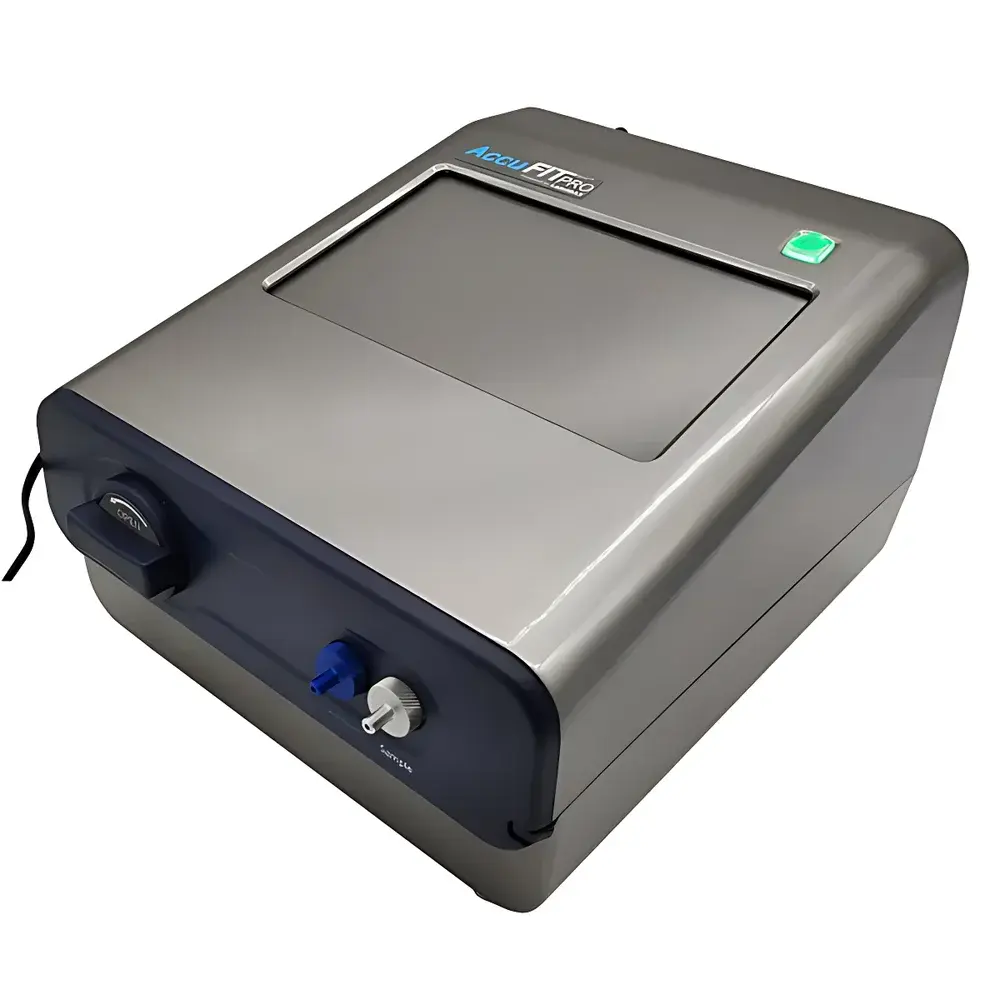
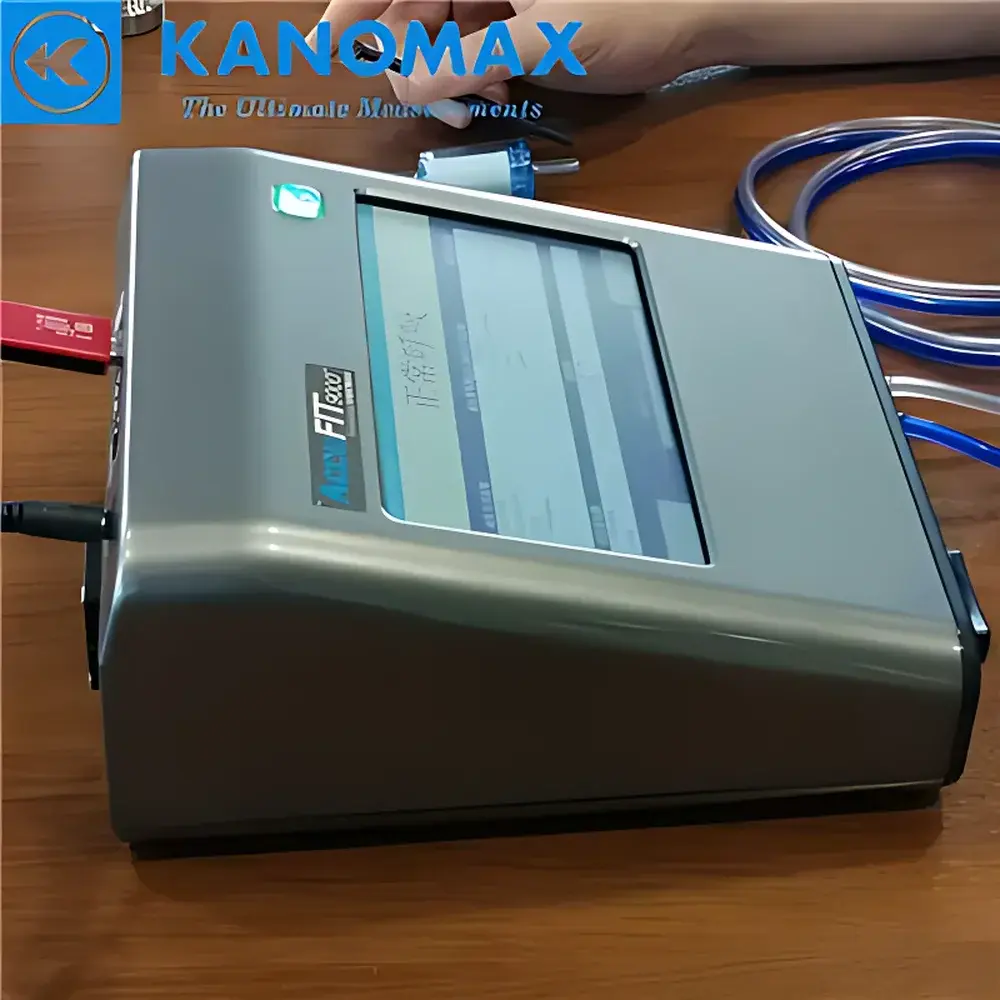
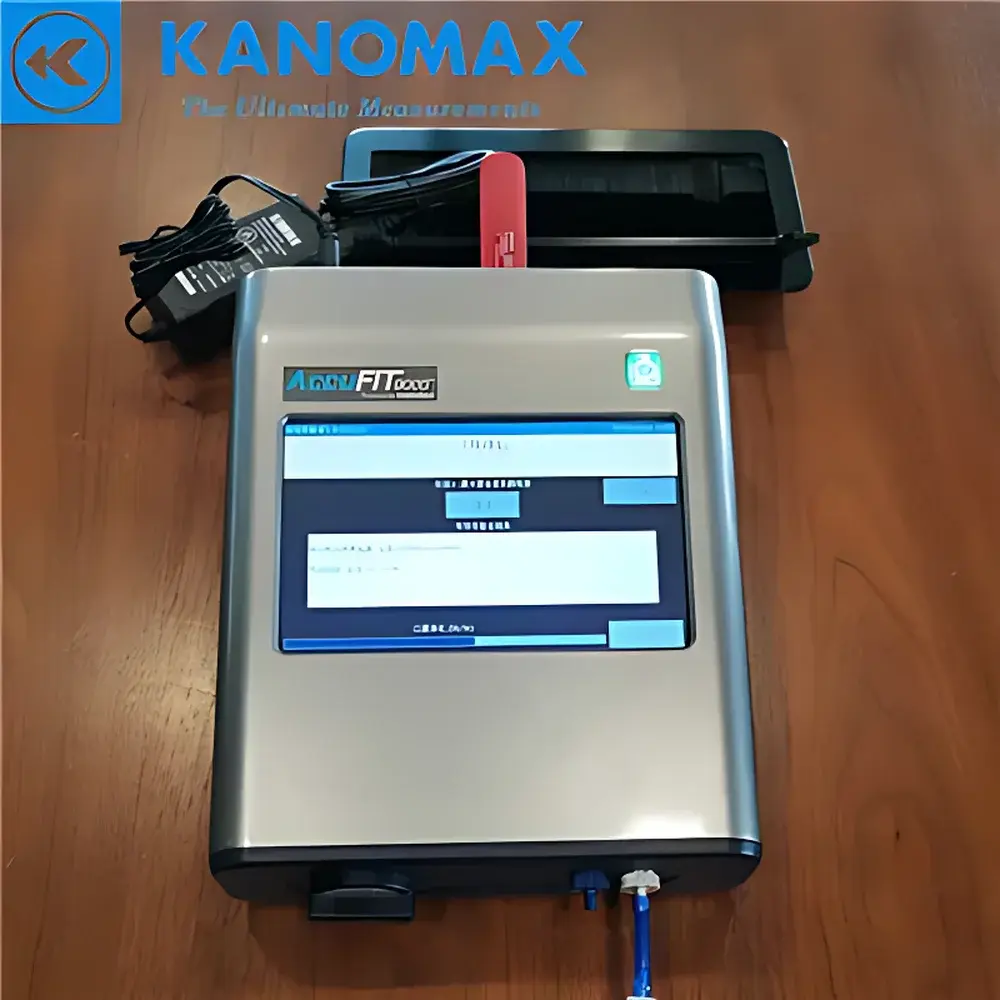
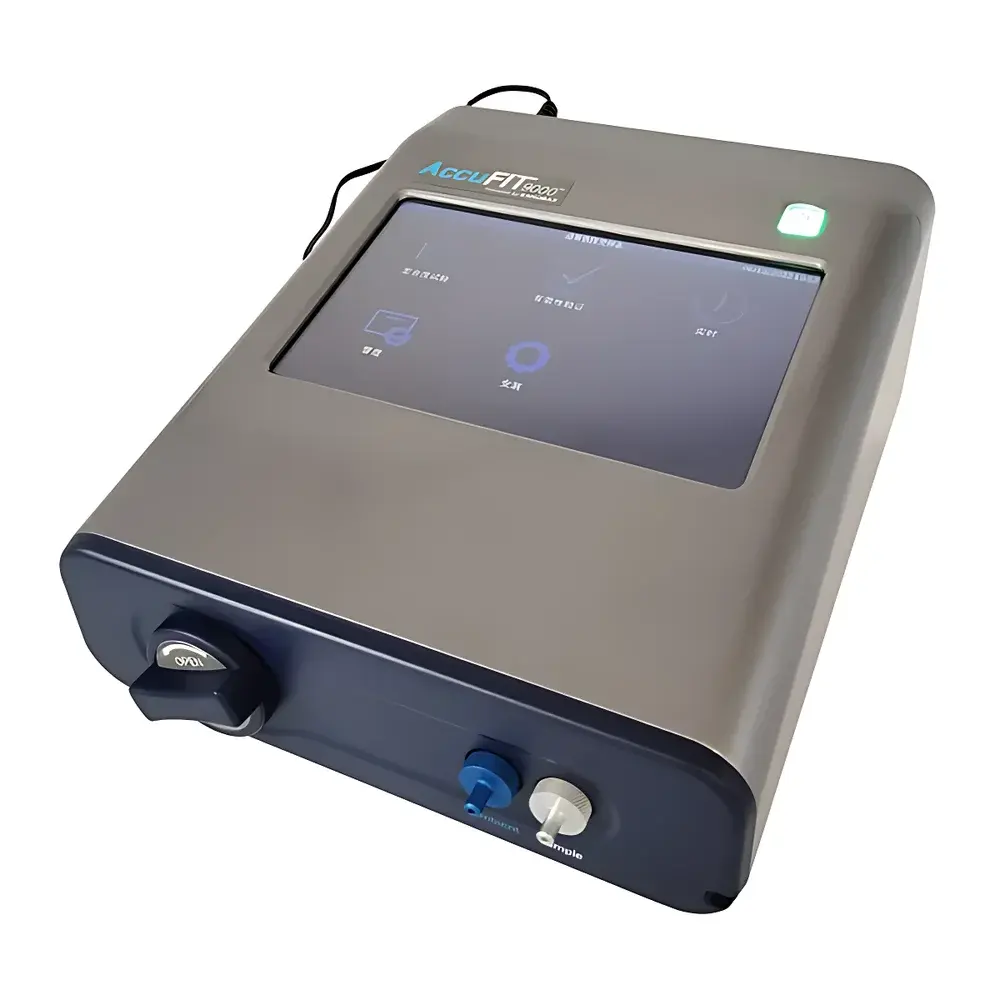
Kanomax 3000-0C/C1 Respirator Fit Tester
| Brand | Kanomax |
|---|---|
| Origin | Japan |
| Model | 3000-0C/C1 |
| Particle Size Range | 0.02–1.0 µm (CPC mode) / 0.015–1.0 µm (C1 mode) |
| Sampling Flow Rate | 100 cm³/min |
| Total Flow Rate | 700 cm³/min |
| Fit Factor Calculation Method | Direct Cout/Cin ratio |
| Test Agent | Isopropanol (≥99.5% purity) or ethanol |
| Display | 7-inch full-color touchscreen |
| Supported Languages | English, Japanese, Chinese, French, Spanish, Portuguese |
| Compliance Standards | OSHA 1910.134, CSA Z94.4, ANSI/AIHA Z88.10, HSE INDG479, GB 19083–2010, GB 2626–2019, GB/T 32610–2016 |
| Connectivity | USB, Ethernet, Wi-Fi |
| Data Export Format | Microsoft Excel (.xlsx) |
| Operating Environment | 10–35 °C, 20–85% RH (non-condensing) |
| Dimensions (3000-0C) | 208 × 117 × 262 mm |
| (3000-C1) | 208 × 152 × 263 mm |
| Weight (3000-0C) | 2.3 kg |
| (3000-C1) | 3.1 kg |
| Software Compatibility | Windows 7/8/10, .NET Framework 3.5 |
| Max Simultaneous Units per PC | 4 |
Overview
The Kanomax 3000-0C/C1 Respirator Fit Tester is a precision-engineered, quantitative fit testing system designed to objectively evaluate the seal integrity between respirators—including N95 filtering facepiece respirators (FFRs), elastomeric half/full-facepieces, powered air-purifying respirators (PAPRs), and self-contained breathing apparatus (SCBAs)—and the wearer’s facial contour. Unlike qualitative methods relying on subjective sensory responses (e.g., saccharin or Bitrex® aerosol challenges), the 3000-0C/C1 employs Condensation Particle Counter (CPC)-based aerosol photometry to measure ambient particle concentration outside the respirator (Cout) and intramask concentration (Cin) in real time. The resulting fit factor (FF = Cout/Cin) is calculated directly and continuously across multiple test exercises (e.g., normal breathing, deep breathing, head side-to-side, head up-and-down, talking, bending over), providing traceable, auditable, and statistically robust data compliant with globally recognized occupational health and safety frameworks.
Key Features
- Two integrated configurations: 3000-0C (base unit with external aerosol generation) and 3000-C1 (fully self-contained with internal nebulizer and integrated CPC detection)
- N95-specific test protocol embedded per NIOSH criteria—automatically applies pass/fail thresholds (FF ≥ 100 for N95) and generates standardized reporting templates
- Multi-standard compliance engine supporting OSHA 1910.134 Appendix A, CSA Z94.4–18, ANSI/AIHA Z88.10–19, UK HSE INDG479, and Chinese national standards GB 2626–2019 and GB 19083–2010
- High-sensitivity CPC detection capable of resolving ultrafine particles from 0.02 µm (3000-0C) or 0.015 µm (3000-C1) up to 1.0 µm, enabling accurate quantification across diverse filtration efficiency classes (P1/P2/P3, FFP1/FFP2/FFP3, N95/N99/N100)
- 7-inch capacitive touchscreen interface with six-language support (English, Japanese, Chinese, French, Spanish, Portuguese), intuitive icon-driven navigation, and context-sensitive prompts
- Dual sampling architecture: left-side ambient inlet for Cout measurement and right-side intramask probe port for Cin, both equipped with HEPA-filtered zero-count verification capability
Sample Compatibility & Compliance
The 3000-0C/C1 accommodates a broad spectrum of respiratory protection devices without mechanical modification, including disposable FFRs (3M™, Honeywell™, Kimberly-Clark™), reusable elastomeric respirators (MSA™, Scott™, HSP™), PAPRs, SCBAs, and chemical cartridge respirators. Its aerosol challenge agent—high-purity isopropanol (≥99.5%) or ethanol—generates a stable, non-toxic, non-irritating polydisperse cloud that meets ISO 16900-1:2016 requirements for fit test aerosols. All test protocols are fully aligned with GLP-aligned documentation practices: each session captures operator ID, subject ID, respirator model/lot, test date/time, environmental conditions (T/RH), raw concentration traces, exercise-by-exercise FF values, and final pass/fail determination. Audit trails are timestamped and digitally signed in accordance with FDA 21 CFR Part 11 principles when used in regulated GMP environments.
Software & Data Management
Kanomax FitTest Pro software (Windows 7/8/10, .NET 3.5) enables centralized control of up to four 3000-0C/C1 units from a single workstation. It supports automated batch testing, customizable report generation (PDF + Excel export), and long-term database archiving with role-based access control. Raw concentration time-series data are stored at 10 Hz resolution, permitting post-hoc waveform analysis and deviation diagnostics. Exported Excel files include embedded metadata headers (standard version, test sequence ID, calibration certificate number), ensuring full traceability for internal QA reviews or third-party accreditation audits (e.g., ISO/IEC 17025). Data transfer occurs via encrypted USB mass storage, Ethernet TCP/IP, or IEEE 802.11n Wi-Fi—no proprietary drivers required.
Applications
This instrument serves as the primary quantitative fit testing platform in occupational health clinics, hospital infection prevention departments, industrial hygiene laboratories, fire/rescue training academies, and government regulatory bodies. It is routinely deployed during initial respirator selection, annual requalification, post-facial surgery reassessment, and after significant weight change (>10%). In clinical research settings, it supports validation studies for novel respirator designs, comparative efficacy trials across filter media technologies, and human factors investigations into anthropometric variability in seal performance. Its compact footprint (under 210 mm wide) and battery-free AC operation (110–240 V, 50/60 Hz) make it suitable for mobile deployment in field hospitals or manufacturing cleanrooms.
FAQ
What aerosol agent is required for operation?
Isopropanol (≥99.5% purity) or anhydrous ethanol is used exclusively—no hazardous or irritant compounds (e.g., sodium chloride, Bitrex®) are needed.
Does the system require annual recalibration?
Yes; Kanomax recommends annual factory recalibration against NIST-traceable CPC reference standards, with optional on-site verification using zero-air filters and certified challenge aerosols.
Can the device be used for both qualitative and quantitative testing?
No—it is a dedicated quantitative system; qualitative screening is not supported nor intended.
Is the software compatible with networked enterprise IT infrastructure?
Yes; FitTest Pro supports domain authentication, SQL Server backend integration, and TLS 1.2–encrypted data transmission over corporate Ethernet/Wi-Fi networks.
What is the minimum detectable fit factor resolution?
The system reports fit factors in integer increments with ±5% repeatability (CV < 4.2% across 20 consecutive tests under controlled conditions).
Related Products







