
KANOMAX EP-CRMS Continuous Real-Time Monitoring System for Pharmaceutical Cleanroom Particulate Contamination
| Key | Brand: KANOMAX |
|---|---|
| Origin | Liaoning, China |
| Manufacturer Type | Authorized Distributor |
| Product Category | Domestic |
| Model | EP-CRMS |
| Instrument Type | Online Monitoring System |
| Flow Rate | High-Flow (28.3 L/min standard) |
| Flow Accuracy | <1 count deviation per 5 min |
| Timing Accuracy | ±1 s over 6-min sampling interval |
| Repeatability | ≤±10% FS |
| Particle Size Distribution Error | ≤±30% |
| Indication Error | <±30% FS |
Overview
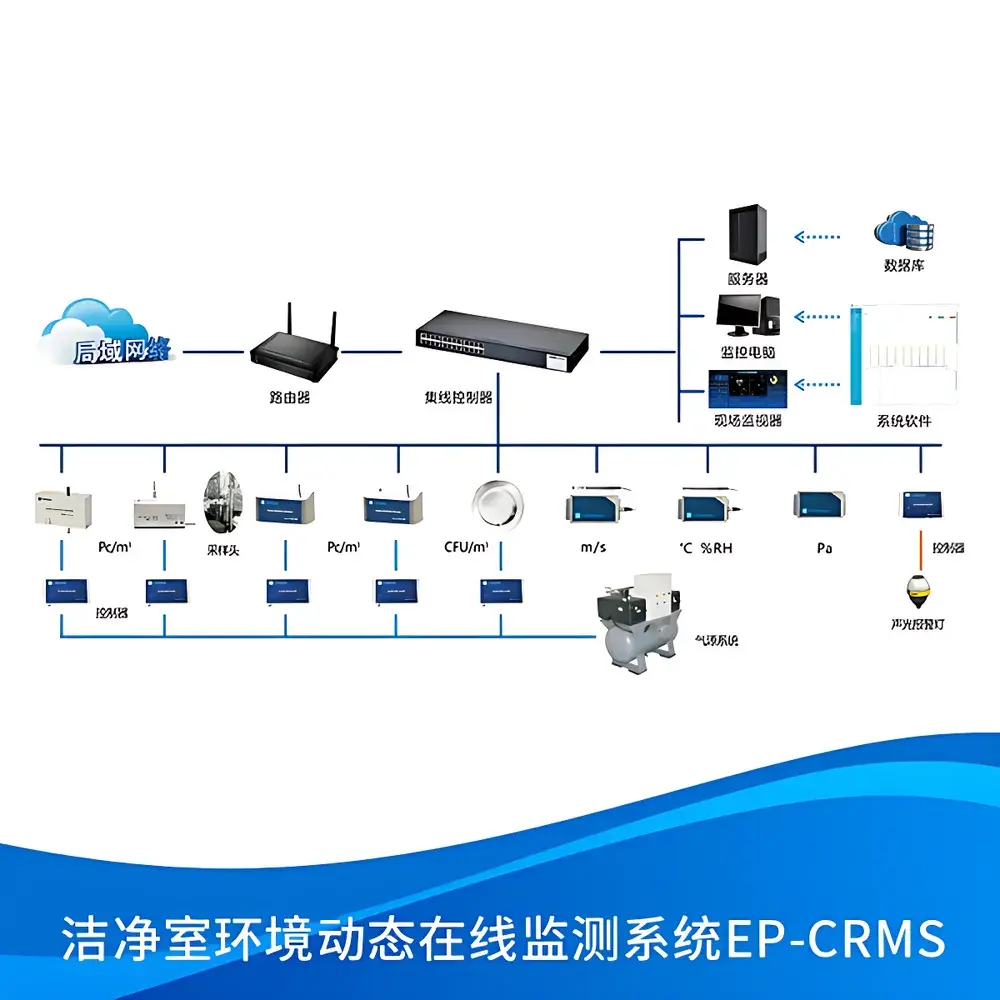
The KANOMAX EP-CRMS Continuous Real-Time Monitoring System is an integrated, multi-point environmental surveillance platform engineered for compliance-driven pharmaceutical cleanroom operations. It employs ISO 21501-4–compliant optical particle counting (OPC) and ISO 14698-1–validated active air sampling for viable microorganisms, enabling simultaneous, synchronized monitoring of airborne particulates (≥0.3 µm), viable bioburden (via impactor-based collection), and critical environmental parameters—including differential pressure, temperature, relative humidity, airflow velocity, illuminance, and noise—across Grade A, B, C, and D classified zones. Designed to meet the stringent data integrity and process validation requirements of EU GMP Annex 1, FDA 21 CFR Part 11, USP /, ISO 14644-1/2, and China GMP 2010, the EP-CRMS delivers deterministic, auditable, and ALCOA+–aligned data streams essential for lifecycle management of sterile manufacturing processes.
Key Features
- Multi-sensor real-time acquisition: Simultaneous detection of non-viable particles (0.3/0.5/1.0/3.0/5.0/10.0 µm channels), viable microorganisms (via FKC-0S impactor with ≥98% collection efficiency at ≥12 m/s jet velocity), and environmental parameters (differential pressure, temp/RH, airflow velocity, etc.)
- Dual-redundant vacuum source: Dual dry-running, oil-free rotary vane pumps (316 stainless steel construction) configured in hot-standby mode with automatic failover and manual override capability
- Precision volumetric control: Integrated particle and microbial sampling controllers ensure exact 1 m³ cumulative sample volume per test cycle, with real-time flow verification and error-triggered re-sampling logic
- Robust data integrity architecture: Full audit trail (user login/logout, parameter changes, alarm events, data edits), electronic signatures (per 21 CFR Part 11 §11.200), and immutable database logging with timestamped, tamper-evident records
- Scalable modular topology: Expandable sensor node configuration supporting up to 128 monitored points; plug-and-play integration of new particle counters, microbial samplers, or environmental probes without system downtime
- Compliance-ready hardware: All wetted parts—including isokinetic sampling heads, internally coated PTFE-lined tubing, and mounting brackets—fabricated from ASTM A276 Type 316 stainless steel per GB 50591-2010 and ISO 14644-3
Sample Compatibility & Compliance
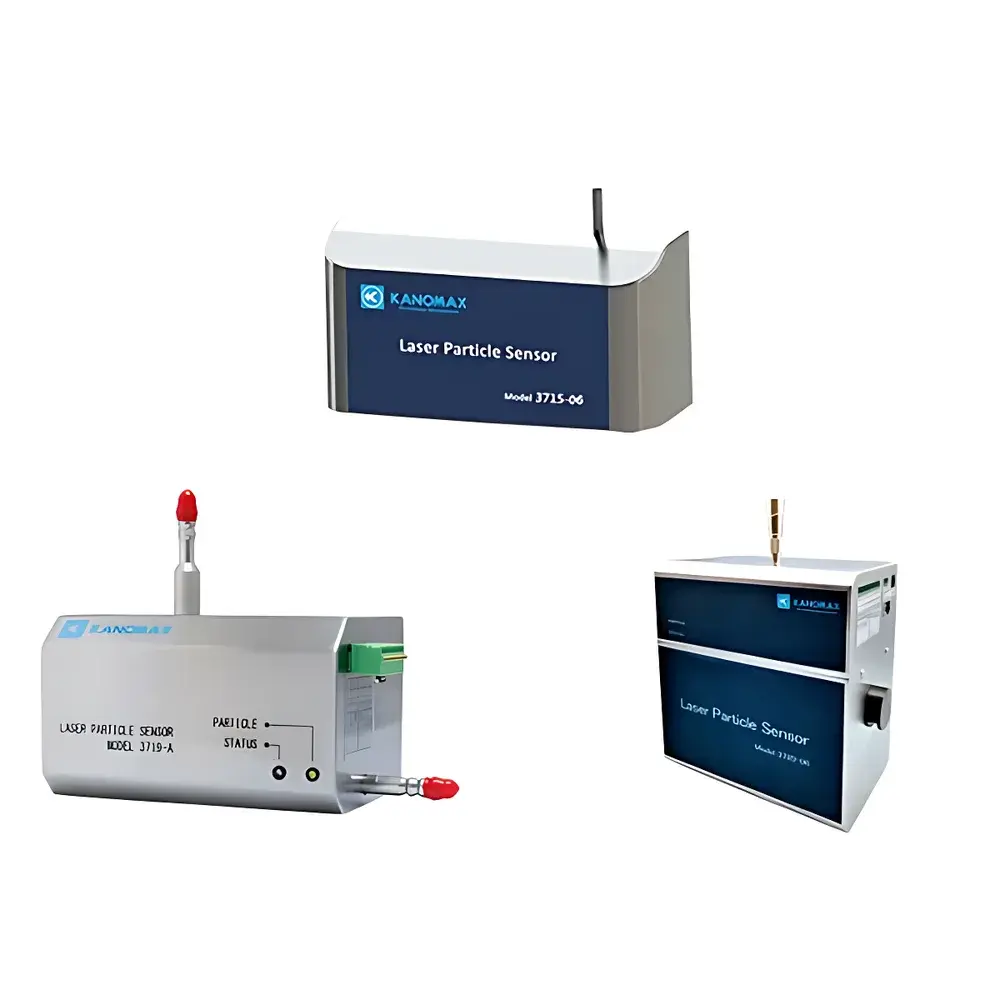
The EP-CRMS is validated for use in aseptic processing environments compliant with EU GMP Annex 1 (2022), FDA Guidance for Industry: Sterile Drug Products Produced by Aseptic Processing (2004), and ICH Q5A(R2). Particle sensors (models 3714, 3715, 3718-A, 3719-A, 3720-06) conform to ISO 21501-4:2018 for calibration traceability and counting efficiency. Microbial sampling adheres to ISO 14698-1:2003 and its Annex B for recovery validation, with FKC-0S impactors achieving ≥98% collection efficiency at nominal 50 L/min flow. System-level qualification includes full 4Q protocol execution (DQ/IQ/OQ/PQ), FAT/SAT documentation, and risk-based assessment per ISO 14971. All firmware and software modules are developed under IEC 62304 Class B safety lifecycle requirements.
Software & Data Management
The central server software provides role-based access control (RBAC) with configurable permission tiers for QA, IT, Operations, and Engineering personnel. Data visualization includes real-time dashboards with tabular, trend-line, histogram, and UCL-based statistical summaries (mean, max, min, cumulative counts). Automated report generation supports daily, weekly, monthly, and annual formats exportable as PDF or Excel (ISO/IEC 27001–compliant encryption). Historical data is retained for ≥36 months with automated backup to network-attached storage (NAS) and optional cloud archive. All data modifications require dual electronic signature approval and generate immutable audit entries with hash-verified timestamps. The system supports Modbus RTU/TCP, Ethernet/IP, and 4–20 mA analog output for MES/SCADA integration.
Applications
- Continuous Grade A zone monitoring during aseptic filling, lyophilization, and stoppering operations
- Background environment surveillance in Grade B isolators and RABS enclosures
- Environmental qualification of tunnel ovens, steam sterilizers, and depyrogenation tunnels
- Process validation support for media fills, smoke studies, and filter integrity testing
- Real-time deviation response: Automatic interlock activation (e.g., halt filling line, isolate chamber) upon particle or environmental excursion
- Regulatory submission readiness: Pre-formatted data packages aligned with EMA Annex 15 and FDA eCTD Module 3 requirements
FAQ
Does the EP-CRMS support 21 CFR Part 11-compliant electronic signatures?
Yes. The system implements role-based digital signature workflows with identity authentication, biometric or token-based second-factor verification, and immutable audit trails for all signed actions.
Can the system be validated for GMP use?
Yes. Comprehensive 4Q validation documentation (DQ/IQ/OQ/PQ), FAT/SAT reports, and risk assessments are provided as standard deliverables.
What particle size channels are available on the integrated sensors?
Configurable options include dual-channel (0.3/0.5 µm), dual-channel (0.5/5.0 µm), and six-channel (0.3/0.5/1.0/3.0/5.0/10.0 µm) detection, all traceable to NIST SRM 1930.
Is the system compatible with existing MES or SCADA infrastructure?
Yes. Native Modbus TCP/RTU, OPC UA, and Ethernet/IP protocols enable seamless bidirectional integration with major manufacturing execution systems.
How is sensor calibration maintained across the monitoring network?
Automated calibration scheduling, usage-based maintenance alerts, and centralized calibration certificate repository ensure continuous metrological traceability per ISO/IEC 17025.
Related Products







