
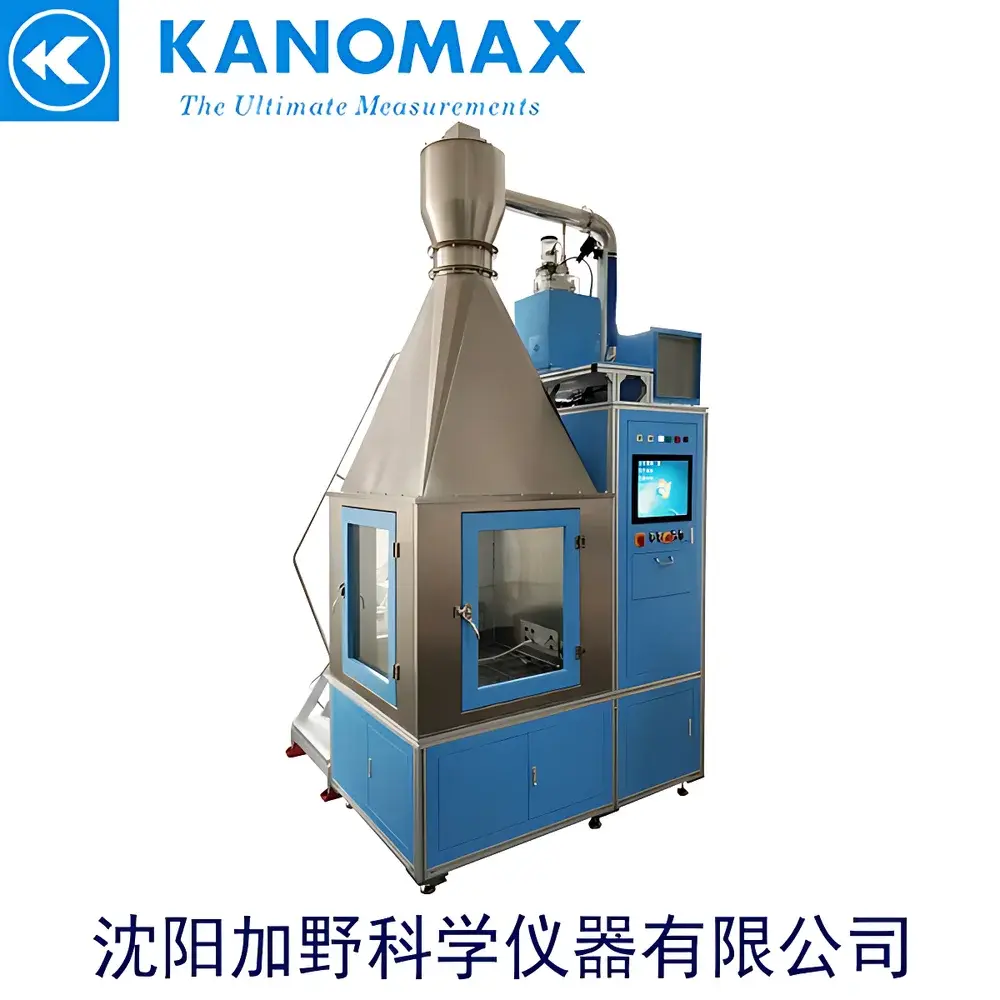
Kanomax F9301 Aerosol Photometer Calibration System
| Brand | Kanomax |
|---|---|
| Origin | Liaoning, China |
| Manufacturer Type | Authorized Distributor |
| Country of Origin | China |
| Model | F9301 |
| Pricing | Upon Request |
Overview
The Kanomax F9301 Aerosol Photometer Calibration System is a traceable, metrologically rigorous calibration platform engineered for laboratory-grade verification and periodic calibration of aerosol photometers—particularly those used in cleanroom qualification (ISO 14644), HVAC filter integrity testing (e.g., EN 1822, IEST-RP-CC034), and pharmaceutical facility environmental monitoring. Unlike generic aerosol generators, the F9301 implements a closed-loop, dual-mode calibration architecture grounded in primary measurement principles: real-time photometric comparison against a certified reference photometer (NIST-traceable or equivalent national standard), supplemented by gravimetric validation via membrane filtration and microbalance analysis (per ISO 14644-3 Annex B and USP ). The system generates polyalphaolefin (PAO-4) test aerosols under controlled dilution, mixing, and stabilization protocols to deliver stable, repeatable mass concentrations across a broad dynamic range—enabling both low-level background verification (0.01 µg/L) and high-concentration challenge testing (up to 150 µg/L).
Key Features
- Two independent concentration calibration modes: photometric comparison using an integrated reference photometer (maximum permissible error ≤ ±10% at assigned points) and gravimetric validation via certified filter weighing (ASTM D1896-compliant workflow)
- Multi-stage aerosol generation with precision PAO-4 nebulization, turbulent mixing chamber, and laminar diffusion section to ensure spatial homogeneity and temporal stability (≤5% drift over 4 h at 0.01–1 µg/L; ≤2% over 20 min at 10–150 µg/L)
- Integrated primary flow reference: calibrated thermal mass flowmeter (0–50 L/min, accuracy < ±1.0% of reading) serving as the volumetric anchor for concentration calculation
- Industrial-grade control architecture: ruggedized IPC with capacitive touchscreen HMI, enabling fully automated sequence execution—from aerosol generation initiation and dwell stabilization to data acquisition, report generation, and on-site thermal printing
- Dual-stage exhaust filtration (HEPA + activated carbon) ensuring zero ambient contamination during operation and full compliance with OSHA and local occupational exposure limits (OELs)
- Stabilized AC power conditioning module eliminating electrical noise interference to sensitive photodetectors and analog signal chains of both reference and unit-under-test instruments
Sample Compatibility & Compliance
The F9301 supports calibration of all commercially available aerosol photometers operating on light-scattering principles—including but not limited to TSI 9500/9550 series, Kanomax 3800/3880, Fluke 985, and Particle Measuring Systems (PMS) models—provided they accept standard 25-mm or 37-mm filter cassettes and operate within the specified flow rate window (10–50 L/min). The system conforms to key international standards governing calibration infrastructure: ISO/IEC 17025:2017 (clause 6.4 on equipment validation), ISO 14644-3:2019 (cleanroom testing requirements), and EU GMP Annex 1 (2022) for sterile manufacturing environments. Gravimetric procedures align with ISO 14644-3 Annex B and USP , while photometric traceability follows NIST SP 260-198 guidelines for optical aerosol instrumentation.
Software & Data Management
Calibration sequences are managed through embedded Windows-based software with role-based access control (operator, supervisor, administrator). All measurement events—including timestamped concentration values, flow readings, temperature/humidity logs, and instrument IDs—are recorded with full audit trail functionality compliant with FDA 21 CFR Part 11 (electronic signatures, change history, user authentication). Reports are generated in PDF format with embedded metadata (calibration date, operator ID, uncertainty budget per point, reference standard certificates), and optionally exported to CSV for LIMS integration. Automatic backup to external USB storage ensures data integrity and GLP/GMP record retention.
Applications
- Periodic calibration and performance verification of aerosol photometers in accredited calibration laboratories (ISO/IEC 17025 scope)
- Filter integrity testing validation per EN 1822-5 and IEST-RP-CC034 for HEPA/ULPA filters in cleanrooms and isolators
- Baseline verification of particle counters used in environmental monitoring programs under EU GMP Annex 1 and FDA Aseptic Processing Guidance
- Method development and uncertainty analysis for aerosol-based contamination control protocols
- Training and competency assessment for cleanroom technicians and QA/QC personnel
FAQ
What aerosol material is used for calibration?
PAO-4 (polyalphaolefin, 4-cSt viscosity) is the default test aerosol, meeting ISO 14644-3 and EN 1822 specifications for particle size distribution and stability.
Is gravimetric calibration mandatory for ISO/IEC 17025 accreditation?
Yes—gravimetric validation serves as the primary reference method for mass concentration; photometric comparison is secondary and requires regular cross-validation against gravimetry.
Can the F9301 calibrate instruments outside the 0.01–150 µg/L range?
No—the system’s validated operational envelope is strictly defined per its type examination and uncertainty budget; extrapolation is not permitted under ISO/IEC 17025.
Does the system support remote diagnostics or network connectivity?
Local Ethernet port enables secure file transfer and firmware updates; however, no cloud connectivity or remote control is implemented to preserve data sovereignty and cybersecurity compliance.
What maintenance intervals are recommended?
Quarterly verification of flowmeter calibration and annual recalibration of the reference photometer by an accredited metrology lab are required to maintain traceability.
Related Products







