
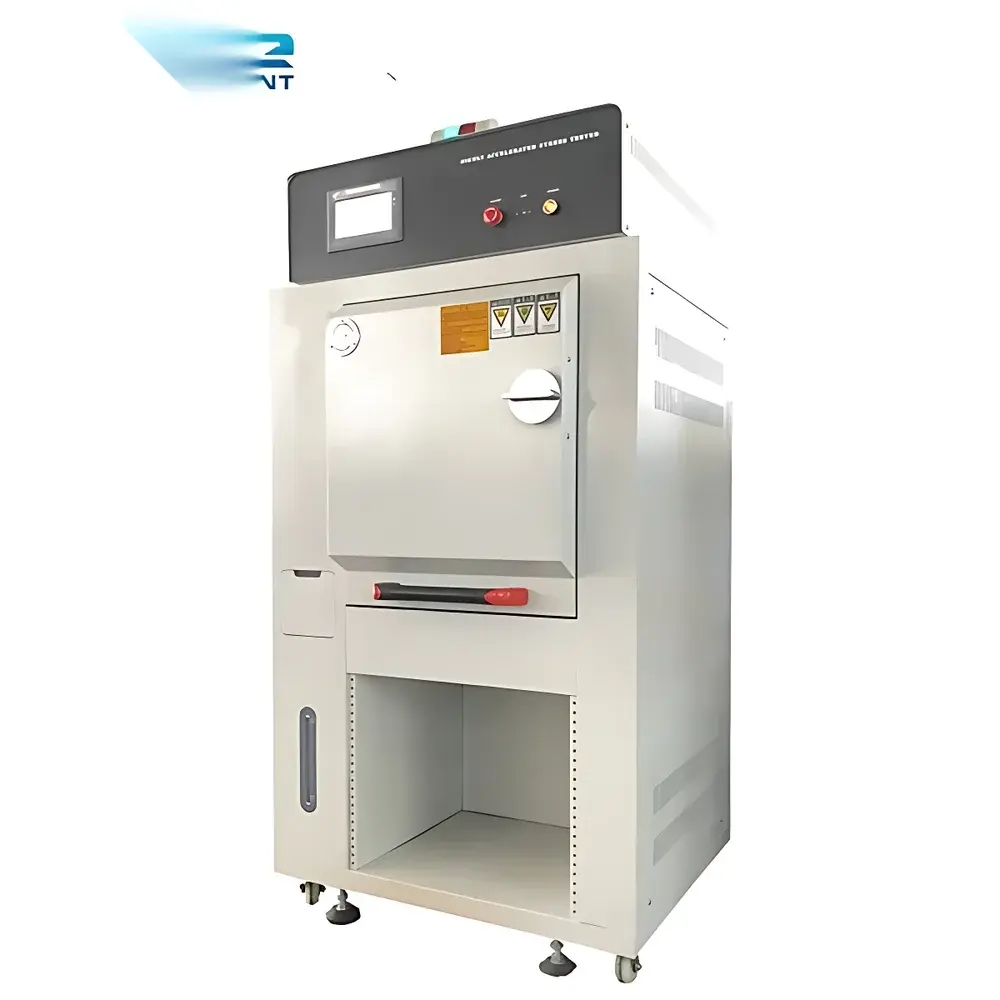
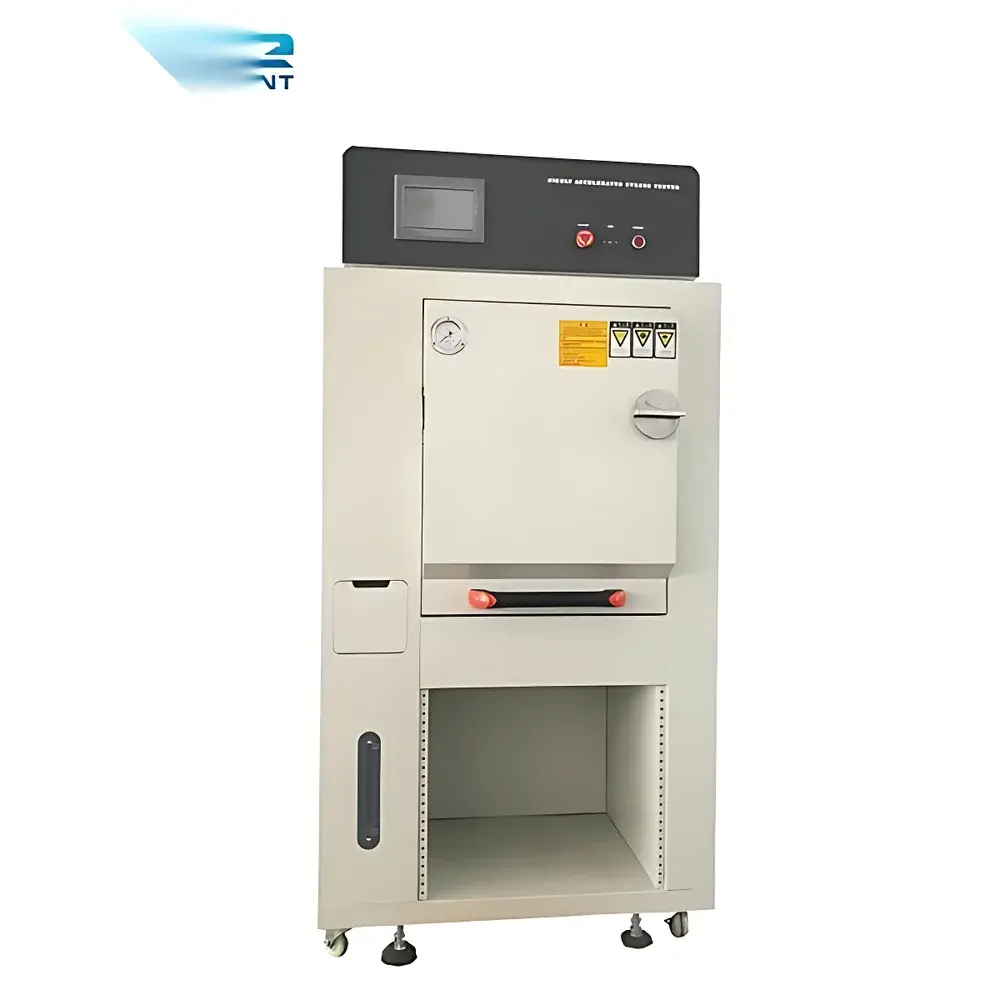
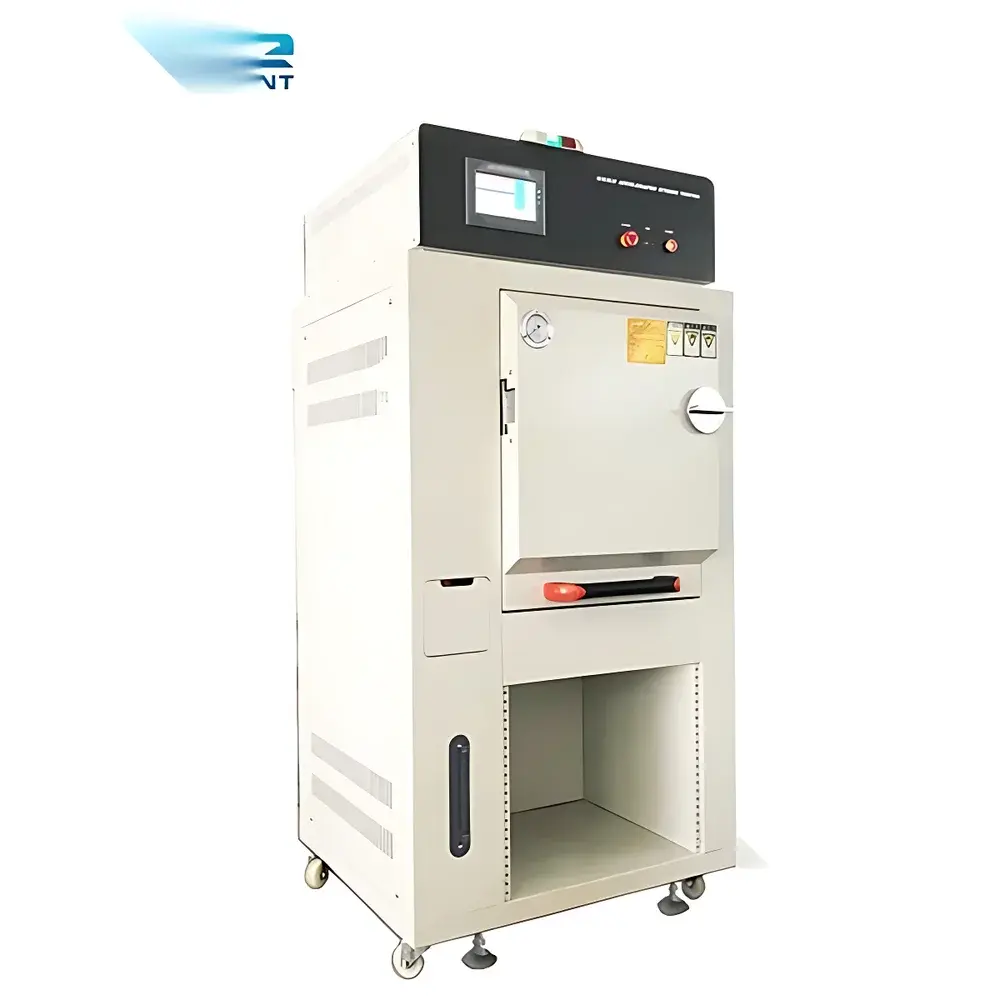
Programmable High-Pressure Steam Aging Test Chamber
| Brand | Other Brands |
|---|---|
| Origin | Imported |
| Manufacturer Type | General Distributor |
| Price | USD 13,500 (approx.) |
Overview
The Programmable High-Pressure Steam Aging Test Chamber is an engineered environmental stress test system designed for accelerated reliability evaluation of electronic components and materials under controlled high-humidity, elevated-temperature, and pressurized saturated steam conditions. Operating on the principle of Highly Accelerated Stress Testing (HAST), it replicates decades of field-level moisture ingress and thermal-mechanical degradation in a fraction of the time—enabling rapid identification of latent defects such as intermetallic diffusion, wire bond corrosion, delamination at die-attach interfaces, and solder joint fatigue. Unlike standard temperature-humidity chambers, this chamber maintains precise control over absolute steam pressure (up to 2.0 kg/cm² gauge), enabling true saturation conditions at temperatures from 105 °C to 135 °C—critical for simulating failure mechanisms governed by Arrhenius-driven kinetics and moisture diffusion coefficients in encapsulants and passivation layers.
Key Features
- Automated water replenishment system with real-time level monitoring—ensures uninterrupted test continuity during extended HAST cycles (e.g., 96–1008 h).
- Digital LED temperature controller with ±0.5 °C accuracy and programmable ramp/soak profiles compliant with JESD22-A110 and A118 standards.
- Steam-synchronized digital timer: initiates countdown only after chamber reaches target saturation temperature and pressure—eliminating timing drift due to thermal inertia.
- Integrated pressure–temperature gauge calibrated to NIST-traceable references; displays absolute pressure (kg/cm²) and corresponding saturation temperature per IAPWS-IF97 thermodynamic tables.
- Condensate purge system with continuous low-velocity steam bleed to maintain >99.5% saturated vapor quality—minimizing superheat-induced non-uniform aging effects.
- One-piece molded silicone door gasket with compression-set resistance >10,000 cycles—guaranteeing leak-tight sealing up to 2.0 kg/cm² and meeting ISO 17025 environmental chamber integrity requirements.
- Electropolished 316L stainless steel interior chamber surface (Ra ≤ 0.4 µm)—resistant to chloride-induced pitting and compatible with post-test SEM/EDS analysis.
- Interlocked safety architecture: motorized door latch verification prevents power-on unless fully sealed; redundant mechanical safety valve (ASME BPVC Section VIII compliant) activates at 105% of max working pressure.
- Dual independent thermal cutoffs (bimetallic + solid-state): trigger audible alarm and cut heater power if internal temperature exceeds setpoint by >5 °C—fully documented in FAT/SAT reports.
- ABS-insulated door handle and front panel—limits surface temperature to <45 °C during operation per IEC 61000-4-2 touch-safety guidelines.
Sample Compatibility & Compliance
This chamber accommodates wafer-level packages (WLP), QFN, BGA, LED phosphor-coated modules, PV cell interconnect ribbons, NdFeB sintered magnets, and multilayer ceramic capacitors (MLCCs). Internal dimensions range from Φ250 × 300 mm to Φ650 × 600 mm—supporting JEDEC-standard test boards (up to 200 × 200 mm) and custom fixtures. All models comply with IEC 60068-2-66 (HAST method), MIL-STD-202 Method 108, and JIS C 60068-2-66. Optional validation packages include IQ/OQ documentation aligned with FDA 21 CFR Part 11 and ISO/IEC 17025 for GLP/GMP-regulated labs.
Software & Data Management
Standard RS-485 Modbus RTU interface enables integration with LabVIEW, MATLAB, or enterprise MES systems. Optional Ethernet-enabled controller supports CSV log export (timestamped T/P/RH at 1-second intervals), audit trail with user login, and alarm event history—including timestamps for all safety interventions. Data files are SHA-256 hashed and stored with immutable metadata for traceability in regulated environments.
Applications
- Qualification testing of automotive-grade ICs per AEC-Q100 Rev G (HAST condition H3TRB).
- Reliability screening of GaN-on-Si power devices exposed to humid high-voltage bias.
- Moisture sensitivity level (MSL) requalification for legacy PCBAs post-reflow.
- Accelerated life testing of photovoltaic module edge seals under damp heat + pressure.
- Corrosion acceleration studies on rare-earth magnet coatings under cyclic steam exposure.
FAQ
What is the maximum allowable test duration for continuous HAST operation?
Standard configuration supports unattended runs up to 1008 hours (6 weeks); extended-cycle variants include reinforced condensate reservoirs and dual-pump redundancy.
Can the chamber operate at 143 °C as specified in some military specs?
Yes—upon factory calibration and safety valve upgrade to 3.0 kg/cm² rating (requires separate quotation and FAT sign-off).
Is third-party calibration certification available?
NIST-traceable calibration certificates (temperature, pressure, humidity) are provided with each unit; ISO/IEC 17025-accredited calibration optional.
How is steam purity verified during qualification?
Steam quality is validated using a calibrated steam calorimeter per ASME PTC 19.11; typical measured dryness fraction ≥ 0.995 under steady-state conditions.
Does the system support remote monitoring via cloud platform?
Yes—optional IoT gateway enables secure TLS 1.2 MQTT connectivity to AWS IoT Core or private Azure IoT Hub instances with configurable alert thresholds.



