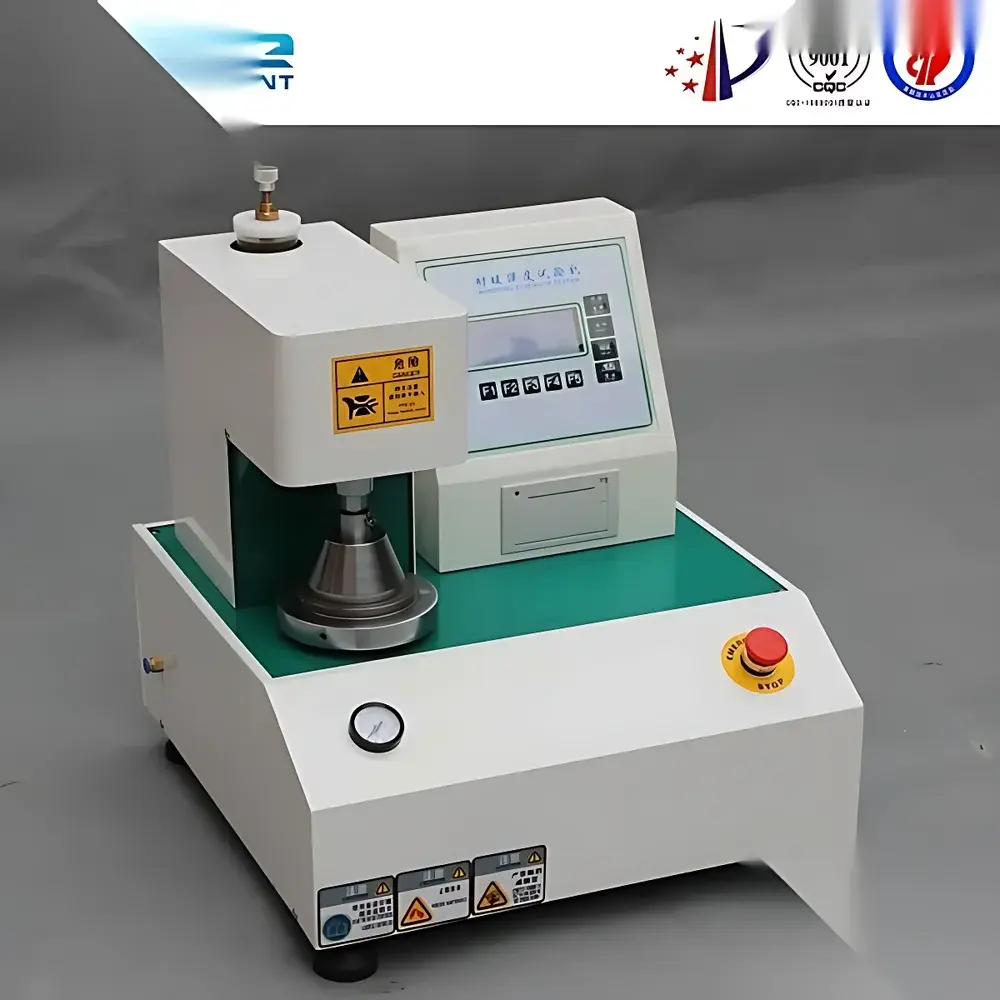
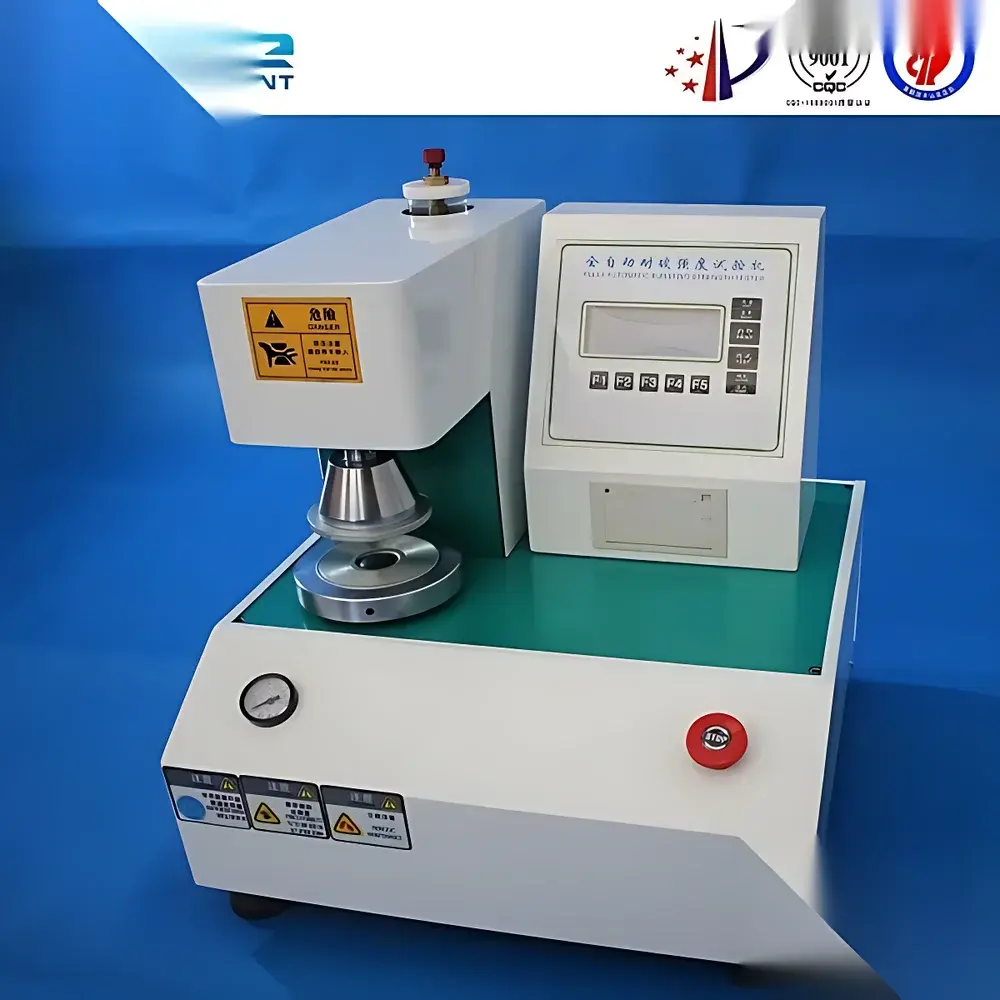
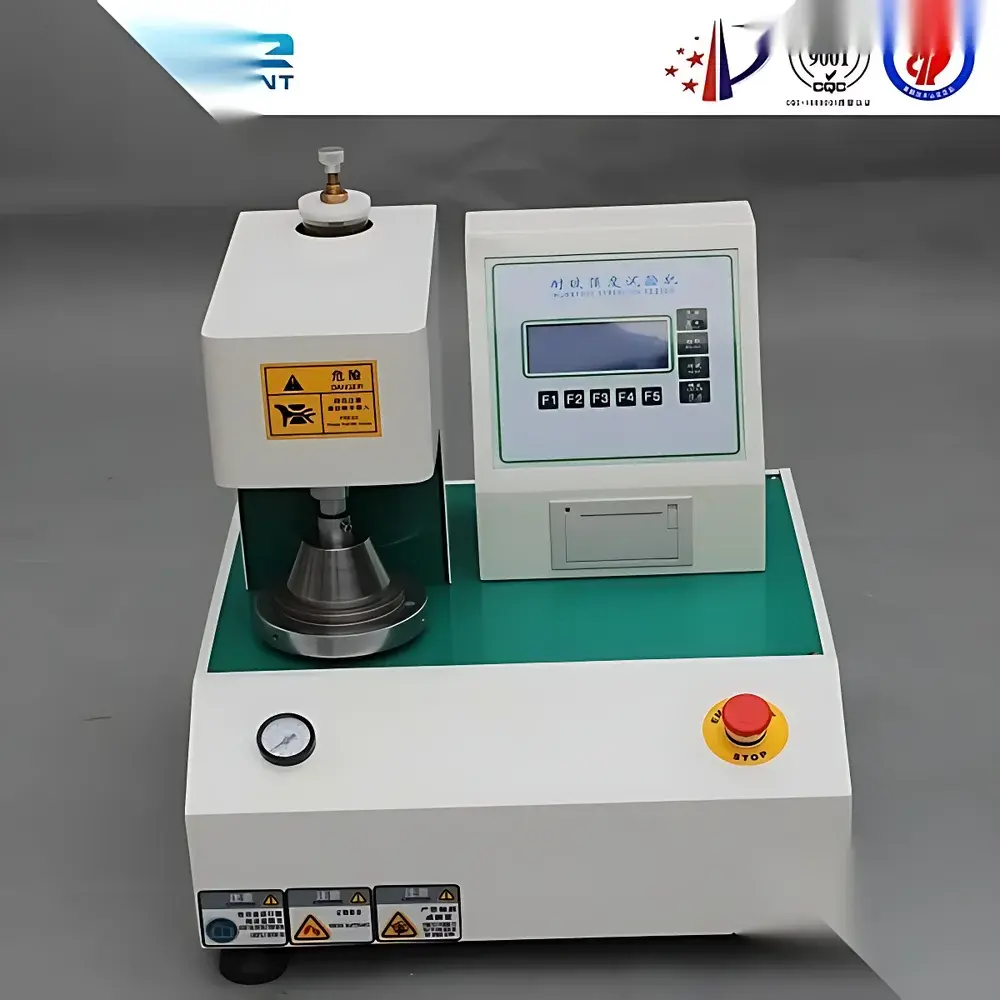
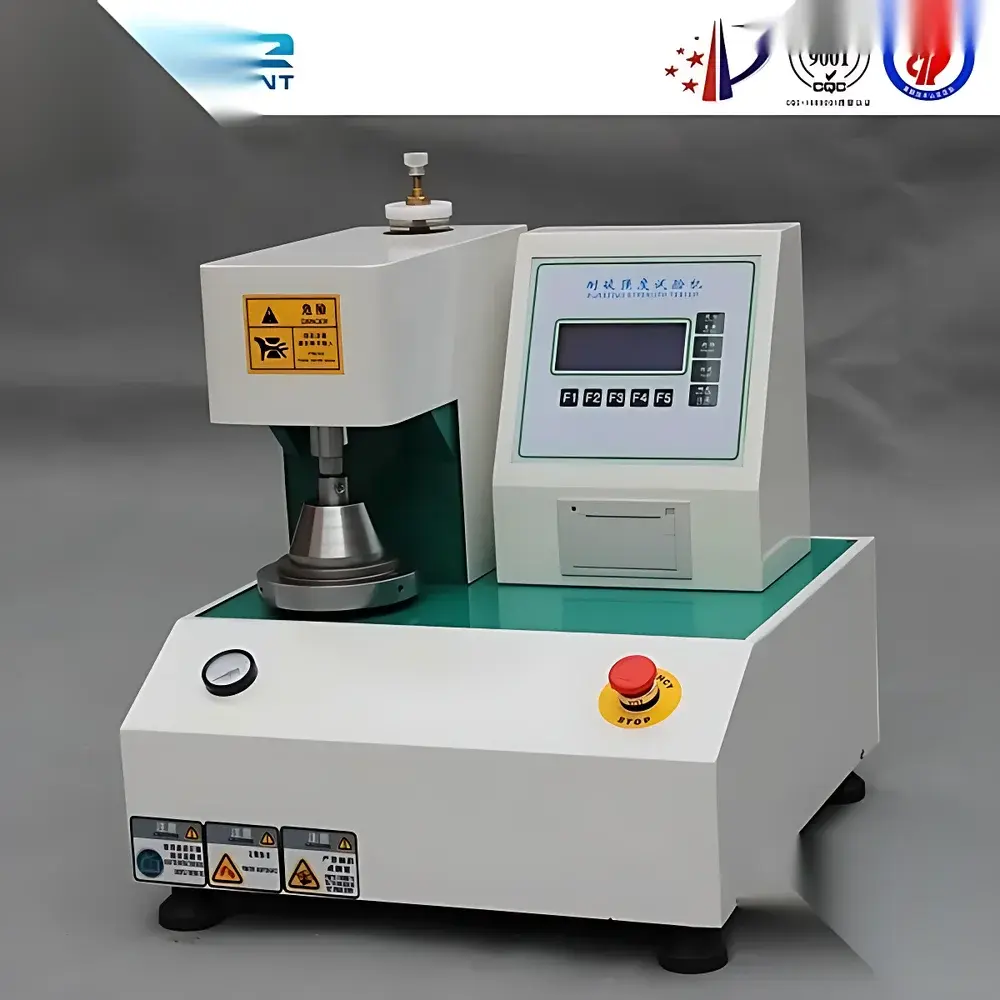
Box Compression Tester (Burst Strength Tester) – Universal Paperboard & Corrugated Board Testing System
| Brand | OEM |
|---|---|
| Origin | Imported |
| Manufacturer Type | Authorized Distributor |
| Compliance | ISO 2759, GB/T 1539 |
| Operating Pressure Range | 0–1.5 MPa (adjustable via precision pneumatic regulator) |
| Burst Force Resolution | 0.01 kPa |
| Data Storage Capacity | 50 test records |
| Calibration Adjustment | User-accessible digital offset compensation |
| Safety | Dual-circuit emergency stop, auto-return to home position post-failure |
| Output | Integrated thermal printer with timestamped reports |
Overview
The Box Compression Tester (Burst Strength Tester) is a precision-engineered instrument designed for the quantitative determination of burst strength — the maximum uniform hydraulic or pneumatic pressure a sheet material can withstand before rupture — in accordance with internationally recognized mechanical testing principles. It operates on the principle of controlled, progressive pressurization applied uniformly across a fixed circular test area (typically 31.4 mm diameter per ISO 2759), where a rubber diaphragm expands against a clamped specimen until structural failure occurs. This method delivers highly reproducible results for paperboard, corrugated fiberboard (single-, double-, and triple-wall), solid bleached sulfate (SBS), recycled linerboard, and select non-paper substrates including woven textiles (e.g., cotton duck, silk habotai) and synthetic laminates. The system’s pneumatic actuation architecture ensures consistent loading rate control and eliminates mechanical hysteresis commonly observed in spring-loaded analog testers.
Key Features
- Fully automated test cycle: Single-button initiation triggers clamp closure, pressure ramp-up, peak detection, automatic shutdown upon rupture, and return to standby position — eliminating operator-dependent timing errors.
- Digital third-generation controller with real-time pressure feedback loop, enabling user-adjustable calibration offsets without hardware recalibration or external service tools.
- Integrated dual-scale analog pressure gauge (0–1.6 MPa) and digital display for simultaneous visual verification and data logging of clamping pressure — critical for maintaining ISO 2759-compliant pre-load consistency (≥100 kPa).
- Emergency stop circuit compliant with IEC 60204-1, featuring redundant mechanical cutoff and immediate pneumatic venting to halt pressurization within <100 ms.
- Onboard memory stores up to 50 sequential test records, automatically computing arithmetic mean, standard deviation, and maximum/minimum values — export-ready via thermal printer with date/time stamp, sample ID field, and unit annotation (kPa or psi).
- Modular clamping mechanism accommodates specimens up to 180 mm × 180 mm with ±0.1 mm parallelism tolerance, ensuring uniform stress distribution across heterogeneous corrugated structures.
Sample Compatibility & Compliance
This tester is validated for use with all grades of packaging-grade paperboard, including but not limited to: test liner, medium, fluting, combined board (C-flute, B-flute, E-flute, FEFCO-compliant designs), and coated/uncoated recycled fiberboard. Non-paper applications include tightly woven natural and synthetic fabrics used in protective packaging liners or archival storage enclosures. All measurements adhere strictly to ISO 2759:2021 “Board — Determination of bursting strength” and GB/T 1539–2003 “Paperboard — Determination of bursting strength”, including mandatory conditioning requirements (23 °C ±1 °C, 50 % RH ±2 % RH for 24 h prior to testing). The instrument meets GLP documentation standards for traceability: each printed report includes operator ID field, environmental condition log placeholder, and firmware version identifier.
Software & Data Management
While the embedded controller provides standalone operation, optional RS-232 or USB-C interface enables direct connection to laboratory information management systems (LIMS) or QC databases. Raw pressure vs. time waveform data (sampled at 100 Hz) can be exported in CSV format for advanced statistical process control (SPC) analysis, including Cp/Cpk calculation, X-bar & R chart generation, and trend monitoring per ISO 22514 series. Audit trail functionality complies with FDA 21 CFR Part 11 requirements when paired with validated PC-based acquisition software — supporting electronic signatures, change logs, and immutable record retention for regulated environments.
Applications
- Quality assurance of incoming raw materials (linerboard, medium) at converting plants.
- In-process validation of corrugated board lamination integrity during production line integration.
- Final package qualification for ISTA 1A/2A transport simulation protocols.
- R&D evaluation of starch-based adhesives, bio-coatings, or nanocellulose-reinforced composites under standardized burst load conditions.
- Supplier certification audits requiring documented conformance to TAPPI T 403, ASTM D726, and EN 13820.
FAQ
What is the recommended maintenance interval for the pneumatic system?
We recommend quarterly inspection of air filter regulators and annual replacement of diaphragm seals to maintain pressure accuracy within ±1.5 % of full scale.
Can the instrument be calibrated using NIST-traceable reference standards?
Yes — certified burst strength reference discs (certified to ±0.5 kPa uncertainty) are available for on-site verification; calibration certificate includes as-found/as-left data per ISO/IEC 17025 guidelines.
Is operator training required before first use?
A 90-minute guided startup protocol is included in the manual; however, no formal certification is mandated — the interface complies with ISO 9241-110 usability principles for industrial instrumentation.
Does the thermal printer support label stock or only plain paper?
The integrated printer accepts 57 mm wide thermal paper rolls only; adhesive-backed labels are not supported due to heat-sensitive adhesive degradation risk.
How is compliance with environmental conditioning verified during testing?
The instrument does not monitor ambient conditions; users must validate chamber stability per ISO 187 using independent hygrothermographs logged separately and referenced in test reports.
Related Products