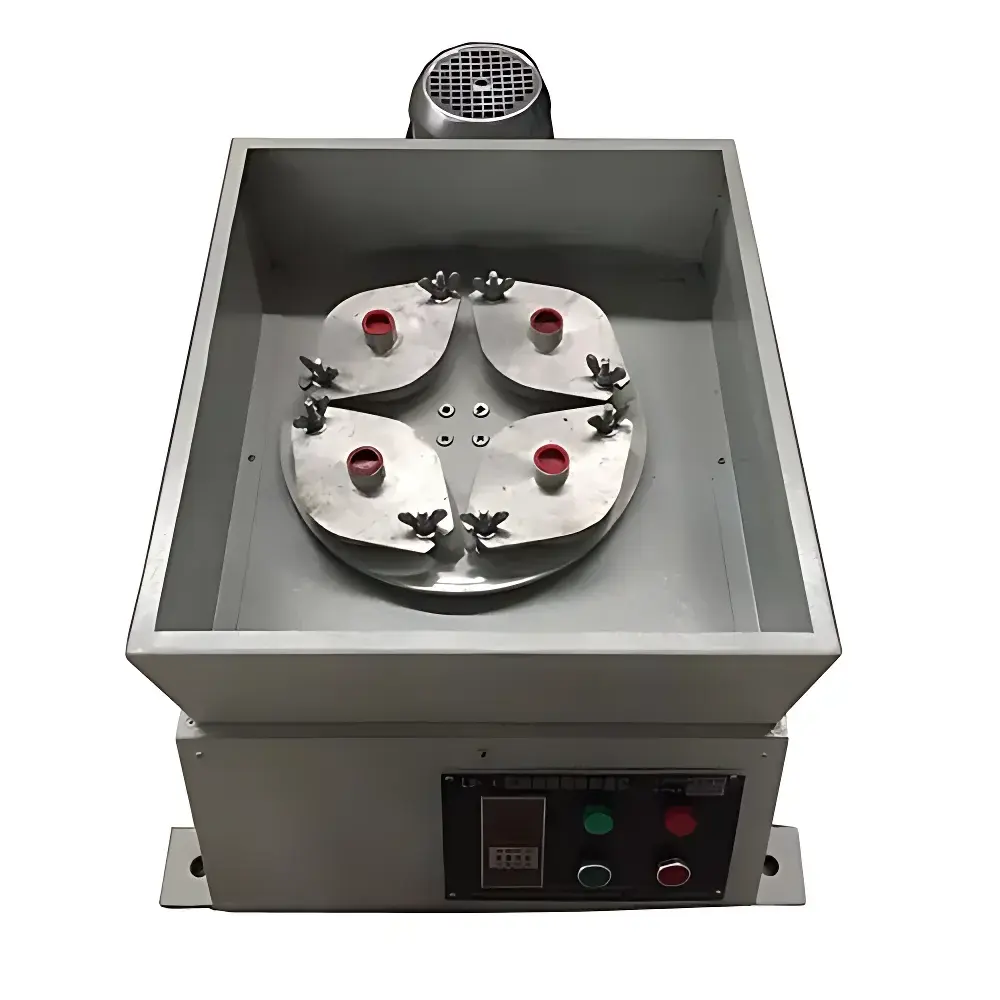
Ceramic Glaze Abrasion Tester LM-8
| Origin | Hunan, China |
|---|---|
| Manufacturer Type | Authorized Distributor |
| Origin Category | Domestic (China) |
| Model | LM-8 |
| Pricing | Available Upon Request |
| Sample Size | 100 × 100 mm |
| Test Stations | 2–8 simultaneous samples |
| Turntable Center-to-Sample Center Distance | 195 mm |
| Rated Turntable Speed | 300 ± 10% rpm |
| Eccentricity | e = 22.5 mm |
| Fixture Internal Diameter | Ø83 mm |
| Fixture Internal Height | 25.5 mm |
| Effective Abraded Area per Sample | ≈54 mm² |
| Motor Power | 1.5 kW |
| Power Supply | 380 V ± 10%, 50 Hz ± 10%, 3-phase 4-wire |
Overview
The LM-8 Ceramic Glaze Abrasion Tester is a precision-engineered instrument designed to evaluate the surface wear resistance of glazed ceramic tiles in strict accordance with internationally recognized standards—specifically ISO/DIS 10545-7:1994 Ceramic Tiles — Test Methods for Glazed Tiles — Determination of Resistance to Surface Abrasion and GB/T 3810.7–2006 Test Methods for Ceramic Tiles — Part 7: Determination of Glaze Abrasion Resistance. It operates on the principle of controlled rotary abrasion, where standardized abrasive media (typically alumina or silicon carbide grit) is applied under defined load and motion geometry to simulate mechanical wear on the glaze surface. The test quantifies degradation through visual assessment of abrasion marks after prescribed rotation intervals, enabling classification into standardized wear resistance grades (e.g., PEI I–V). This method reflects real-world service conditions such as foot traffic in residential and commercial flooring applications, making the LM-8 an essential tool for quality assurance and product development in the architectural ceramics industry.
Key Features
- Multi-station testing capability supporting 2–8 specimens simultaneously, improving throughput for batch validation and comparative studies.
- Precision-machined turntable with fixed eccentricity (e = 22.5 mm) and consistent center-to-sample distance (195 mm), ensuring uniform kinematic input across all test positions.
- Robust 1.5 kW motor driving a rigid, dynamically balanced turntable at a nominal speed of 300 ± 10% rpm—maintaining stable rotational energy delivery throughout extended test cycles.
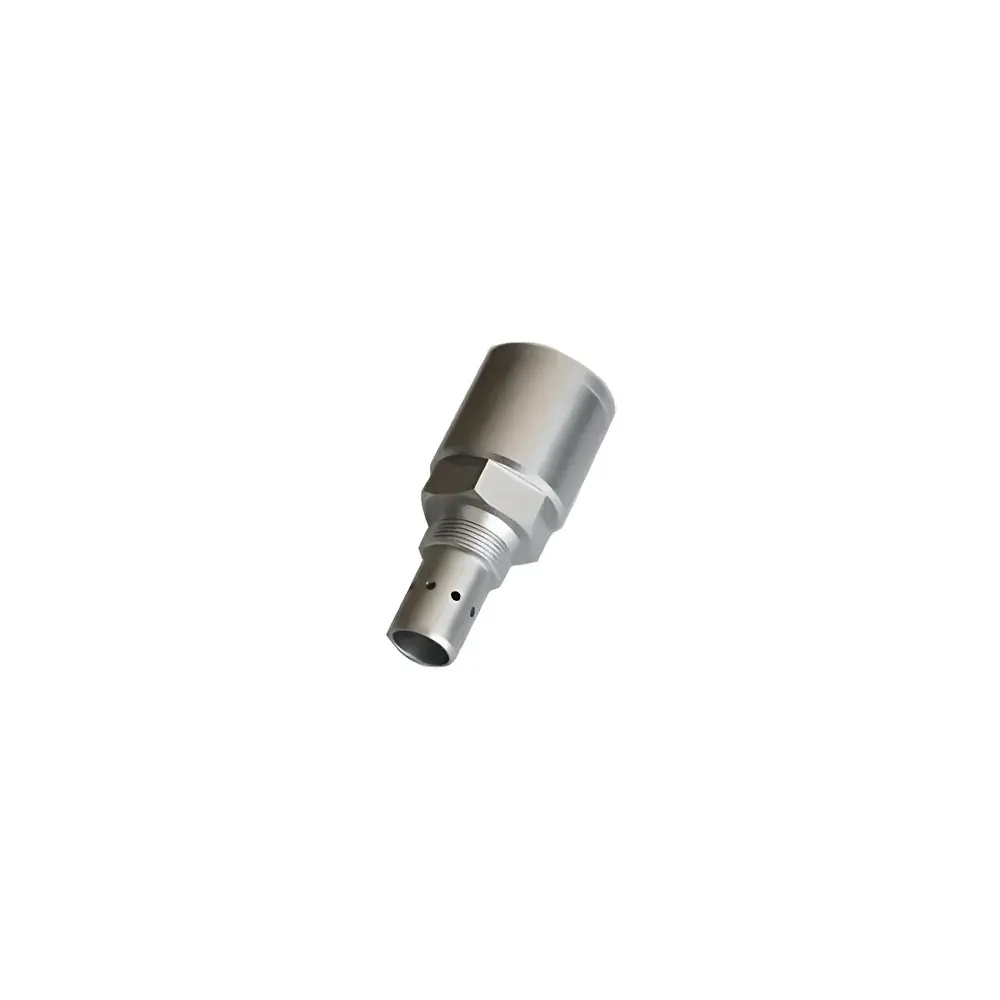
- Standardized metal fixtures with integrated rubber sealing gaskets (internal diameter Ø83 mm, internal height 25.5 mm), providing reproducible containment of abrasive media and minimizing lateral dispersion during rotation.
- Effective abraded area per specimen precisely defined at ≈54 mm²—aligned with ISO 10545-7 requirements for geometric consistency and result comparability across laboratories.
- Industrial-grade 3-phase 4-wire power interface (380 V ± 10%, 50 Hz ± 10%) ensures stable operation under variable grid conditions typical in manufacturing and testing facility environments.
Sample Compatibility & Compliance
The LM-8 accepts standard square ceramic tile specimens measuring 100 × 100 mm—fully compliant with dimensional specifications outlined in both ISO 10545-7 and GB/T 3810.7. Its fixture geometry and loading configuration are validated for use with all common types of glazed porcelain, stoneware, and earthenware tiles used in wall and floor applications. In addition to abrasion resistance evaluation, the instrument supports downstream correlation with ISO 10545-14 (resistance to staining and pollution), as the same specimen set can be reused for sequential testing following abrasion exposure. The system meets structural and operational requirements for GLP-compliant testing environments and is routinely deployed in national metrology institutes, third-party certification labs (e.g., CNAS-accredited facilities), and R&D centers conducting ASTM C1027 and EN 10282-aligned assessments.
Software & Data Management
The LM-8 is a manually operated, analog-controlled instrument without embedded digital control or data logging firmware. All test parameters—including rotation count, abrasive mass, and load application—are set and monitored externally using calibrated timers, precision balances, and standardized test protocols. This design prioritizes traceability, repeatability, and audit readiness: each test run is documented via laboratory notebooks or LIMS-integrated worksheets that record operator ID, calibration status of ancillary equipment (e.g., analytical balance, stopwatch), environmental conditions (temperature/humidity per ISO 10545-1), and pass/fail judgments against the PEI grading scale. For laboratories operating under FDA 21 CFR Part 11 or ISO/IEC 17025 requirements, full procedural documentation—including fixture calibration certificates, abrasive lot traceability, and inter-laboratory round-robin validation reports—is maintained separately and referenced in test reports.
Applications
- Quality control of glazed ceramic tiles in production lines prior to shipment or certification.
- Comparative wear performance evaluation of new glaze formulations during R&D.
- Third-party conformity assessment for CE marking, CCC certification, and Green Building rating systems (e.g., LEED MR credits).
- Failure analysis of field-failed tiles to correlate surface degradation with manufacturing variables (e.g., firing temperature, glaze chemistry).
- Supporting technical documentation for ISO 9001:2015 clause 8.5.1 (control of production and service provision) and clause 8.6 (release of products and services).
FAQ
What standards does the LM-8 comply with?
The LM-8 is fully aligned with ISO/DIS 10545-7:1994 and GB/T 3810.7–2006 for glaze abrasion testing, and its mechanical configuration supports conformance with ASTM C1027 and EN 10282 for related surface durability assessments.
Can the LM-8 be used for unglazed tiles?
No—the LM-8 is specifically engineered for glazed ceramic surfaces; unglazed or textured tiles require alternative test methods such as ISO 10545-12 (deep abrasion) or ASTM C241 (abrasion resistance of refractories).
Is calibration of the turntable speed required?
Yes—users must verify rotational speed periodically using a certified tachometer per ISO/IEC 17025 Section 6.5, with calibration records retained for audit purposes.
What abrasive media is recommended?
ISO 10545-7 specifies aluminum oxide grit (Al₂O₃, mesh size #60–#80, density ~3.9 g/cm³); users must document the manufacturer, lot number, and sieve analysis certificate for each batch used.
How is wear resistance classified post-test?
Results are interpreted visually against the PEI (Porcelain Enamel Institute) scale (Grade I–V), where Grade I indicates suitability only for walls, and Grade V denotes heavy commercial traffic resistance—determined by the number of rotations until visible abrasion appears.