
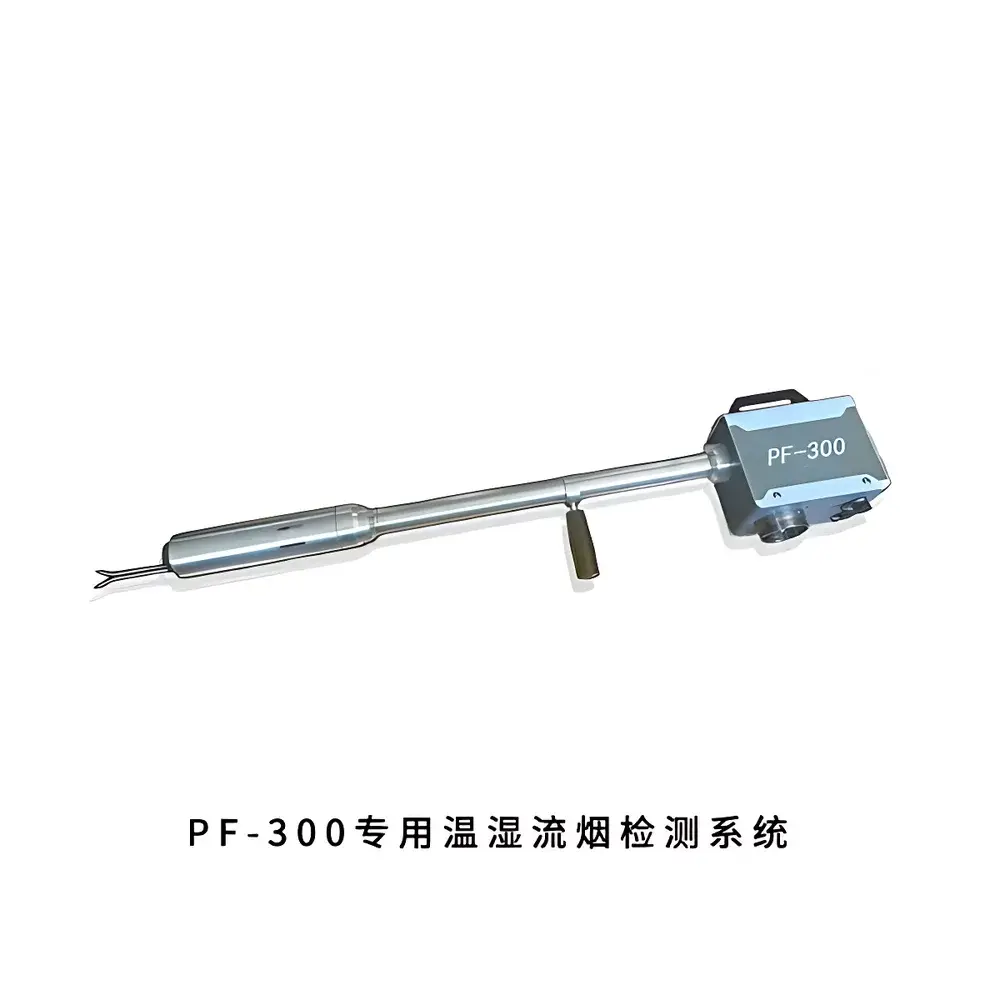
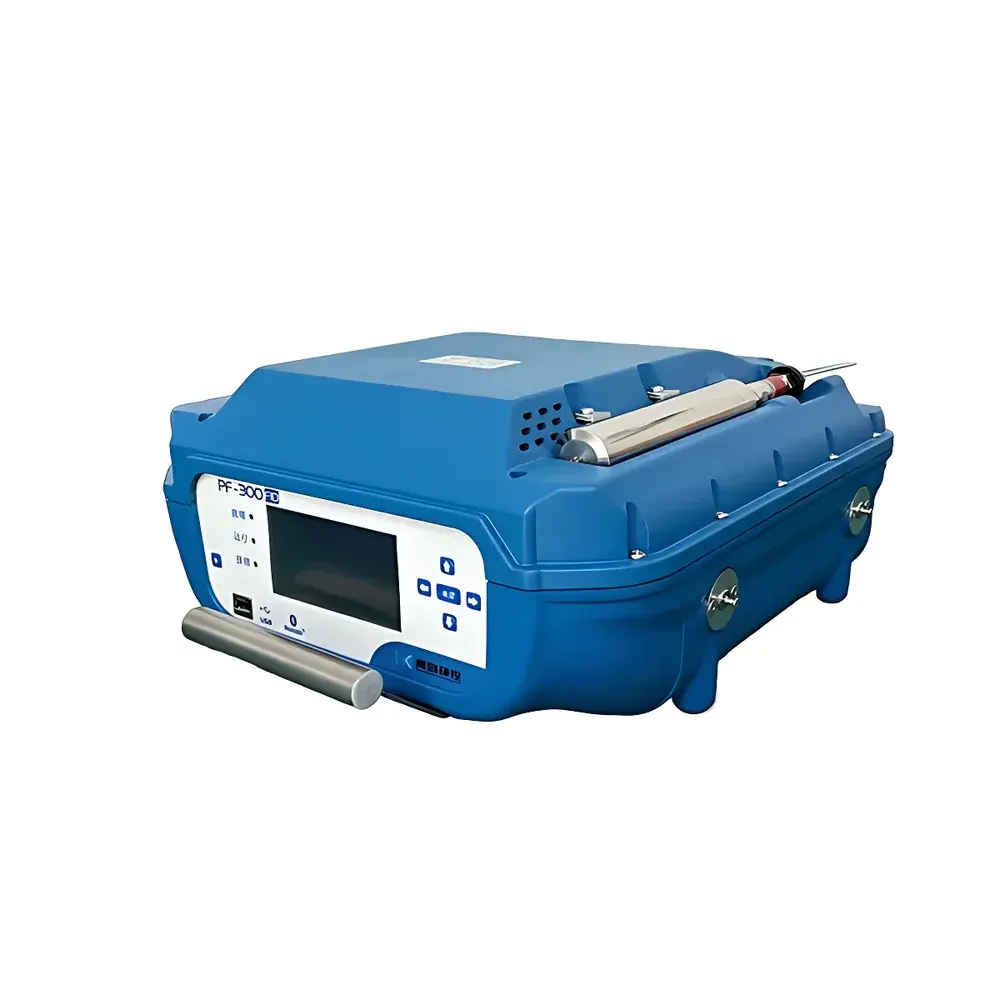
HUANKONG PF-300 Portable Methane, Total Hydrocarbons (THC), and Non-Methane Hydrocarbons (NMHC) Analyzer per HJ 1331–2023
| Brand | HUANKONG |
|---|---|
| Origin | Shandong, China |
| Manufacturer Type | Direct Manufacturer |
| Instrument Type | Portable |
| Detection Principle | Catalytic Oxidation + Flame Ionization Detection (FID) |
| Measured Parameters | Methane (CH₄), Total Hydrocarbons (THC), Non-Methane Hydrocarbons (NMHC) |
| Measurement Range | Expandable |
| Detection Limit | mg C/m³ |
| Repeatability | Low Relative Deviation |
Overview
The HUANKONG PF-300 is a field-deployable, catalytic oxidation–flame ionization detection (CO-FID) based analyzer engineered for quantitative determination of methane (CH₄), total hydrocarbons (THC), and non-methane hydrocarbons (NMHC) in ambient air, fugitive emissions at facility boundaries, and stack exhaust from stationary sources. It operates in strict accordance with the Chinese national standard HJ 1331–2023 — “Determination of Total Hydrocarbons, Methane, and Non-Methane Hydrocarbons in Exhaust Gas from Stationary Sources — Portable Catalytic Oxidation–Hydrogen Flame Ionization Detection Method” — and is validated against supplementary technical specifications including HJ 1012–2018, GB 37822–2019, and regional standards such as DB37/T 3922–2020 and DB35/T 1913–2020. The instrument implements high-temperature catalytic conversion (≥600 °C) to oxidize all non-methane organic compounds prior to FID detection, enabling selective quantification of CH₄ and NMHC via differential measurement. Its fully heated gas path — encompassing sample line, catalytic reactor, and FID detector — eliminates condensation artifacts in high-humidity or low-temperature flue gas environments, ensuring analytical integrity across diverse industrial emission conditions.
Key Features
- Compact, single-operator portable design: Net weight 4 hours continuous operation.
- Onboard gas supply system: Integrated solid-state metal hydride hydrogen storage cylinder (rechargeable via external H₂ source), zero-air generator, and certified calibration gas reservoir — all traceable to national metrological standards for field QC compliance.
- Fully heated architecture: Entire sample pathway — from inlet fitting through catalytic converter to FID jet — maintained above 180 °C to prevent adsorption, condensation, or fractionation of volatile organic compounds (VOCs).
- Dual-mode sampling: Quantitative loop injection enables simultaneous THC and CH₄ measurement from identical sample aliquots, minimizing temporal drift and improving NMHC calculation accuracy (NMHC = THC − CH₄).
- Multi-range internal calibration curves: Preloaded algorithms support rapid selection of optimal sensitivity range based on anticipated concentration levels — eliminating manual dilution or gain adjustment during field surveys.
- Real-time connectivity: Bluetooth/Wi-Fi interface enables live data streaming to Android/iOS mobile devices; supports on-site thermal printing and encrypted cloud upload compliant with enterprise data governance policies.
Sample Compatibility & Compliance
The PF-300 is validated for direct analysis of undiluted stack gas (up to 20% O₂, ≤95% RH, ≤200 °C flue temperature) and ambient/fugitive air samples. It meets structural and performance requirements outlined in HJ 1012–2018 for portable hydrocarbon analyzers, including linearity (R² ≥ 0.999), zero drift (< ±2% full scale/24 h), and span drift (< ±3% full scale/24 h). All internal gas standards are certified per CNAS-accredited reference material protocols. The analyzer supports audit-ready operation under GLP-aligned workflows, with timestamped event logs, user-accessible calibration history, and immutable raw signal archives — features aligned with regulatory expectations for data integrity in VOC enforcement monitoring.
Software & Data Management
The companion HUANKONG FieldLink™ application provides real-time instrument status visualization (FID bias voltage, catalyst temperature, H₂ pressure, flow rate), configurable alarm thresholds, and automated report generation (PDF/CSV). Data files include embedded metadata: GPS coordinates, operator ID, sampling duration, ambient T/P/RH, and QA/QC flags. Remote firmware updates are delivered over TLS-secured channels; software versioning follows semantic versioning (SemVer) conventions. Audit trails comply with principles analogous to FDA 21 CFR Part 11 for electronic records — including user authentication, action logging, and electronic signature capability where enabled by local regulatory adoption.
Applications
- Regulatory compliance monitoring at petroleum refineries, petrochemical plants, coke ovens, pharmaceutical manufacturing facilities, coating operations, textile dyeing units, and rubber compounding sites.
- Field validation and performance verification of fixed CEMS systems measuring THC/NMHC — supporting HJ 75–2017 and HJ 76–2017 QA/QC protocols.
- Rapid-response VOC leak detection and repair (LDAR) surveys, including fence-line monitoring per GB 37822–2019.
- Emergency response scenarios requiring immediate quantification of hydrocarbon plumes following process upsets or storage tank incidents.
- Research-grade emission factor development for industrial source categories under provincial or national inventory programs.
FAQ
Does the PF-300 require external hydrogen cylinders?
No — it integrates a rechargeable solid-state metal hydride hydrogen storage module rated for ≥150 analyses per charge. Optional external H₂ generator is available for extended deployment.
Can the instrument measure methane independently without calculating NMHC?
Yes — users may configure the analyzer to report CH₄ only, THC only, or NMHC (calculated) in standalone or combined modes via the FieldLink™ interface.
Is catalytic oxidation efficiency verified for complex VOC mixtures?
Per HJ 1331–2023, catalytic conversion efficiency is validated ≥95% for representative C₂–C₁₀ aliphatic/aromatic compounds at operating temperature; certificate of conformance is supplied with each unit.
How is moisture interference managed during high-humidity sampling?
The entire gas path is actively heated and insulated; no Nafion dryers or condensate traps are required — eliminating maintenance points and preserving reactive VOC species.
What optional modules are supported for integrated flue gas parameter measurement?
The PF-300 accepts plug-and-play integration with the HUANKONG THF-200 stack probe module, providing simultaneous measurement of flue gas temperature, static/dynamic pressure, volumetric flow, moisture content, and ambient barometric pressure — with automatic concentration correction per standard state (dry, 273.15 K, 101.325 kPa).







