
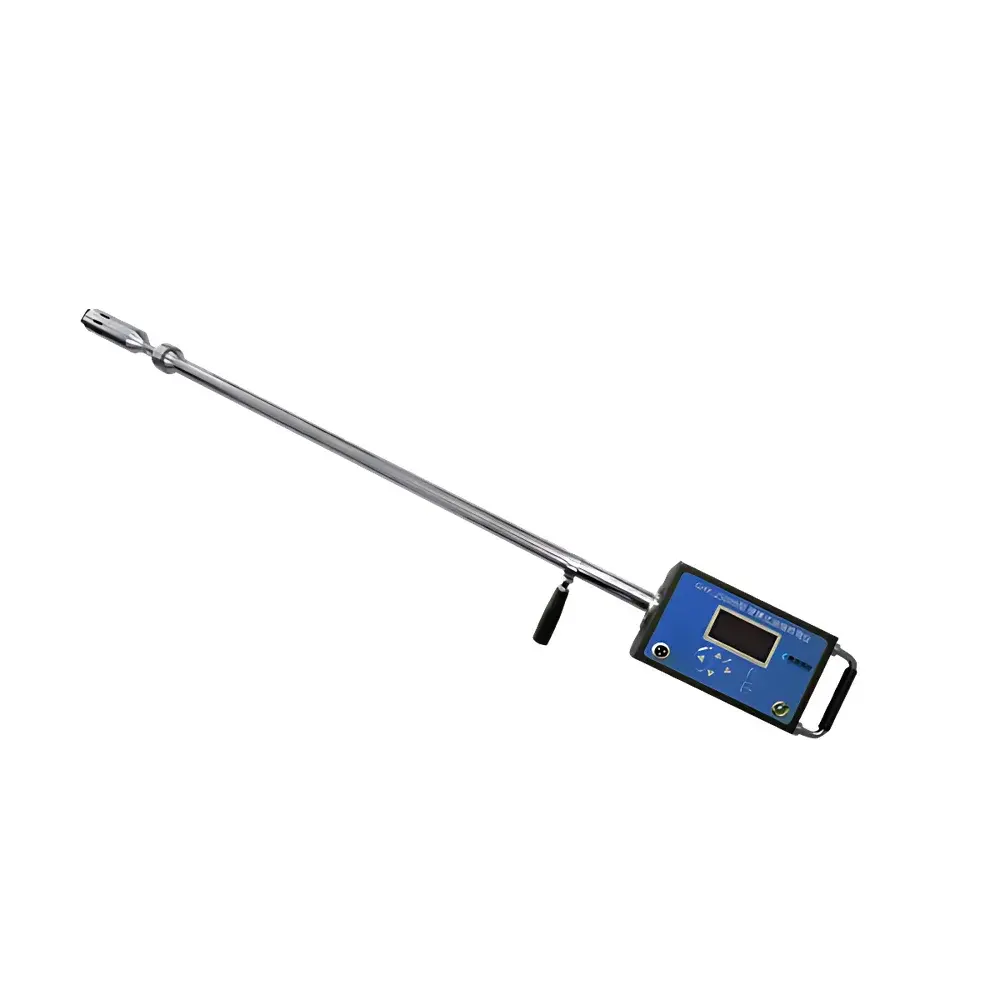
HUANKONG GHK-2500B Portable Oil Fume Concentration Analyzer
| Brand | HUANKONG |
|---|---|
| Origin | Shandong, China |
| Manufacturer Type | Direct Manufacturer |
| Country of Origin | China |
| Model | GHK-2500B |
| Price Range | USD 7,000 – 21,000 (FOB) |
| Detection Principle | Laser Light Scattering (Compliant with DB13/T 5530–2022) |
| Portability | Handheld, Field-Deployable |
| Application Scope | Commercial Kitchen Emission Monitoring, Environmental Compliance Auditing, Municipal Enforcement, Research & Education |
Overview
The HUANKONG GHK-2500B Portable Oil Fume Concentration Analyzer is a field-deployable, integrated emission measurement system engineered for regulatory-grade assessment of cooking oil fume emissions from food service establishments. It operates on the principle of laser light scattering—specifically aligned with the methodology defined in DB13/T 5530–2022 “Determination of Cooking Oil Fume Pollutants by Laser Scattering Method”—enabling quantitative, real-time detection of airborne oil aerosol mass concentration (mg/m³) and particulate matter (PM₂.₅/PM₁₀ equivalent). Unlike generic gas detectors, the GHK-2500B is purpose-built for flue gas streams containing high-humidity, thermally unstable, and chemically aggressive cooking effluents. Its optical path design incorporates temperature- and pressure-compensated signal processing to maintain measurement integrity across ambient conditions ranging from −10 °C to 50 °C and stack pressures up to ±5 kPa. The instrument meets the metrological and functional requirements of HJ 2526–2012 (“Technical Specification for Portable Cooking Oil Fume Analyzers”) and supports compliance verification against GB 18483–2001 (“Emission Standard of Cooking Oil Fume from Catering Industry”) and DB11/1488–2018 (“Emission Standard of Air Pollutants from Catering Services”).
Key Features
- Laser scattering photometer with imported optical sensor module, calibrated traceably to NIST-traceable reference aerosols
- Simultaneous dual-parameter output: oil fume concentration (mg/m³) and suspended particulate concentration (μg/m³)
- Isokinetic sampling probe with auto-aligning nozzle—maintains velocity-matched sampling per GB/T 16157–1996
- Integrated capacitive-resistive humidity sensor for real-time flue gas moisture correction (range: 0–95% RH, ±1.5% RH accuracy)
- High-stability differential pressure transducer (±0.1 Pa resolution) for dynamic flow velocity calculation
- Onboard heating system (up to 120 °C) prevents condensation-induced bias in humid exhaust streams
- Embedded smoke duct survey algorithm—automatically calculates optimal number of sampling points and axial spacing per SZDB/Z 254–2017
- Wide-temperature, high-brightness LCD (≥1000 cd/m²) with anti-glare coating for outdoor daylight readability
- Real-time display of instantaneous, time-weighted average (TWA), and peak concentration values
- Internal data logger (≥10,000 records) with timestamp, GPS-tagged location (optional), and audit trail metadata
Sample Compatibility & Compliance
The GHK-2500B is validated for use in exhaust ducts and open-flame kitchen environments where oil fume aerosols exhibit particle size distributions predominantly between 0.1–10 μm. It accommodates flue gas temperatures up to 200 °C (with optional high-temp probe) and handles condensable organic vapors without sensor poisoning. All measurement outputs comply with Chinese national and regional environmental standards, including but not limited to HJ 2526–2012, GB 18483–2001, and DB11/1488–2018. While not certified to ISO/IEC 17025 under third-party accreditation, its calibration protocol follows documented procedures traceable to national metrology institutes. Data export formats (CSV, PDF report templates) support integration into municipal environmental information platforms and internal QA/QC workflows.
Software & Data Management
The device runs embedded firmware v3.2+ with configurable averaging intervals (1–60 seconds), user-defined reporting thresholds, and automatic pass/fail flagging against local limit values. Data transfer occurs via Bluetooth 5.0 (BLE) to Android/iOS mobile applications or Windows-based desktop software (HUANKONG DataLink v2.1), which provides spectral visualization, statistical summaries (min/max/SD), and customizable report generation compliant with GLP documentation requirements. All stored measurements include immutable metadata: operator ID, calibration date, ambient T/P/humidity, and probe insertion depth. Optional cloud synchronization enables centralized fleet management for municipal enforcement agencies.
Applications
- Regulatory inspections by urban environmental protection bureaus and city administrative law enforcement teams
- Pre-compliance testing and routine monitoring at restaurants, university canteens, hotel kitchens, and central catering facilities
- Field validation of油烟净化设备 (oil fume purifier) efficiency before and after installation
- Academic research on cooking emission profiles, aerosol dynamics, and mitigation technology evaluation
- Baseline surveys and long-term trend analysis in urban air quality monitoring networks
FAQ
Does the GHK-2500B require external calibration gases or reference standards during field use?
No—calibration is performed using solid aerosol reference generators (e.g., dioctyl phthalate or corn oil mist) per HJ 2526–2012; no compressed gas cylinders are needed.
Can the instrument operate continuously inside a hot, high-humidity kitchen exhaust duct?
Yes—the heated sampling line (standard) and thermal management system ensure stable operation at duct wall temperatures up to 80 °C and relative humidity >90%.
Is the data output compatible with municipal environmental monitoring platforms?
Yes—CSV exports include all required fields per HJ 212–2017 communication protocol; API integration support is available upon request.
What maintenance intervals are recommended for sustained accuracy?
Optical window cleaning every 50 hours of cumulative operation; full system verification every 6 months or after 200 sampling events.
Does the device meet any international standards such as ISO or ASTM?
It is designed to align technically with ISO 29463-3 (high-efficiency filter testing principles) and ASTM D6331 (aerosol photometer performance criteria), though formal certification is pending.
Related Products







