
English Product Name
| Brand | OKEO |
|---|---|
| Origin | Assembled in China with Imported Core Components |
| Manufacturer Type | Authorized Distributor |
| Origin Category | Import-Integrated |
| Price | USD 2,650 (FOB China, ex-factory) |
Overview
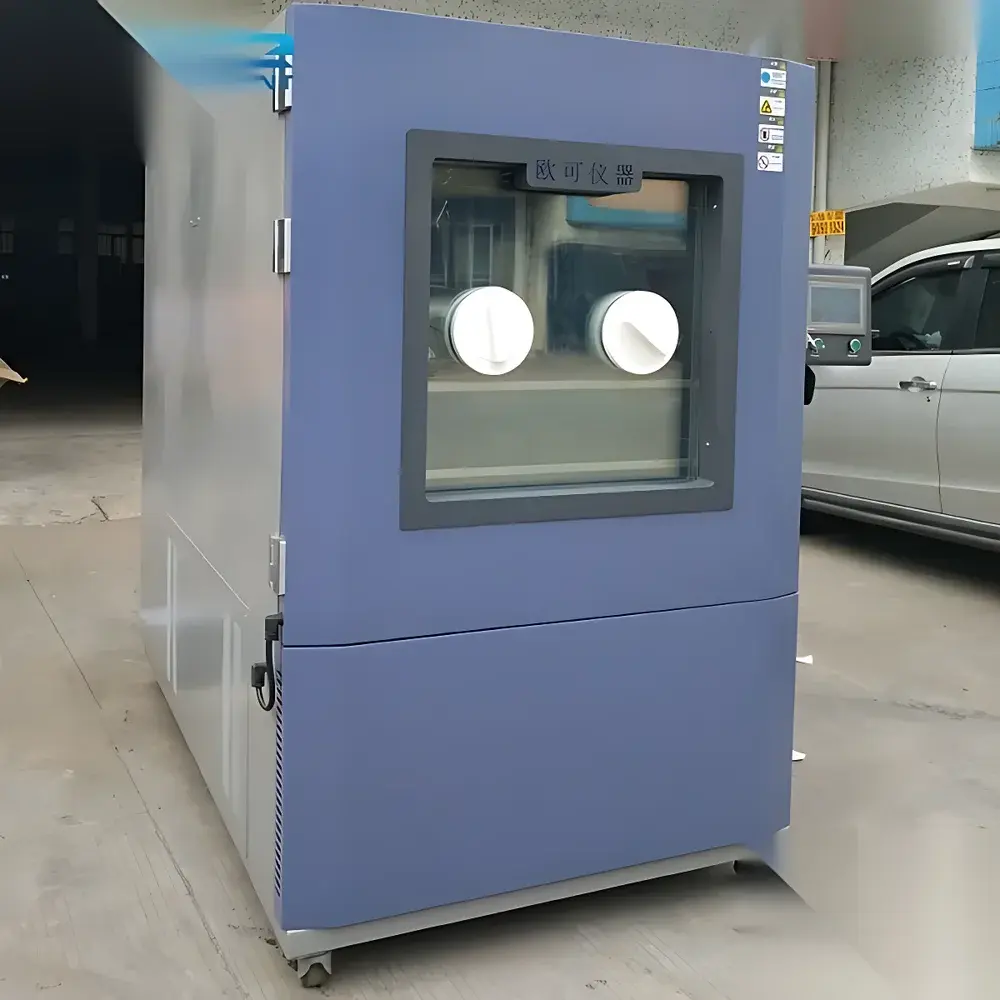
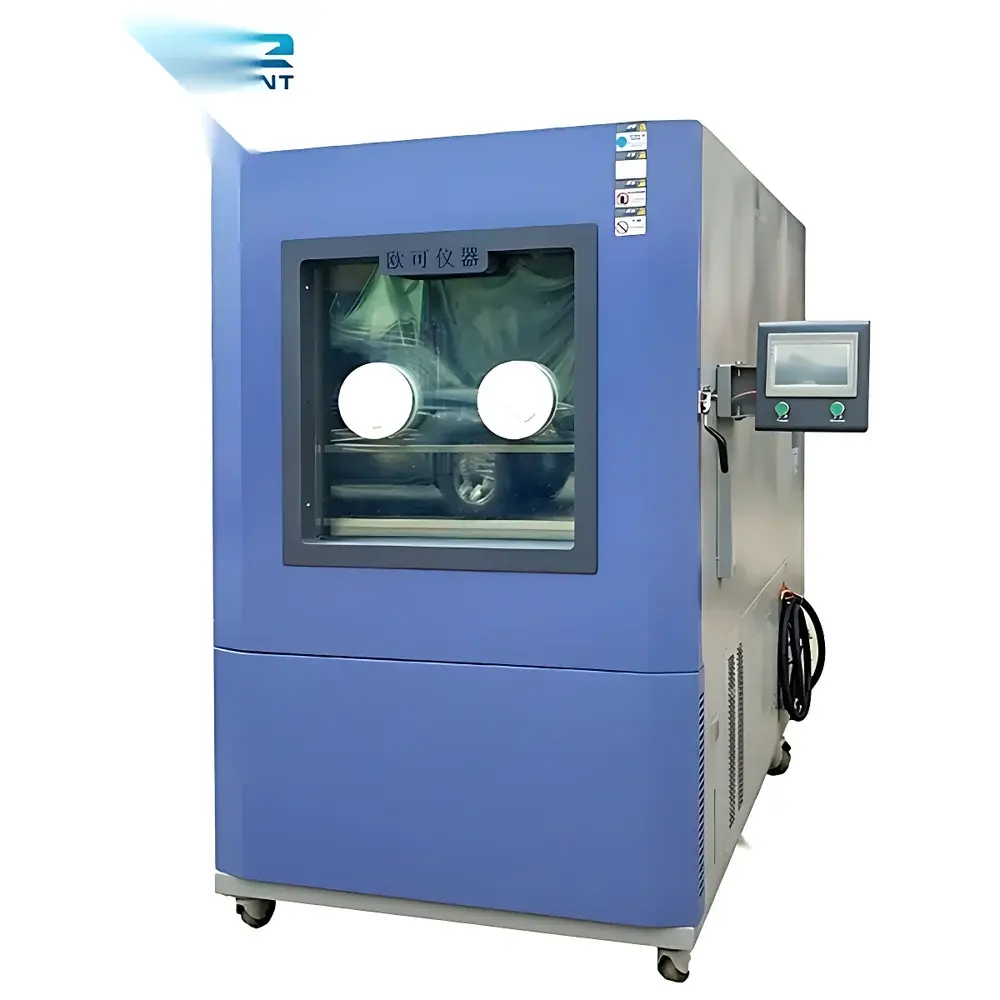
The OKEO Environmental Test Chamber is a precision-engineered temperature and humidity controlled chamber designed for reliable, long-term stability in accelerated environmental stress testing. It operates on the principle of balanced heating, cooling, humidification, and dehumidification—implemented via a Balanced Temperature & Humidity Control (BTHC) system. This architecture dynamically regulates thermal and moisture energy input to match system losses, enabling stable setpoint maintenance across wide operating ranges (typically −40 °C to +150 °C; 20–98% RH). Unlike single-stress chambers, this unit simultaneously applies controlled thermal and hygric loads—critical for validating product robustness under real-world climatic conditions. Its design prioritizes operational safety, repeatability, and compliance readiness for industrial R&D, quality assurance, and reliability engineering workflows.
Key Features
- Integrated multi-layer protection architecture: dry-run prevention for humidifier, independent overtemperature cutoff, low-water-level detection, compressor overload/overheat/overcurrent monitoring, high-pressure refrigerant switch, molded-case circuit breaker, and residual-current device (RCD) for electrical safety.
- Advanced BTHC control logic using PID algorithms with SSR-driven output—ensuring precise, drift-free regulation of both temperature and relative humidity without manual recalibration.
- Full capillary tube expansion system (replacing conventional thermostatic expansion valves), delivering superior responsiveness, load adaptability, and long-term stability during rapid ramping or dwell cycles.
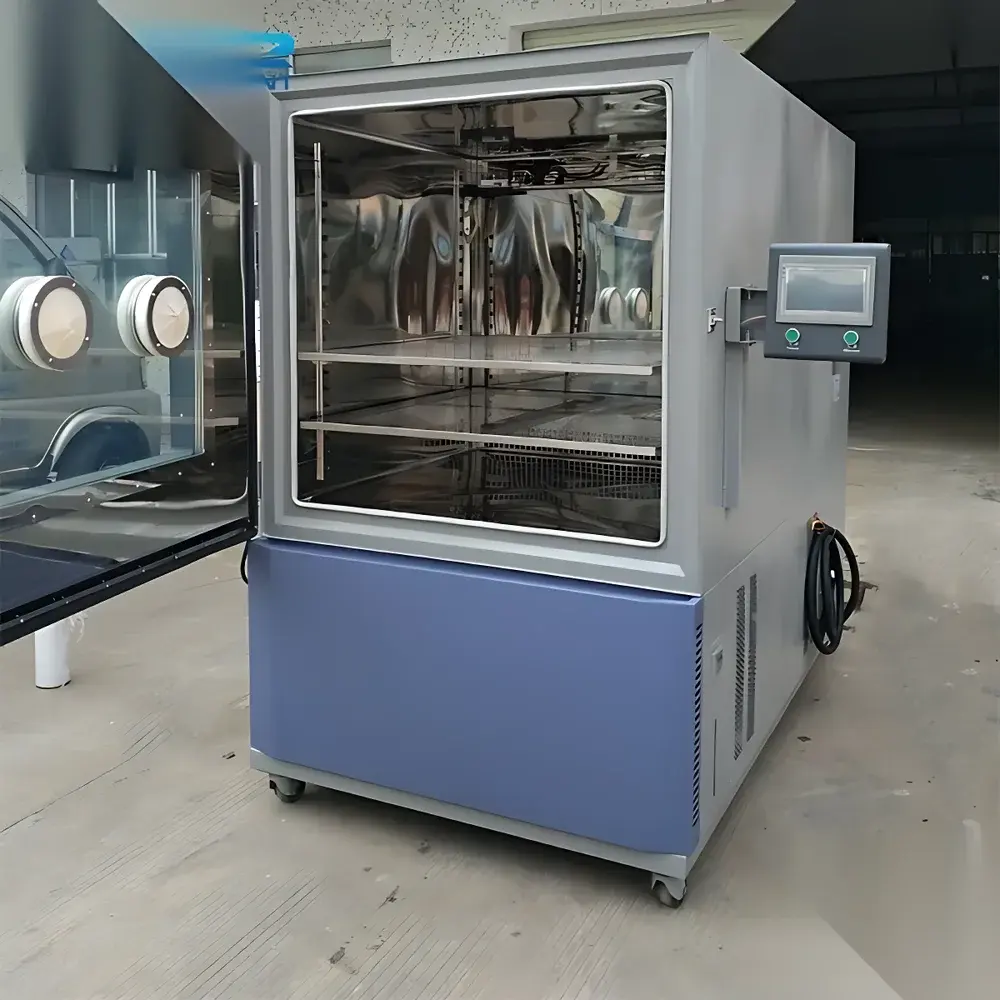
- Ergonomic curved enclosure with seamless stainless-steel interior, flat non-reactive door handle, and intuitive 7-inch capacitive touchscreen controller supporting multilingual UI and programmable test profiles.
- Air circulation optimized via centrifugal blower and ducted laminar flow design—achieving uniformity within ±0.5 °C and ±2% RH (at 25 °C/60% RH, empty chamber, per IEC 60068-3-5).
Sample Compatibility & Compliance
The chamber accommodates standard test specimens up to 500 L internal volume (custom dimensions available upon request). Its structural integrity and thermal/hygric performance are validated under no-load conditions at ambient 25 °C ±6 °C. Cooling performance requires external chilled water supply at 10–28 °C and 0.1–0.3 MPa pressure. The system complies with multiple national and international standards including GB/T 2423.1–2023 (Cold Testing), GB/T 2423.2–2023 (Dry Heat), IEC 60068-2-1 (Cold), IEC 60068-2-2 (Dry Heat), GJB 1032A–2021 (Environmental Stress Screening), MIL-STD-2164A (ESS for Electronics), and GJB 234–2022 (Quantitative ESS). All safety circuits meet IEC 61000-4 series EMC requirements and comply with CE marking directives (2014/30/EU, 2014/35/EU).
Software & Data Management
The embedded controller supports real-time logging of temperature, humidity, alarm status, and system faults at user-defined intervals (1–600 seconds). Data export is available via USB flash drive in CSV format. Optional Ethernet connectivity enables remote monitoring through Modbus TCP or OPC UA protocols—facilitating integration into centralized lab management systems. Audit trails, user access levels (admin/operator), and electronic signature support align with GLP and GMP documentation requirements per FDA 21 CFR Part 11 when paired with validated software packages. Calibration certificates traceable to NIM (National Institute of Metrology, China) are provided with each shipment.
Applications
This chamber serves critical roles in electronics component qualification (e.g., PCB solder joint reliability, capacitor aging), automotive ECU validation under cyclic humidity exposure, pharmaceutical packaging permeability studies, aerospace material outgassing screening, and battery cell thermal runaway simulation. It is routinely deployed in QC labs for incoming inspection of raw materials, in-process verification of coating adhesion under humidity cycling, and final product acceptance testing prior to market release. Its balanced control strategy ensures minimal thermal shock during transitions—making it suitable for sensitive optical assemblies and MEMS devices requiring minimal mechanical stress.
FAQ
What does “high domestic content” mean in this context?
It indicates that the chamber is assembled and quality-controlled in China using a combination of locally sourced mechanical structures (cabinet, insulation, air handling) and imported core subsystems—including refrigeration compressors, humidity sensors (Vaisala HUMICAP®), PID controllers, and SSR modules—ensuring performance parity with fully imported equivalents.
Is the temperature ramp rate guaranteed under load?
No. The published ramp rates (e.g., 3 °C/min) reflect air temperature change in an empty chamber per IEC 60068-3-5. Actual rates decrease predictably with specimen mass, thermal mass, and surface emissivity—users should conduct load-specific characterization per ISO/IEC 17025 guidelines.
Can this chamber operate continuously at 85 °C / 85% RH?
Yes. Continuous operation at this stress point is supported by redundant humidifier heating elements, corrosion-resistant stainless-steel water reservoir, and active condensate management—validated for ≥1,000-hour uninterrupted duty cycles.
Does it support automated test sequencing?
Yes. The controller supports up to 99 programmable segments per profile, with jump-to-step, loop count, and hold-on-alarm functions—enabling complex sequences such as “-25 °C/1h → 25 °C/60%RH/4h → 85 °C/85%RH/16h” per JEDEC JESD22-A101.
What maintenance is required for long-term reliability?
Quarterly cleaning of condenser coils and humidifier tank; biannual calibration verification of temperature/humidity sensors; annual replacement of desiccant in the dehumidification bypass loop (if equipped); and routine inspection of refrigerant line integrity per ASHRAE Guideline 3.



