
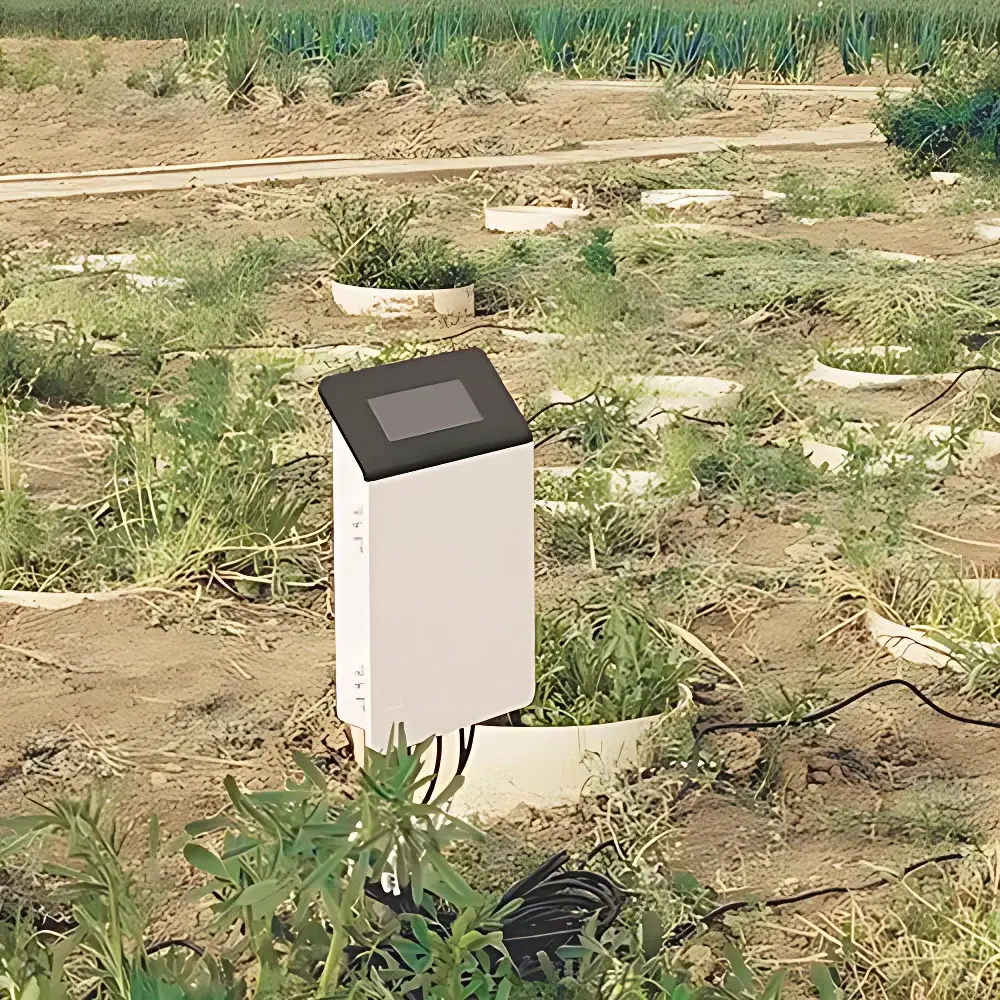
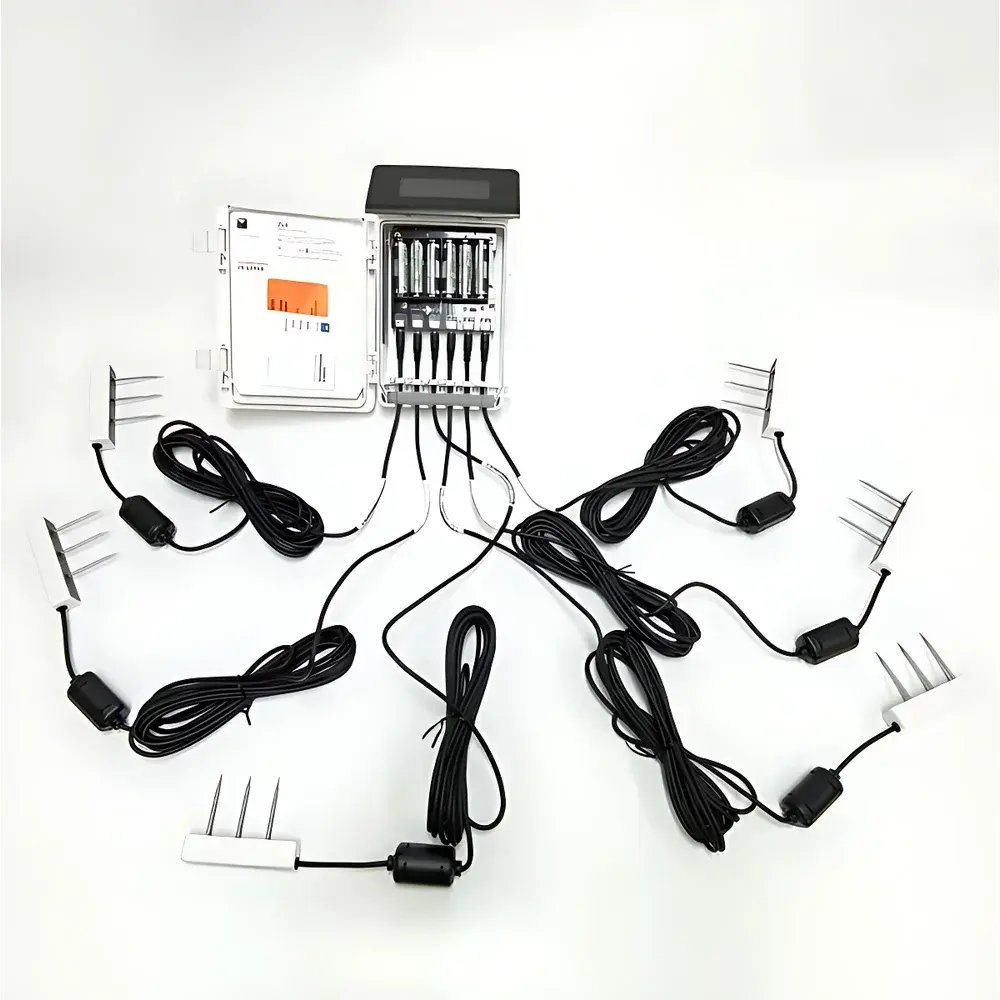
METER ZL6 Soil Water Content and Water Potential Monitoring System
| Brand | METER |
|---|---|
| Origin | USA |
| Model | ZL6 Soil Water Content and Water Potential Monitoring System |
| Instrument Type | Soil Moisture and Water Potential Analyzer |
| Channel Capacity | 6-channel data logger |
| Communication | GPRS-enabled, cloud-connected via Zentra Cloud |
| Power Supply | Solar-rechargeable NiMH battery |
| Enclosure Dimensions | 14.9 × 25 × 6.3 cm |
| Compliance | Designed for long-term field deployment in compliance with ISO 11274 (soil water retention), ASTM D5859 (in-situ soil moisture measurement), and GLP-aligned data traceability per FDA 21 CFR Part 11 requirements when configured with audit-trail-enabled Zentra Cloud subscription |
Overview
The METER ZL6 Soil Water Content and Water Potential Monitoring System is a modular, field-deployable environmental sensing platform engineered for high-fidelity, long-term quantification of soil hydraulic properties. It integrates precision sensors—based on dielectric spectroscopy (for volumetric water content, VWC) and thermodynamic equilibrium principles (for matric potential)—with a low-power, 6-channel edge data logger and secure cloud infrastructure. Unlike time-domain reflectometry (TDR) systems, which rely on complex pulse propagation analysis and suffer from high cost and signal attenuation in saline or heterogeneous soils, the ZL6 leverages robust frequency-domain dielectric sensing at 70 MHz—a scientifically validated compromise that minimizes sensitivity to bulk electrical conductivity (EC) and temperature drift while maintaining accuracy across diverse soil textures, from sandy loam to clay-rich profiles. The system’s core architecture supports simultaneous acquisition of VWC, matric potential (ψm), temperature, and bulk EC—enabling comprehensive characterization of soil water status within the plant-available range (−10 kPa to −1500 kPa) and beyond.
Key Features
- 6-channel ZL6 data logger with embedded GPS, Bluetooth 4.2, and GPRS modem—enables autonomous, solar-powered operation with <10 mW average power draw during active sampling cycles
- Modular sensor compatibility: Accepts all METER digital and analog sensors—including TEROS 11 (VWC/temperature), TEROS 12 (VWC/temperature/EC), TEROS 21 (matric potential/temperature via ceramic equilibration), and TEROS 32 (high-resolution tensiometric ψm measurement in wet-range soils)
- Field-proven durability: IP68-rated enclosures; stainless-steel sensor probes; epoxy-sealed electronics; operational range: −25°C to +50°C; validated performance at altitudes up to 5,000 m (e.g., Qinghai-Tibet Plateau deployments)
- High-resolution temporal monitoring: Configurable sampling intervals from 1 minute to 24 hours—supports diurnal transpiration flux analysis and irrigation scheduling at sub-daily resolution
- Zentra Cloud integration: End-to-end encrypted data transmission; role-based user access control; automated metadata tagging (location, sensor ID, calibration history); export-ready CSV/NetCDF formats compliant with FAO-56 and USDA-ARS data standards
Sample Compatibility & Compliance
The ZL6 system is validated for use in mineral soils, organic substrates (e.g., peat, coco coir), and hydroponic media. Sensor selection is application-specific: TEROS 11 and TEROS 12 provide calibrated VWC across salinity ranges up to 10 dS/m; TEROS 21 operates reliably from −1 kPa to −100 kPa (dry end), leveraging pre-characterized ceramic moisture release curves traceable to NIST-standardized gravimetric protocols; TEROS 32 covers −0.1 kPa to −80 kPa (wet end) with ±0.5 kPa accuracy and <1% hysteresis over 12-month field exposure. All sensors meet IEC 60529 (IP68) and MIL-STD-810G (shock/vibration) specifications. Data integrity complies with GLP/GMP documentation requirements when paired with Zentra Cloud’s optional 21 CFR Part 11 audit trail module—including electronic signatures, change logs, and immutable timestamping.
Software & Data Management
Zentra Cloud serves as the central analytical interface—accessible via web browser or iOS/Android mobile app. Users configure sampling schedules, apply site-specific calibration offsets (e.g., texture-corrected εr–VWC relationships), and generate time-series visualizations with overlay capabilities (e.g., VWC vs. ψm hysteresis loops). The platform supports automated anomaly detection (e.g., sensor drift alerts based on inter-sensor consistency checks), batch processing of multi-depth profiles, and API-driven integration with third-party platforms such as CropX, FieldView, or custom GIS workflows. Raw sensor outputs are stored with full provenance: firmware version, battery voltage, signal-to-noise ratio, and diagnostic flags—ensuring full traceability for peer-reviewed publications or regulatory submissions.
Applications
- Agricultural water management: Real-time deficit irrigation triggering, root-zone water balance modeling, and yield response curve development under variable climate regimes
- Ecological research: Quantifying ecohydrological partitioning (evapotranspiration vs. deep drainage) in watershed-scale studies and restoration monitoring
- Soil physics laboratories: Validation of pedotransfer functions, hydraulic conductivity estimation via inverse modeling (e.g., HYDRUS-1D), and unsaturated zone process characterization
- Civil infrastructure: Monitoring embankment stability, landfill cover performance, and green roof substrate moisture dynamics
- Climate observatories: Long-term trend analysis of soil desiccation indices and permafrost active layer thaw depth proxies
FAQ
How does the ZL6 system differentiate between soil water content and water potential measurements?
It employs two physically distinct principles: VWC is derived from 70 MHz dielectric permittivity (εr) using calibrated polynomial relationships, while matric potential is determined either by ceramic equilibration (TEROS 21) or direct tensiometric pressure transduction (TEROS 32), both referenced to atmospheric pressure.
Can the ZL6 operate without cellular connectivity?
Yes—the logger stores up to 8 MB of data locally (equivalent to ~1 year of 15-minute interval logging across 6 sensors) and supports USB or Bluetooth retrieval. GPRS is optional for remote telemetry.
What calibration is required before deployment?
Factory calibration is provided for all sensors. Field validation against gravimetric sampling is recommended for site-specific texture correction; Zentra Cloud includes tools for post-hoc calibration curve adjustment using user-supplied reference data.
Is the system compatible with third-party sensors?
Only METER-branded digital sensors (SDI-12 or Modbus RTU) are natively supported. Analog sensors require external signal conditioning and are not guaranteed for accuracy or cloud synchronization.
How is data security ensured in Zentra Cloud?
All data transmissions use TLS 1.2+ encryption; stored data is encrypted at rest using AES-256; account access enforces two-factor authentication (2FA) and session timeout policies aligned with NIST SP 800-63B.
Related Products







