
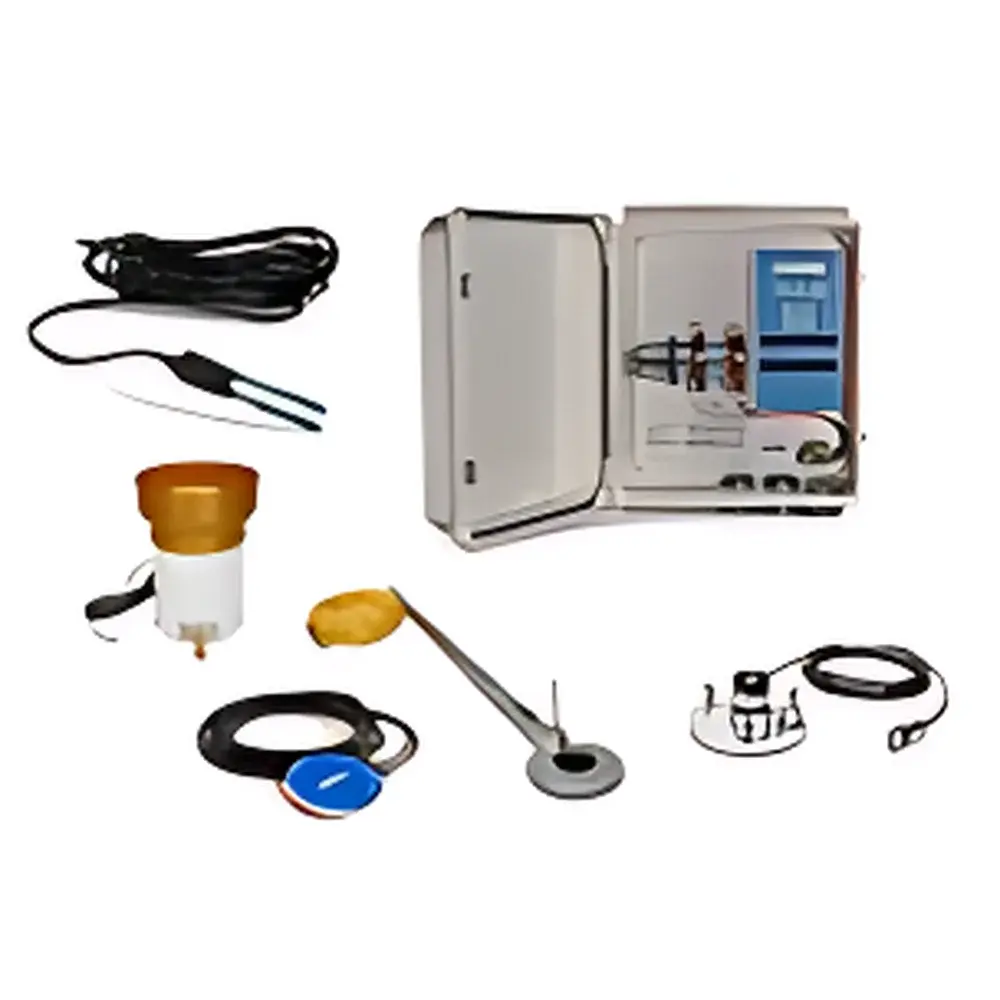
LI-COR Biomet Environmental Monitoring System
| Brand | LI-COR |
|---|---|
| Origin | USA |
| Model | Biomet |
| Instrument Type | Integrated Eddy Covariance-Compatible Biometeorological Sensor System |
| Compliance | Designed for ASTM D7289, ISO 16485, and FLUXNET-compatible data acquisition frameworks |
| Data Synchronization | Time-synchronized with LI-COR gas analyzers (e.g., LI-7200/7810) and ultrasonic anemometers (e.g., LI-7500A/RS) via DAqM module |
| Software Integration | Fully compatible with SmartFlux® and EddyPro® v8.2+ for flux partitioning, gap-filling, and uncertainty propagation |
Overview
The LI-COR Biomet Environmental Monitoring System is a modular, research-grade biometeorological sensor suite engineered for long-term, high-fidelity eddy covariance (EC) flux networks. It delivers synchronized, low-frequency environmental measurements—including air temperature, relative humidity, precipitation, photosynthetically active radiation (PAR), global solar irradiance, soil moisture, soil heat flux, and net radiation—precisely time-aligned with high-frequency EC gas exchange and turbulence data. Unlike standalone weather stations, Biomet is purpose-built to support the physical interpretation of ecosystem–atmosphere exchange processes by providing co-located, traceable, and metrologically consistent ancillary data required for flux correction, energy balance closure analysis, and physiological modeling. All sensors are selected for field durability, low power consumption, and compatibility with LI-COR’s DAqM (Data Acquisition Module) architecture, ensuring seamless integration into SmartFlux®-managed EC observatories operating under FLUXNET, AmeriFlux, or ICOS protocols.
Key Features
- Time-synchronized data acquisition: DAqM modules sample all Biomet sensors at 1 Hz with microsecond-level timestamp alignment to EC raw data streams (e.g., LI-7500A, LI-7200), enabling rigorous post-hoc flux partitioning and quality control.
- Modular expandability: Up to four DAqM units can be daisy-chained via RS-485, supporting >72 analog inputs and full SDI-12, digital I/O, and switch-controlled actuation for auxiliary devices (e.g., shutter controls, valve drivers).
- Robust power resilience: Optional DRM (Data Recovery Module) integrates regulated 12 VDC output, battery-backed memory (32 MB flash), and automatic switchover to internal rechargeable battery during mains failure—ensuring uninterrupted acquisition of critical low-frequency variables for gap-filling workflows.
- Traceable sensor calibration: Vaisala HMP155 (temperature/humidity), LI-COR LI-190R/LI-200R (PAR/solar), Kipp & Zonen CNR4/NR Lite2 (net radiation), Stevens Hydra Probe II (soil water content), and Hukseflux HFP01SC (self-calibrating soil heat flux) each meet NIST-traceable calibration standards with documented uncertainty budgets.
- Field-hardened mechanical design: All sensors feature IP67-rated enclosures, anodized aluminum housings, acrylic diffusers, stainless-steel fasteners, and O-ring seals—validated for continuous operation across -40 °C to +80 °C ambient conditions and 0–95% RH (non-condensing).
Sample Compatibility & Compliance
The Biomet system is validated for deployment in terrestrial ecosystems including forests, grasslands, croplands, tundra, and wetlands. Sensor selection adheres to FLUXNET Best Practices (Baldocchi et al., 2001; Papale et al., 2006) and supports compliance with ISO 16485 (soil moisture measurement), ASTM D7289 (radiation instrumentation), and US EPA Method IO-3 (ambient meteorological monitoring). Data structures conform to the AmeriFlux Level 1–2 processing hierarchy and are directly ingestible into FluxSuite™ cloud platform for automated QA/QC, metadata annotation, and export to NetCDF CF-1.7-compliant formats. The DAqM firmware implements configurable sampling priorities, enabling user-defined data retention policies during power interruption per GLP-aligned audit trails.
Software & Data Management
Biomet data is acquired and managed exclusively through LI-COR’s SmartFlux® software environment, which provides real-time visualization, sensor diagnostics, and integrated EddyPro® workflow orchestration. DAqM modules expose standardized Modbus RTU registers over RS-485, enabling third-party SCADA integration (e.g., Campbell Scientific LoggerNet, LabVIEW DAQmx). DRM module logs include timestamped battery voltage, input power status, and sensor health flags—stored with millisecond resolution for forensic power-loss analysis. All raw data is written to FAT32-formatted microSD cards or streamed via Ethernet to remote servers using FTP/SFTP or MQTT protocols. Audit logging meets FDA 21 CFR Part 11 requirements when deployed with SmartFlux® Server Edition and role-based access control.
Applications
- Ecosystem-scale carbon, water, and energy balance studies requiring ancillary meteorological drivers for eddy covariance flux corrections (e.g., u* filtering, Webb-Pearman-Leuning corrections, energy balance closure diagnostics).
- Long-term ecological research (LTER) sites requiring multi-decade sensor stability and intercalibration consistency across networked towers.
- Agricultural micrometeorology for irrigation scheduling, evapotranspiration modeling (e.g., FAO-56 Penman-Monteith), and phenocam-integrated vegetation index derivation.
- Soil–plant–atmosphere continuum (SPAC) modeling, where simultaneous measurements of soil thermal conductivity (via HFP01SC self-calibration), volumetric water content (Hydra Probe II), and surface radiation budget (CNR4) constrain root-zone water dynamics.
- Climate change impact assessments requiring traceable, interoperable biomet data compliant with GCOS Surface Network (GSN) and WMO GAW station reporting standards.
FAQ
What is the primary synchronization mechanism between Biomet sensors and eddy covariance instruments?
Biomet data is acquired via LI-COR DAqM modules, which share the same GPS-disciplined 10 MHz clock reference as LI-COR gas analyzers and ultrasonic anemometers—ensuring sub-millisecond temporal alignment without post-acquisition interpolation.
Can Biomet operate independently of an eddy covariance system?
Yes. While optimized for EC integration, the DAqM+DRM architecture supports autonomous deployment as a Class I FLUXNET-compliant biomet station, with full data logging, remote telemetry, and SmartFlux® offline processing capabilities.
How does the DRM module ensure data continuity during extended power outages?
The DRM includes a maintenance-free LiFePO₄ backup battery (rated for >500 cycles), intelligent charge management, and priority-based data buffering—retaining up to 35 days of 1-Hz Biomet data even if main power remains offline.
Are calibration certificates provided for individual sensors?
Yes. Each Vaisala HMP155, LI-COR LI-190R/LI-200R, Kipp & Zonen CNR4, Stevens Hydra Probe II, and Hukseflux HFP01SC ships with NIST-traceable calibration reports valid for 24 months from date of manufacture.
Is Phenocam integration supported natively within SmartFlux?
Yes. StarDot NetCam SC (Phenocam) images are ingested, geotagged, and archived in FluxSuite™ alongside Biomet time series, enabling pixel-level NDVI time series extraction and automated phenophase detection via embedded machine learning models.







