
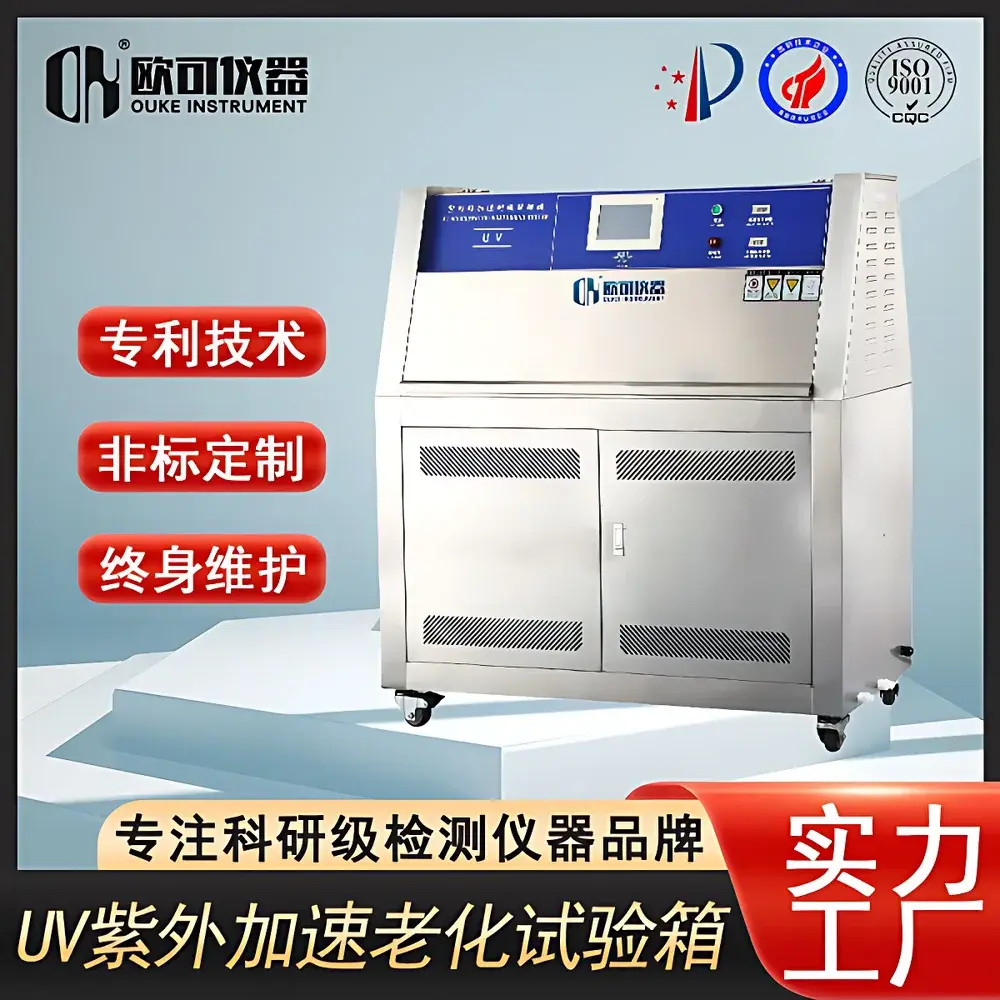
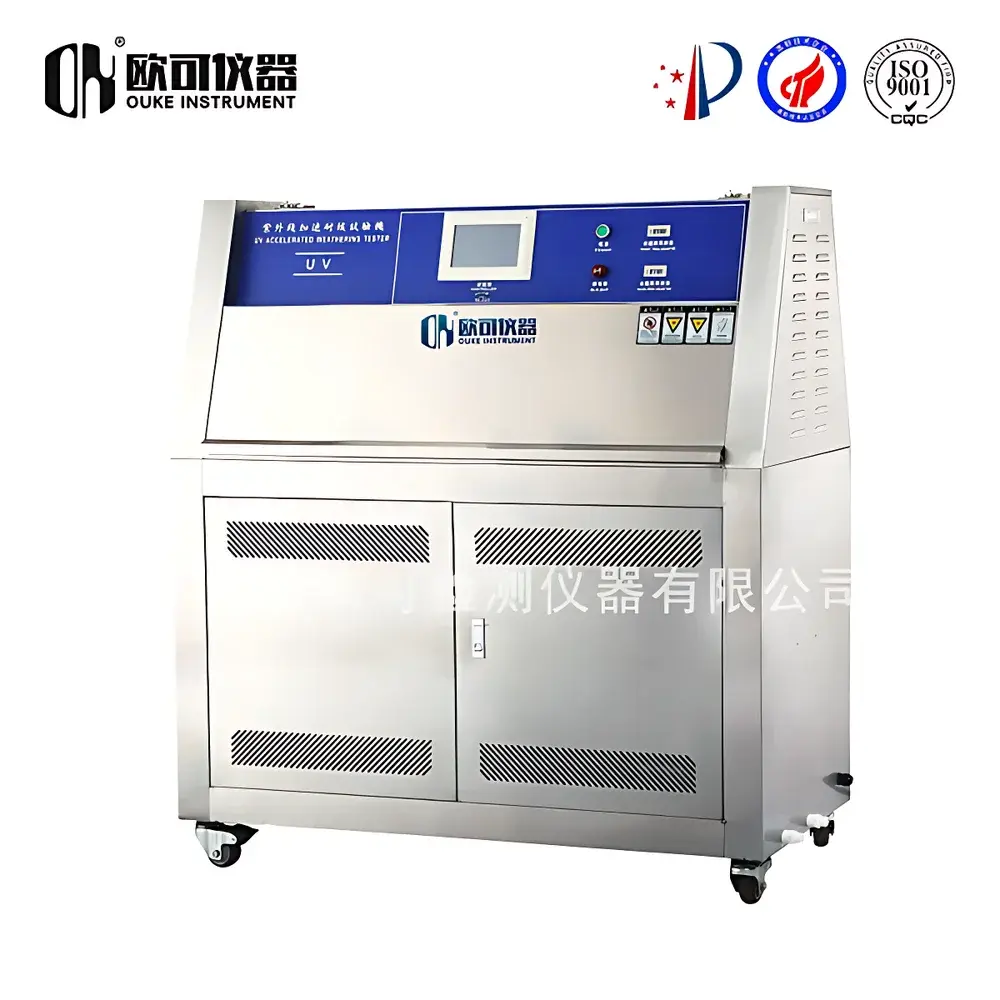
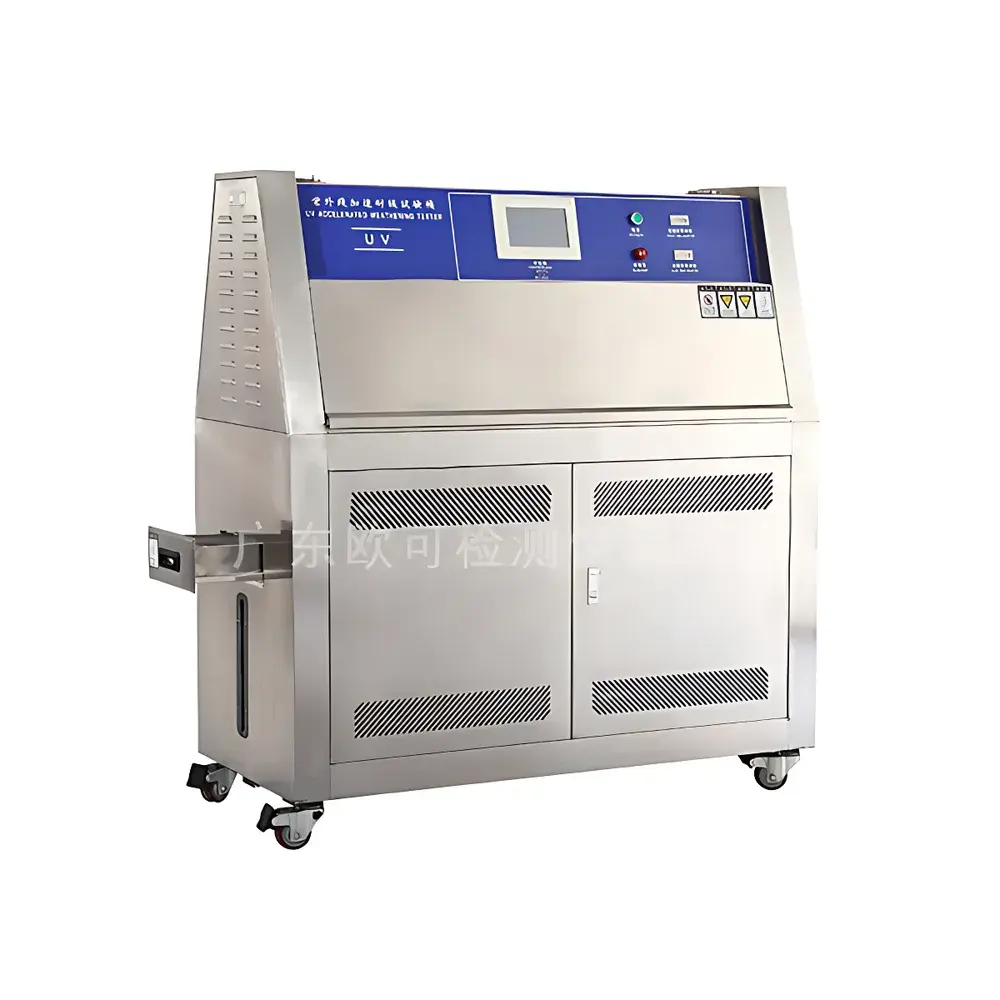
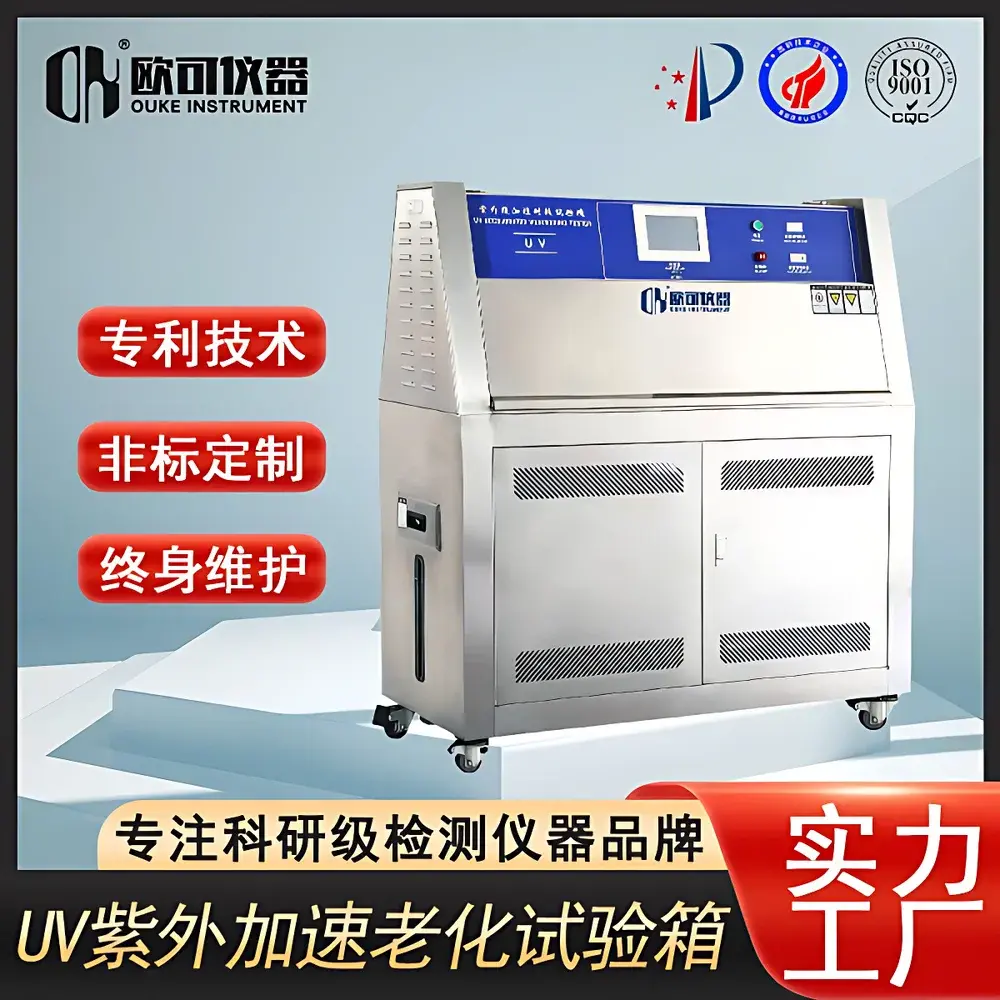
OK UV Aging Test Chamber OK-UV-290.02
| Brand | OK Instruments |
|---|---|
| Origin | Guangdong, China |
| Manufacturer Type | Direct Manufacturer |
| Product Origin | Domestic (China) |
| Model | OK-UV-290.02 |
| Humidity Range | ≥95% RH (in-chamber actual value) |
| Lamp Power | 40 W per tube |
| Irradiance Range | 0.72 W/m² |
| Exposure Time | 1–9999 h (adjustable) |
| Illumination Temperature Range | RT to 70 °C |
| UV Wavelength Range | 280–400 nm |
| Chamber Internal Dimensions (L×W×H) | 1170 × 400 × 400 mm |
Overview
The OK UV Aging Test Chamber OK-UV-290.02 is a precision-engineered environmental test system designed for accelerated ultraviolet (UV) exposure testing of polymeric materials, coatings, plastics, elastomers, and textiles. It operates on the principle of controlled fluorescent UV irradiation—mimicking the photochemical degradation mechanisms induced by solar UV radiation in real-world outdoor environments. Unlike broad-spectrum xenon arc or carbon arc sources, this chamber utilizes calibrated UVA-340 or UVB-313 fluorescent lamps to deliver spectrally defined UV energy within the 280–400 nm range, enabling reproducible simulation of short-wave UV stress under regulated thermal and hygrothermal conditions. The system supports standardized cyclic exposures—including UV irradiation, condensation, and optional spray—to replicate diurnal weathering patterns such as daylight photolysis followed by nighttime moisture deposition. Its architecture conforms to fundamental requirements of ISO 4892-3, ASTM G154, ASTM D4329, and GB/T 16422.3, making it suitable for R&D validation, QC release testing, and comparative formulation studies in regulated industrial settings.
Key Features
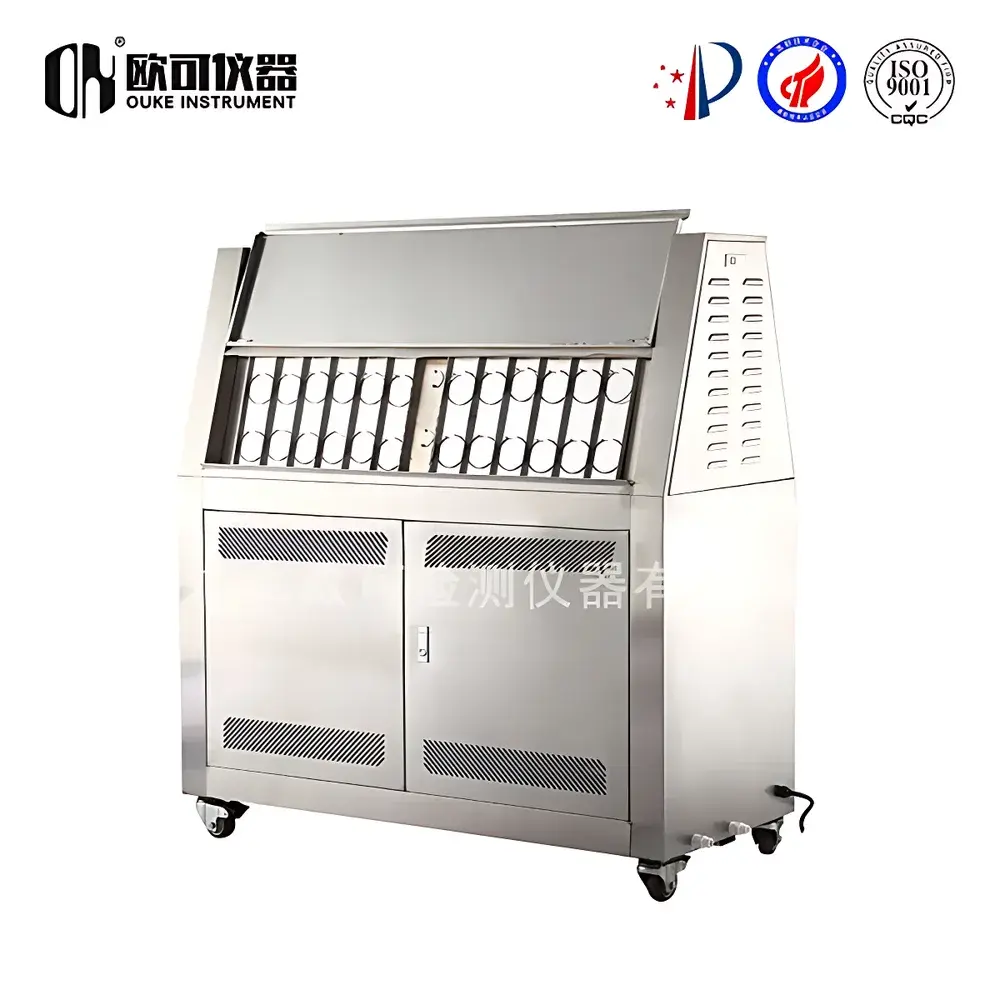
- Stainless steel interior chamber (1170 × 400 × 400 mm) with corrosion-resistant finish and optimized reflectivity for uniform irradiance distribution
- Dual-lamp compatibility: Supports both UVA-340 (peak at 340 nm, solar-spectrum matched) and UVB-313 (peak at 313 nm, high-acceleration mode) fluorescent tubes (40 W per lamp)
- Precise irradiance control: Fixed-output design calibrated to 0.72 W/m² at specimen plane (340 nm), compliant with standard reference conditions for comparative aging studies
- Thermal regulation: Adjustable illumination temperature from ambient (RT) up to 70 °C with ±2 °C stability over time
- High-humidity condensation capability: Achieves ≥95% RH internally to simulate dew formation during dark cycles—critical for hydrolytic degradation assessment
- Programmable exposure timer: Digital controller enables user-defined exposure durations from 1 hour to 9999 hours, supporting multi-step sequences
- Robust mechanical construction: Integrated lamp holders, sample racks with adjustable tilt angles (0°–45°), and front-access viewing window with UV-blocking glass
Sample Compatibility & Compliance
The OK-UV-290.02 accommodates flat-sheet specimens up to 100 mm × 100 mm (standard rack configuration), with customizable fixtures available for irregular geometries including molded parts, extrusions, and coated panels. It is routinely deployed for evaluating weathering resistance of thermoplastics (e.g., PP, ABS, PC, PVC), engineering resins (e.g., nylon, PBT), automotive clearcoats, architectural acrylics, silicone sealants, and UV-stabilized geotextiles. All operational parameters align with the procedural constraints outlined in ISO 4892-3 Annex A (fluorescent UV exposure methods) and ASTM G154 Section 6 (equipment qualification criteria). While not equipped with closed-loop irradiance feedback (i.e., no “SunEye”-type sensor), its fixed-output lamp system ensures inter-laboratory repeatability when lamps are replaced per manufacturer-recommended intervals (typically every 1600–2000 h). Calibration certificates traceable to national standards can be provided upon request for GLP-compliant documentation workflows.
Software & Data Management
This model features an embedded microprocessor-based controller with LED display and tactile keypad interface—designed for reliability in continuous operation without dependency on external PCs or proprietary software suites. Real-time monitoring includes elapsed exposure time, setpoint temperature, and lamp-on status. Data logging is manual via timestamped operator records; however, optional RS-232 or USB interfaces (available as field-upgrade kits) enable integration with laboratory information management systems (LIMS) or custom SCADA platforms for automated audit trails. For regulatory compliance (e.g., FDA 21 CFR Part 11, ISO/IEC 17025), users may implement supplementary electronic logbooks with role-based access controls and digital signature validation. Firmware updates are delivered via secure download and require physical confirmation to maintain configuration integrity.
Applications
- Accelerated weathering screening of plastic components for automotive interiors and exteriors
- Comparative evaluation of UV stabilizer packages (HALS, benzotriazoles, triazines) in polymer compounding
- Correlation studies between QUV-type exposure and natural outdoor exposure (e.g., Florida, Arizona) for service-life prediction modeling
- Quality assurance testing of powder-coated metal substrates per AAMA 2605 or ISO 20344
- Photostability assessment of medical device polymers subject to ISO 10993-12 biocompatibility protocols
- Development of UV-resistant encapsulants for photovoltaic modules (IEC 61215 qualification support)
FAQ
What UV lamp types are compatible with the OK-UV-290.02?
UVA-340 and UVB-313 fluorescent tubes (G13 base, 40 W) are supported. Lamp selection must align with test standard requirements—UVA-340 for realistic solar simulation, UVB-313 for aggressive acceleration.
Does the chamber include condensation or water spray functionality?
Condensation is standard via bottom-mounted humidity reservoir and heated chamber walls. Spray functionality is not included but can be added as a factory-installed option (OK-UV-Spray-Kit).
Is irradiance calibration traceable to NIST or equivalent metrology institutes?
Yes—calibration reports with uncertainty budgets are available upon request, referencing ISO/IEC 17025-accredited third-party laboratories.
How often should UV lamps be replaced to maintain test validity?
Per ISO 4892-3 guidelines, lamps should be replaced after 1600 h of cumulative operation or at 80% of initial spectral output—whichever occurs first. OK Instruments provides lamp life tracking templates.
Can this unit be used for ISO 11341 (rubber—artificial weathering) testing?
Yes, when configured with UVA-340 lamps and operated within specified irradiance and temperature limits, it satisfies the core exposure conditions of ISO 11341 Clause 6.2.



