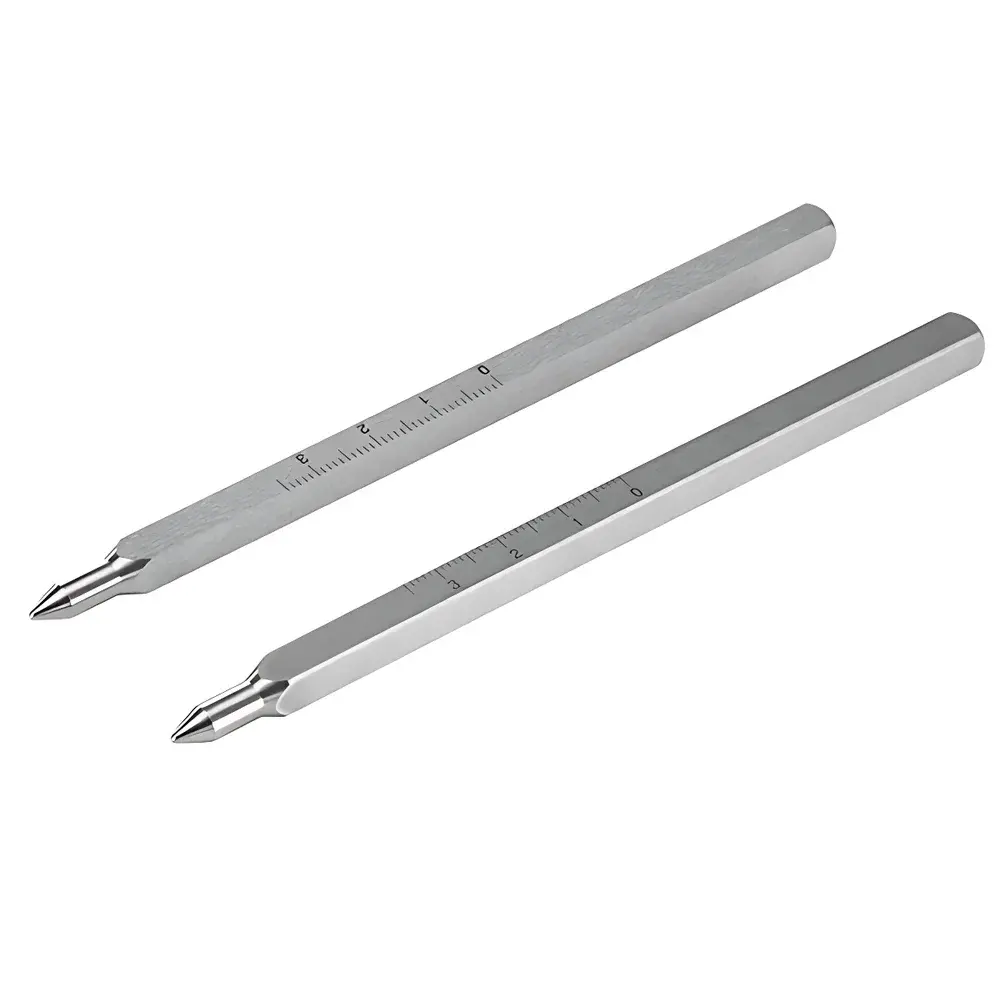
RWD 68302 Rat 45° Ear Bar
| Brand | RWD |
|---|---|
| Origin | Shenzhen, China |
| Manufacturer Type | Original Equipment Manufacturer (OEM) |
| Country of Origin | China |
| Model | 68302 |
| Pricing | Available upon Request |
Overview
The RWD 68302 Rat 45° Ear Bar is a precision-engineered stereotaxic accessory designed specifically for secure, reproducible head fixation of adult rats during neuroscientific, electrophysiological, or imaging experiments. Unlike conventional ear bars with acute or pointed tips, this model features a deliberately engineered 45° angled, blunt-tipped design that distributes mechanical load across the external auditory meatus without penetrating or compressing delicate tympanic structures. Its geometry conforms to established anatomical constraints of the rat skull—particularly the interaural distance and zygomatic arch contour—enabling stable, low-drift positioning while minimizing physiological stress responses associated with improper restraint. The device operates on passive mechanical fixation principles, relying on calibrated lateral compression force rather than invasive clamping or adhesive methods, making it suitable for longitudinal studies requiring repeated sessions over days or weeks.
Key Features
- Blunt 45° angled tip geometry optimized to avoid tympanic membrane contact and reduce risk of otic trauma during insertion and stabilization
- Machined from medical-grade stainless steel (AISI 316L equivalent) for corrosion resistance, autoclavability, and compliance with ISO 13485–aligned manufacturing controls
- Integrated depth-stop mechanism prevents over-insertion beyond safe anatomical limits; compatible with standard RWD and Kopf stereotaxic frames via universal 1/4″-28 threaded base
- Surface-finished to Ra ≤ 0.8 µm to eliminate micro-roughness that could induce tissue irritation or biofilm nucleation
- Calibrated spring-loading system delivers consistent, repeatable lateral force (nominal range: 12–18 N per side) across multiple users and experimental sessions
Sample Compatibility & Compliance
The RWD 68302 is validated for use with Sprague-Dawley, Wistar, and Long-Evans rats weighing 250–500 g. It is not intended for use with mice, gerbils, or juvenile rats (<200 g), due to disproportionate external ear canal dimensions. Device deployment follows the American Association for Laboratory Animal Science (AALAS) Guidelines for Rodent Stereotaxic Surgery and aligns with NIH OLAW Policy on humane surgical technique. All materials comply with USP Class VI biocompatibility testing standards. Documentation includes full traceability to raw material lot numbers and in-process dimensional inspection reports—supporting GLP-compliant study documentation requirements where applicable.
Software & Data Management
As a purely mechanical stereotaxic component, the RWD 68302 requires no embedded firmware, drivers, or software integration. However, its geometric consistency enables high-fidelity coordinate reproducibility when used in conjunction with digital stereotaxic planning platforms such as Paxinos & Watson atlas-based navigation tools (e.g., StereoToolbox v3.2+, BrainMaker Pro). Experimental metadata—including insertion depth, lateral offset, and torque values—can be logged manually or imported into ELN systems (e.g., LabArchives, Benchling) using standardized ontology tags (OBI_0000297 for “stereotaxic fixation device”). Audit trails for device sterilization cycles are maintained per ISO 17664 requirements.
Applications
- Chronic cranial window implantation for two-photon microscopy
- Longitudinal in vivo electrophysiology (tetrode, silicon probe, or optrode recordings)
- Stereotaxic injection of viral vectors, tracers, or pharmacological agents into subcortical nuclei
- fMRI-compatible rodent head fixation protocols under isoflurane or medetomidine sedation
- Behavioral assays requiring precise head alignment (e.g., whisker-dependent tactile discrimination, visual stimulus calibration)
FAQ
Is the RWD 68302 compatible with non-RWD stereotaxic frames?
Yes—it features a standardized 1/4″-28 UNC threaded mounting interface, enabling direct integration with Kopf, Stoelting, and other major-brand frames equipped with matching receptacles.
Can these ear bars be resterilized between animals?
Yes—autoclaving at 121°C, 15 psi for 20 minutes is fully supported. Post-sterilization inspection for tip deformation or thread wear is recommended after every 25 cycles.
What is the maximum recommended insertion depth for adult rats?
The integrated depth stop limits insertion to ≤ 4.2 mm from the external auditory meatus opening—within the safe zone defined by Paxinos & Watson (8th ed.) for rat temporal bone anatomy.
Does this model support bilateral symmetry verification during setup?
Yes—the symmetrical 45° angle and identical tip geometry allow concurrent laser alignment checks using a midline sagittal reference beam, ensuring < ±0.15° angular deviation between left and right fixation axes.
Related Products