
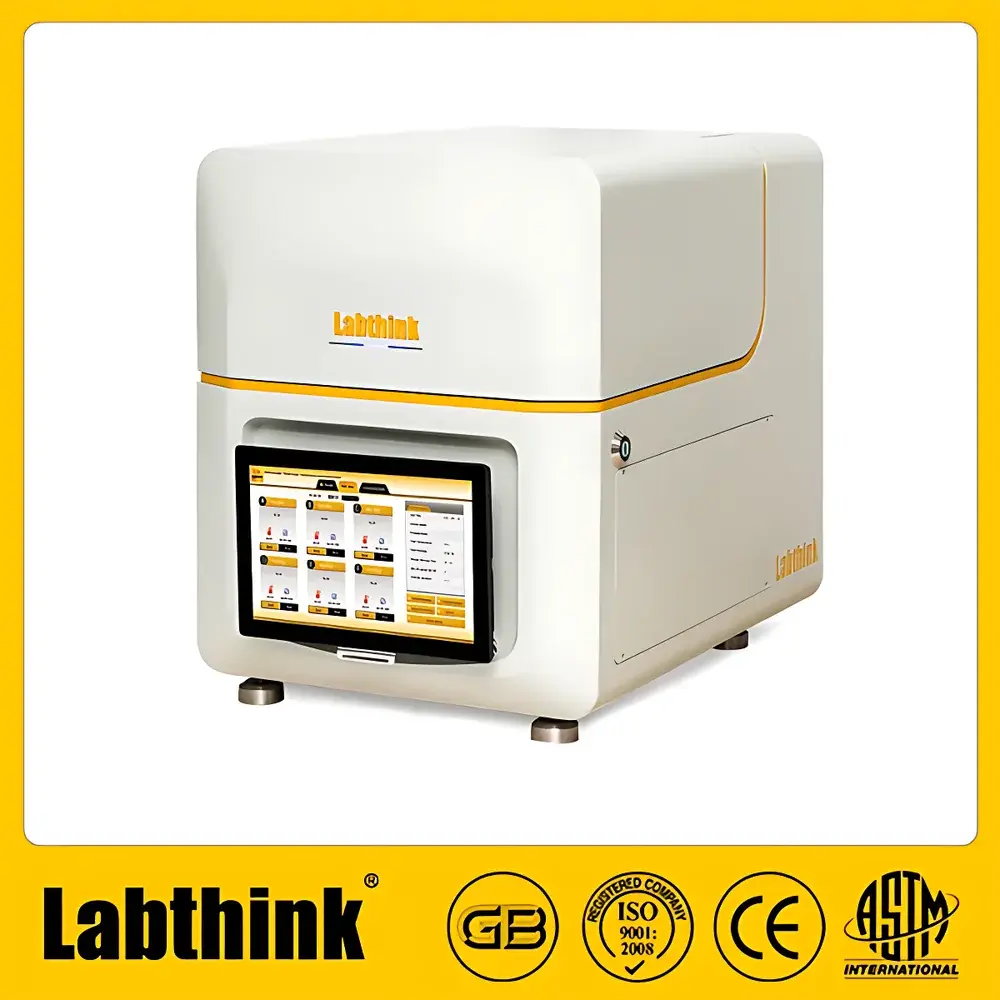
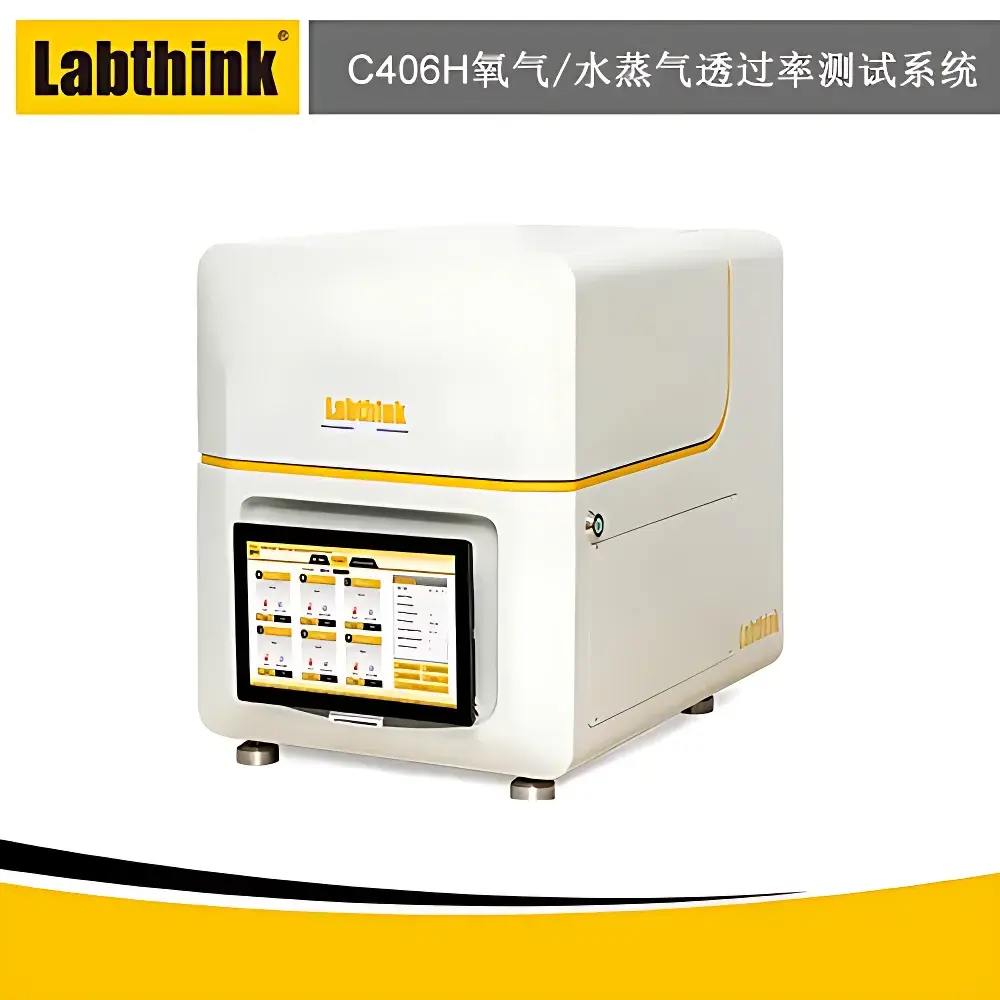
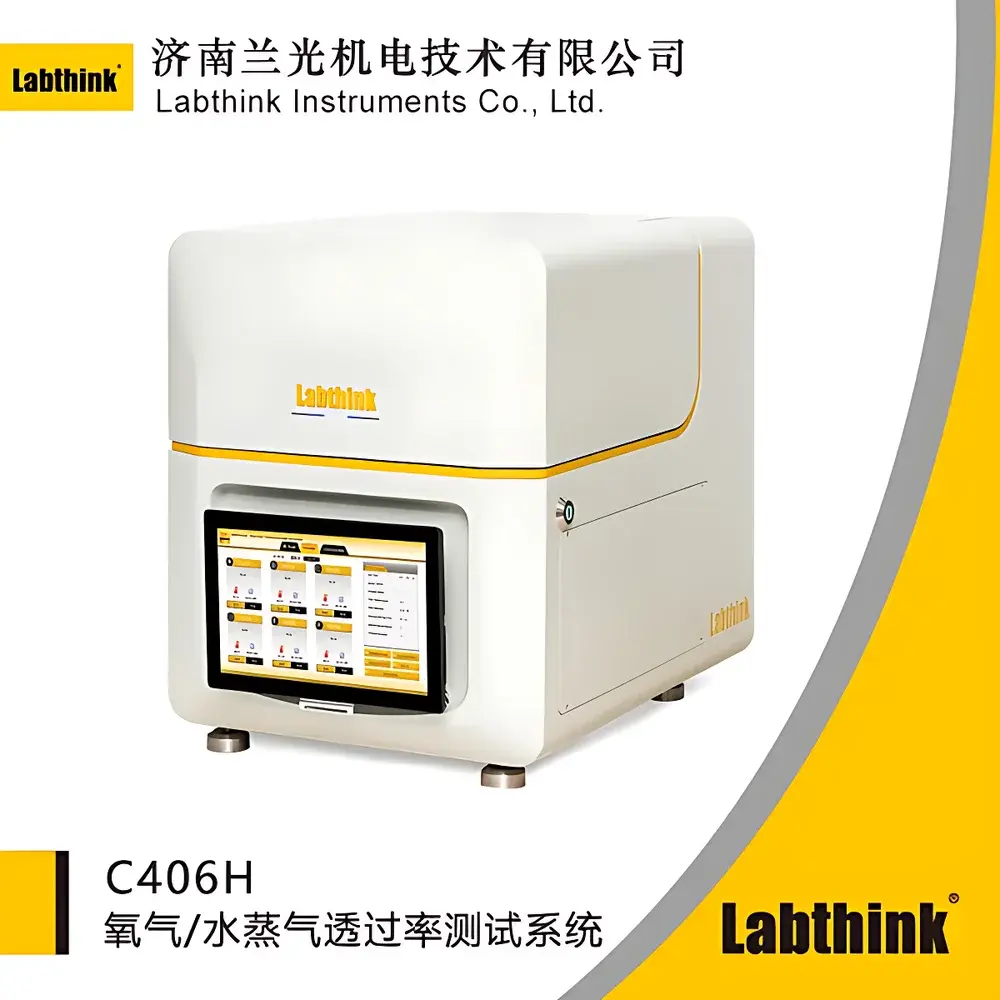
Labthink C406H Coulometric Oxygen Transmission Rate (OTR) & Infrared Water Vapor Transmission Rate (WVTR) Analyzer
| Brand | Labthink |
|---|---|
| Origin | Shandong, China |
| Manufacturer Type | OEM Manufacturer |
| Country of Origin | China |
| Model | C406H |
| Price Range | USD 28,000 – 98,000 |
| OTR Range | 0.02–200 cc/(m²·day) @ 50 cm² |
| WVTR Range | 0.02–40 g/(m²·day) @ 50 cm² |
| OTR Resolution | 0.0001 cc/(m²·day) |
| WVTR Resolution | 0.0001 g/(m²·day) |
| OTR Repeatability | ±0.02 cc/(m²·day) or ±1%, whichever is greater |
| WVTR Repeatability | ±0.02 g/(m²·day) or ±2%, whichever is greater |
| Temperature Control Range | 10–50 °C (optional: 5–60 °C) |
| Temp Stability | ±0.15 °C |
| RH Range | 0%, 5–90% ±2%, 100% RH |
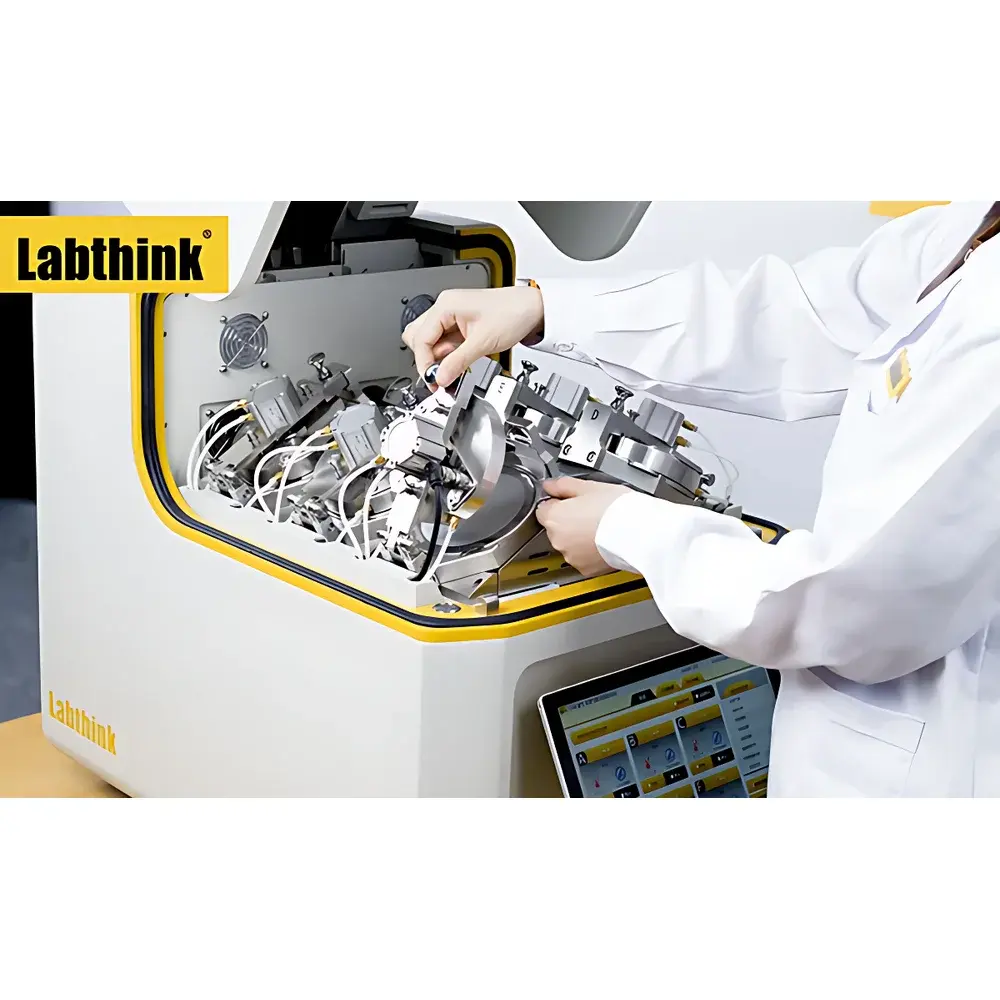
| Test Chambers | 6 independent chambers |
| Standard Test Area | 50 cm² |
| Sample Size | 11.2 cm × 11.2 cm |
| Max Sample Thickness | ≤3 mm |
| Carrier Gas | ≥99.999% N₂, ≥99.5% O₂ |
| Inlet Pressure | ≥280 kPa |
| Power Supply | 120 VAC ±10%, 60 Hz / 220 VAC ±10%, 50 Hz |
| Net Weight | 100 kg |
| Dimensions | 60 cm × 49 cm × 66 cm |
Overview
The Labthink C406H Coulometric OTR & Infrared WVTR Analyzer is a dual-mode, high-precision permeation testing platform engineered for simultaneous or independent measurement of oxygen transmission rate (OTR) and water vapor transmission rate (WVTR) in barrier packaging materials. It operates on two fundamental physical principles: coulometric detection of oxygen molecules based on Faraday’s law of electrolysis, and non-dispersive infrared (NDIR) absorption spectroscopy for quantitative water vapor analysis. This dual-sensor architecture eliminates inter-instrument variability and enables true co-located, condition-matched evaluation of both critical barrier properties—essential for validating integrity in sterile medical packaging, shelf-life prediction for pharmaceutical blister cards, and moisture-sensitive electronics encapsulation. The system complies with ASTM D3985 (OTR), ASTM F1249 (WVTR), ISO 15106-2 (WVTR), GB/T 19789, GB/T 26253, and YBB 00082003-2015, supporting regulatory submissions under FDA 21 CFR Part 11 and EU Annex 11 when configured with optional CFR 21 Part 11-compliant software modules.
Key Features
- Six independent, parallel test chambers—each with a standardized 50 cm² test area—enabling concurrent analysis of up to six specimens under identical environmental conditions, increasing throughput by 3× versus conventional single- or dual-chamber systems.
- Coulometric oxygen sensor with sub-ppb detection limit and >3× extended operational lifetime compared to conventional electrochemical cells; non-consumable infrared moisture sensor eliminating calibration drift and consumable replacement costs.
- Rainbow Bridge™ chamber architecture with 360° circumferential air circulation and PID-controlled thermal management ensures temperature uniformity within ±0.15 °C across all chambers.
- Integrated high-accuracy relative humidity sensors and closed-loop RH control system support precise, programmable humidity profiles from 0% to 100% RH at ±2% RH tolerance.
- Automated sample clamping mechanism delivers consistent sealing force across all six stations, minimizing edge leakage and improving inter-test reproducibility.
- Embedded industrial-grade Windows-based computing module with 12-inch capacitive touch interface—immune to external malware, ensuring long-term system stability and secure local data storage without reliance on external PCs.
Sample Compatibility & Compliance
The C406H accommodates rigid and flexible planar materials up to 3 mm thick, including monolayer and multilayer polymer films (e.g., PET, OPP, PE, EVOH), metallized substrates (AlOx, SiOx, Al foil composites), paperboard laminates, pharmaceutical blister foils (PVC/PVDC, cold-form aluminum), and photovoltaic backsheet polymers. All test protocols adhere strictly to ISO/IEC 17025-aligned validation practices. Optional CFR 21 Part 11 and GMP-compliant configurations include electronic signatures, full audit trails, role-based access control, and data integrity safeguards compliant with ALCOA+ principles. Calibration traceability is maintained to NIST-traceable gas standards and certified reference materials.
Software & Data Management
The proprietary Labthink PermeationSuite™ software provides intuitive workflow-driven operation: users define test parameters (T/RH setpoints, duration, gas flow rates), initiate automated sequences, and monitor real-time sensor outputs—including O₂ concentration (ppm), H₂O concentration (ppm), chamber temperature, and RH—via synchronized graphical overlays. Raw sensor signals are processed using first-principles mass transport algorithms incorporating Fickian diffusion modeling and ideal gas law corrections. Export formats include CSV, PDF reports (with metadata embedding), and XML for LIMS integration. Optional DataShield™ encryption ensures HIPAA/FDA-aligned data-at-rest protection; optional GMP Computer System Validation (CSV) packages include IQ/OQ/PQ documentation templates.
Applications
- Pharmaceutical packaging: OTR/WVTR correlation studies for blister packs, sachets, and cold-chain vial stoppers to support ICH Q5C stability protocols.
- Food packaging R&D: Barrier optimization of retort pouches, vacuum-sealed trays, and modified atmosphere packaging (MAP) films.
- Medical device packaging: Validation of Tyvek®/foil pouches per ISO 11607-1 for sterilization integrity and aging simulation.
- Electronics encapsulation: Quantification of moisture ingress into OLED display barriers and semiconductor wafer-level packaging.
- Renewable energy: PV backsheet durability assessment under accelerated damp-heat (85°C/85% RH) per IEC 61215.
FAQ
What gas purity specifications are required for carrier and challenge gases?
High-purity nitrogen (≥99.999%) is mandatory as the carrier gas; oxygen challenge gas must be ≥99.5% pure. Contaminants such as CO₂, hydrocarbons, or moisture will compromise sensor accuracy and longevity.
Can the C406H perform OTR and WVTR tests simultaneously on the same specimen?
No—due to incompatible environmental requirements (OTR requires dry N₂ sweep; WVTR requires controlled RH gradients), tests are conducted sequentially in the same chamber. However, identical specimens can be tested consecutively under matched T/RH conditions to correlate OTR and WVTR behavior.
Is vacuum evacuation required prior to test initiation?
Yes. Each chamber undergoes automated vacuum purge to <10 Pa before gas introduction, ensuring removal of ambient air and baseline stabilization—critical for low-permeability material testing.
How is sensor calibration maintained over time?
Coulometric O₂ sensors are factory-calibrated against NIST-traceable O₂ standards; IR moisture sensors are validated using gravimetrically prepared saturated salt solutions. Annual recalibration is recommended, with full certification documentation provided.
Does the system support custom test methods beyond ASTM/ISO standards?
Yes. PermeationSuite™ allows user-defined method templates—including variable ramp rates, multi-step RH profiles, and conditional termination logic—subject to internal validation per ISO 17025 clause 7.2.2.






