
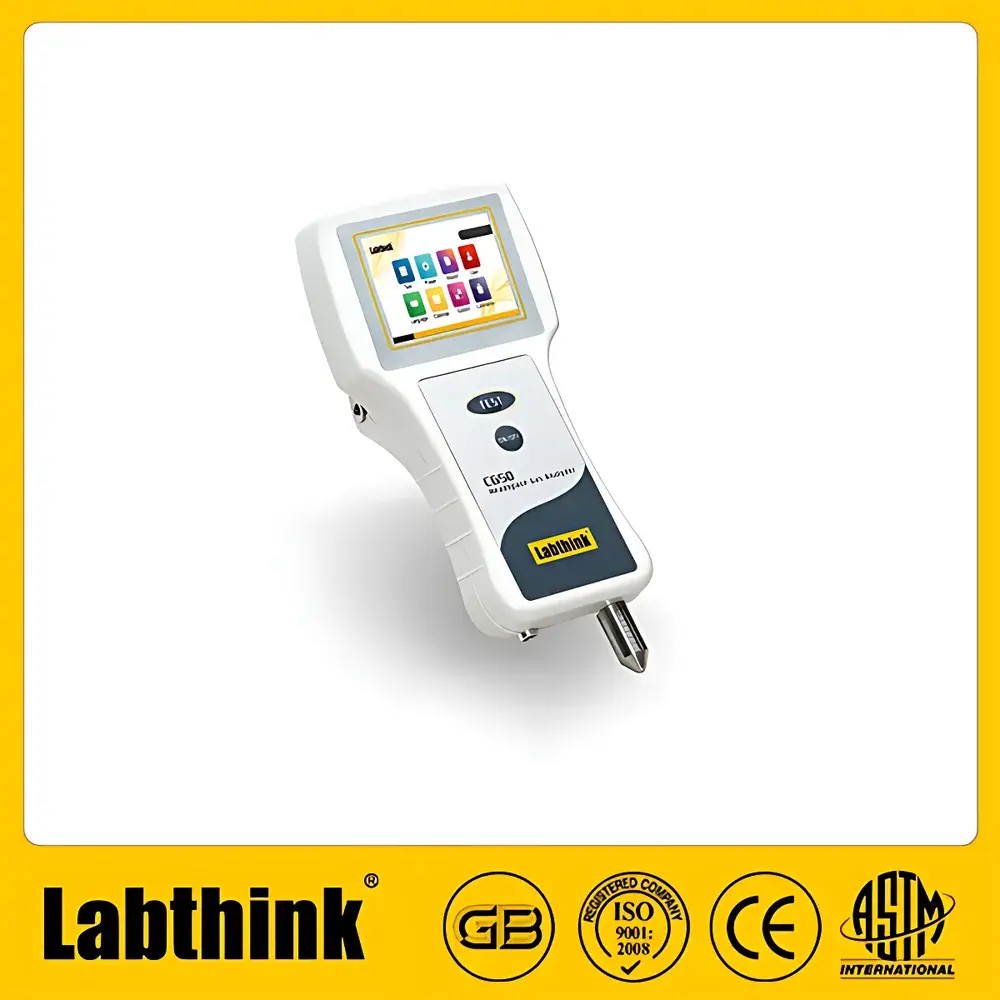
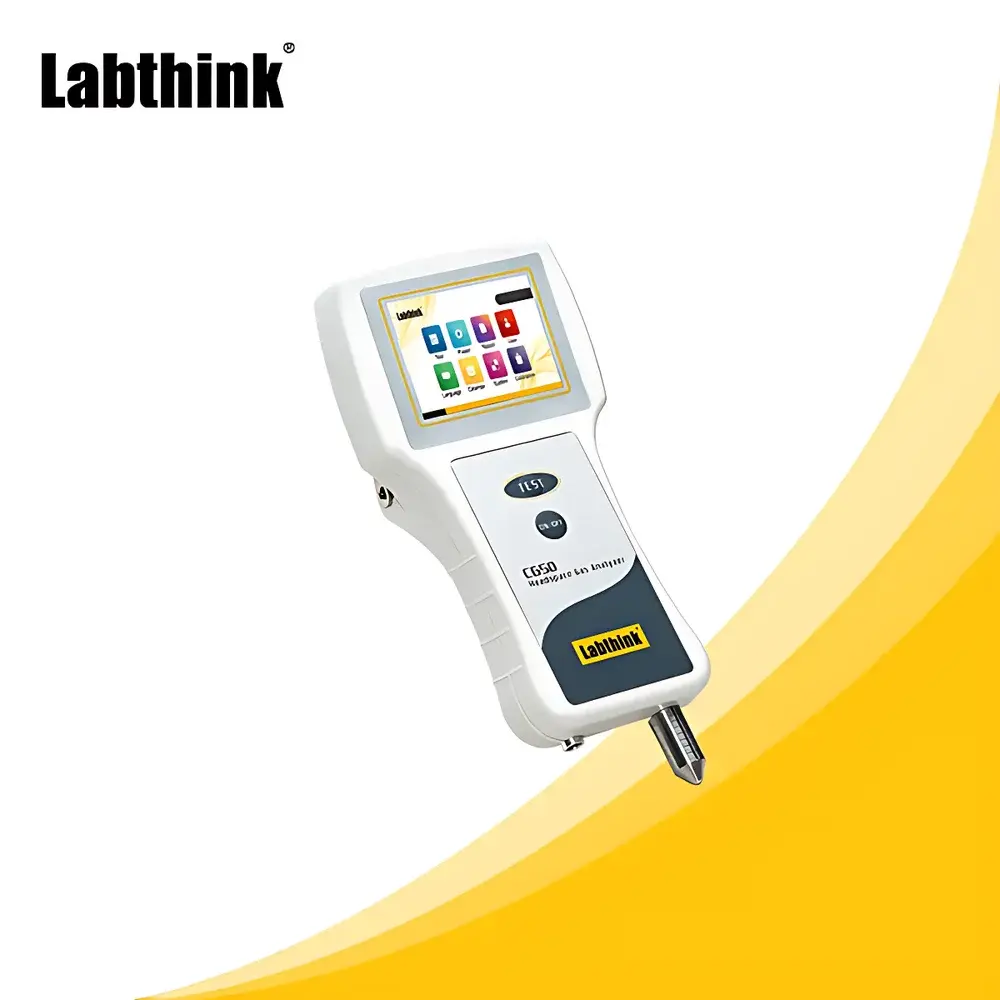
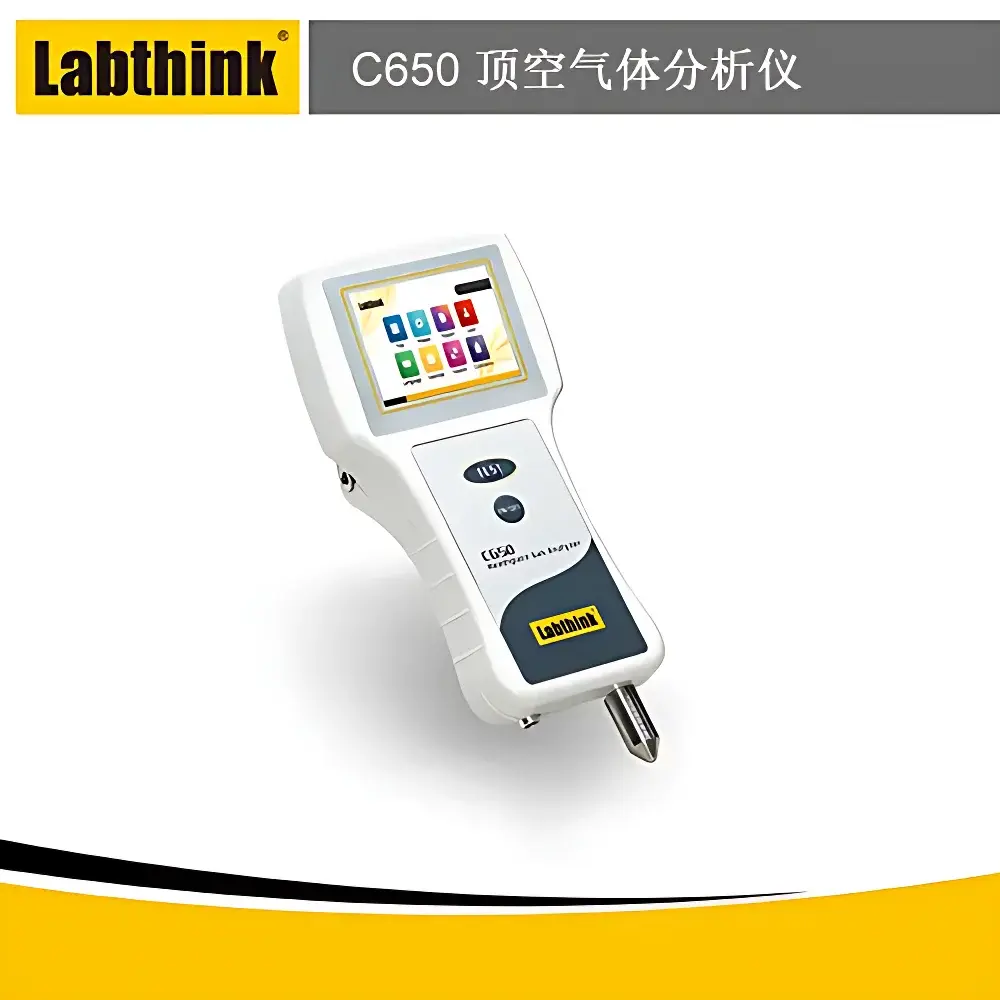
Labthink C650B Headspace Oxygen and Carbon Dioxide Analyzer
| Brand | Labthink |
|---|---|
| Origin | Shandong, China |
| Manufacturer | Labthink Instruments Co., Ltd. |
| Model | C650B |
| Sensor Type (O₂) | Electrochemical |
| Sensor Type (CO₂, optional) | NDIR (Non-Dispersive Infrared) |
| O₂ Range | 0–100% |
| O₂ Resolution | 0.1% |
| O₂ Accuracy | ±0.3% |
| CO₂ Range | 0–100% |
| CO₂ Resolution | 0.01% |
| CO₂ Accuracy | ±(0.03% + 5% of reading) |
| Sample Volume (O₂) | 6–8 mL |
| Sample Volume (CO₂) | 15 mL |
| Dimensions | 220 × 110 × 70 mm |
| Weight | 0.6 kg |
| Power Supply | 220 VAC ±10%, 50 Hz / 120 VAC ±10%, 60 Hz |
| O₂ Sensor Lifetime | ~2 years (in ambient air) |
| CO₂ Sensor Lifetime | >15 years |
| Data Storage Capacity | 1200 test records |
| Interface | USB, optional wireless thermal printer, optional PC control software |
| Compliance | Designed for GLP-compliant environments |
Overview
The Labthink C650B Headspace Oxygen and Carbon Dioxide Analyzer is a handheld, field-deployable instrument engineered for precise quantification of residual oxygen (O₂) and optionally carbon dioxide (CO₂) concentrations in the headspace of sealed packaging—ranging from flexible pouches and rigid trays to glass vials, metal cans, and pharmaceutical ampoules. It operates on two complementary physical principles: electrochemical detection for O₂ and non-dispersive infrared (NDIR) absorption spectroscopy for CO₂. This dual-sensor architecture enables trace-level gas analysis without destructive sampling or external gas chromatography infrastructure. The device draws a defined volume of headspace gas via an integrated, low-pulsation micro-pump, delivers it to calibrated sensors under controlled flow dynamics, and converts real-time voltage outputs into concentration values using factory-established calibration curves traceable to NIST-certified reference gases. Its compact form factor and battery-assisted operation (via AC adapter) make it suitable for inline quality verification in packaging lines, warehouse audits, R&D labs, and regulatory compliance testing per ISO 11607-2, ASTM F2096, and USP guidance.
Key Features
- Handheld ergonomic design with industrial-grade capacitive touchscreen interface supporting both English and Chinese languages
- One-handed operation with automatic power-off and one-touch zero calibration using ambient air or certified span gas
- Modular sensor configuration: standard electrochemical O₂ sensor (0–100% range, 0.1% resolution) and optional NDIR CO₂ sensor (0–100%, 0.01% resolution, >15-year service life)
- Integrated absolute pressure transducer for simultaneous vacuum level assessment in evacuated packages
- Quick-connect sampling needle with protective sleeve and hydrophobic filter to prevent moisture and particulate ingress
- Onboard memory storing up to 1200 test records with timestamp, sample ID, O₂/CO₂ values, pressure reading, and operator notes
- USB interface for direct data export to PC; optional Labthink Control Software enables remote firmware updates, report generation (PDF/CSV), and electronic signature workflows compliant with 21 CFR Part 11
Sample Compatibility & Compliance
The C650B accommodates a broad spectrum of package geometries and materials—including laminated plastic pouches, aluminum trays, PET bottles, tinplate cans, HDPE jars, and borosilicate glass ampoules—without requiring package modification. Its sampling protocol meets ISO 8536-4 (for parenteral containers) and ASTM F392 (flexible barrier materials) requirements for non-invasive headspace interrogation. When paired with the B2226 underwater sampling module, it enables reliable analysis of low-volume or highly volatile headspaces (e.g., lyophilized vials). All sensor calibrations are performed against primary standards traceable to national metrology institutes. Instrument validation documentation—including IQ/OQ protocols, sensor drift logs, and uncertainty budgets—is available upon request to support GMP/GLP audits.
Software & Data Management
Labthink’s proprietary control software provides full lifecycle data governance: automated import of instrument logs, configurable pass/fail thresholds with visual alerts, batch-level statistical process control (SPC) charts, and export-ready reports compliant with ISO/IEC 17025 documentation standards. Audit trails record every user action—including calibration events, parameter changes, and data deletions—with immutable timestamps and operator IDs. Data encryption at rest and role-based access control align with GDPR and HIPAA-aligned data handling practices. Optional integration with LIMS platforms via HL7 or RESTful API is supported for enterprise-scale deployment.
Applications
- MAP (Modified Atmosphere Packaging) verification for dairy, meat, baked goods, coffee, and ready-to-eat meals
- Pharmaceutical stability monitoring: headspace O₂ assessment in blister packs, sachets, and ampoules per ICH Q1A(R2)
- Quality release testing of retorted and aseptic containers to confirm inert gas flush efficacy
- Root cause analysis of shelf-life failures linked to O₂ permeation or CO₂ loss in carbonated products
- Supplier qualification audits where headspace composition serves as a critical control point (CCP) under HACCP plans
FAQ
What is the recommended calibration frequency for routine use?
For daily production line use, zero calibration with ambient air is advised before each shift; span calibration with certified 1% O₂/N₂ and 10% CO₂/N₂ gases is recommended weekly or after sensor replacement.
Can the C650B analyze nitrogen or argon atmospheres?
No—the instrument is configured exclusively for O₂ and CO₂ quantification; inert gas concentration is inferred by difference (100% – [O₂% + CO₂%]) only when no other gases are present.
Is underwater sampling mandatory for ampoule testing?
Not mandatory but strongly recommended: the B2226 module eliminates atmospheric contamination during needle insertion, ensuring measurement integrity for sub-1 mL headspaces.
How is sensor drift managed over time?
Electrochemical O₂ sensors include built-in temperature and humidity compensation; NDIR CO₂ sensors feature auto-zero referencing and optical path stabilization—both reduce long-term drift to ≤0.1% FS/year under normal operating conditions.
Does the device meet FDA requirements for electronic records?
Yes—when operated with validated Labthink Control Software and appropriate procedural controls, it satisfies 21 CFR Part 11 criteria for electronic signatures, audit trails, and data integrity.






