
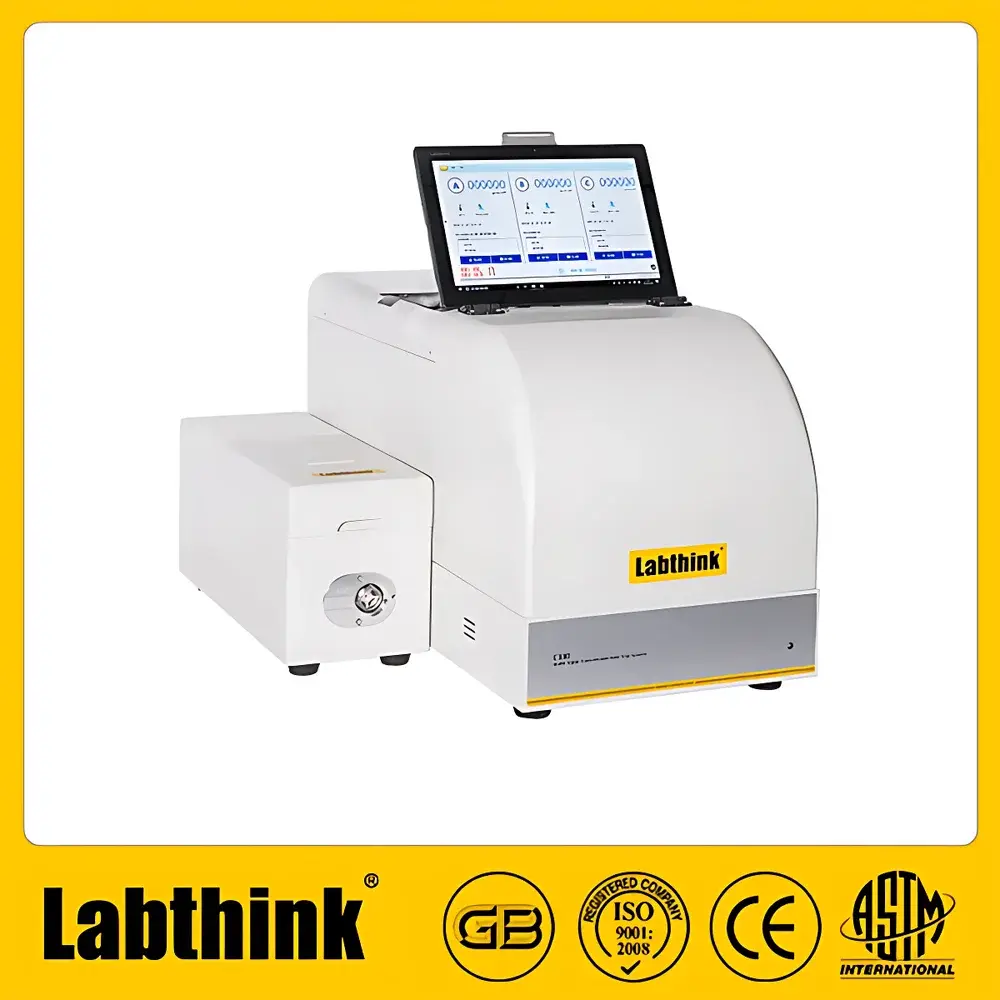
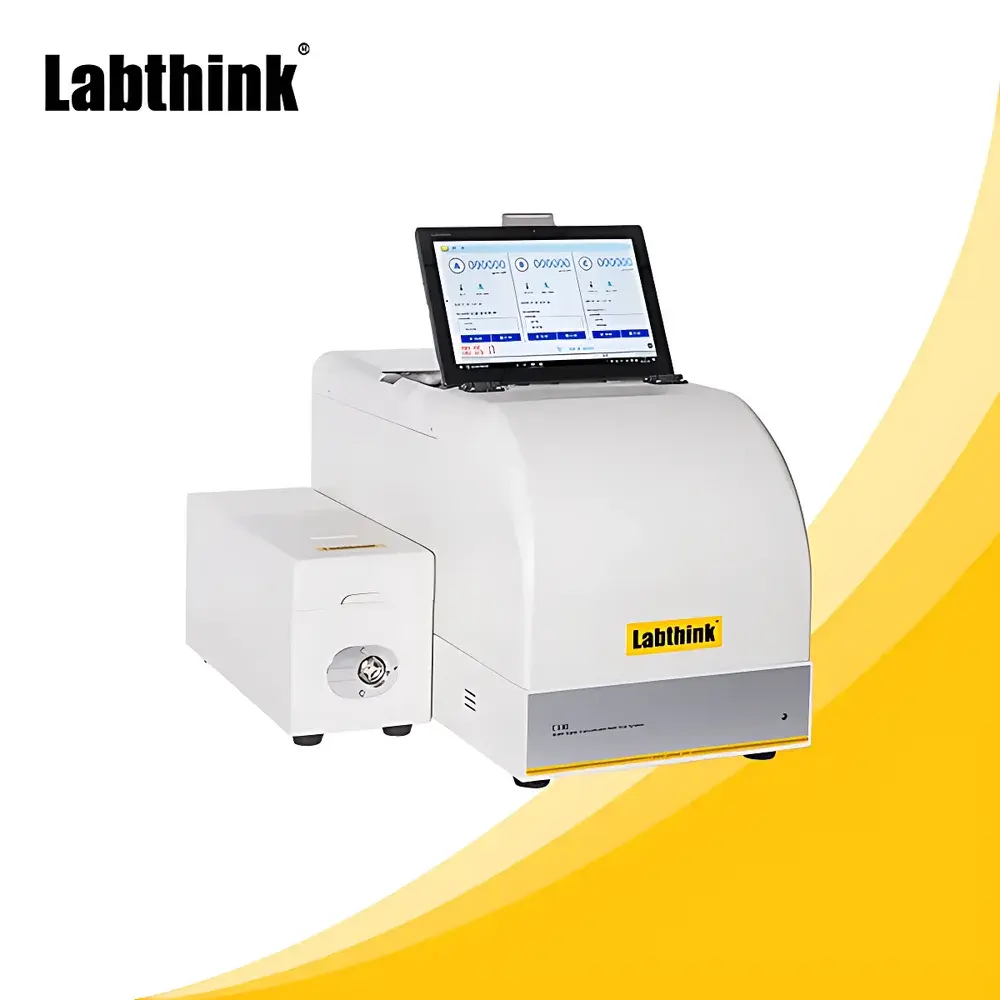
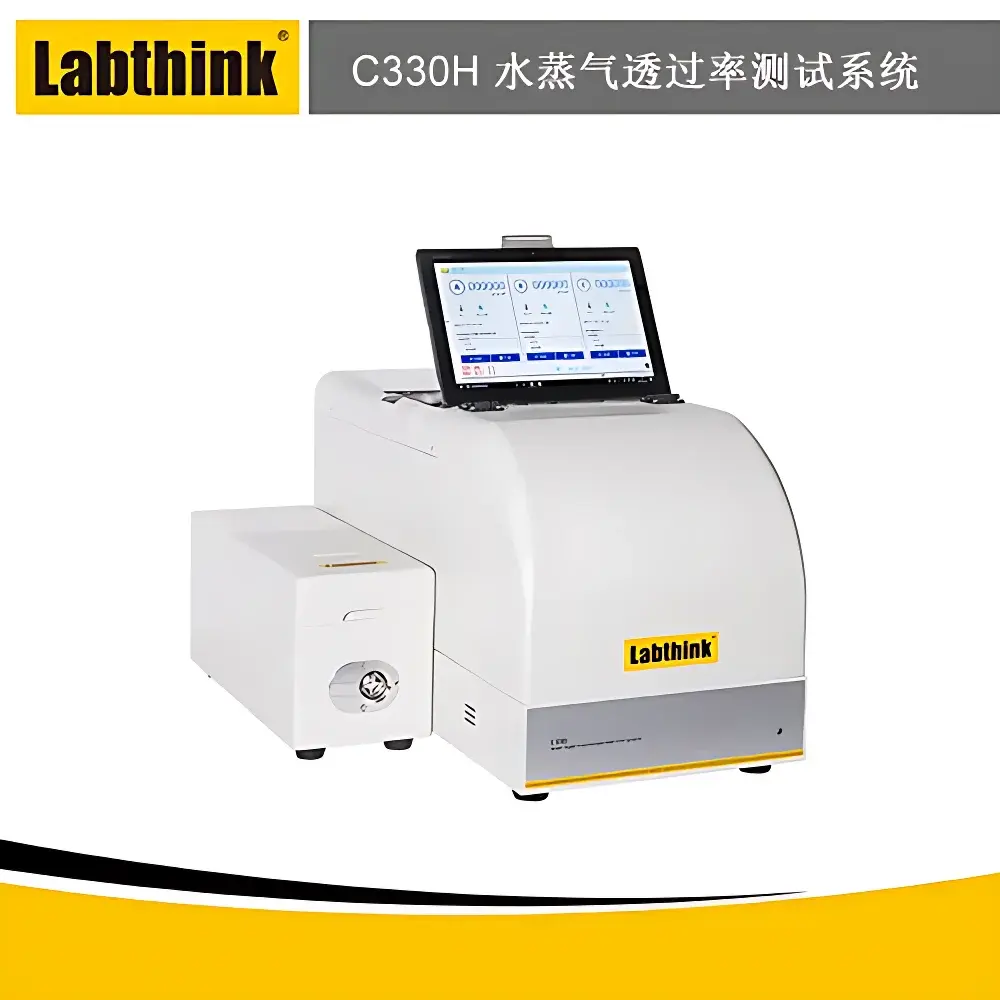
Labthink C330H Electrolytic Sensor-Based Water Vapor Transmission Rate (WVTR) Tester
| Brand | Labthink |
|---|---|
| Model | C330H |
| Measurement Principle | Electrolytic (Coulometric) Sensor per ISO 15106-3 |
| Test Range | 0.005–50 g/(m²·day) |
| Resolution | 0.001 g/(m²·day) |
| Repeatability | ±0.005 g/(m²·day) or ±2%, whichever is greater |
| Temperature Control | 10–55 °C (±0.2 °C) |
| Humidity Control | 5–90% RH (±1% RH), optional 100% RH |
| Test Chambers | 3 independent chambers |
| Standard Test Area | 50 cm² |
| Sample Size | 108 mm × 108 mm |
| Max Sample Thickness | 3 mm |
| Package Testing Capacity | up to 3 L |
| Carrier Gas | ≥99.999% N₂, inlet pressure ≥0.28 MPa |
| Gas Inlet | 1/8″ stainless steel tubing |
| Compliance | ISO 15106-3, ASTM F3299, GB/T 21529, YBB 00092003-2015 |
Overview
The Labthink C330H Electrolytic Sensor-Based Water Vapor Transmission Rate (WVTR) Tester is a precision-engineered instrument designed for quantitative determination of water vapor permeation through packaging and barrier materials under controlled temperature and humidity conditions. It operates on the coulometric electrolytic detection principle defined in ISO 15106-3:2021 — where water vapor diffusing across a test specimen is carried by dry nitrogen carrier gas to a proprietary solid polymer electrolyte sensor. Upon contact, water molecules dissociate at the anode, generating a stoichiometric electric current proportional to mass flow (per Faraday’s law). This first-principles-based transduction ensures traceable, absolute measurement without calibration drift, delivering high reproducibility and long-term sensor stability. The system is optimized for medium-to-high barrier applications — including pharmaceutical blister foils, PVDC-coated films, aluminum-laminated pouches, solar backsheet laminates, and sterile medical device packaging — where sub-mg-level WVTR accuracy is critical for shelf-life prediction and regulatory compliance.
Key Features
- Tri-chamber modular architecture enabling simultaneous testing of three identical specimens (for statistical validation per ISO 15106-3 Annex A) or three distinct materials under identical environmental conditions — fully supporting parallel experimental design and inter-material comparison.
- Patented integrated test block engineered using computational fluid dynamics (CFD) and thermodynamic modeling to ensure uniform laminar gas flow, minimal boundary layer disturbance, and precise thermal equilibrium across all chambers.
- Spatial 3D isothermal control system with independently monitored and regulated temperature/humidity zones for each chamber — equipped with calibrated capacitive RH sensors and Pt100 RTDs providing real-time feedback to dual-loop PID controllers.
- Labthink-developed electrolytic moisture sensor featuring solid polymer electrolyte membrane and gold-plated electrodes; validated for >24 months operational lifetime under continuous use and <0.5% signal drift over 10,000-hour service life.
- Automated environmental conditioning: full-range programmable T/RH ramping, dwell, and step profiling — eliminating manual intervention during preconditioning, equilibration, and steady-state measurement phases.
- 12-inch industrial-grade Windows 10 touchscreen HMI with embedded Intel Core i5 processor, SSD storage, and native USB/Ethernet/Wi-Fi connectivity — supporting both guided routine operation and advanced parameter scripting via professional test mode.
Sample Compatibility & Compliance
The C330H accommodates flat sheet materials (films, foils, papers, composites) up to 108 mm × 108 mm and ≤3 mm thickness, as well as rigid and semi-rigid packages (bottles, cups, trays, blister cards, pouches) with internal volume up to 3 L. Its mechanical clamping system maintains uniform sealing pressure across variable geometries while minimizing edge leakage. All test methodologies conform to internationally recognized standards: ISO 15106-3 (electrolytic sensor method), ASTM F3299 (standard guide for WVTR instrumentation), GB/T 21529 (Chinese national standard for plastic film WVTR), and YBB 00092003-2015 (Chinese pharmacopoeial requirement for pharmaceutical packaging). For regulated environments, optional CFR 21 Part 11-compliant audit trail, electronic signatures, and role-based access control are available — ensuring full alignment with GMP/GLP data integrity requirements.
Software & Data Management
DataShield™ — Labthink’s proprietary data governance platform — provides end-to-end traceability from raw sensor output to final report generation. It enforces ALCOA+ principles (Attributable, Legible, Contemporaneous, Original, Accurate, Complete, Consistent, Enduring, Available) through immutable timestamped records, cryptographic hash verification of datasets, and automated backup to network-attached storage or cloud repositories. Export formats include CSV, PDF/A-2, XML, and Excel-compatible .xlsx with embedded metadata (test parameters, environmental logs, calibration certificates, operator ID). Integration with LIMS and MES systems is supported via RESTful API and OPC UA protocols. Optional 21 CFR Part 11 module delivers electronic signature workflows, biometric authentication, and configurable review/approval hierarchies — meeting FDA, EMA, and PMDA submission readiness criteria.
Applications
The C330H serves cross-industry R&D, QC, and regulatory testing laboratories requiring metrologically sound WVTR data. Primary applications include barrier evaluation of food packaging (e.g., retort pouches, coffee bags, snack wrappers), pharmaceutical primary packaging (cold-form blister foil, sachets, vial stoppers), medical device sterile barriers (Tyvek® lids, peel pouches), photovoltaic encapsulants (EVA, POE, PET-based backsheets), and consumer electronics moisture-sensitive assemblies (OLED display encapsulation, battery cell housings). Extended use cases cover seal integrity assessment of closure systems (screw caps, induction seals), moisture ingress analysis of flexible printed circuit boards, and accelerated aging correlation studies for shelf-life modeling. Each application benefits from the instrument’s low detection limit (0.005 g/m²·day), high dynamic range, and robustness against condensable volatiles or trace organics that may interfere with alternative methods (e.g., infrared or gravimetric).
FAQ
What measurement principle does the C330H employ, and how does it differ from gravimetric or infrared methods?
The C330H uses coulometric electrolysis per ISO 15106-3, converting water vapor mass flux directly into electrical current via Faraday’s law. Unlike gravimetric methods (prone to buoyancy errors and long equilibration times) or IR-based systems (susceptible to CO₂/H₂S interference), this approach offers absolute quantification, sub-mg sensitivity, and immunity to non-aqueous vapors.
Can the C330H test irregularly shaped packages such as syringes or inhalers?
Yes — the optional package testing module includes customizable fixtures and vacuum-assisted sealing to accommodate non-planar geometries up to 3 L volume, provided internal gas circulation paths remain unobstructed and leak-tight.
Is nitrogen purity critical, and what happens if impurities exceed specification?
Carrier gas must be ≥99.999% N₂; oxygen, hydrocarbons, or moisture above 1 ppm will poison the electrolyte membrane, causing baseline drift and reduced sensor lifespan. Integrated inline purifiers and real-time gas quality monitoring are recommended for continuous operation.
How is calibration traceability maintained over time?
Each sensor is factory-calibrated against NIST-traceable permeation standards (e.g., NIST SRM 2820). Users perform quarterly verification using certified reference films; full recalibration is performed by Labthink-certified engineers with documented uncertainty budgets per ISO/IEC 17025.
Does the system support multi-user environments with audit-ready reporting?
Yes — with DataShield™ and optional 21 CFR Part 11 modules, all user actions, parameter changes, and result modifications are logged with digital signatures, timestamps, and IP addresses — satisfying FDA, EU Annex 11, and WHO GMP Annex 11 requirements.







