
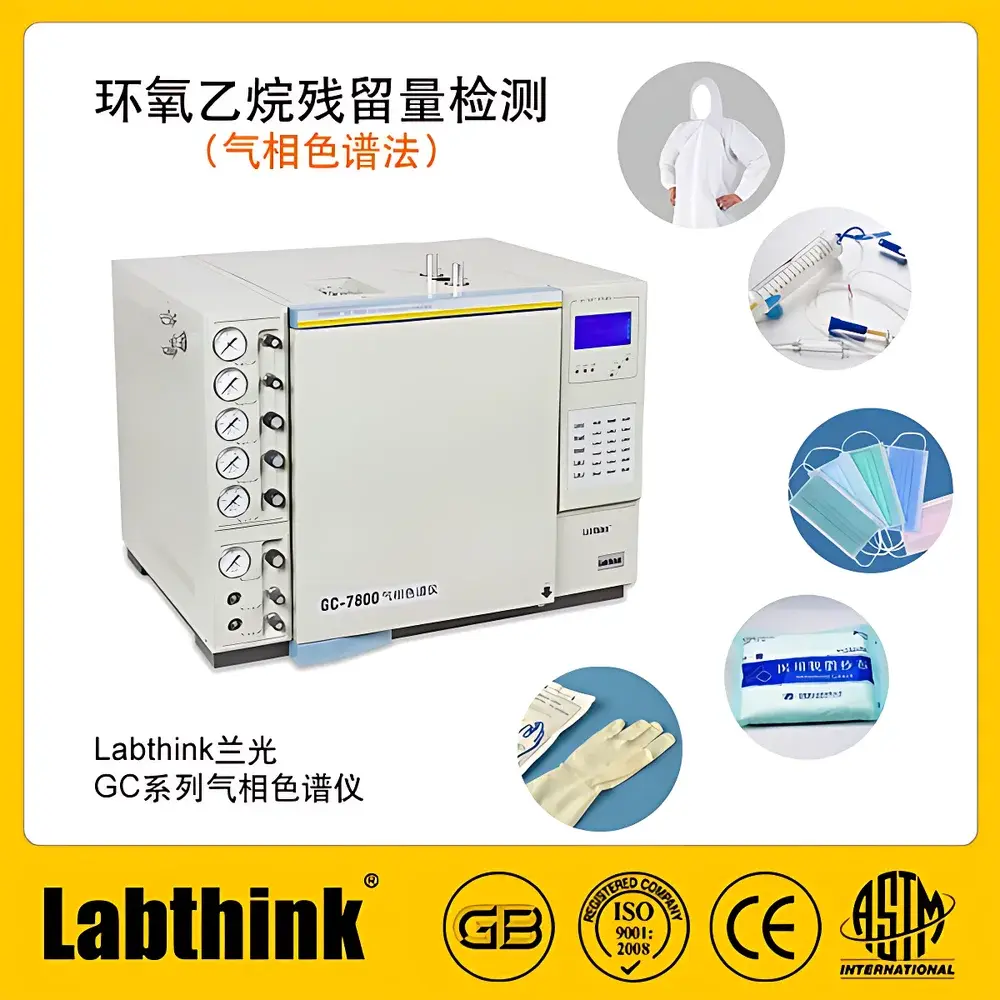
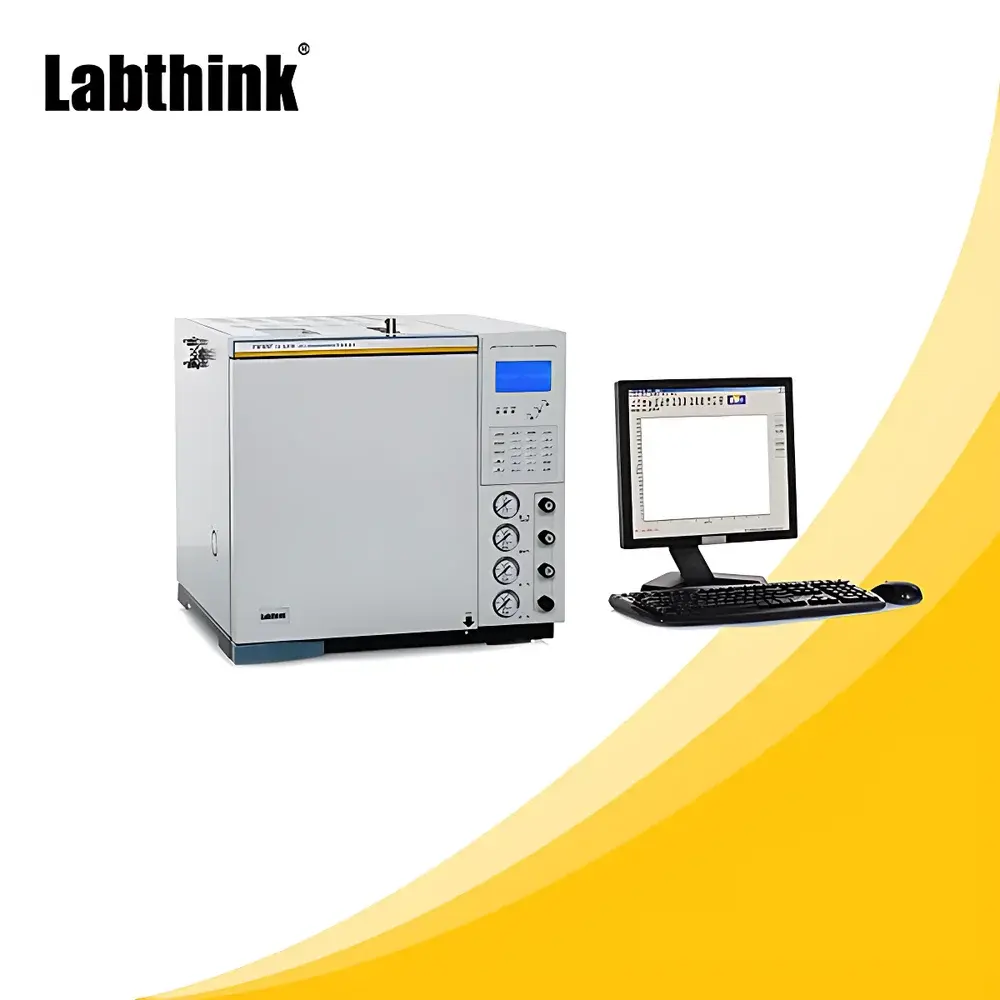
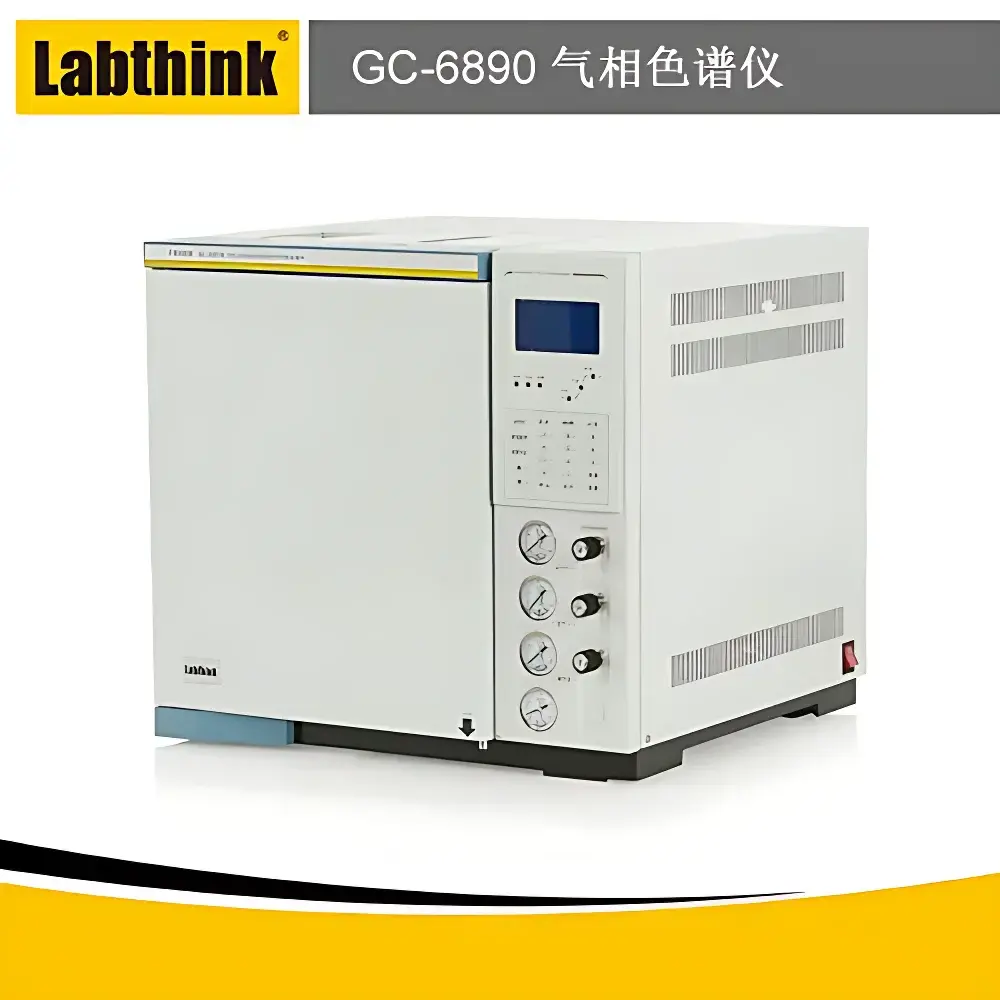
Labthink GC Series Gas Chromatograph for Ethylene Oxide (EO) Residue Testing in Medical Devices
| Brand | Labthink |
|---|---|
| Model | GC Series |
| Origin | Shandong, China |
| Manufacturer | Labthink Instruments Co., Ltd. |
| Application | Quantitative determination of residual ethylene oxide in EO-sterilized medical devices and personal protective equipment (PPE) |
| Detection Principle | Headspace gas chromatography (HS-GC) with flame ionization detection (FID) |
| Compliance Standards | GB/T 14233.1–2008, GB/T 16886.7–2001, ISO 10993-7, ASTM F2573, USP <801>, FDA 21 CFR Part 11 (software-enabled audit trail & electronic signature support) |
| Sample Preparation | Aqueous extraction followed by thermal equilibration in sealed headspace vials |
| Detection Limit | ≤0.1 µg/g (as per method validation per ISO/IEC 17025) |
| Linear Range | 0.5–50 µg/g EO in solid matrix |
| Calibration Method | Gravimetric standard stock solution preparation (1 × 10⁻² g/L), serial dilution, six-point calibration curve |
| Data Output | Peak area or height vs. concentration |
Overview
The Labthink GC Series Gas Chromatograph is a dedicated analytical system engineered for the precise quantification of residual ethylene oxide (EO) in single-use medical devices, surgical masks, respirators (e.g., N95, KN95), gowns, drapes, and other EO-sterilized healthcare products. It implements the standardized headspace gas chromatography (HS-GC) methodology specified in GB/T 14233.1–2008, GB/T 16886.7–2001, ISO 10993-7, and ASTM F2573. The system operates on the principle of aqueous extraction of EO from the test specimen, followed by thermal equilibration in sealed headspace vials. Volatilized EO is then transferred to the GC column via pressurized gas loop injection, separated on a polar capillary column (e.g., DB-624 or equivalent), and detected using a flame ionization detector (FID). This configuration ensures high selectivity, robust baseline stability, and reproducible retention time alignment—critical for regulatory compliance in quality control laboratories operating under GLP or GMP frameworks.
Key Features
- Integrated headspace autosampler compatible with 10–22 mL crimp-top vials, supporting programmable incubation temperature (30–150 °C) and equilibration time (5–60 min)
- High-resolution capillary GC system with split/splitless injector, oven temperature programmability (ambient +5 °C to 400 °C), and ramp precision ±0.1 °C
- FID detector with linear dynamic range >10⁷, detection limit <0.1 pg C/s, and low-noise signal processing for trace-level EO quantification
- Pre-configured EO analysis method package—including validated temperature program, carrier gas flow optimization, and peak integration parameters aligned with ISO 10993-7 Annex B
- Compliance-ready software architecture supporting 21 CFR Part 11 requirements: role-based user access, electronic signatures, full audit trail (including method changes, sequence edits, and result reprocessing), and data integrity safeguards
- Rugged, benchtop design with modular service access, integrated gas supply monitoring, and leak-check diagnostics
Sample Compatibility & Compliance
The GC Series accommodates diverse sample matrices requiring EO residue testing per global regulatory mandates. Validated applications include but are not limited to: surgical masks (YY 0469), medical protective masks (GB 19083–2010), daily protective masks (GB/T 32610–2016), disposable medical gowns, infusion sets, syringes, blood bags, dialysis tubing, catheters, and implantable drug delivery systems. All testing protocols adhere strictly to the extraction conditions defined in GB/T 14233.1–2008 Section 9 (aqueous extraction at 37 °C for 60 min) and the headspace equilibrium parameters stipulated in ISO 10993-7. The instrument platform supports full traceability to ISO/IEC 17025:2017 accreditation requirements when operated within a documented quality management system.
Software & Data Management
ChromPerfect™ GC Control & Analysis Software (v5.2+) provides intuitive method development, real-time chromatogram visualization, and automated report generation compliant with ISO 10993-7 reporting templates. Raw data files (.cdf) are stored with embedded metadata (operator ID, timestamp, instrument state, calibration history). All quantitative results include calculated uncertainty budgets based on repeatability, calibration curve fit (R² ≥ 0.999), and LOD/LOQ verification. Electronic records are encrypted and backed up to network drives with version-controlled archiving. Audit trails record every user action—including manual integration adjustments—with immutable timestamps and operator attribution—ensuring readiness for FDA pre-approval inspections or notified body audits.
Applications
- Release testing of EO-sterilized PPE prior to market distribution
- Stability studies assessing EO desorption kinetics during shelf-life evaluation
- Process validation of EO sterilization cycles (e.g., temperature, humidity, exposure time, aeration duration)
- Comparative analysis of EO residuals across different packaging configurations and material compositions
- Root cause investigation of elevated EO levels in nonconforming batches
- Supporting biological safety evaluations per ISO 10993-1 and ISO 10993-7
FAQ
What regulatory standards does this system support for EO residue testing?
It fully supports GB/T 14233.1–2008, GB/T 16886.7–2001, ISO 10993-7:2019, ASTM F2573–18, and USP , with method parameters pre-validated against these documents.
Is the system capable of 21 CFR Part 11 compliance?
Yes—when deployed with ChromPerfect™ software configured with password-protected roles, electronic signatures, and enabled audit trail logging, it meets all technical and procedural requirements for Part 11 compliance.
Can the system analyze other residual sterilants besides EO?
With appropriate column selection, method revalidation, and detector optimization, it may be adapted for chloroform, formaldehyde, or hydrogen peroxide residuals—but EO remains the primary validated application.
What sample preparation accessories are included?
The system ships with headspace vial racks, crimp-cap sealing tools, calibrated volumetric pipettes, certified EO reference standards (traceable to NIST SRM 1691), and SOP templates for extraction and calibration.
Does Labthink provide IQ/OQ/PQ documentation support?
Yes—comprehensive qualification protocols (including installation checklist, operational performance tests, and precision/recovery studies per ISO 10993-7) are supplied with each instrument, along with vendor-assisted onsite execution options.



