
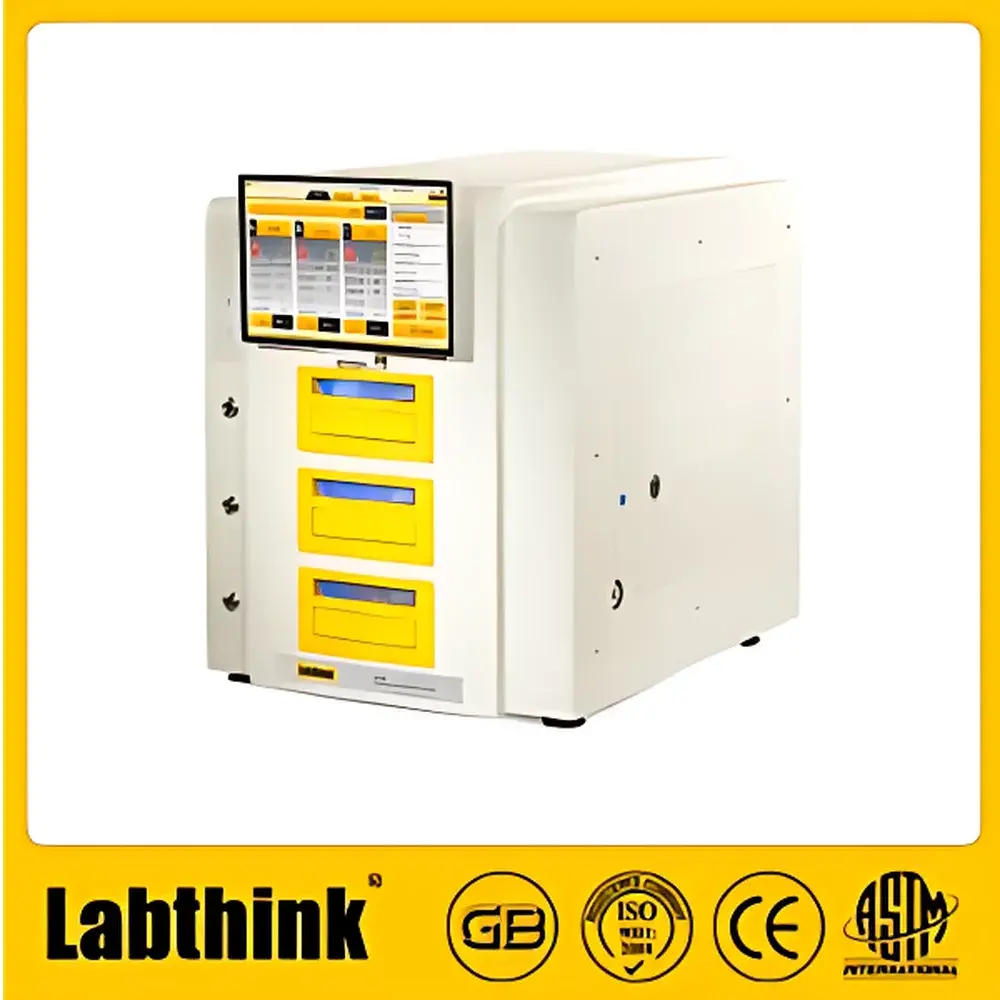
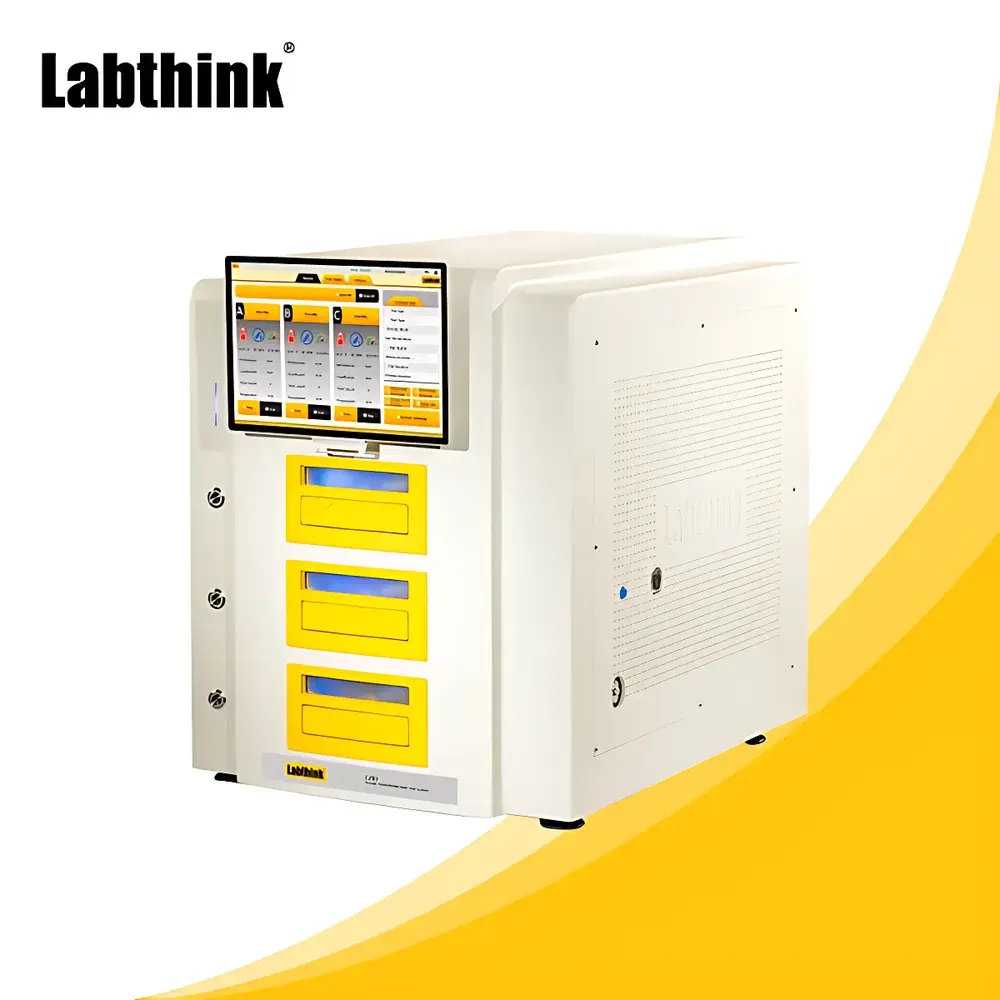
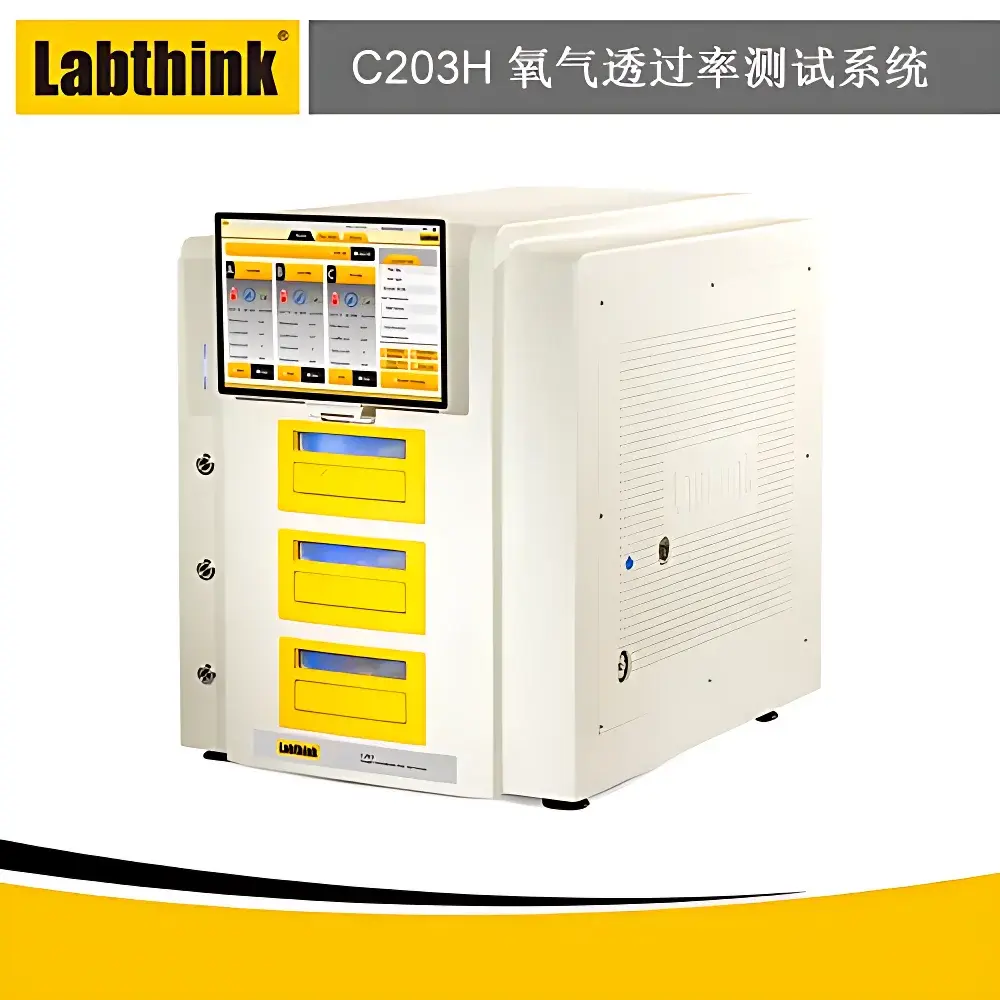
Labthink C203H Oxygen Permeation Analyzer (Isostatic Method, Coulometric Sensor)
| Brand | Labthink |
|---|---|
| Origin | Shandong, China |
| Manufacturer Type | Direct Manufacturer |
| Region of Origin | Domestic (China) |
| Model | C203H |
| Price Range | USD 14,000 – 98,000 |
| Test Principle | Isostatic (Equal-Pressure) Method with Coulometric Oxygen Sensor |
| Standards Compliance | ASTM D3985, ASTM F1307, ASTM F1927 (optional), GB/T 19789, GB/T 31354, DIN 53380-3, JIS K7126-2-B, YBB 00082003-2015 |
| Test Area | 50 cm² (standard), 5 cm² / 1 cm² (optional), custom up to 400,000 cc/(m²·day) |
| Measurement Range | 0.01–200 cc/(m²·day) (50 cm²) |
| Resolution | 0.0001 cc/(m²·day) |
| Repeatability | ±0.01 cc/(m²·day) or ±1%, whichever is greater |
| Temperature Control Range | 15–50 °C (standard), 5–60 °C (custom) |
| Temp Stability | ±0.05 °C |
| RH Control Range | 0–90% RH (O₂ side: ±1% |
| carrier gas side | ±2%, optional) |
| Chamber Configuration | Triple independent test cells |
| Sample Size | 11.2 cm × 11.2 cm (4.4″ × 4.4″) |
| Max Sample Thickness | 3 mm (120 mil) |
| Gas Requirements | ≥99.999% N₂ (carrier), ≥99.5% O₂ (permeant) |
| Power Supply | 120 VAC ±10% / 60 Hz OR 220 VAC ±10% / 50 Hz |
| Dimensions | 600 × 500 × 700 mm |
| Weight | 100 kg (220 lbs) |
| Key Sensor | ppb-level Coulometric O₂ sensor (3× service life vs. conventional) |
| Automation | Fully automated sample clamping, drawer-style chamber actuation, real-time T/RH monitoring, closed-loop flow/temperature/humidity control |
| Software | Embedded industrial PC, Windows-based 12″ touch HMI, CFR 21 Part 11 & GMP-compliant modules (optional), DataShield™ data integrity suite |
Overview
The Labthink C203H Oxygen Permeation Analyzer is an isostatic (equal-pressure) method instrument engineered for high-precision, high-reproducibility oxygen transmission rate (OTR) measurement in barrier packaging materials. It operates on the fundamental principle of molecular diffusion across a planar specimen under controlled partial pressure gradients: oxygen flows over one surface of the test film while ultra-high-purity nitrogen sweeps the opposite side, carrying permeated O₂ molecules to a coulometric sensor. This electrochemical detection method delivers absolute quantification—no calibration gases required—fully compliant with ASTM D3985 and ISO 15105-2 physical principles. Designed for laboratories requiring regulatory-grade data integrity, the C203H integrates thermodynamic stability, sensor longevity, and hardware-level system autonomy to support GLP, GMP, and FDA 21 CFR Part 11 validation workflows.
Key Features
- Triple independent test chambers (50 cm² each), enabling concurrent analysis of three specimens under identical environmental conditions—increasing throughput by 50% versus dual-cell systems.
- ppb-level coulometric oxygen sensor with validated 3× extended operational lifetime compared to conventional electrochemical sensors, minimizing downtime and recalibration frequency.
- 360° circumferential air-circulation thermal management system ensuring ±0.05 °C temperature stability across all chambers—critical for low-OTR measurements where thermal drift directly impacts diffusion kinetics.
- Integrated high-accuracy capacitive humidity and platinum RTD temperature sensors providing real-time, traceable environmental monitoring with automatic feed-forward control of both permeant and carrier gas streams.
- Motorized drawer-style test chamber with acoustic and visual actuation feedback; pneumatic sample clamping ensures uniform sealing force (±2% variation), eliminating operator-dependent leakage paths.
- Embedded industrial-grade computing platform running Windows OS on a 12″ capacitive touchscreen—immune to external malware, with local encrypted storage and deterministic boot sequence for audit-ready operation.
Sample Compatibility & Compliance
The C203H accommodates rigid and flexible planar materials up to 3 mm thick, including metallized polymer films (e.g., vacuum-deposited Al-coated PET, CPP, PE), foil-laminates (Al/PET/PE, Al/PP), coextrusions, PVDC-coated substrates, pharmaceutical blister foils, photovoltaic encapsulants, and semiconductor-grade polyimide sheets. Its mechanical design conforms to ASTM D3985’s dimensional and clamping-force specifications, while its sensor architecture satisfies the zero-baseline requirement of USP for barrier testing of sterile packaging. Optional humidity-controlled carrier gas pathways meet ASTM F1927 criteria for humidified OTR assessment of hygroscopic polymers. All firmware and data handling modules are configurable for 21 CFR Part 11 compliance—including electronic signatures, audit trails, and role-based access control—when paired with the DataShield™ software suite.
Software & Data Management
Control and analysis are executed via Labthink’s proprietary BarrierTest™ software, deployed on the embedded industrial PC. The interface supports fully automated test sequencing: users input target temperature, relative humidity, and test duration; the system autonomously regulates gas flows, chamber pressure, thermal setpoints, and sensor stabilization cycles. Raw sensor output (nA-level current), calculated OTR values, and environmental logs are timestamped and stored in encrypted binary format with SHA-256 hashing. Export options include CSV, PDF reports (with customizable headers, footers, and lab branding), and XML for LIMS integration. Optional CFR 21 Part 11 add-ons provide electronic signature capture, biometric login, and immutable audit trails meeting FDA and EMA requirements for regulated environments.
Applications
This analyzer serves quality control and R&D labs across regulated and high-value sectors: food packaging engineers validate shelf-life models for retort pouches and coffee laminates; pharmaceutical QA teams assess OTR stability of cold-chain blister packs per YBB 00082003-2015; PV module manufacturers qualify ethylene-vinyl acetate (EVA) encapsulant OTR to prevent delamination-induced power loss; and medical device firms verify sterility maintenance in Tyvek®-based pouches per ISO 11607-1. Its low-end sensitivity (0.01 cc/(m²·day)) enables characterization of advanced barrier coatings (SiOₓ, AlOₓ, multilayer nanocomposites), while high-range configurations support rapid screening of non-barrier polymers (LDPE, PP) during extrusion line qualification.
FAQ
What standards does the C203H comply with?
ASTM D3985 (primary), ASTM F1307, ASTM F1927 (optional humidity control), GB/T 19789, GB/T 31354, DIN 53380-3, JIS K7126-2-B, and YBB 00082003-2015.
Is sensor calibration required before each test?
No—the coulometric sensor provides absolute O₂ concentration measurement; no zero/span calibration gases are needed per ASTM D3985 Section 8.2.
Can the instrument operate under elevated humidity conditions?
Yes—optional dual-path humidity control allows independent RH regulation on both O₂ and N₂ sides, supporting ASTM F1927-compliant testing at up to 90% RH.
How is data integrity ensured for regulated use?
With optional DataShield™ and CFR 21 Part 11 modules, the system enforces user authentication, electronic signatures, tamper-evident audit logs, and encrypted local storage—fully aligned with FDA and EU Annex 11 expectations.
What sample preparation is required?
Specimens must be flat, defect-free, and cut to 11.2 cm × 11.2 cm; thickness must not exceed 3 mm. Conditioning per ASTM D618 is recommended prior to testing.




