
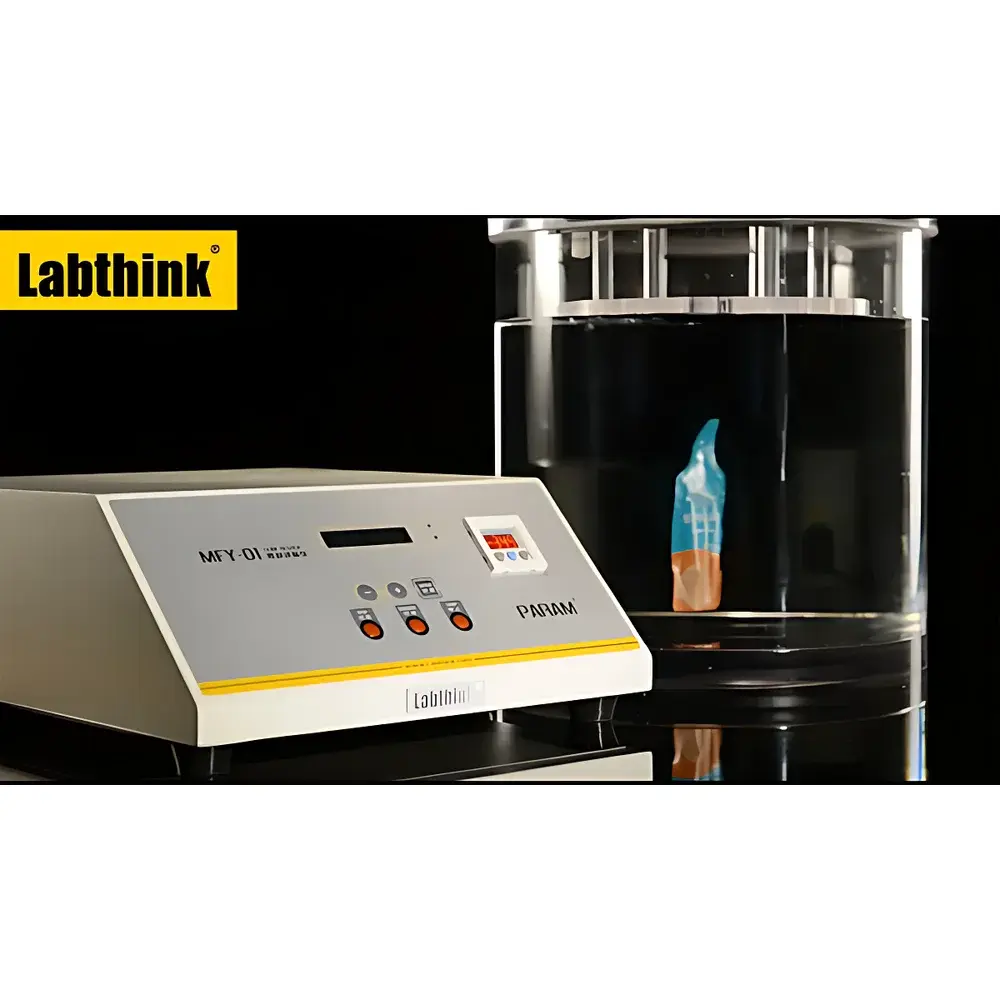
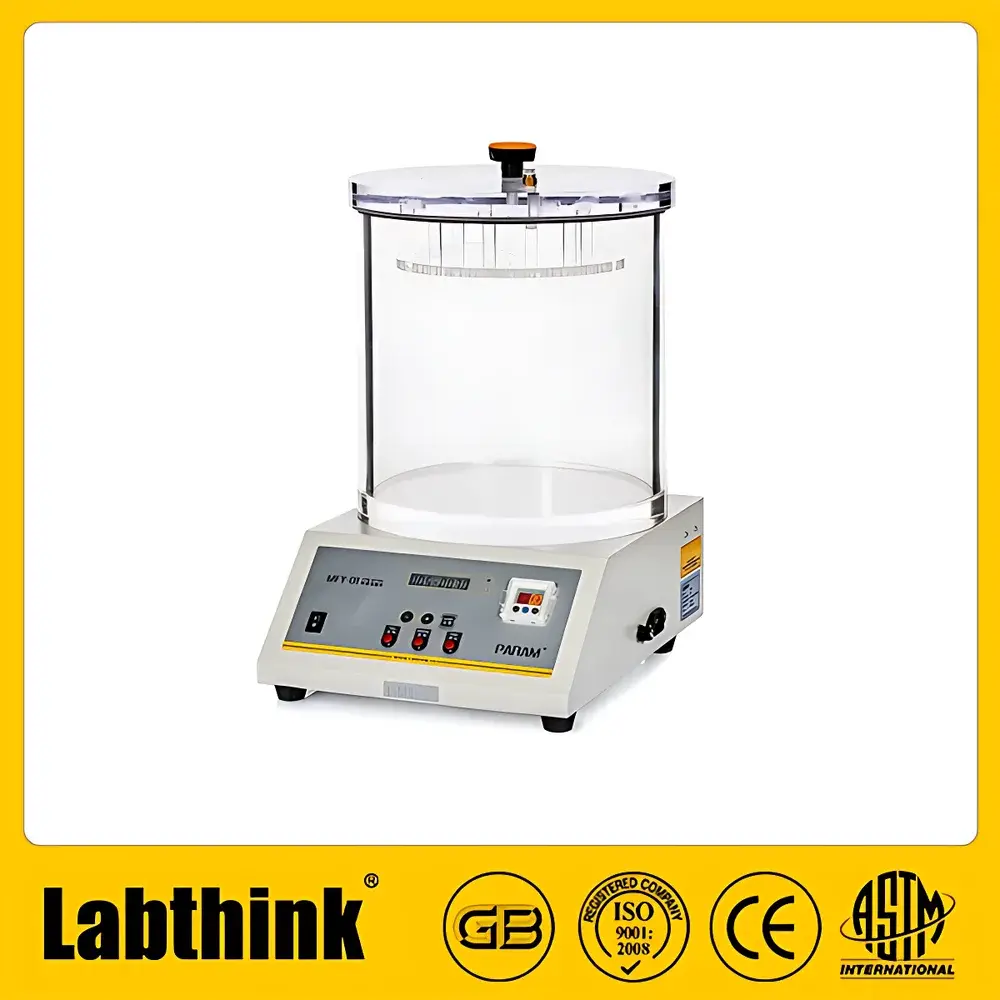
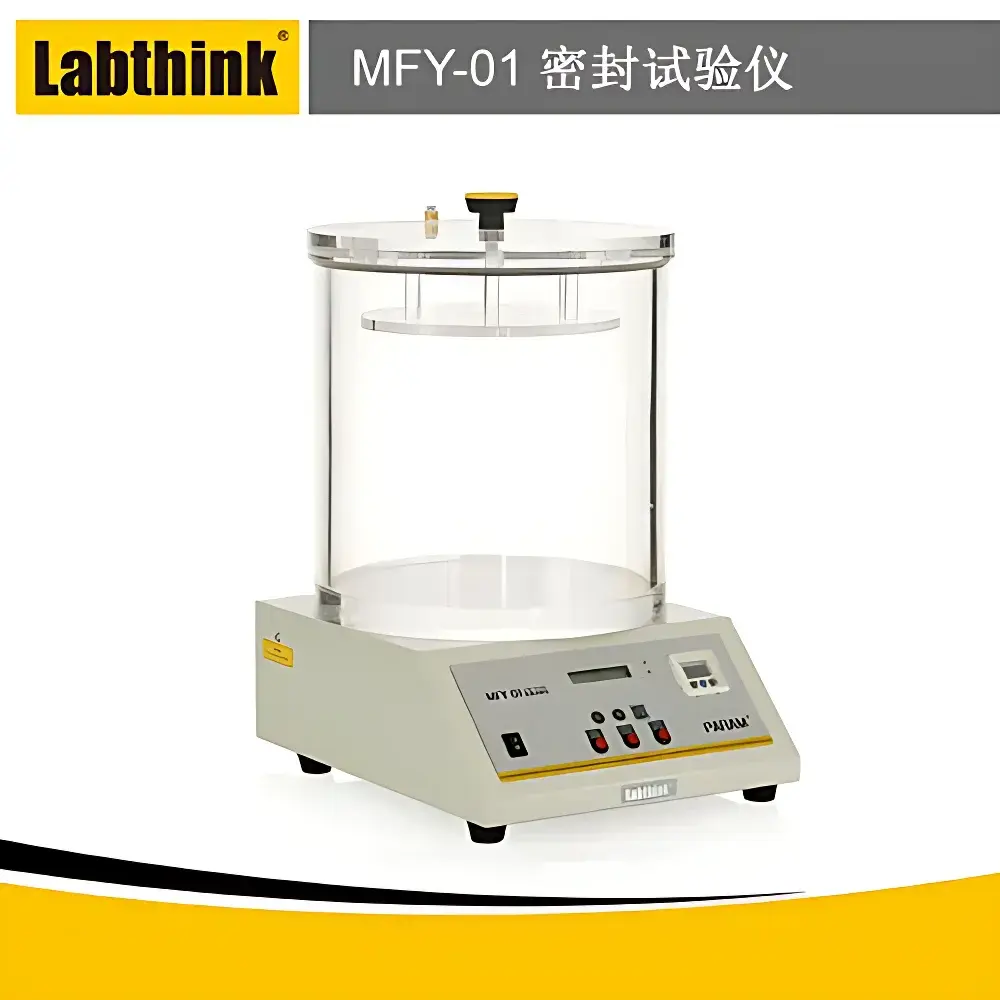
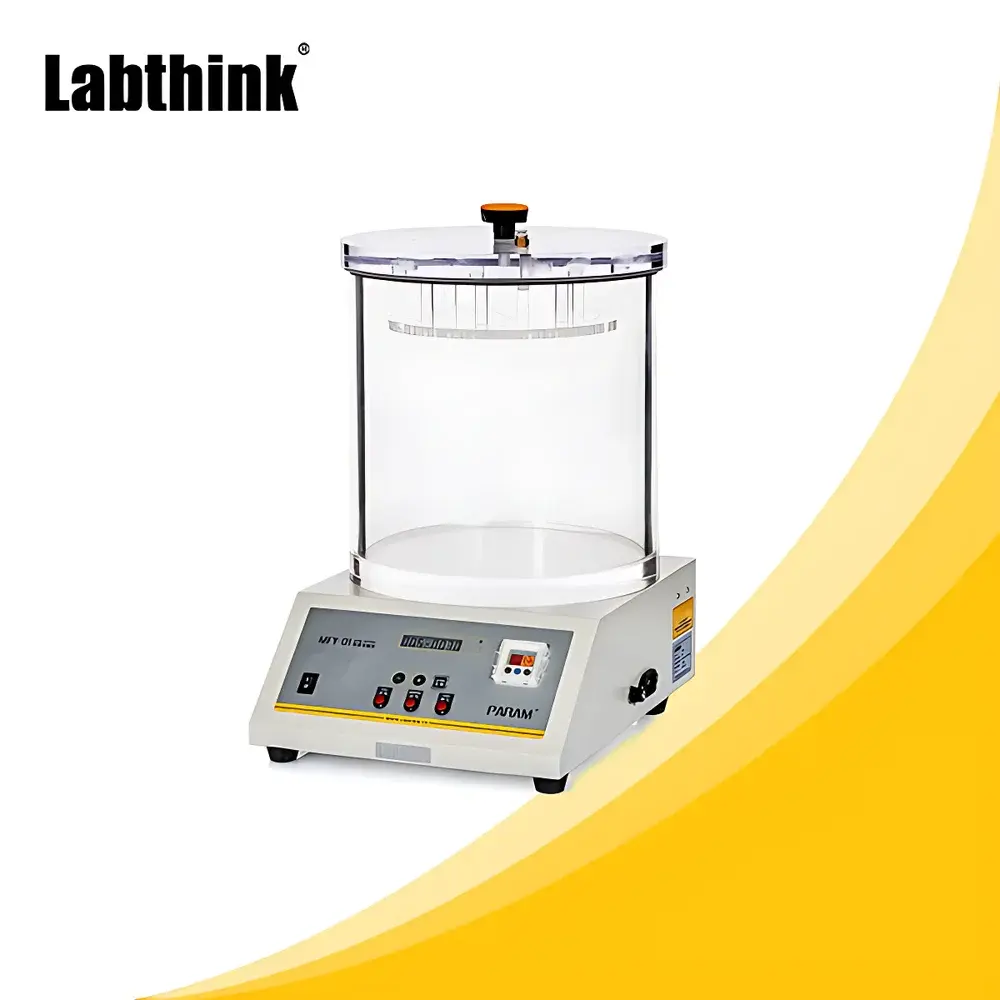
Labthink MFY-01 Soft Packaging Seal Integrity Tester (Vacuum Decay Method)
| Brand | Labthink |
|---|---|
| Origin | Shandong, China |
| Manufacturer | Labthink International Co., Ltd. |
| Model | MFY-01 |
| Vacuum Range | 0 to –90 kPa |
| Accuracy Class | Class 1 |
| Vacuum Chamber Dimensions (Standard) | Φ270 mm × 210 mm (H) |
| Pneumatic Supply Requirement | 0.7 MPa (user-supplied) |
| Air Inlet Fitting | Φ6 mm polyurethane tubing |
| Power Supply | AC 220 V, 50 Hz |
| Net Weight | 12 kg |
| Compliance Standards | GB/T 15171, ASTM D3078 |
Overview
The Labthink MFY-01 Soft Packaging Seal Integrity Tester is an automated vacuum-decay-based instrument engineered for objective, repeatable assessment of seal integrity in flexible and semi-rigid packaging. It operates on the principle of controlled negative pressure application within a water-submerged test chamber—leveraging differential pressure to induce stress at potential leak paths. During operation, the specimen is placed inside a sealed vacuum chamber partially filled with water; upon evacuation, any breach in the package manifests either as visible air leakage (bubbling) or as reversible/irreversible dimensional deformation (e.g., bulging, collapse, or delayed recovery), both of which serve as qualitative and semi-quantitative indicators of seal failure. This method aligns with the fundamental physics of gas diffusion under pressure differentials and is widely accepted for non-destructive, pass/fail evaluation in regulated and industrial quality control environments.
Key Features
- Microprocessor-controlled vacuum generation with LCD interface for intuitive parameter setting and real-time monitoring
- Programmable vacuum level (0 to –90 kPa) and dwell time, enabling method standardization across batches and operators
- Automated pressure maintenance via imported pneumatic components, ensuring stable vacuum hold during observation phase
- Integrated auto-termination logic: test concludes precisely upon reaching preset duration or detecting critical pressure deviation
- Controlled post-test decompression with reverse air purge to prevent water ingress and facilitate rapid specimen handling
- Dual-purpose test capability: supports both bubble-emission detection (for gross leaks) and deformation-based assessment (for marginal seals or elastic packaging)
- Modular vacuum chamber design with three optional configurations (Φ270×210 mm, Φ360×585 mm, Φ460×330 mm H) to accommodate diverse package geometries—from sachets and pouches to rigid trays and blister cards
Sample Compatibility & Compliance
The MFY-01 accommodates a broad spectrum of packaging formats used across regulated and non-regulated sectors—including laminated film pouches, aluminum-plastic blisters, PE/PP tubes, HDPE bottles with induction-sealed caps, thermoformed trays, and composite cartons. It is routinely deployed for pre-release verification after mechanical stress conditioning (e.g., drop testing per ISTA 2A or compression per ASTM D642), enabling correlation between physical abuse and seal degradation. The instrument complies with national and international standards governing package integrity validation: GB/T 15171–1994 “Method for Determination of Seal Integrity of Flexible Package” and ASTM D3078–22 “Standard Test Method for Determination of Leaks in Flexible Packaging by Bubble Emission.” While not inherently quantitative like pressure decay or mass extraction systems, its operational protocol satisfies GLP-aligned documentation requirements when paired with defined SOPs, operator training records, and manual observation logs.
Software & Data Management
The MFY-01 operates as a standalone hardware platform without embedded data logging or PC connectivity. All test parameters—including set vacuum level, hold time, and operator ID—are entered manually via the front-panel keypad and retained only for the current session. Results are recorded externally via standardized paper-based or electronic lab notebooks. For laboratories requiring audit-ready traceability, integration with LIMS or ELN systems is achieved through procedural controls rather than digital interfacing. Users implementing 21 CFR Part 11 compliance must supplement operation with written protocols specifying observation criteria (e.g., maximum allowable bubble count per 15 s, acceptable deformation thresholds), independent secondary review, and retention of dated, signed test records for minimum archival periods defined by internal QA policy or sector-specific regulations (e.g., ISO 13485 for medical devices, ICH Q5C for biologics).
Applications
- Final package release testing for sterile barrier systems in pharmaceutical and medical device manufacturing
- Process validation support during form-fill-seal (FFS) line qualification and change control assessments
- In-process seal strength trending for heat-sealed laminate structures subjected to variable dwell time or temperature profiles
- Supplier qualification of pre-made pouches, sachets, and stick packs prior to filling operations
- Root cause analysis of field failures linked to seal delamination, channel defects, or contamination-induced weak seals
- Stability study packaging integrity checks at accelerated and real-time storage conditions
FAQ
Is the MFY-01 compliant with FDA or EU MDR requirements for sterile packaging validation?
The instrument itself is not certified as a medical device but serves as a validated test tool when operated within a documented, risk-based qualification framework aligned with ISO 11607–2 and Annex 1 expectations.
Can it detect sub-micron leaks?
No—bubble emission detection is limited to leaks ≥100 µm under standard test conditions; smaller defects require quantitative methods such as helium mass spectrometry or tracer gas leak testing.
Does it require calibration certification?
Yes—vacuum transducer calibration against NIST-traceable standards is recommended annually or per internal SOP, with records maintained as part of equipment qualification.
What maintenance is required for long-term reliability?
Routine inspection of O-rings, chamber sealing surfaces, and pneumatic valves; periodic replacement of desiccant in the air filtration unit if ambient humidity exceeds 60% RH.
Can test parameters be exported or saved digitally?
No—the device lacks USB, Ethernet, or serial interfaces; parameter recall is manual and session-limited.




