
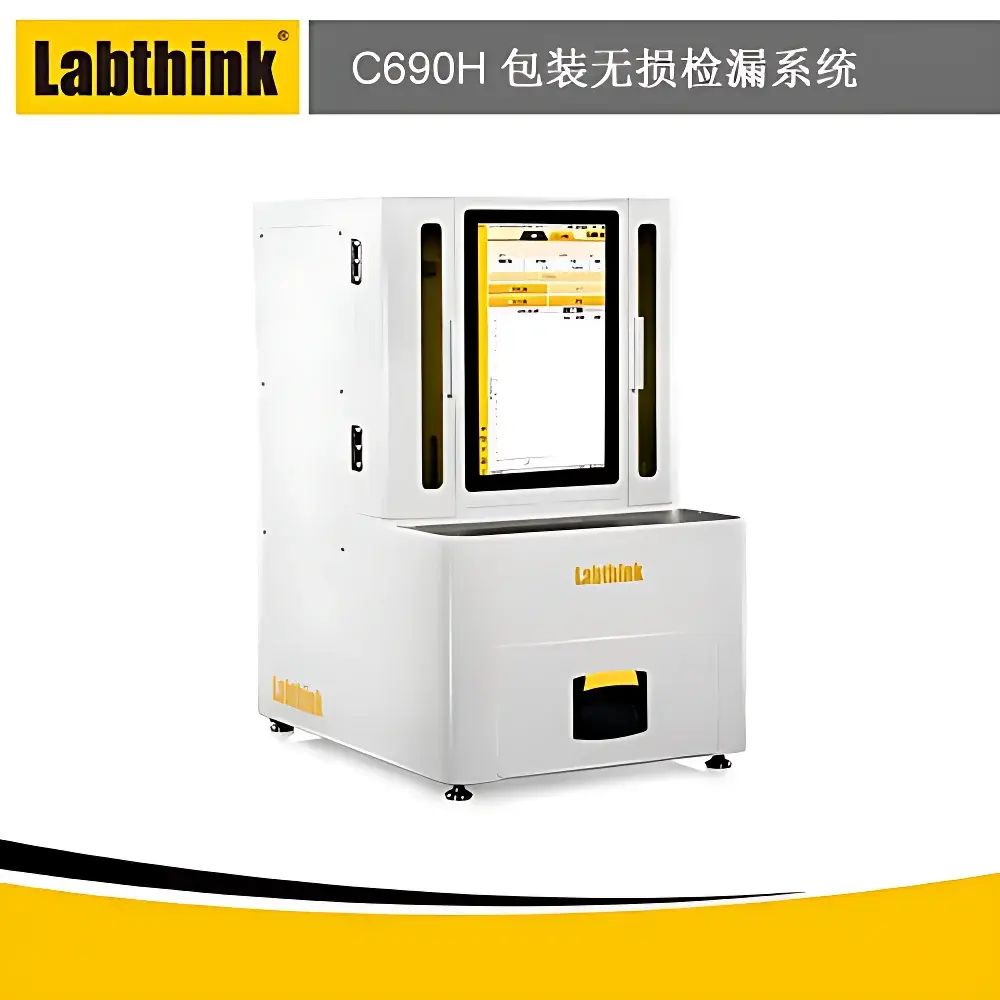
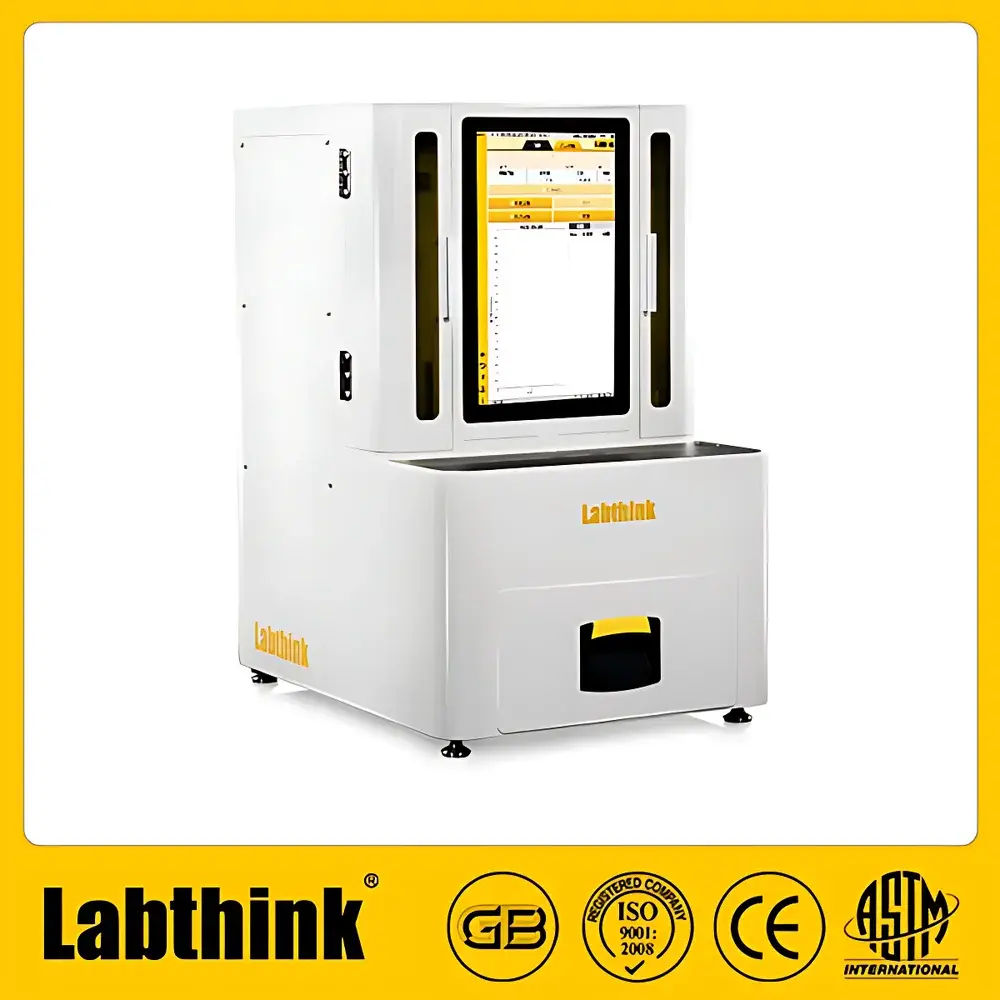
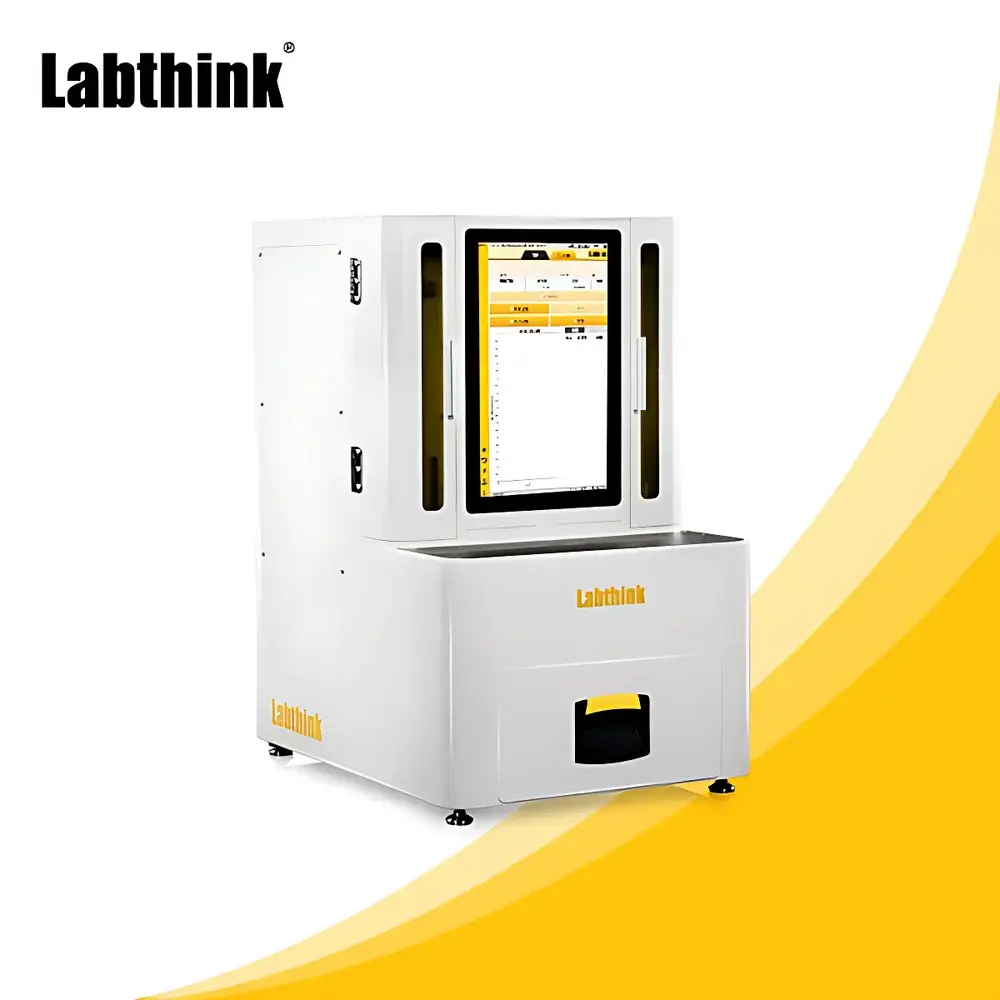
Labthink C690H Non-Destructive Package Leak Tester
| Brand | Labthink |
|---|---|
| Model | C690H |
| Principle | Vacuum Decay Method |
| Standards Compliance | ASTM F2338, YY/T 0681.18, USP <1207> |
| Test Range | 3–8–Large Leak (Reference Orifice, USP <1207>) |
| Detection Limit | ≤3 µm |
| Resolution | 0.1 µm |
| Repeatability | ±1 µm |
| Pressure Range | −100 to 0 to +100 kPa |
| Sample Capacity | 20–120 units per batch |
| Max Sample Size | Ø45 mm × 80 mm |
| Gas Supply | Compressed Air (≥500 kPa / 72.5 psi) |
| Interface | Ø6 mm Polyurethane Tubing |
| Power | 120 VAC ±10% 60 Hz or 220 VAC ±10% 50 Hz |
| Dimensions | 850 × 500 × 730 mm |
| Weight | 95 kg |
| Vacuum Source | Integrated European Vacuum Pump |
| Data Traceability | NIST-Traceable Pressure & Flow Sensors |
| Software Platform | Windows-based Embedded OS with 15.6" Touchscreen |
| Optional Compliance Modules | 21 CFR Part 11 Electronic Signatures, GMP Computer System Validation Support |
Overview
The Labthink C690H Non-Destructive Package Leak Tester is an engineered solution for quantitative, non-destructive container closure integrity testing (CCIT) of sterile pharmaceutical primary packaging. It operates on the vacuum decay principle—a pressure-based, deterministic method that measures minute changes in chamber pressure over time following controlled evacuation. Unlike subjective dye ingress or bubble emission tests, the C690H delivers traceable, numeric leakage rates (in standard cubic centimeters per second, sccs) and equivalent reference orifice diameters (in micrometers), directly aligned with the risk-based framework defined in USP . The system is validated for use across a broad range of rigid and semi-rigid containers including vials (e.g., serum, lyophilized), ampoules, cartridge systems (carpules), infusion bottles, and pre-filled syringes—without compromising sterility or requiring sample destruction.
Key Features
- Dual independent test channels (A and B) enable concurrent evaluation of two distinct container formats or sizes, maximizing throughput without cross-contamination or reconfiguration delays.
- Automated drop-through sample loader accommodates 20–120 units per batch, supporting high-volume QC release testing while maintaining consistent positioning and seal interface geometry.
- Vacuum decay and positive-pressure decay modes are both available; the latter mitigates false negatives caused by transient pore occlusion (e.g., from particulates or viscous residues).
- NIST-traceable absolute pressure transducers and mass flow sensors ensure metrological integrity; all raw pressure-time data and calculated leakage metrics are fully auditable and exportable in CSV or PDF format.
- Embedded 15.6-inch industrial touchscreen runs a purpose-built Windows OS application with vertical UI layout optimized for glove-compatible operation and rapid parameter navigation.
- Real-time pressure decay curve visualization, automatic pass/fail classification per user-defined limits, and on-the-fly calculation of equivalent orifice diameter (EOD) per ISO 15797 and ASTM F2338 Annex A1.
- Integrated sensor suite monitors vacuum pump status, chamber seal integrity, ambient temperature drift, and air supply pressure—triggering context-aware alerts before test initiation or during execution.
Sample Compatibility & Compliance
The C690H accepts containers up to Ø45 mm × 80 mm in dimension, covering standard 2R–30R vials, Type I glass ampoules, Luer-lock cartridges, and polymer-based pre-filled syringe barrels. Its modular cavity design allows field-reconfigurable tooling for custom geometries, with optional negative/positive control standards (certified leak references per ISO 20417) supplied for method verification. From a regulatory perspective, the system satisfies core requirements of EU Annex 11, FDA Guidance for Industry on Container Closure Integrity Testing, and ISO 13485:2016 for medical device packaging validation. Audit trails record all user actions—including parameter changes, result overrides, and calibration events—with immutable timestamps and operator ID linkage. Multi-tiered access control supports role-based permissions (e.g., operator, supervisor, QA reviewer), and electronic signatures comply with 21 CFR Part 11 Subpart C when the optional compliance module is enabled.
Software & Data Management
The embedded software provides full lifecycle data governance: test method templates can be saved, version-controlled, and locked against unauthorized modification. Each test run generates a structured metadata package containing instrument configuration, environmental logs, raw sensor time-series, statistical summaries (mean, SD, CV%), and final verdicts. Data export supports direct integration with LIMS via OPC UA or secure FTP. Remote firmware updates are performed over Ethernet using TLS-encrypted connections; USB ports allow offline report printing or backup media transfer. All stored data resides in encrypted local storage with configurable retention policies, and system backups adhere to ALCOA+ principles (Attributable, Legible, Contemporaneous, Original, Accurate, Complete, Consistent, Enduring, Available).
Applications
- Batch-level CCIT for lyophilized and liquid-filled vials prior to market release.
- Stability study support: periodic integrity monitoring of aged or stressed samples under ICH Q5C conditions.
- Process validation: qualification of stoppering, crimping, or sealing equipment outputs.
- Root cause analysis of container defects—correlating leakage magnitude with visual inspection findings or manufacturing variances.
- Comparative assessment of alternative closures (e.g., elastomeric vs. halobutyl stoppers) under identical test conditions.
- Support for regulatory submissions requiring analytical method validation per ICH Q2(R2), including specificity, linearity, accuracy, precision (repeatability & intermediate precision), and robustness studies.
FAQ
What is the detection limit of the C690H, and how is it verified?
The system achieves a validated detection limit of ≤3 µm equivalent orifice diameter under standard test conditions (ASTM F2338 Cycle A). Verification is performed using NIST-traceable calibrated leak standards across the 1–10 µm range, with results documented in the Instrument Qualification Report (IQ/OQ/PQ).
Can the C690H be used for flexible packaging such as pouches or sachets?
No—the C690H is specifically engineered for rigid and semi-rigid containers with geometric stability under vacuum. Flexible films or laminates require alternative methods such as helium mass spectrometry or laser-based headspace analysis.
Is external compressed air required, and what are the specifications?
Yes: clean, oil-free compressed air at ≥500 kPa (72.5 psi) and ≤5 µm particulate filtration is mandatory. The system includes a pressure regulator and filter assembly; users must supply a compatible air source meeting ISO 8573-1 Class 2:2:2 requirements.
How does the system handle environmental fluctuations (e.g., lab temperature or barometric pressure changes)?
Ambient temperature and atmospheric pressure are continuously monitored via integrated sensors; compensation algorithms adjust baseline pressure stabilization thresholds in real time to maintain measurement fidelity across typical laboratory operating ranges (15–30 °C, 80–106 kPa).
Does the C690H support IQ/OQ/PQ documentation packages?
Yes—Labthink provides comprehensive qualification documentation kits, including URS, FDS, SDS, test protocols, and executed reports compliant with GAMP 5 and FDA expectations for regulated environments.






