
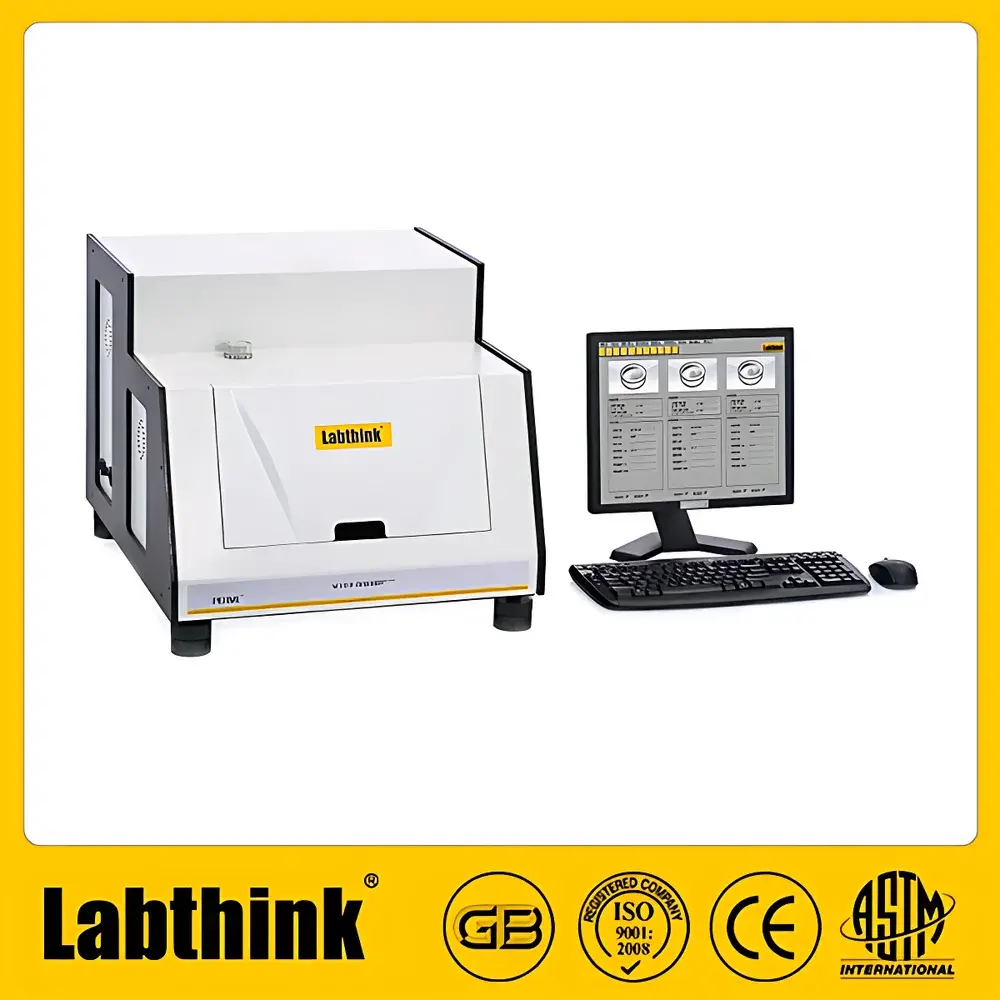
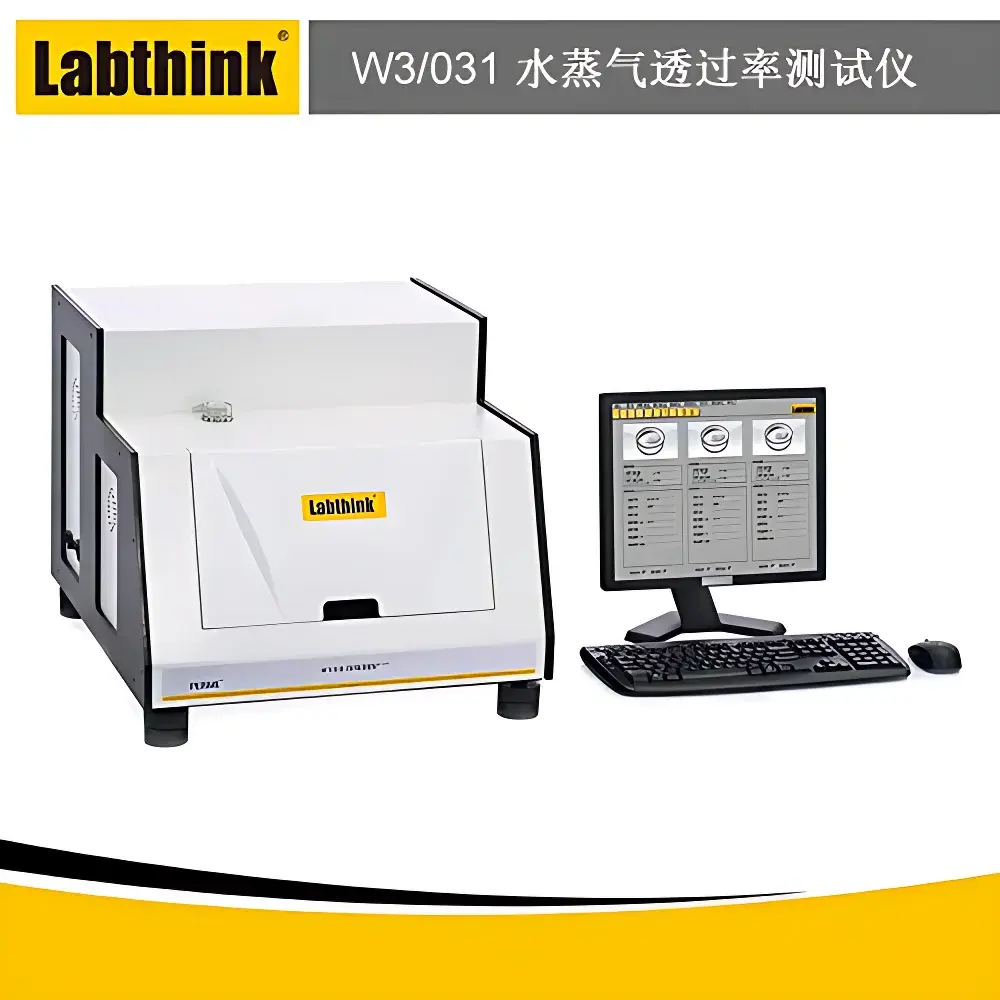
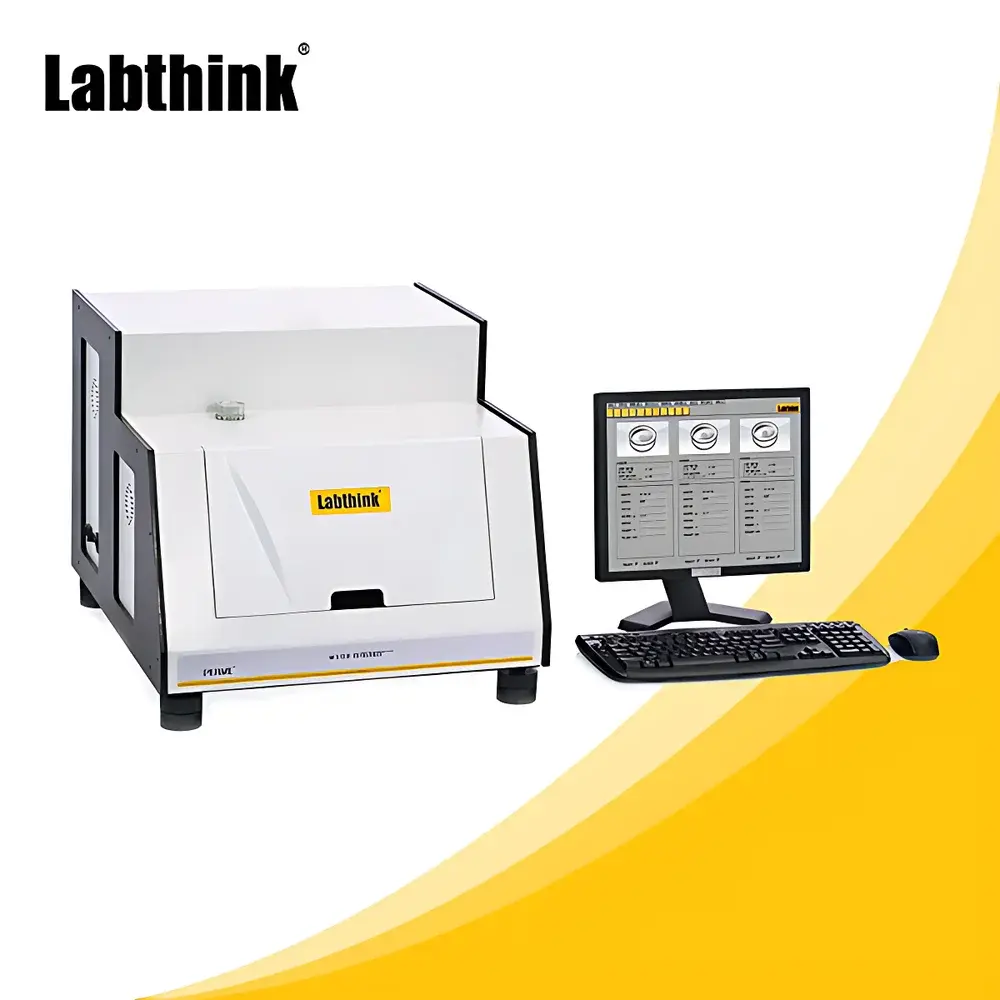
Labthink W3/031 Gravimetric Cup Method Water Vapor Transmission Rate (WVTR) Tester
| Brand | Labthink |
|---|---|
| Model | W3/031 |
| Measurement Principle | Gravimetric cup method (ASTM E96, ISO 2528, GB 1037 compliant) |
| Test Range | 0.1–10,000 g/m²·24h |
| Sample Capacity | 1–3 independent cups |
| Resolution | 0.0001 g |
| Weight Accuracy | ±0.01 g/m²·24h |
| Temperature Control | 15–55 °C (±0.1 °C) |
| Humidity Control | 10–98% RH (±1% RH) |
| Test Area | 33 cm² |
| Specimen Thickness | ≤3 mm |
| Specimen Diameter | Φ74 mm |
| Chamber Volume | 27 L |
| Air Supply | 0.6 MPa, Φ4 mm polyurethane tubing |
| Power | 220 VAC 50 Hz / 120 VAC 60 Hz |
| Net Weight | 83 kg |
| Dimensions | 580 × 680 × 470 mm (L×W×H) |
Overview
The Labthink W3/031 Gravimetric Cup Method Water Vapor Transmission Rate (WVTR) Tester is an engineered solution for precise, standardized measurement of water vapor permeation through flexible packaging materials—including plastic films, laminates, coated papers, and pharmaceutical blister foils. It operates on the gravimetric cup method (also known as the desiccant or moisture gain method), wherein a conditioned test specimen seals a permeation cup containing a desiccant or distilled water, establishing a defined vapor pressure gradient across the sample. Under controlled temperature and relative humidity (RH) conditions, water vapor migrates through the film, resulting in measurable mass change over time. The instrument continuously monitors cup weight via high-resolution analytical balance subsystems, enabling direct calculation of WVTR (g/m²·24h), permeability coefficient, and transmission rate per ASTM E96, ISO 2528, GB/T 1037, and other internationally recognized standards. Designed for compliance-driven environments—such as food packaging QC labs, pharma packaging R&D, and regulatory submission support—the W3/031 delivers traceable, reproducible data aligned with GLP and GMP documentation requirements.
Key Features
- Triple independent test stations: Three sealed permeation cups operate simultaneously under identical or individually configured environmental conditions, maximizing throughput without cross-contamination or thermal/hygrometric interference.
- Precision gravimetric architecture: Integrated ultra-low-drift load cells (0.0001 g resolution) and vibration-damped weighing platforms ensure long-duration stability during multi-day tests—critical for low-permeability barrier films.
- Advanced environmental control: Dual-zone thermoelectric Peltier modules enable rapid, stable temperature regulation (15–55 °C, ±0.1 °C); active humidity generation and scrubbing deliver precise RH setpoints from 10% to 98% (±1% RH) using NIST-traceable calibration protocols.
- Embedded Linux-based control platform: Replaces legacy microcontroller systems with deterministic real-time OS, supporting secure firmware updates, encrypted data logging, and seamless integration with laboratory network infrastructure.
- Automated desiccant conditioning and purge management: Integrated air drying system with auto-regenerating silica gel cartridges and programmable purge airflow (0.5–2.5 m/s) minimizes operator intervention and ensures consistent boundary layer conditions.
Sample Compatibility & Compliance
The W3/031 accommodates flat, non-porous, and semi-crystalline polymeric specimens up to 3 mm thick and 74 mm in diameter—covering common formats used in food pouches, medical device pouches, and child-resistant packaging. Its 33 cm² test area conforms to ISO 2528 and ASTM D1653 geometrical requirements. All hardware and software components are validated per IQ/OQ protocols and support full audit trails required under FDA 21 CFR Part 11 for electronic records and signatures. The system complies with test method validity criteria outlined in USP , YBB00092003 (Chinese Pharmacopoeia), TAPPI T464, DIN 53122-1, and JIS Z0208. Optional NIST-traceable reference membranes (certified WVTR values) enable routine performance verification and instrument qualification.
Software & Data Management
Controlled by Labthink’s proprietary Lystem™ v3.0 software, the W3/031 provides role-based access control, customizable test templates, automated pass/fail evaluation against user-defined specification limits, and export-ready reports in PDF, CSV, and XML formats. All raw weight-time datasets are timestamped, digitally signed, and stored with metadata including ambient lab conditions, operator ID, calibration history, and cup-specific environmental logs. When deployed within enterprise LAN environments, the instrument natively interfaces with the Lystem™ Laboratory Data Sharing System—enabling centralized data archiving, cross-instrument trend analysis, and automated report distribution to QMS platforms such as TrackWise or MasterControl. Audit trail functionality records every parameter change, data export event, and user login, satisfying ALCOA+ principles for data integrity.
Applications
- Quality assurance of multilayer coextruded films used in retort pouches and frozen food packaging.
- Barrier performance validation of aluminum oxide (AlOx) and silicon oxide (SiOx) coated PET films.
- Accelerated aging studies correlating WVTR shifts with thermal oxidative degradation.
- Regulatory dossier preparation for FDA Food Contact Notification (FCN) submissions.
- Comparative evaluation of bio-based polymers (e.g., PLA, PHA) versus conventional PE/PP structures.
- Pharmaceutical primary packaging qualification per ICH Q5C stability guidelines.
FAQ
What standards does the W3/031 fully support out-of-the-box?
ASTM E96 (desiccant and water methods), ISO 2528, GB/T 1037, GB/T 16928, TAPPI T464, DIN 53122-1, JIS Z0208, and YBB00092003.
Can the instrument perform both dry-cup and wet-cup configurations?
Yes—user-selectable cup orientation and internal desiccant/water reservoir configuration enables full compliance with both ASTM E96 Procedure A (dry cup) and Procedure B (wet cup).
Is remote monitoring and control supported?
Yes—via secure HTTPS web interface and optional Lystem™ Cloud Gateway, allowing real-time status viewing, test initiation, and alarm notifications from any authorized workstation.
How is system accuracy verified during routine operation?
Through scheduled use of certified reference standards (e.g., NIST-traceable polyethylene or cellophane membranes), documented in calibration logs that meet ISO/IEC 17025 requirements.
Does the W3/031 require external compressed air?
Yes—a clean, oil-free air supply at 0.6 MPa is mandatory for humidity control and purge airflow; an optional integrated oil-free scroll compressor is available as an accessory.






