
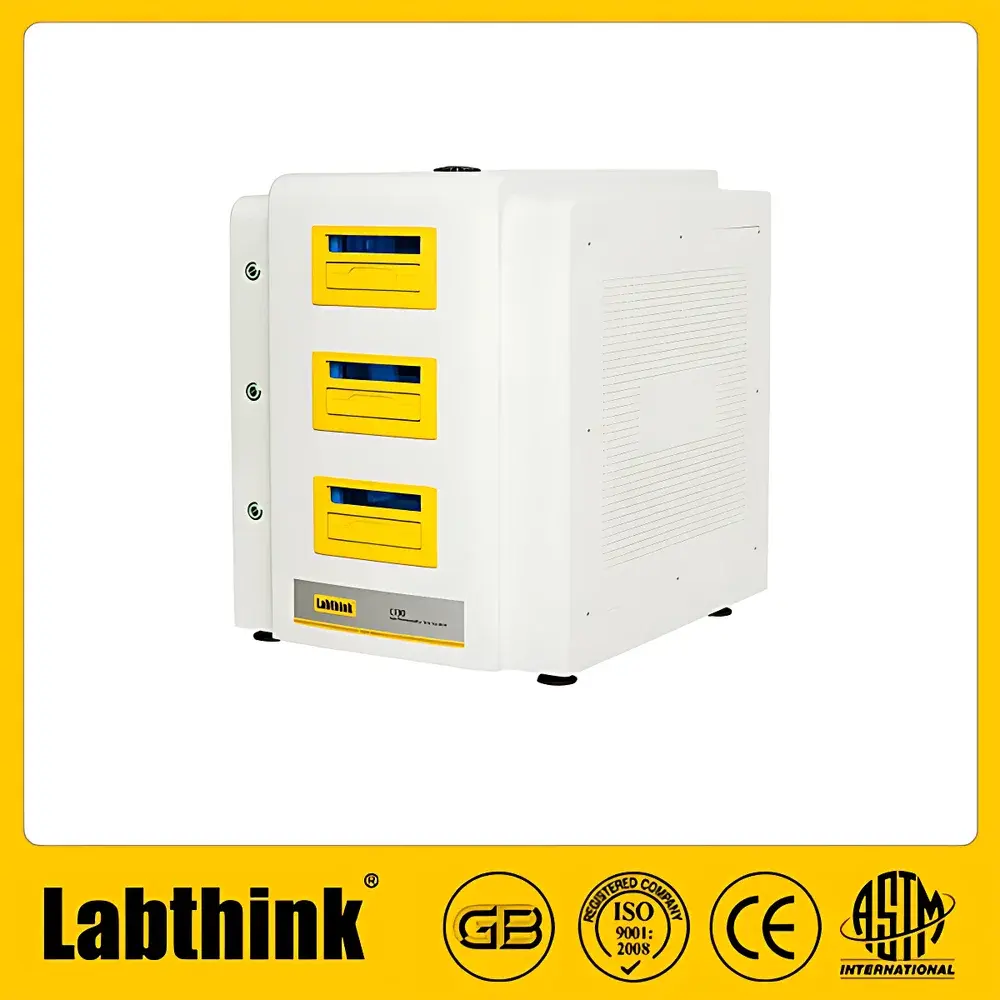
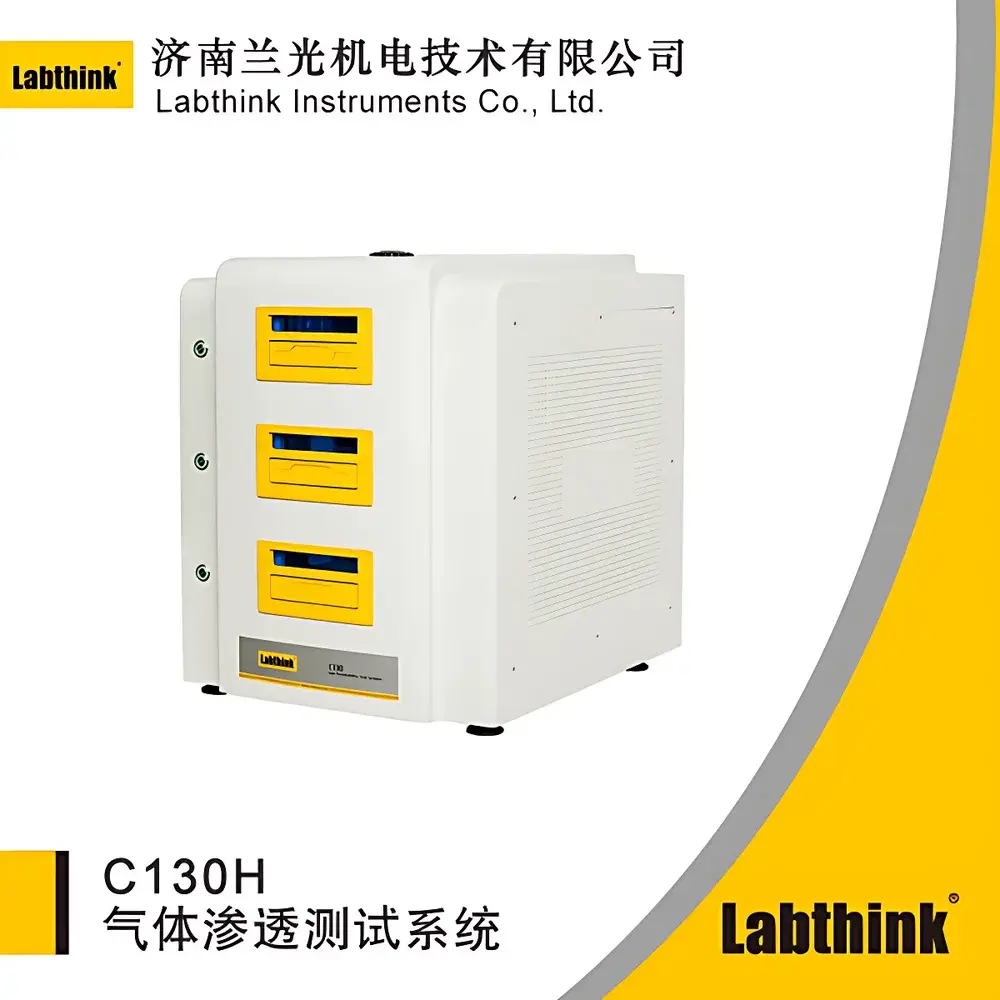
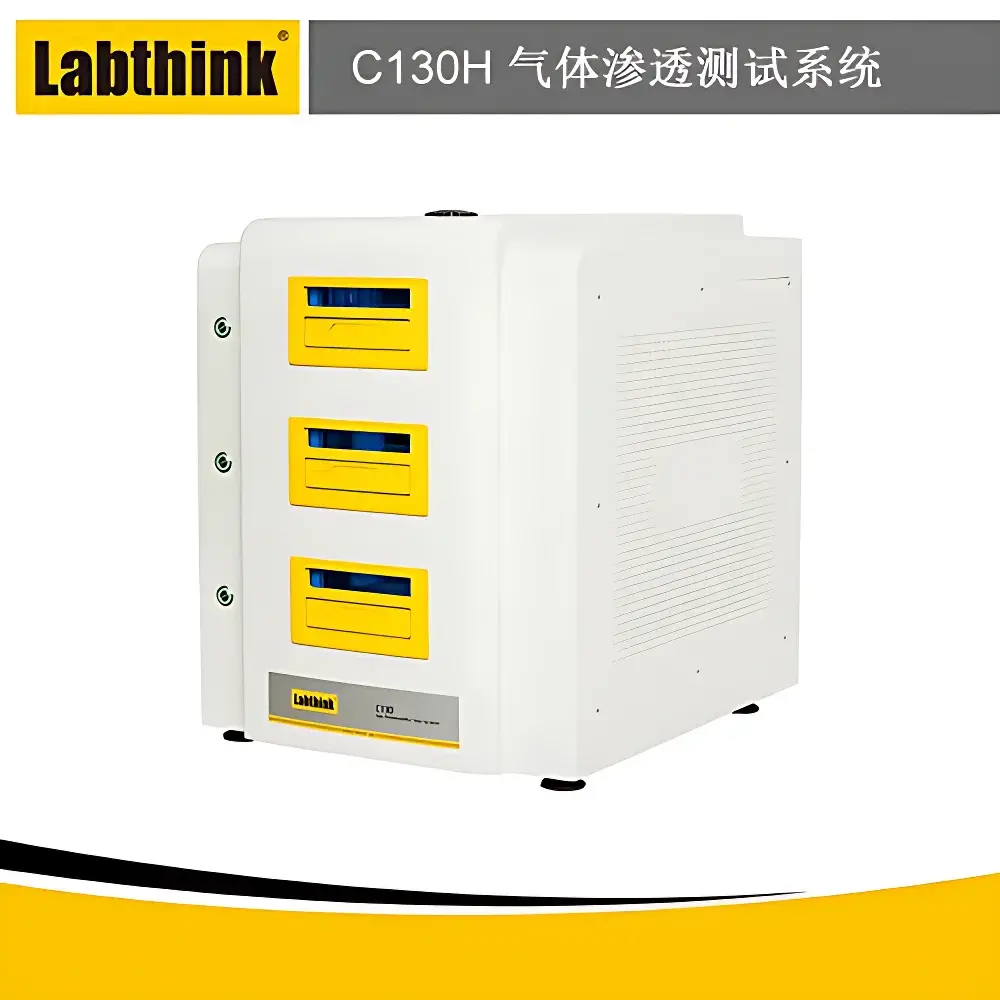
Labthink C130H Differential-Pressure Method Gas Permeation Analyzer
| Brand | Labthink |
|---|---|
| Origin | Shandong, China |
| Manufacturer Type | Original Equipment Manufacturer (OEM) |
| Country of Origin | China |
| Model | C130H |
| Price Range | USD 14,000 – 85,000 |
Overview
The Labthink C130H Differential-Pressure Method Gas Permeation Analyzer is an engineered precision instrument designed for the quantitative determination of gas transmission rates—specifically oxygen transmission rate (OTR), nitrogen transmission rate (NTR), carbon dioxide transmission rate (CO2TR), and helium transmission rate (HeTR)—through polymeric films, laminates, foils, and rigid sheet materials. It operates on the fundamental principle of differential-pressure (manometric) gas permeation, in accordance with ISO 15105-1, ISO 2556, ASTM D1434, GB/T 1038-2000, JIS K7126-1, and YBB 00082003. In this method, a conditioned specimen is sealed between two chambers: the high-pressure (upstream) chamber is pressurized with test gas, while the low-pressure (downstream) chamber is maintained under high vacuum. The transient pressure rise in the downstream chamber—monitored via ultra-high-resolution vacuum transducers—is mathematically integrated to calculate permeability coefficients (P), diffusion coefficients (D), solubility coefficients (S), and ultimately, gas transmission rates under standardized conditions (e.g., cm³/m²·24h·0.1 MPa). This thermodynamically grounded approach ensures traceable, reproducible, and metrologically compliant results essential for packaging integrity validation in food, pharmaceutical, and aerospace applications.
Key Features
- Triple independent test chambers: Enables concurrent, statistically independent measurements on three specimens—reducing inter-test variability and accelerating throughput without cross-contamination.
- Automated drawer-style test cavity with pneumatic clamping: Eliminates manual torque variation; ensures uniform sealing force (±1.5% repeatability) and minimizes operator-induced error.
- Ultra-high-stability vacuum system: Equipped with a UK-sourced dual-stage vacuum pump (ultimate vacuum < 0.2 Pa), coupled with imported high-accuracy vacuum sensors (resolution: 0.01 Pa; accuracy: ±0.2% of reading across 1–100% full scale).
- 360° forced-air thermal circulation: Maintains temperature stability within ±0.05 °C over the full operating range (10–50 °C), validated at calibration ports per ISO/IEC 17025 traceable protocols.
- Dynamic pressure compensation: Real-time upstream pressure regulation maintains constant ΔP (10–210 kPa adjustable) with drift < ±0.2 kPa during test duration—critical for accurate Fickian diffusion modeling.
- Dual operational modes: “Standard Test Mode” for routine QC (one-button start, auto-stop); “Research Mode” for advanced kinetic analysis—including time-lag calculation, activation energy profiling, and Arrhenius-based extrapolation.
Sample Compatibility & Compliance
The C130H accommodates flat, non-porous specimens up to Φ97 mm (38.48 cm² effective area), including but not limited to: BOPP/CPP laminates, metallized PET, PVDC-coated films, aluminum foil composites, biodegradable starch-based films, fluoropolymer-coated fiberglass, epoxy-coated metal sheets, and rubber elastomers. It supports O2, N2, CO2, He, and air as test gases; hazardous or flammable gases (e.g., H2, CH4) require factory-installed explosion-proof modifications per IEC 60079-0. Humidity-controlled testing (10–90% RH) is available via optional integrated humidification module. All hardware and firmware comply with ISO/IEC 17025 calibration traceability requirements. Optional GMP-compliant configuration includes 21 CFR Part 11–enabled electronic signatures, audit trails, and role-based user access control—validated for pharmaceutical primary packaging qualification per USP and EU Annex 1.
Software & Data Management
The embedded Windows-based platform integrates instrument control, real-time data acquisition, and analytical reporting into a single hardened unit—eliminating external PC dependencies and associated cybersecurity or OS compatibility risks. Live visualization includes synchronized pressure-vs.-time, transmission rate-vs.-time, and temperature-vs.-time curves with overlay capability. Raw data export is supported in CSV, XML, and PDF formats. Calibration logs, maintenance records, and test reports are timestamped and digitally signed. Optional DataShield™ enterprise module enables centralized database synchronization, LIMS integration (via HL7 or REST API), and automated report distribution—fully aligned with GLP/GMP documentation integrity standards.
Applications
- Food packaging R&D: Quantifying OTR of instant noodle pouches to predict shelf-life under ambient storage; validating barrier performance of retortable pouches post-sterilization.
- Pharmaceutical packaging: Measuring He permeation through blister lidding foils for lyophilized biologics; assessing moisture-gas coupling effects in desiccant-containing HDPE bottles.
- Aerospace materials: Evaluating helium leakage through inflatable decelerator membranes (NASA TPS qualification).
- Sustainable packaging: Characterizing O2 and CO2 permeability of compostable PLA/PBAT blends under accelerated aging (40 °C/75% RH).
- Automotive components: Determining air permeation through EPDM door seals and fuel tank liners per SAE J1708.
- Coating development: Assessing VOC barrier properties of UV-cured acrylic coatings on metal substrates.
FAQ
What gas types can be tested without customization?
O2, N2, CO2, He, and dry air—provided user-supplied gas sources meet purity ≥99.999% and pressure specifications (0.5–0.6 MPa).
Is the system compliant with FDA 21 CFR Part 11?
Yes—when equipped with the optional GMP software package, which provides electronic signature enforcement, immutable audit trails, and system validation documentation (IQ/OQ/PQ templates included).
Can the C130H measure water vapor transmission (WVTR)?
No—WVTR requires gravimetric or modulated IR detection and is outside the scope of differential-pressure gas permeation. Labthink offers the W3/030 for that application.
How is calibration verified?
Using certified reference films (e.g., NIST-traceable polyester standard) and direct sensor calibration via external ports for temperature (±0.3 °C) and vacuum (0.01 Pa resolution).
What maintenance intervals are recommended?
Vacuum pump oil change every 2,000 hours; O-ring inspection and grease reapplication (USP-grade silicone vacuum grease) every 6 months; annual full metrological verification by accredited service partner.





