
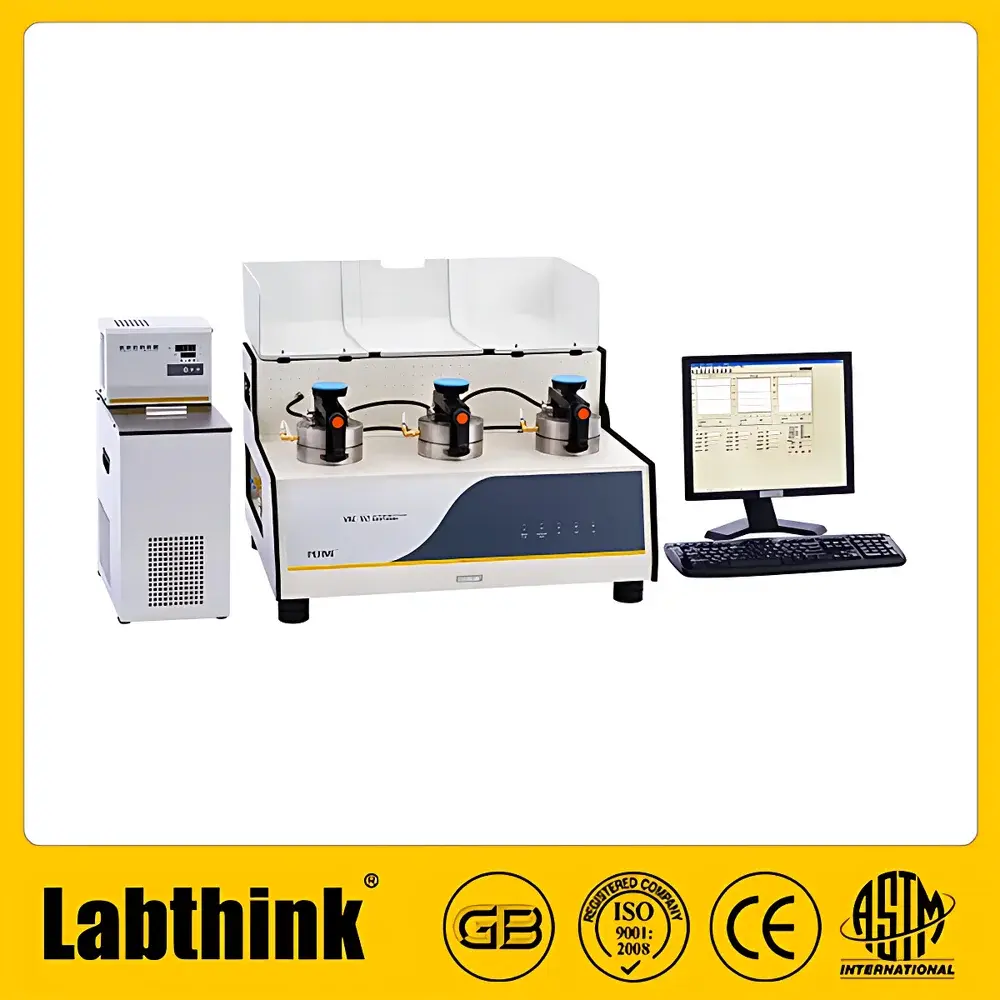
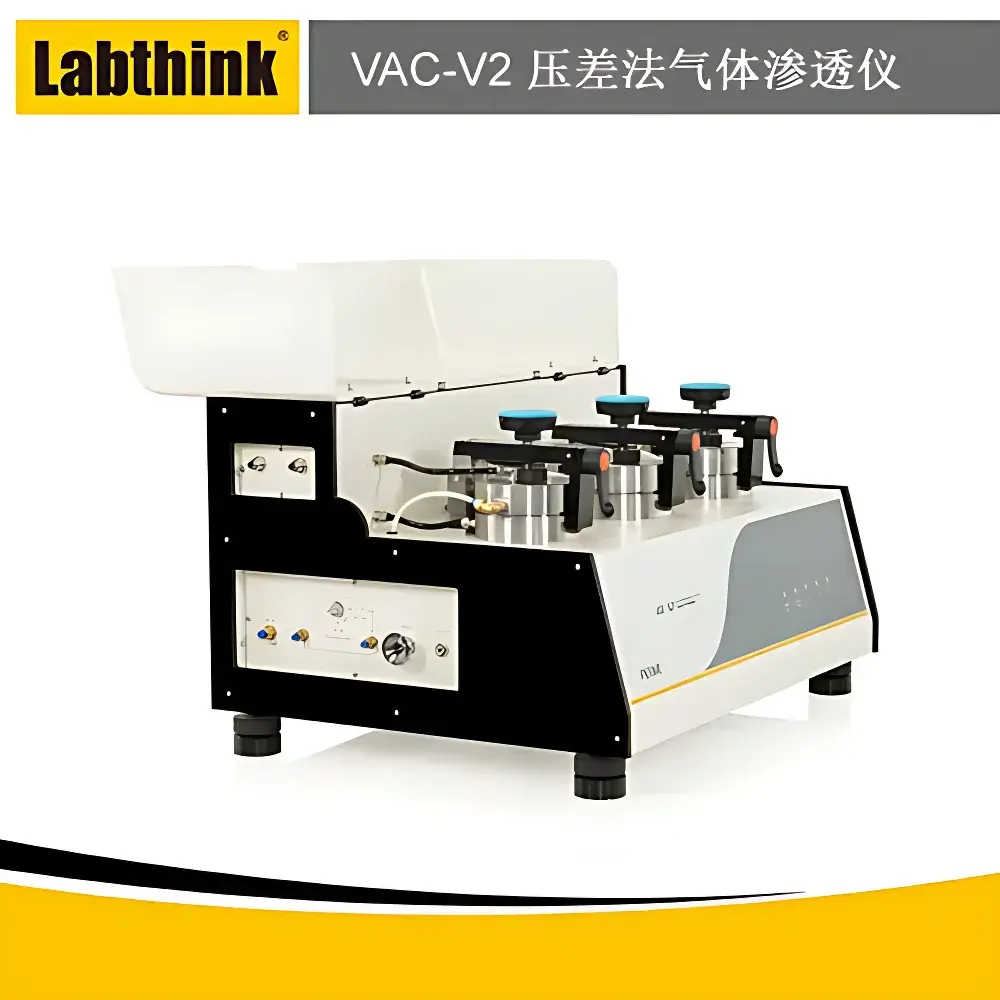
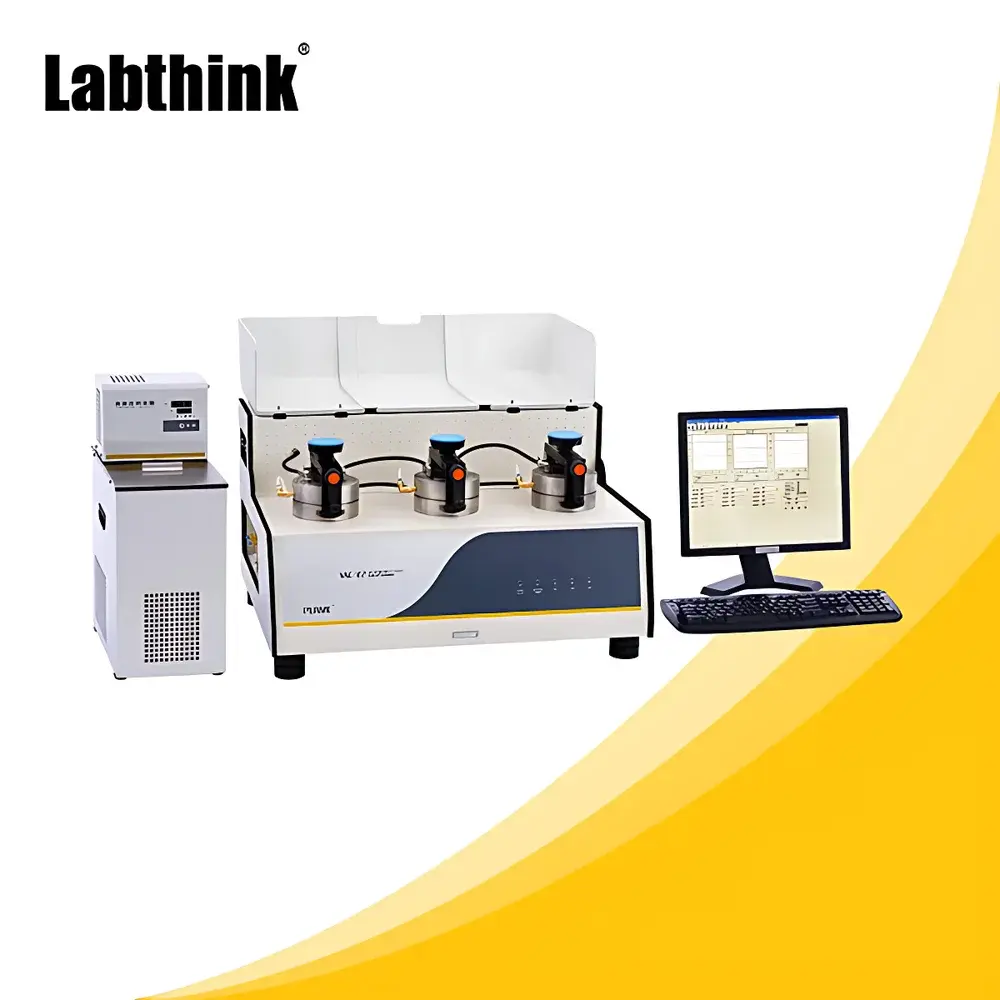
Labthink VAC-V2 Pressure-Difference Method Gas Permeability Analyzer
| Brand | Labthink |
|---|---|
| Origin | Shandong, China |
| Manufacturer Type | OEM Manufacturer |
| Country of Origin | China |
| Model | VAC-V2 |
| Price Range | USD 14,000 – 85,000 |
| Test Principle | Pressure-difference (manometric) method |
| Measurable Gases | O₂, N₂, CO₂, air, He, H₂, CH₄ (with optional safety modification) |
| Test Parameters | Gas Transmission Rate (GTR), Solubility Coefficient (S), Diffusion Coefficient (D), Permeability Coefficient (P) |
| Independent Test Chambers | 3 |
| Temperature Control Range | 5–95 °C |
| Temp. Accuracy | ±0.1 °C |
| Vacuum Resolution | 0.1 Pa |
| Lower Chamber Vacuum Level | <20 Pa |
| Standard Compliance | ISO 15105-1, ISO 2556, ASTM D1434, JIS K7126-1, GB/T 1038–2000, YBB 00082003 |
| Sample Area | 38.48 cm² |
| Sample Diameter | Φ97 mm |
| Pressure Range | −0.1 to +0.1 MPa |
| Gas Supply Pressure | 0.4–0.6 MPa |
| Interface | RS232 |
| Data System | Lystem™ Laboratory Data Management Platform |
| Power Supply | AC 220 V, 50 Hz |
| Net Weight | 88 kg |
| Dimensions | 760 × 575 × 450 mm (L×W×H) |
Overview
The Labthink VAC-V2 Pressure-Difference Method Gas Permeability Analyzer is an engineered solution for precise, reproducible measurement of gas barrier performance in flexible packaging materials and rigid sheet substrates. It operates on the fundamental principle of pressure-difference (manometric) gas transmission analysis, where a controlled pressure gradient is established across a conditioned test specimen sealed between two independent chambers. Under this differential pressure, gas molecules permeate through the material via dissolution–diffusion mechanisms. The instrument continuously monitors the pressure rise in the evacuated low-pressure chamber (typically <20 Pa), enabling real-time calculation of gas transmission rate (GTR), diffusion coefficient (D), solubility coefficient (S), and permeability coefficient (P) — all derived from first principles of Fick’s law and Henry’s law. Designed for regulatory-compliant quality control and R&D validation in packaging development, the VAC-V2 supports testing under rigorously controlled thermal and environmental conditions, making it suitable for evaluating high-barrier laminates, metallized films, polymer-coated papers, and pharmaceutical blister materials.
Key Features
- Triple independent test chambers enable concurrent, statistically independent measurements of up to three specimens — identical or dissimilar — without cross-contamination or shared calibration drift.
- High-resolution vacuum sensing (0.1 Pa resolution) coupled with active vacuum stabilization ensures reliable detection of ultra-low transmission rates down to 0.05 cm³/m²·24h·0.1MPa, critical for evaluating AlOx-, SiOx-, or EVOH-based barrier structures.
- Precision temperature control (±0.1 °C) over a broad operational range (5–95 °C) allows Arrhenius-based modeling of temperature-dependent permeation behavior and accelerated aging simulation.
- Dual-mode test termination logic — proportional response and fuzzy logic algorithms — minimizes subjective endpoint interpretation and improves inter-laboratory reproducibility.
- Modular gas handling architecture supports safe evaluation of flammable (H₂, CH₄) and toxic gases when equipped with certified explosion-proof modifications and gas-specific sensor modules (optional).
- Expandable upper measurement limit (≥500,000 cm³/m²·24h·0.1MPa) accommodates highly permeable substrates such as non-woven fabrics or uncoated LDPE, eliminating the need for dilution or secondary calibration.
- Integrated Lystem™ data management platform provides audit-trail-enabled reporting, user-level access control, electronic signature support, and full compliance with FDA 21 CFR Part 11 requirements for regulated environments.
Sample Compatibility & Compliance
The VAC-V2 accepts circular specimens with a defined test area of 38.48 cm² (Φ97 mm), compatible with standard die-cutting tools per ISO 15105-1 and ASTM D1434. It accommodates single-layer polymers (e.g., PET, PP, PE), multilayer coextrusions, aluminum foil laminates, metallized polyester, silicon oxide (SiOx) coated films, and pharmaceutical-grade cold-forming foils. All test methodologies adhere strictly to internationally recognized standards: ISO 15105-1 (plastics — determination of gas transmission rate — part 1: pressure-difference method), ISO 2556 (plastics — determination of gas transmission rate — manometric method), ASTM D1434 (standard test method for determining gas permeability characteristics of plastic film and sheeting), JIS K7126-1, GB/T 1038–2000, and YBB 00082003 (Chinese pharmaceutical packaging standard). Calibration is traceable to NIST-certified reference membranes, and system verification includes daily vacuum integrity checks and periodic zero-gas leakage validation.
Software & Data Management
Controlled via dedicated Windows-based software, the VAC-V2 automates parameter setup, chamber conditioning, test execution, real-time curve fitting, and multi-parameter output generation. Raw pressure vs. time datasets are stored with full metadata (operator ID, timestamp, ambient RH/temperature, chamber status logs). The Lystem™ platform enables centralized database synchronization across multiple instruments, role-based report generation (PDF/Excel), customizable templates aligned with GLP/GMP documentation requirements, and version-controlled method storage. All data entries include immutable timestamps, operator authentication, and change history — satisfying ALCOA+ (Attributable, Legible, Contemporaneous, Original, Accurate, Complete, Consistent, Enduring, Available) data integrity criteria.
Applications
- Quality assurance of food packaging films for shelf-life prediction and modified atmosphere packaging (MAP) validation.
- Development and qualification of barrier coatings for flexible electronics encapsulation (e.g., OLED, organic photovoltaics).
- Regulatory submission support for pharmaceutical primary packaging, including blister foil and sachet laminate characterization per ICH Q5C and USP <671>.
- Comparative analysis of biodegradable polymer films (PLA, PHA, starch blends) under varying humidity and temperature stress conditions.
- Failure analysis of delaminated or pinholed barrier structures through localized GTR mapping (when used with micro-die cutting protocols).
- Supporting ISO 11607-1 validation of sterile barrier systems for medical device packaging.
FAQ
What gases can be tested without modification?
O₂, N₂, CO₂, air, and He may be tested using the standard configuration. H₂ and CH₄ require factory-installed safety upgrades including leak-tight gas pathways, flame arrestors, and intrinsically safe electronics.
Is humidity control integrated into the base system?
Relative humidity control (0–100% RH) is available as an optional add-on module; the base system operates at dry or ambient RH conditions only.
Can the VAC-V2 generate Arrhenius plots automatically?
Yes — the software performs linear regression on log(GTR) vs. 1/T data points collected across ≥3 temperatures, calculates activation energy (Eₐ), and exports the fitted equation with R² and confidence intervals.
How is calibration verified between tests?
Each test session begins with a vacuum integrity check (<0.5 Pa/min drift) and optional reference membrane verification using certified N₂-permeable standards traceable to NIST SRM 1477.
Does the system support 21 CFR Part 11 compliance out-of-the-box?
Yes — Lystem™ includes electronic signatures, audit trails, user permission tiers, and data encryption compliant with FDA 21 CFR Part 11 Subpart B requirements for closed systems.





