
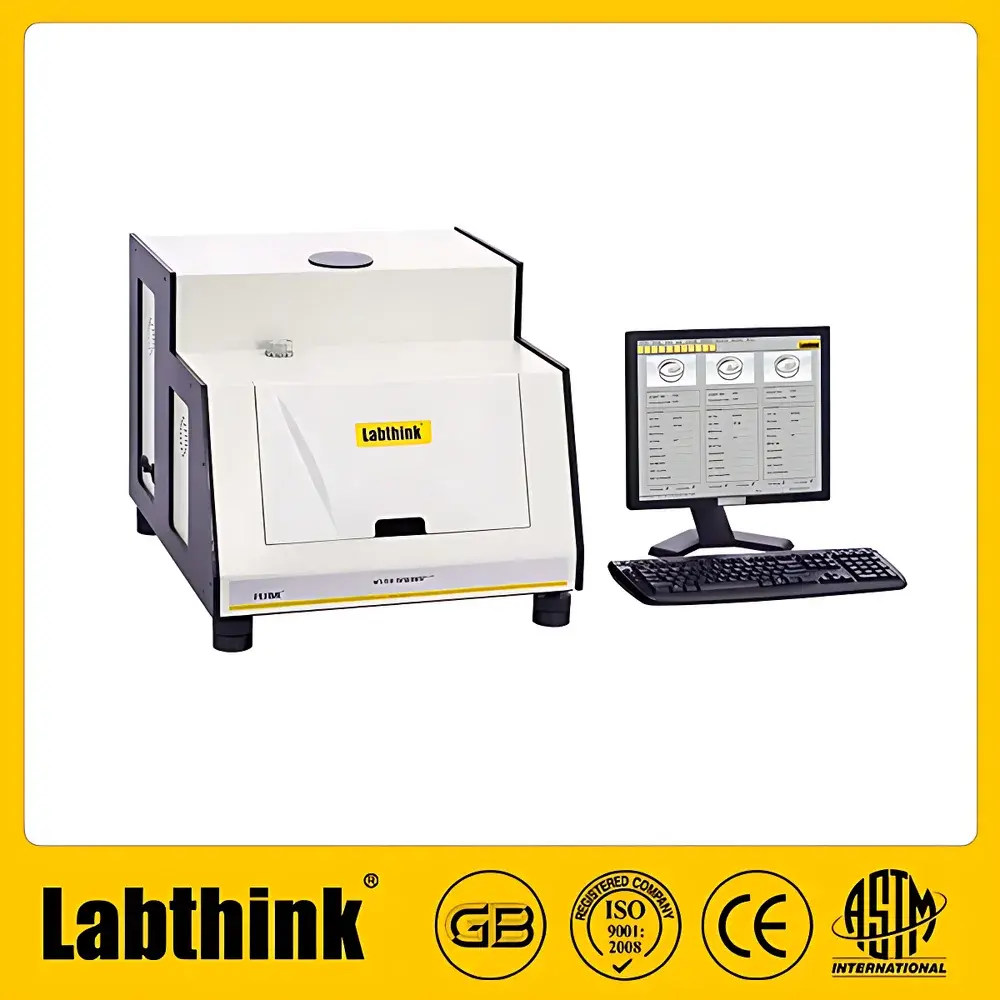
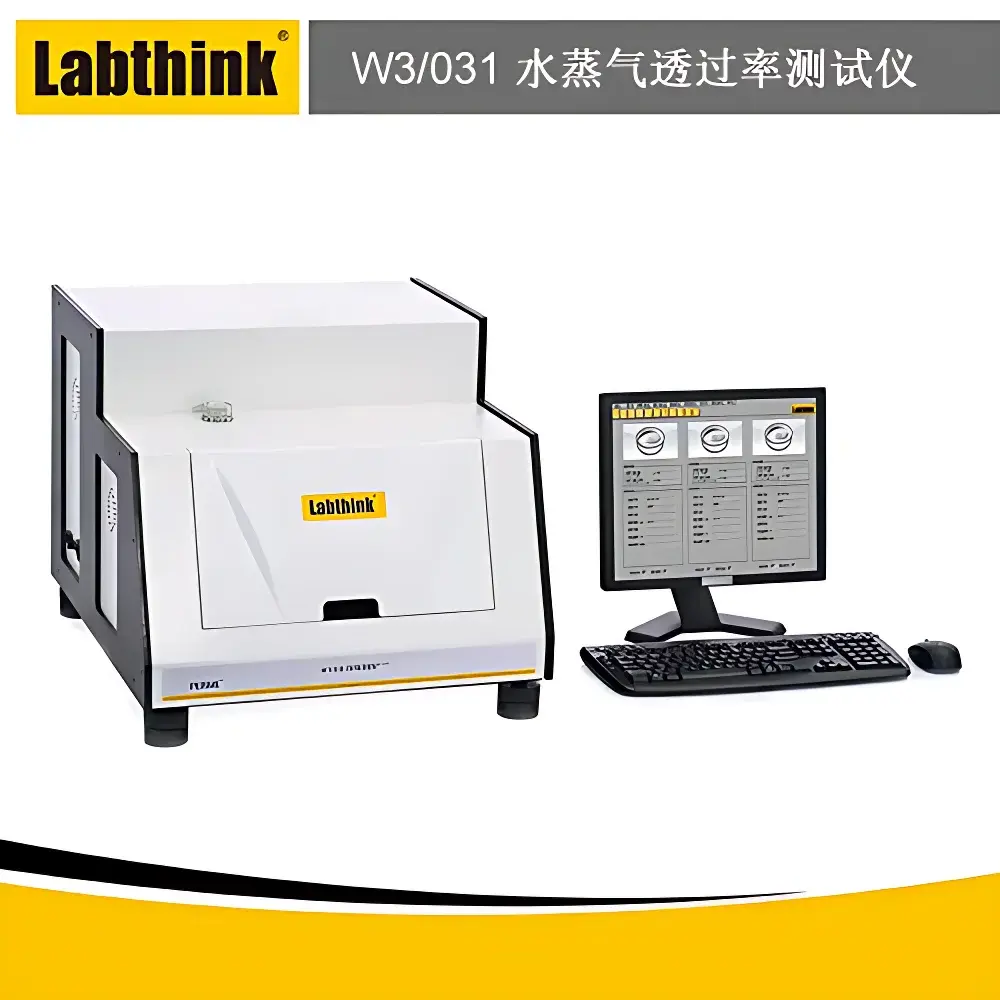
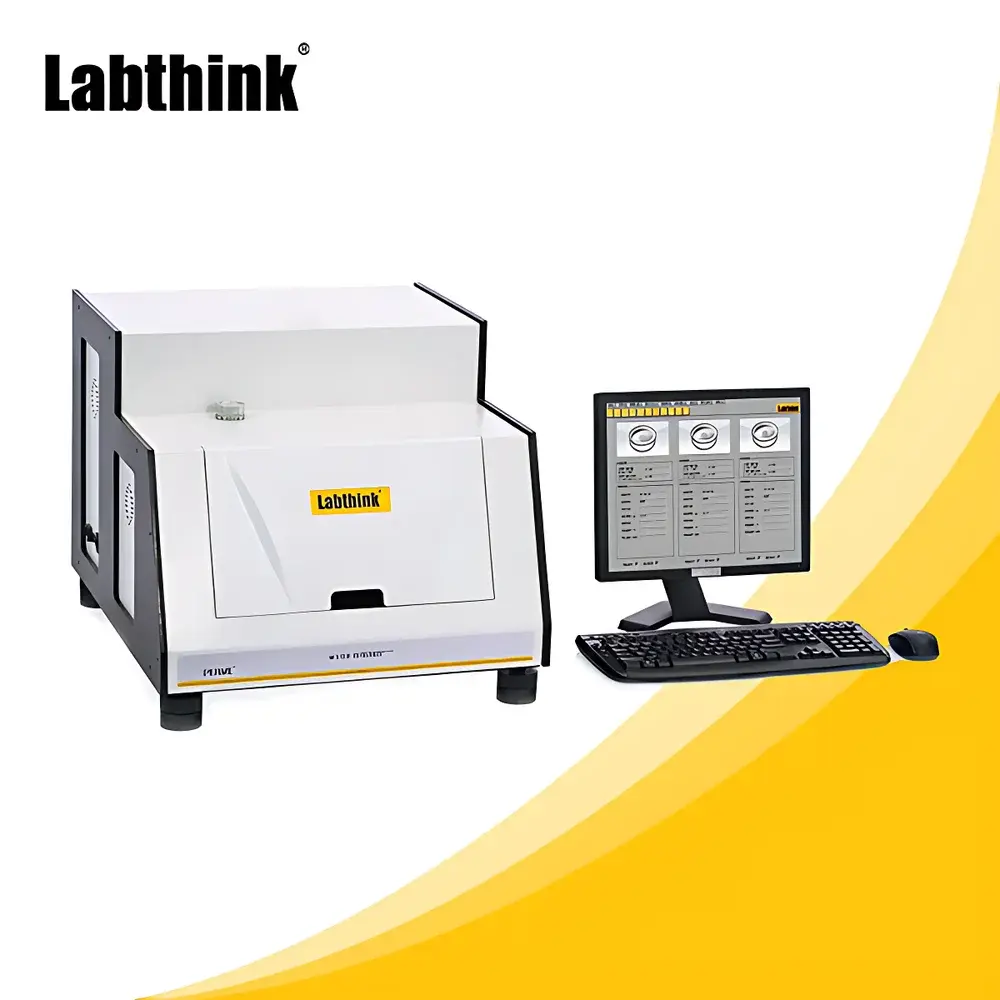
Labthink W3/031 Gravimetric Water Vapor Transmission Rate Tester for OLED Encapsulation Materials
| Brand | Labthink |
|---|---|
| Model | W3/031 |
| Principle | Gravimetric Cup Method |
| Test Range | 0.1–10,000 g/m²·24h |
| Sample Capacity | 1–3 independent cups |
| Resolution | 0.0001 g |
| Weight Accuracy | ±0.0001 g |
| Temperature Control | 15–55 °C (±0.1 °C) |
| Humidity Control | 10–98% RH (±1% RH) |
| Test Area | 33 cm² |
| Sample Thickness | ≤3 mm |
| Sample Diameter | Φ74 mm |
| Chamber Volume | 27 L |
| Purge Air Velocity | 0.5–2.5 m/s |
| Air Supply | 0.6 MPa, Φ4 mm polyurethane tubing |
Overview
The Labthink W3/031 Gravimetric Water Vapor Transmission Rate (WVTR) Tester is an engineered solution for precise, traceable, and standards-compliant measurement of water vapor permeation through ultra-barrier films—specifically developed to meet the stringent requirements of OLED encapsulation material qualification. It operates on the gravimetric cup method (also known as the desiccant cup or weight gain/loss method), a primary reference technique defined in ISO 2528, ASTM E96, GB/T 1037, and JIS Z0208. In this method, a conditioned film specimen is sealed over a test cup containing either desiccant (for dry-side measurement) or saturated salt solution (for controlled RH gradient), establishing a defined vapor pressure differential across the sample. The system continuously monitors mass change of the cup assembly using high-resolution analytical balances under tightly regulated temperature and humidity conditions. WVTR is calculated from the linear slope of mass vs. time data, normalized to test area and time—ensuring metrological rigor suitable for R&D validation, QC release testing, and regulatory submission packages.
Key Features
- Triple-cup independent testing architecture: Enables concurrent evaluation of up to three specimens under identical environmental conditions, improving throughput without cross-contamination or calibration drift.
- High-stability climate chamber: Maintains temperature within ±0.1 °C and relative humidity within ±1% RH across the full operational range (15–55 °C / 10–98% RH), critical for low-WVTR barrier film characterization where small environmental deviations induce significant measurement uncertainty.
- Sub-milligram mass resolution: Integrated 0.0001 g resolution microbalances with active drift compensation ensure accurate quantification of ultra-low transmission rates typical of multilayer oxide/nitride OLED barriers (e.g., <0.001 g/m²·24h).
- Automated environmental control and data acquisition: Fully programmable test profiles—including ramped T/RH sequences—support dynamic barrier assessment per ASTM D1653 Annex A4 and ISO 15106-3.
- Modular cup design with standardized 33 cm² test area and Φ74 mm sample aperture: Ensures compliance with all major international standards while accommodating thicknesses up to 3 mm; custom fixtures available for non-standard geometries.
- Controlled purge airflow (0.5–2.5 m/s): Minimizes boundary layer resistance at the dry-side surface, reducing edge effects and enhancing repeatability—particularly essential for nanoscale ALD-coated substrates.
Sample Compatibility & Compliance
The W3/031 accommodates rigid and flexible planar films including PET, PEN, PI, SiOx/AlOx-coated substrates, thin-film hybrid barriers, and laminated structures used in foldable display encapsulation. Specimens must be impermeable to liquid water and free of pinholes or delamination. All hardware, software workflows, and calibration protocols are designed to support GLP-compliant operation. The instrument satisfies audit requirements for ISO/IEC 17025-accredited laboratories and aligns with FDA 21 CFR Part 11 data integrity expectations via secure user access control, electronic signatures, and immutable audit trails for all test parameters, raw mass logs, and final reports.
Software & Data Management
Labthink’s proprietary PermeationWare™ v4.x software provides full ICH Q5E-aligned data handling: automatic linear regression validation (R² ≥ 0.99 required), outlier detection, slope stability thresholds, and configurable pass/fail criteria per test standard. Raw mass-time datasets are stored in encrypted SQLite databases with version-controlled backups. Export options include PDF test reports (with embedded metadata, operator ID, calibration certificate IDs, and environmental log histories), CSV for statistical process control (SPC) integration, and XML for LIMS ingestion. All calculations adhere strictly to ASTM E96 Procedure A (desiccant method) and ISO 2528 Annex B conventions—no proprietary correction factors applied.
Applications
- Qualification of thin-film encapsulation (TFE) layers for AMOLED, microLED, and QD-OLED displays
- Comparative barrier performance screening of ALD Al2O3, PECVD SiNx, and hybrid organic-inorganic stacks
- Accelerated aging studies correlating WVTR shift with thermal/humidity stress exposure (e.g., 85 °C/85% RH)
- QC release testing of roll-to-roll coated barrier films prior to module lamination
- Development of moisture-scavenging adhesives and getter-integrated encapsulants
- Validation of packaging films for pharmaceutical blister cards and sterile medical device pouches
FAQ
What standards does the W3/031 fully support?
It natively implements test modes compliant with ASTM E96 (Procedure A & B), ISO 2528, GB/T 1037, JIS Z0208, DIN 53122-1, TAPPI T464, and YBB00092003—each selectable via software configuration.
Can it measure WVTR below 0.001 g/m²·24h?
Yes, when operated under optimized low-drift conditions (e.g., 40 °C/90% RH, extended test duration >7 days) and paired with validated desiccant-grade cups and zero-drift balance calibration, the system achieves reliable quantification down to 0.0005 g/m²·24h with expanded uncertainty <12% (k=2).
Is third-party calibration certification available?
Labthink provides NIST-traceable balance calibration certificates and chamber T/RH validation reports (per ISO 17025) upon request; annual recalibration services include full system performance verification against certified reference films.
How is data integrity ensured for regulated environments?
PermeationWare™ enforces role-based permissions, electronic signatures for report approval, automated audit logs recording every parameter change, and write-once-read-many (WORM) archival—fully aligned with FDA 21 CFR Part 11 and EU Annex 11 requirements.
Related Products





