
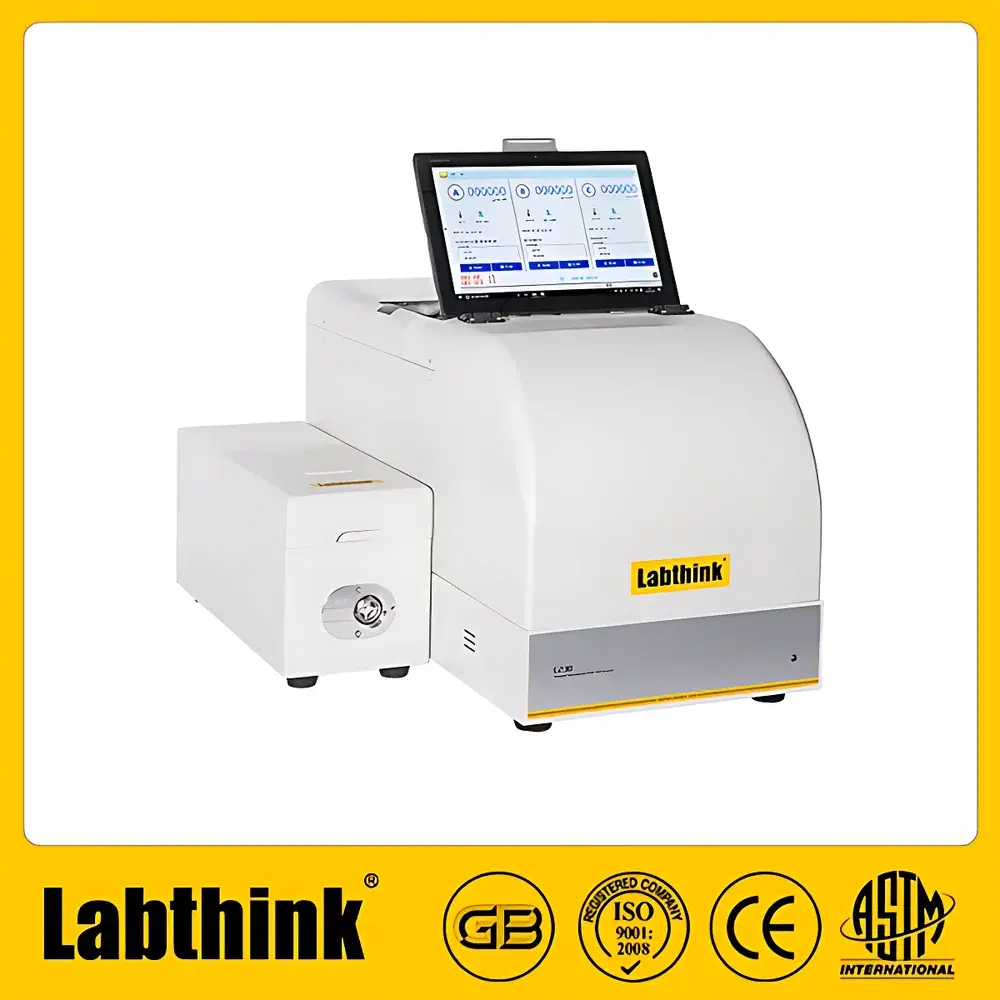
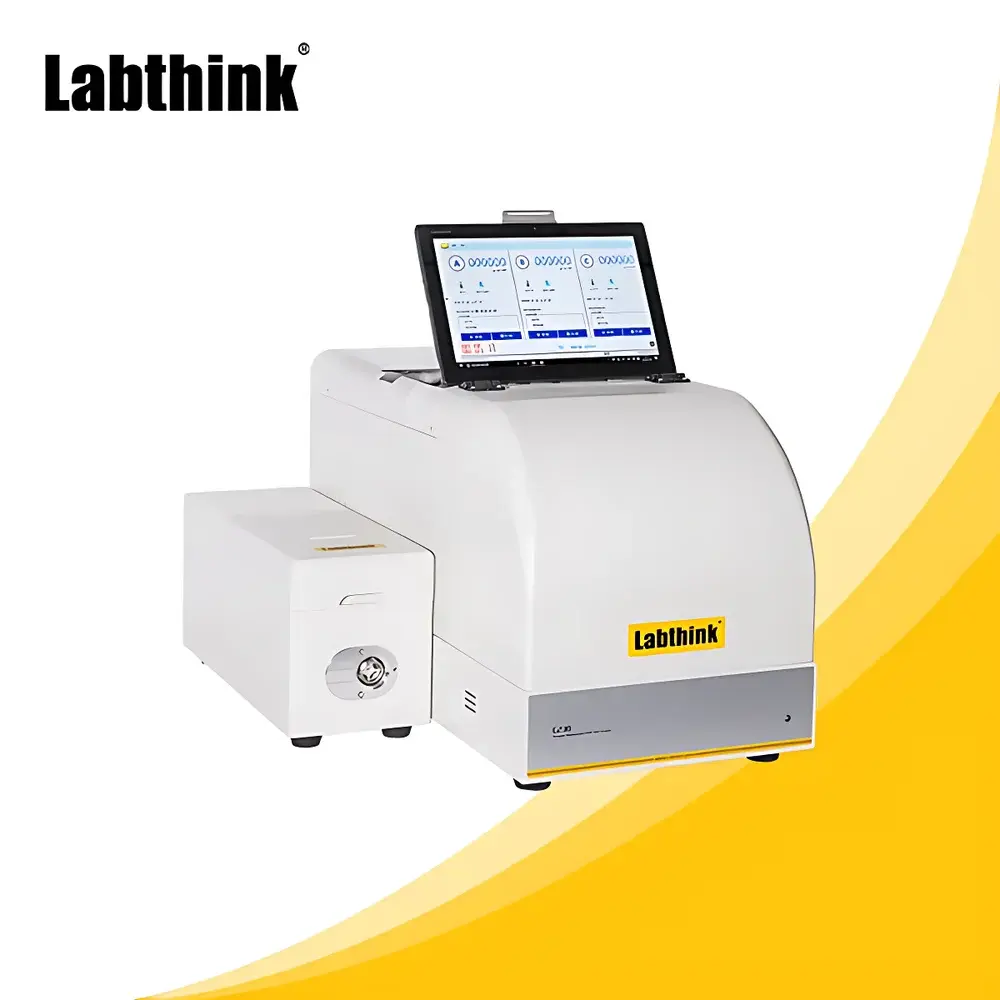
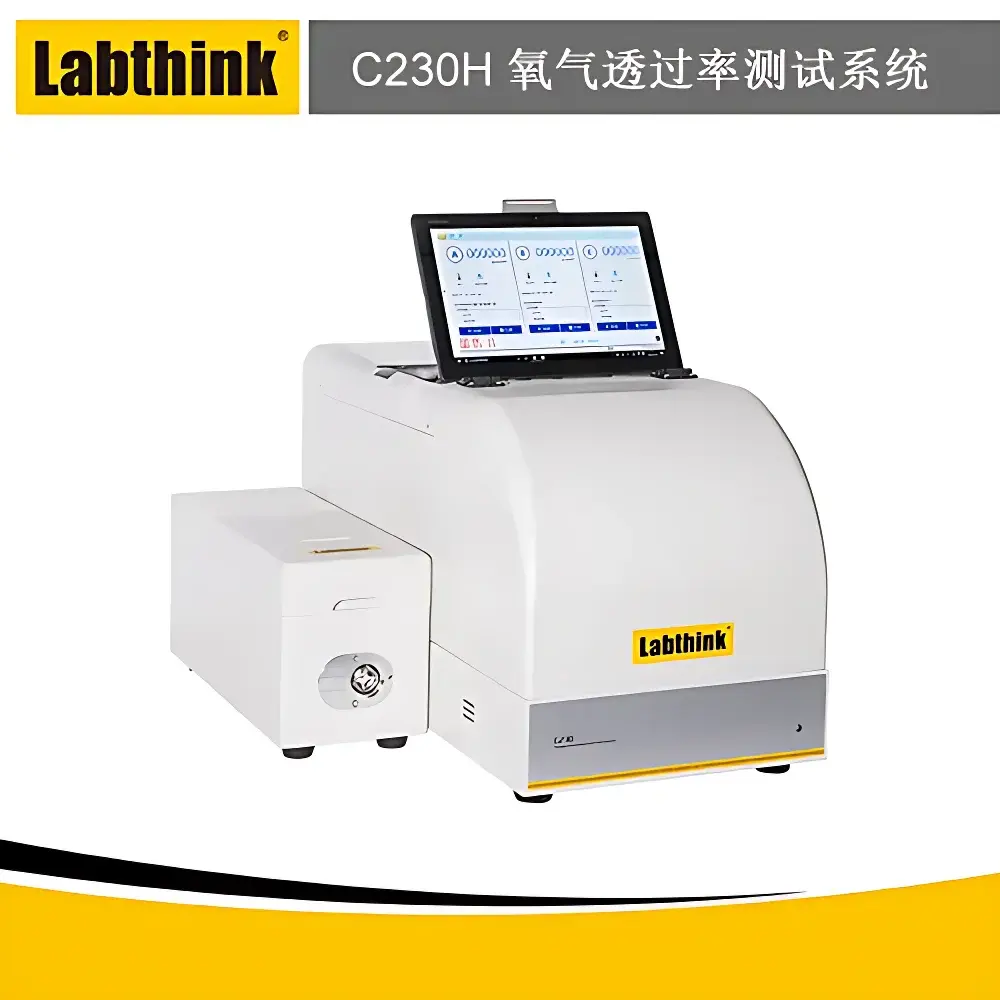
Labthink C230H Container Oxygen Transmission Rate (OTR) Analyzer
| Brand | Labthink |
|---|---|
| Model | C230H |
| Principle | Coulometric O₂ Sensor + Isobaric Method |
| Standard Compliance | ASTM D3985, ASTM F1307, GB/T 19789, GB/T 31354 |
| Test Modes | Film, Sheet, Rigid/ Flexible Packaging (up to 3 L) |
| Chambers | 3 Independent Test Cells |
| OTR Range (Film) | 0.01–200 cm³/(m²·day) |
| OTR Range (Container) | 0.00005–1 cm³/(pkg·day) |
| Resolution | 0.001 cm³/(m²·day) |
| Repeatability | ±0.01 cm³/(m²·day) or ±2% (whichever is greater) |
| Temperature Control | 10–55 °C (±0.2 °C) |
| Humidity Control | 0–90% RH (±1%) |
| Sample Area | 50 cm² |
| Max Sample Thickness | ≤3 mm |
| Sample Size | 108 mm × 108 mm |
| Carrier Gas | ≥99.999% N₂, ≥0.28 MPa |
| Data Management | DataShield™ Audit-Trail Enabled |
| Regulatory Support | Optional 21 CFR Part 11 Compliance & GMP Computer System Validation |
Overview
The Labthink C230H Container Oxygen Transmission Rate (OTR) Analyzer is a high-precision, triple-chamber isobaric testing system engineered for quantitative determination of oxygen permeation through packaging materials and finished packages. It operates on the coulometric detection principle—where oxygen molecules permeating across a test specimen are carried by ultra-high-purity nitrogen (≥99.999%) into a galvanic oxygen sensor, generating a current proportional to O₂ concentration. This electrochemical signal is converted in real time to oxygen transmission rate (OTR), expressed in standardized units per ISO, ASTM, and national regulatory frameworks. Designed explicitly for quality control laboratories in food, pharmaceutical, medical device, and advanced material manufacturing sectors, the C230H delivers traceable, reproducible results under rigorously controlled thermal and humid conditions—enabling reliable assessment of barrier integrity for shelf-life prediction, formulation optimization, and regulatory dossier submission.
Key Features
- Triple independent test chambers with synchronized environmental control—each equipped with dedicated high-accuracy temperature and relative humidity sensors (±0.2 °C, ±1% RH) to eliminate inter-chamber drift and ensure statistical validity of parallel testing.
- Monolithic thermofluidic test block architecture—optimized via computational fluid dynamics (CFD) and thermal modeling to minimize cross-chamber thermal gradients, flow asymmetry, and humidity stratification—critical for ASTM D3985-compliant repeatability.
- Fully automated climate regulation—integrated Peltier-based heating/cooling and dual-stage humidity generation enable precise, stable setpoint maintenance across the full operational range (10–55 °C; 0–90% RH).
- 12-inch industrial-grade Windows 10 touchscreen HMI—featuring deterministic real-time OS scheduling, multi-threaded test orchestration, and native support for USB peripherals, network printers, and external data loggers.
- DataShield™ secure data management suite—providing ALCOA+ compliant audit trails, role-based access control, electronic signatures, and encrypted local/cloud export (CSV, PDF, XML, SQL) with configurable retention policies.
- Modular hardware configuration—supports optional 21 CFR Part 11 compliance packages, GMP computer system validation documentation (IQ/OQ/PQ), and third-party LIMS/ELN integration via RESTful API or OPC UA.
Sample Compatibility & Compliance
The C230H accommodates flat specimens (films, sheets, foils) up to 108 mm × 108 mm and ≤3 mm thick, as well as rigid and semi-rigid packaging (bottles, cups, trays, pouches, blister packs) with internal volumes up to 3 L. It meets the geometric and procedural requirements of ASTM D3985 (film/sheet), ASTM F1307 (packaged goods), ASTM F1927 (optional high-sensitivity mode), GB/T 19789, GB/T 31354, DIN 53380-3, JIS K7126-2-B, and YBB 00082003-2015. Its triple-chamber design inherently satisfies ICH Q5C and USP recommendations for replicate testing—supporting both identical-sample triplicates (for precision estimation) and heterogeneous-sample concurrent evaluation (e.g., comparative barrier screening across material batches or supplier variants).
Software & Data Management
The embedded software platform implements a dual-mode operation paradigm: AutoTest for routine QC workflows (fully parameterized SOP execution with pass/fail logic and auto-report generation), and ExpertMode for method development, kinetic profiling, and Arrhenius modeling. All raw sensor outputs, environmental logs, and user actions are timestamped and cryptographically hashed within DataShield™. The system supports full 21 CFR Part 11 compliance—including electronic signature enforcement, biometric or token-based authentication, and immutable audit trail review—with optional validation documentation kits available for GxP-regulated environments. Data exports comply with ASTM E1461 and ISO/IEC 17025 reporting conventions.
Applications
Primary applications include OTR quantification of polymer films (PET, PE, PP, EVOH, PVDC), metallized laminates, aluminum foil composites, pharmaceutical blister foils, sterile barrier systems, and ready-to-eat meal containers (e.g., instant noodle bowls). Extended use cases cover solar backsheet durability assessment, battery cell housing permeability, automotive fuel tank liner validation, PPR pipe diffusion barriers, and cosmetic airless packaging integrity verification. Each application benefits from the instrument’s ability to decouple permeant flux from boundary-layer resistance—ensuring measurement fidelity across low-permeability (<0.01 cm³/m²·day) and high-barrier (<1×10⁻⁴ cm³/pkg·day) domains.
FAQ
What standards does the C230H directly support?
ASTM D3985, ASTM F1307, GB/T 19789, GB/T 31354, DIN 53380-3, JIS K7126-2-B, and YBB 00082003-2015.
Can it test both flat materials and finished packages in the same session?
Yes—chambers operate independently; one may run film testing while another evaluates a vacuum-sealed cup or PET bottle.
Is carrier gas included with the instrument?
No—users must supply ≥99.999% pure nitrogen at ≥0.28 MPa; Labthink provides gas conditioning manifolds and pressure regulators as optional accessories.
How is data integrity ensured for regulated environments?
Via DataShield™ with configurable audit trails, electronic signatures, and optional 21 CFR Part 11 validation packages including IQ/OQ/PQ protocols.
What sample preparation is required prior to testing?
Specimens must be conditioned per ASTM D618 (23 °C/50% RH, 48 h minimum) and free of surface contaminants, folds, or microcracks that could induce edge leakage.
Does the system support accelerated aging correlation studies?
Yes—temperature-controlled chambers allow Arrhenius-based extrapolation of OTR at storage temperatures using data collected at elevated test temperatures (e.g., 25 °C → 40 °C → 55 °C).





