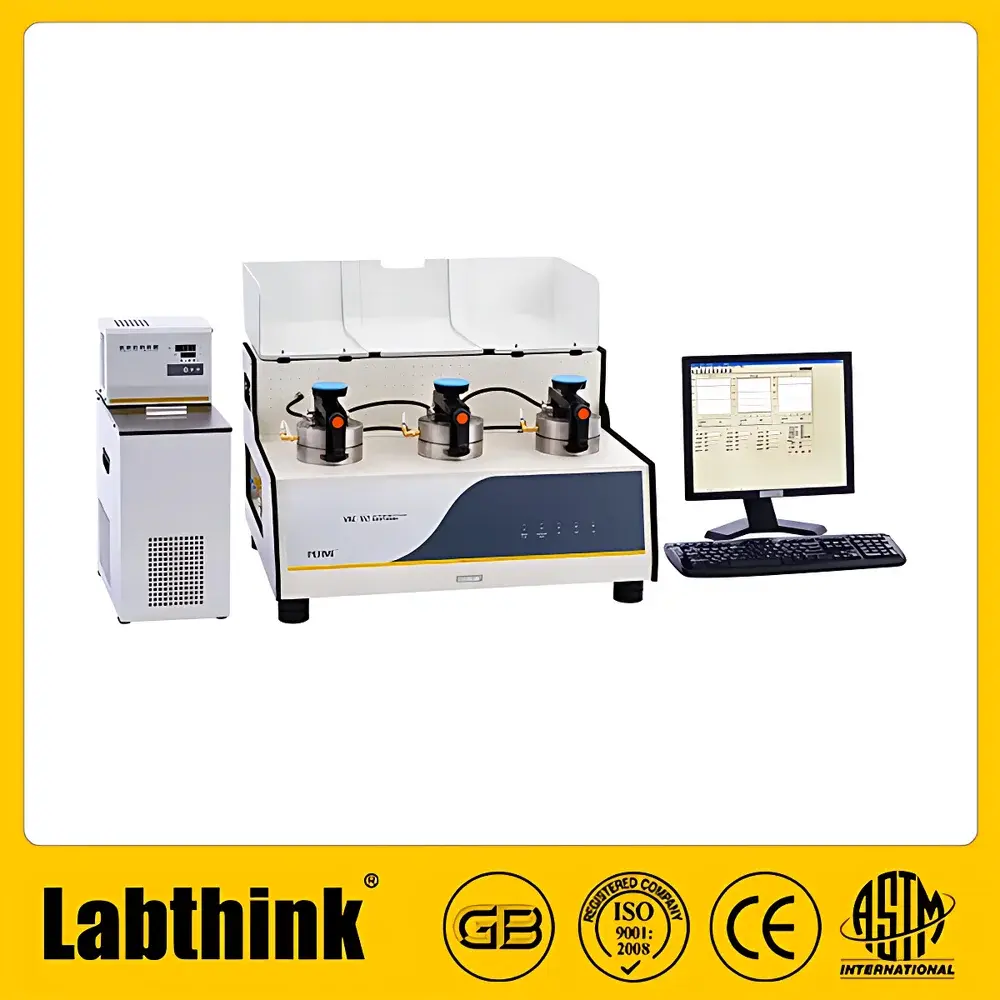
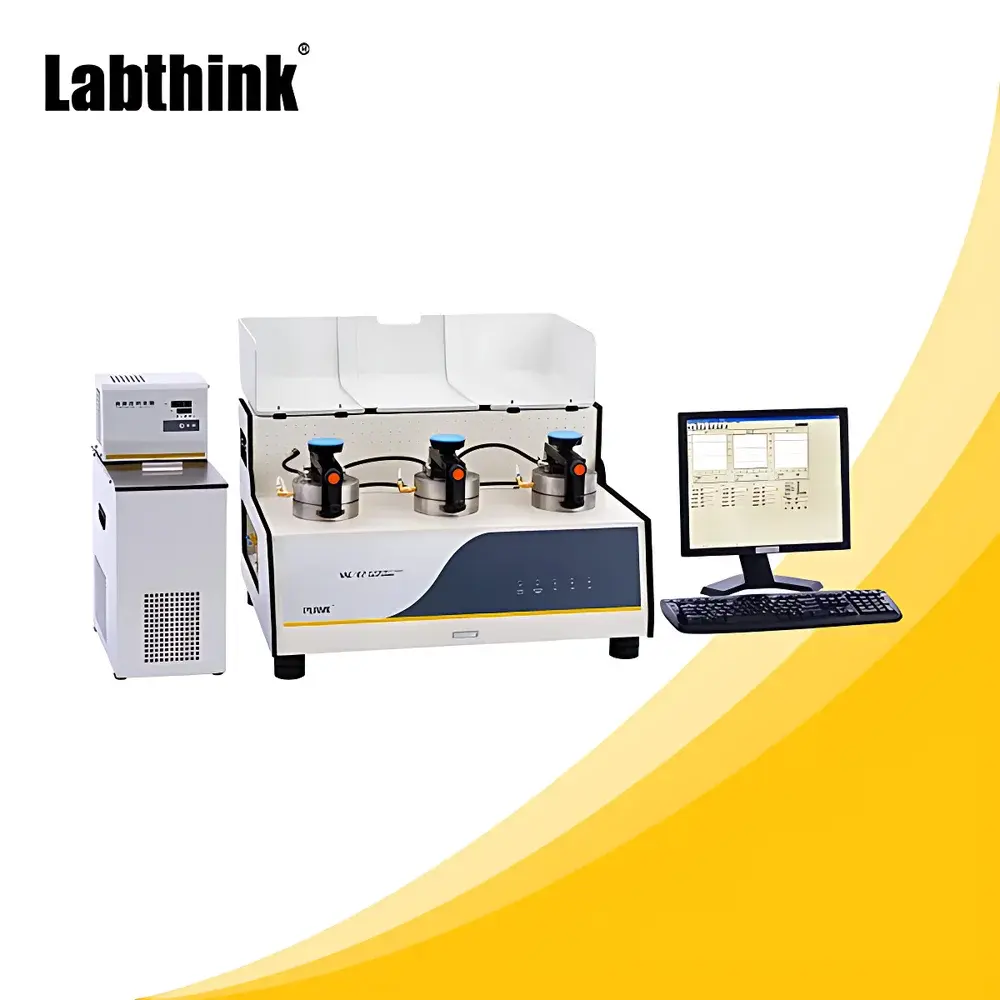
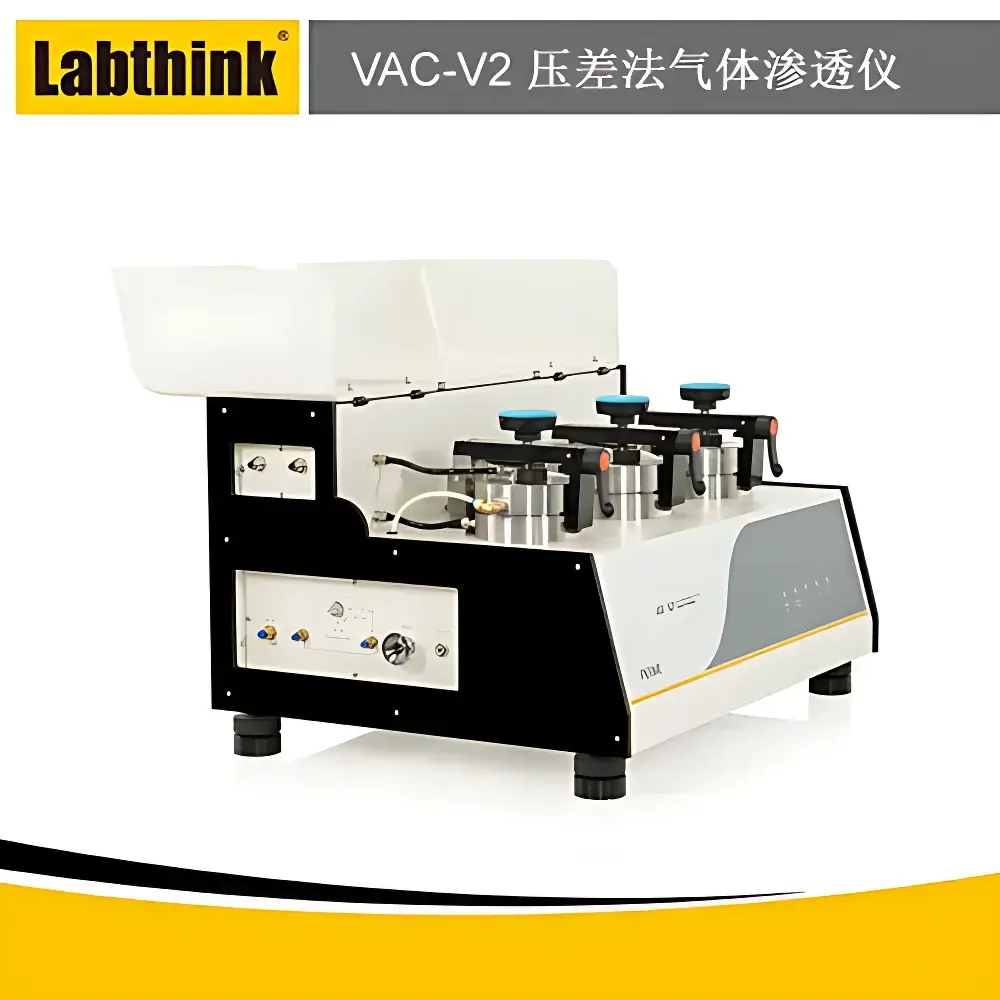
Labthink VAC-V2 Differential Pressure Gas Permeability Analyzer
| Brand | Labthink |
|---|---|
| Model | VAC-V2 |
| Measurement Principle | Differential Pressure (Manometric) Method |
| Test Gases | O₂, N₂, CO₂, Air, He, etc. |
| Test Range | 0.05–50,000 cm³/m²·24h·0.1MPa (standard) |
| Specimen Capacity | 3 independent test chambers |
| Vacuum Resolution | 0.1 Pa |
| Chamber Vacuum Level | <20 Pa |
| Temperature Control Range | 5–95 °C |
| Temp. Accuracy | ±0.1 °C |
| Humidity Control Range | 0%RH, 2–98.5%RH, 100%RH (humidifier optional) |
| RH Accuracy | ±1%RH |
| Specimen Diameter | Φ97 mm |
| Effective Test Area | 38.48 cm² |
| Test Pressure Differential | −0.1 to +0.1 MPa |
| Supply Gas Pressure | 0.4–0.6 MPa |
| Interface | Ø6 mm polyurethane tubing |
| Dimensions | 760 × 575 × 450 mm (L×W×H) |
| Power | 220 VAC 50 Hz / 120 VAC 60 Hz |
| Weight | 88 kg |
Overview
The Labthink VAC-V2 Differential Pressure Gas Permeability Analyzer is a precision-engineered instrument designed for quantitative determination of gas transmission rates (GTR), permeability coefficients (P), diffusion coefficients (D), and solubility coefficients (S) in flexible barrier materials. It operates on the established differential pressure (manometric) principle defined in ISO 15105-1, ASTM D1434, and GB/T 1038–2000. In this method, a conditioned specimen is sealed between two isolated chambers: a high-pressure upstream chamber charged with test gas (e.g., O₂, CO₂, N₂, or He), and a downstream chamber maintained under controlled vacuum. The transient pressure rise in the downstream chamber—monitored via high-resolution absolute pressure transducers—is mathematically integrated to derive time-dependent permeation kinetics. This enables not only steady-state gas transmission rate calculation but also full Fickian parameter extraction under standardized or user-defined environmental conditions.
Key Features
- Triple independent test chambers enable concurrent evaluation of three specimens—identical or dissimilar—under identical thermal and barometric conditions, significantly improving laboratory throughput and inter-sample comparability.
- High-stability temperature control (±0.1 °C) across a broad operational range (5–95 °C) supports testing under accelerated aging, refrigerated storage, or high-temperature sterilization simulation protocols.
- Dual-mode process logic—proportional control and fuzzy inference—ensures robust convergence during vacuum establishment and pressure stabilization, minimizing operator intervention and enhancing repeatability.
- Expandable measurement range accommodates both ultra-high-barrier films (e.g., SiOₓ-coated PET) and highly permeable biopolymers (e.g., starch-based compostable films), with optional extended-volume configuration supporting GTR values exceeding 500,000 cm³/m²·24h·0.1MPa.
- Integrated vacuum system features an imported oil-sealed rotary vane pump and real-time vacuum monitoring down to 0.1 Pa resolution, ensuring compliance with stringent low-pressure requirements specified in ISO 2556 and JIS K7126-1.
- Modular humidity integration (optional humidifier unit) allows precise RH conditioning (2–98.5% RH, ±1% RH accuracy) for evaluating hygroscopic materials such as cellulose-based films, PLA blends, and protein-coated substrates.
Sample Compatibility & Compliance
The VAC-V2 is validated for use with planar, non-porous, and semi-crystalline polymeric barriers including—but not limited to—polyethylene (PE), polypropylene (PP), ethylene-vinyl alcohol (EVOH), polyvinylidene chloride (PVDC), metallized polyester (MPET), aluminum foil laminates, fluoropolymer-coated fiberglass, and biodegradable matrices (e.g., PHA, PBAT, PLA, starch composites). Its mechanical clamping design ensures uniform sealing force distribution over the 38.48 cm² effective test area (Φ97 mm), minimizing edge leakage artifacts. The system conforms to regulatory and quality frameworks applicable to packaging validation: data integrity complies with FDA 21 CFR Part 11 when used with Lystem™ software’s audit trail and electronic signature modules; test reports are structured to support GLP/GMP documentation requirements for pharmaceutical blister packaging (YBB 00082003), food contact materials (EU 10/2011), and aerospace-grade elastomer qualification (e.g., helium permeation in inflatable decelerators).
Software & Data Management
Control and analysis are executed via Labthink’s Lystem™ Laboratory Data Sharing System—a secure, network-deployable platform supporting multi-user access, role-based permissions, and centralized database archiving. All raw pressure-time curves, calculated permeation parameters, calibration logs, and environmental metadata are timestamped and cryptographically hashed to ensure ALCOA+ compliance (Attributable, Legible, Contemporaneous, Original, Accurate, Complete, Consistent, Enduring, Available). Built-in curve-fitting algorithms implement nonlinear regression against Fick’s second law solutions, enabling Arrhenius modeling of temperature-dependent permeability and extrapolation to non-tested conditions (e.g., predicting shelf-life at 4 °C from 23 °C data). RS232 and Ethernet interfaces facilitate integration into MES/LIMS environments; CSV, PDF, and XML export formats comply with ISO/IEC 17025 reporting standards.
Applications
- Packaging R&D: Quantification of O₂ transmission through modified atmosphere packaging (MAP) films, CO₂ retention in carbonated beverage pouches, and N₂ barrier performance in snack lamination structures.
- Biopolymer Characterization: Comparative assessment of aerobic degradation kinetics in compostable films by tracking increasing O₂ permeability over time under controlled humidity and temperature gradients.
- Medical Device Packaging: Validation of sterile barrier integrity for Tyvek® pouches, foil-laminated trays, and peelable lids per ISO 11607–2.
- Aerospace & Automotive: Helium leak rate screening of inflatable landing systems and fuel tank liners; air permeability mapping of rubber diaphragms and gasket compounds.
- Coating & Laminate Development: Evaluation of barrier enhancement from SiO₂, AlOₓ, or graphene oxide nanocoatings applied to PET, paperboard, or aluminum substrates.
- Regulatory Submissions: Generation of repeatable, auditable datasets required for FDA premarket notifications (510(k)), EFSA migration assessments, and EU Declaration of Conformity for food contact plastics.
FAQ
What gases can be tested with the VAC-V2?
Oxygen (O₂), nitrogen (N₂), carbon dioxide (CO₂), air, helium (He), and other non-corrosive gases are supported. Testing of flammable or toxic gases (e.g., H₂, Cl₂) requires factory modification of gas-handling components and safety interlocks.
Is humidity control built-in?
Relative humidity conditioning is available via an optional external humidifier module; the base system supports dry (0%RH) and saturated (100%RH) states, with precise intermediate RH control (2–98.5%RH, ±1%RH) enabled upon humidifier installation.
How is calibration performed?
Certified standard reference films (e.g., SRM-certified PET or LDPE) are supplied for routine verification. Calibration routines automatically compute system-specific correction factors for pressure drift, temperature offset, and chamber volume—traceable to NIST-maintained metrological references.
Can the VAC-V2 meet pharmaceutical packaging validation requirements?
Yes. When operated with Lystem™ software configured for 21 CFR Part 11 compliance—including electronic signatures, audit trails, and data encryption—the system satisfies Annex 11 and ICH Q5C expectations for stability-indicating barrier testing of primary packaging.
What maintenance is required?
Routine maintenance includes vacuum pump oil changes every 500 operating hours, periodic inspection of O-rings and sealing surfaces, and annual verification of pressure transducer linearity using certified deadweight testers.