
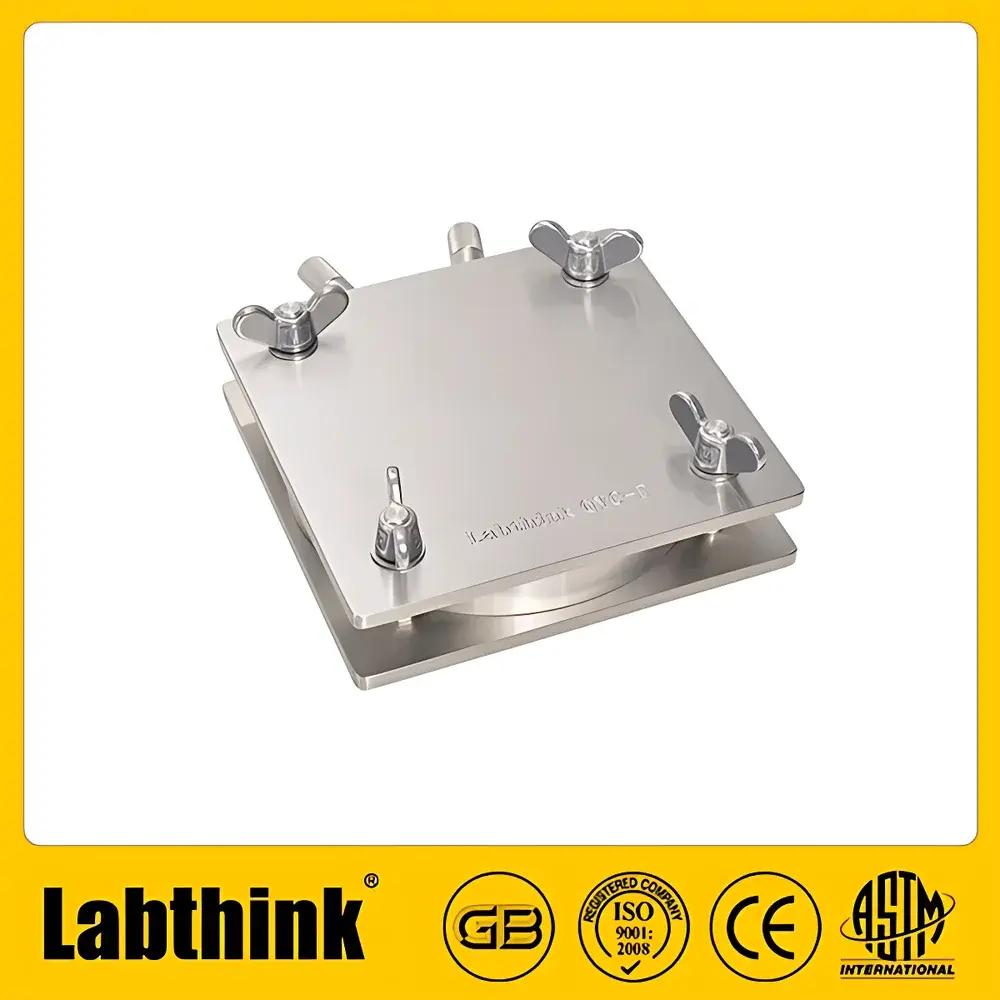
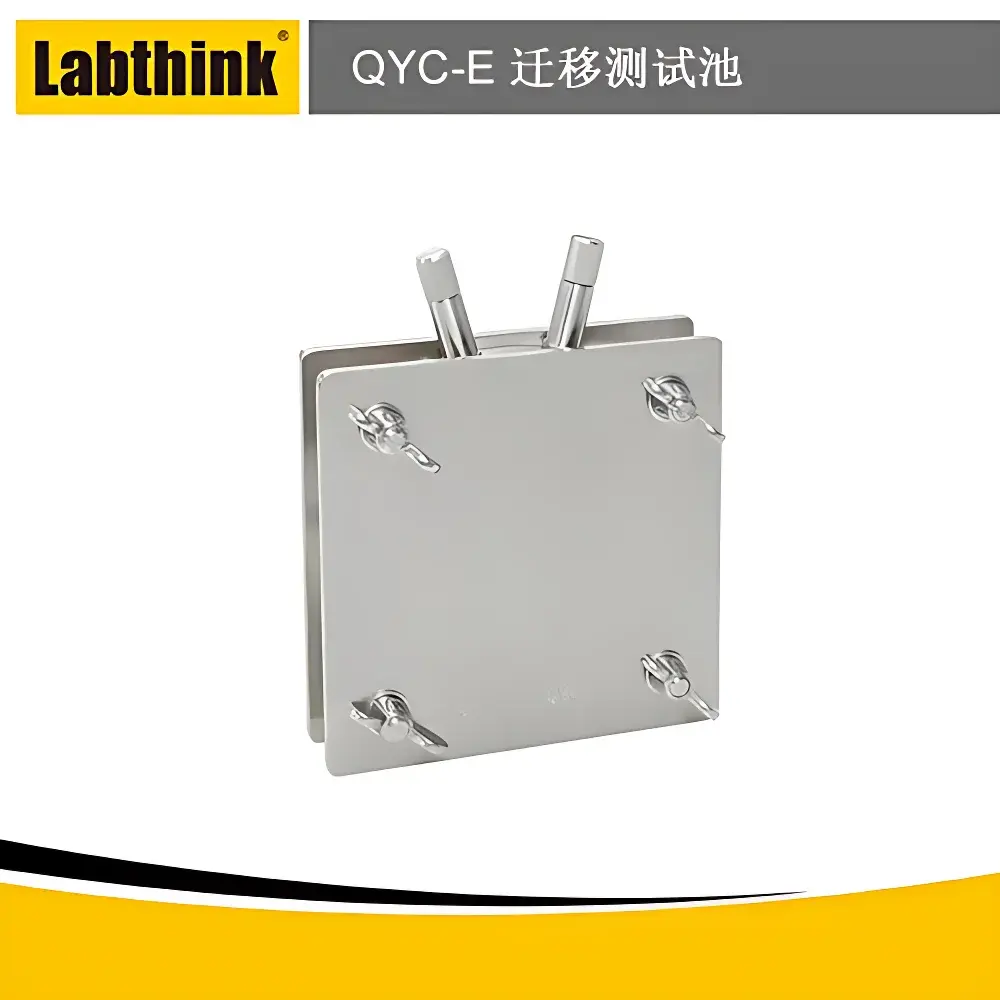
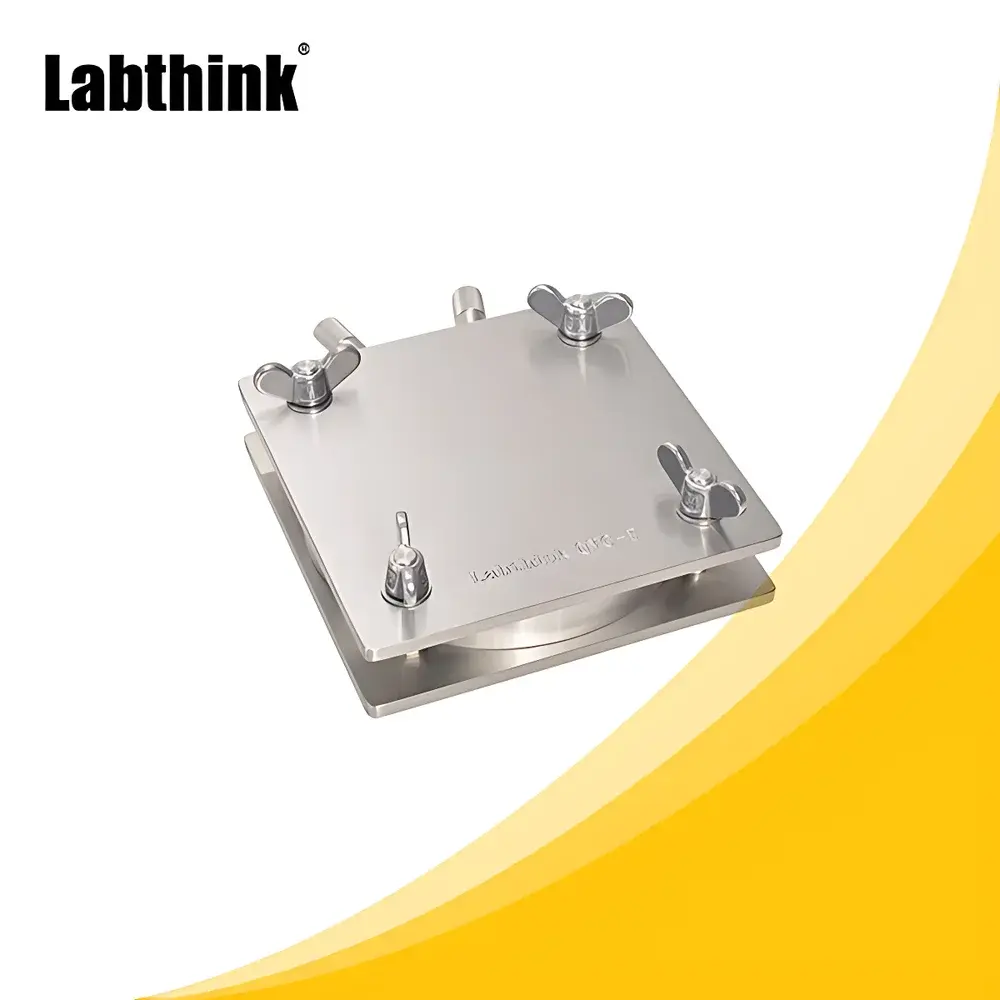
Labthink QYC-E Stainless Steel Migration Test Cell for Food Contact Materials
| Brand | Labthink |
|---|---|
| Origin | Shandong, China |
| Manufacturer | Jinan Labthink Electromechanical Technology Co., Ltd. |
| Model | QYC-E |
| Material | ASTM F86-compliant 316 stainless steel (body, sealing bolts, base feet) |
| Contact Configuration | Single- or double-sided exposure |
| Single-Side Exposure Area | 100 cm² (Φ112.8 mm) |
| Double-Side Exposure Area | 200 cm² |
| Cell Volume | 200 mL |
| Operating Temperature Range | 5 °C to 180 °C |
| Dimensions (L×W×H) | 175 mm × 140 mm × 63 mm |
| Net Weight | 2.3 kg |
| Compliance | GB 5009.156–2016, GB 31604.1–2015, EN 13130-1:2004 Annex D, Figure D.6 (Migration Test Cell C) |
Overview
The Labthink QYC-E Stainless Steel Migration Test Cell is an engineered precision tool designed for standardized pre-treatment of food contact materials (FCMs) in regulatory migration testing workflows. It operates on the principle of controlled static immersion — where a defined surface area of the test specimen is exposed to food simulants under specified time–temperature conditions to quantify potential chemical transfer. This cell is explicitly aligned with the physicochemical requirements of national and international standards governing food safety assessment, including China’s GB 5009.156–2016 and GB 31604.1–2015, as well as the European harmonized method EN 13130-1:2004 (Annex D, Figure D.6 — designated as “Migration Test Cell C”). Its geometry, material composition, and sealing architecture are rigorously validated to eliminate background interference from the test apparatus itself — ensuring that only analyte migration from the specimen contributes to measured results.
Key Features
- Full structural compliance with EN 13130-1:2004 Annex D, Figure D.6 — enabling cross-laboratory reproducibility and interlaboratory comparability in regulatory submissions.
- Monolithic construction from ASTM F86-certified 316 stainless steel (body, sealing columns, base feet), selected for its low extractables profile, high corrosion resistance, and thermal stability up to 180 °C.
- Double-sided exposure capability (200 cm² total) with independent control over single- or dual-face contact — supporting both conservative worst-case simulation and asymmetric packaging layer evaluation.
- High-integrity sealing system utilizing fluoropolymer-reinforced elastomeric gaskets rated for continuous use across the full operating temperature range (5–180 °C), resistant to hydrolysis, oxidation, and organic solvent swelling.
- Geometrically constrained exposure zone: only the centrally defined 100 cm² (Φ112.8 mm) circular area contacts simulant — eliminating edge effects and ensuring strict adherence to standardized test surface definition per GB 31604.1–2015.
- Self-contained, non-pressurized design with 200 mL internal volume — optimized for standard simulant volumes while minimizing headspace and volatile loss during elevated-temperature incubation.
Sample Compatibility & Compliance
The QYC-E test cell accommodates rigid and semi-rigid sheet-form food contact materials, including plastics, coated metals, laminated films, and paper-based composites. It supports all six primary food simulants defined in GB 31604.1–2015 and Regulation (EU) No 10/2011: distilled water, 3% (w/v) acetic acid, 10% (v/v) and 20% (v/v) ethanol, vegetable oil (or substitute such as isooctane or heptane), and n-hexane. Its inert stainless steel construction ensures no leachable contribution to analytical blanks — critical for trace-level quantification by GC-MS, HPLC-UV, or ICP-MS. The device meets material traceability and documentation requirements for GLP-compliant laboratories and supports audit readiness for ISO/IEC 17025 accreditation and FDA 21 CFR Part 11-aligned data integrity frameworks.
Software & Data Management
As a passive mechanical test cell, the QYC-E requires no embedded firmware or proprietary software. All experimental parameters — exposure area, simulant type, temperature, duration, and sample identification — are recorded externally in laboratory information management systems (LIMS) or electronic lab notebooks (ELN). Its standardized dimensions and interface geometry enable seamless integration into automated incubation racks, thermal cycling chambers, and robotic sample handling platforms. Documentation generated using the QYC-E conforms directly to reporting templates required by CNAS, CMA, and EU Reference Laboratories for Food Contact Materials (EURL-FCM).
Applications
- Regulatory migration testing of plastic packaging films, trays, and lids under simulated storage and distribution conditions.
- Validation of barrier coatings on metal cans and aluminum foil laminates against acidic and alcoholic simulants.
- Screening of adhesives, inks, and printing varnishes for non-volatile migrant release into aqueous and fatty food simulants.
- Accelerated aging studies at elevated temperatures (e.g., 70 °C, 100 °C, or 121 °C) to assess long-term migration behavior per kinetic modeling protocols.
- Reference material qualification and method verification in accredited testing laboratories performing routine FCM compliance assessments.
FAQ
Is the QYC-E test cell compatible with autoclaving?
Yes — the entire assembly, including gaskets, is rated for repeated steam sterilization at 121 °C for 20 minutes without degradation of sealing integrity or dimensional stability.
Can it be used for fatty food simulants like olive oil or sunflower oil?
No — the QYC-E is designed for use with substitute simulants only (e.g., isooctane, heptane, or n-hexane) as specified in GB 31604.1–2015 and EN 13130-1:2004; direct use of real oils is not supported due to viscosity, oxidation, and cleaning constraints.
What is the recommended cleaning protocol between tests?
Rinse thoroughly with methanol or acetone, followed by deionized water, then air-dry in a clean laminar flow hood; avoid abrasive cleaners or ultrasonic baths that may compromise surface passivation.
Does the cell include calibration documentation?
Each unit is supplied with a Certificate of Conformance referencing dimensional verification against EN 13130-1:2004 Annex D, traceable to NIM (National Institute of Metrology, China) standards.
How is test area accuracy verified during routine use?
Users should periodically confirm the inner diameter of the exposure aperture using calibrated digital calipers (±0.02 mm tolerance); deviation beyond ±0.2 mm invalidates compliance with GB 31604.1–2015.





