
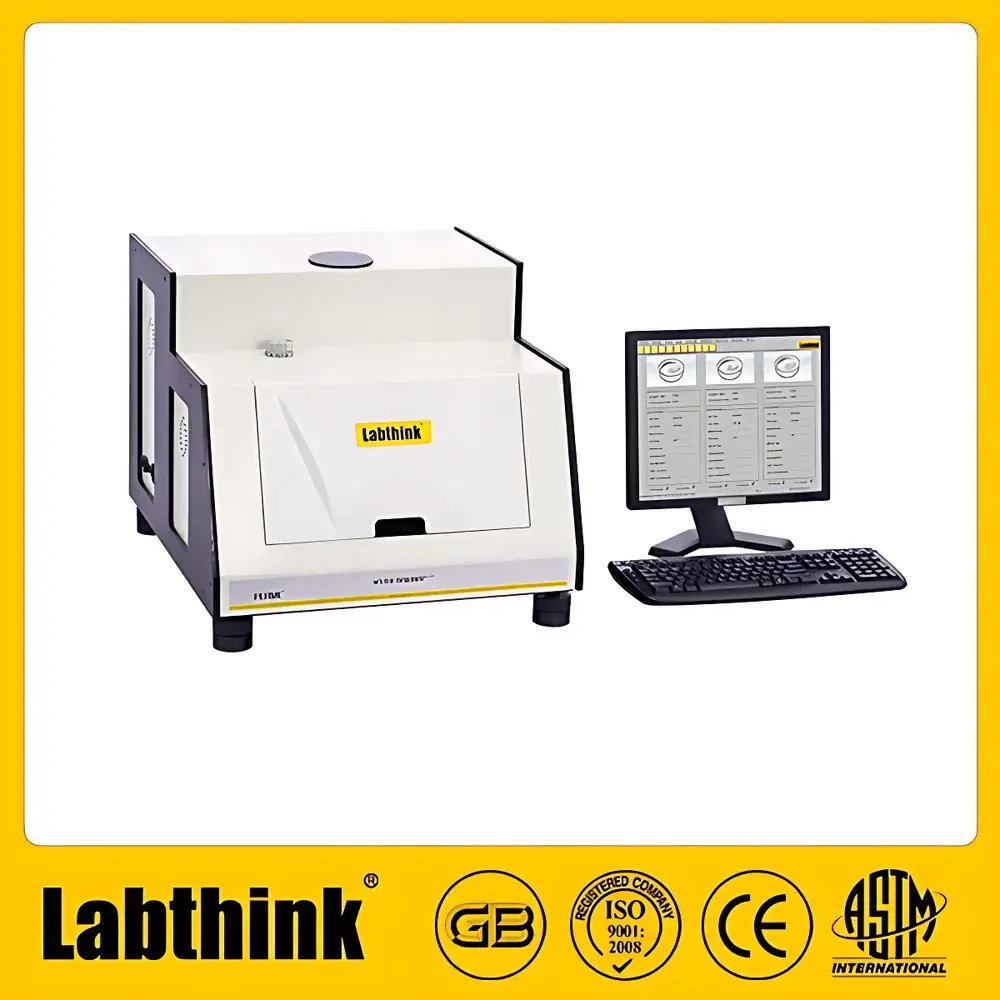
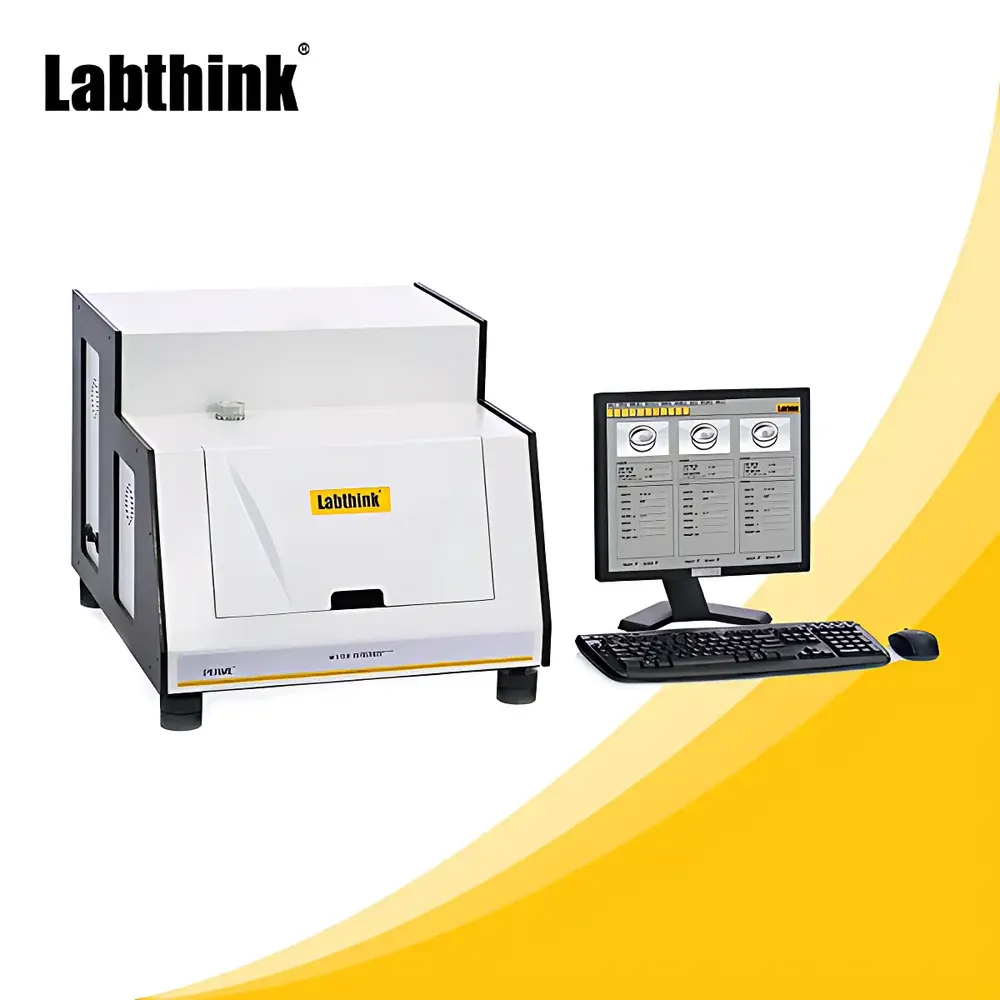
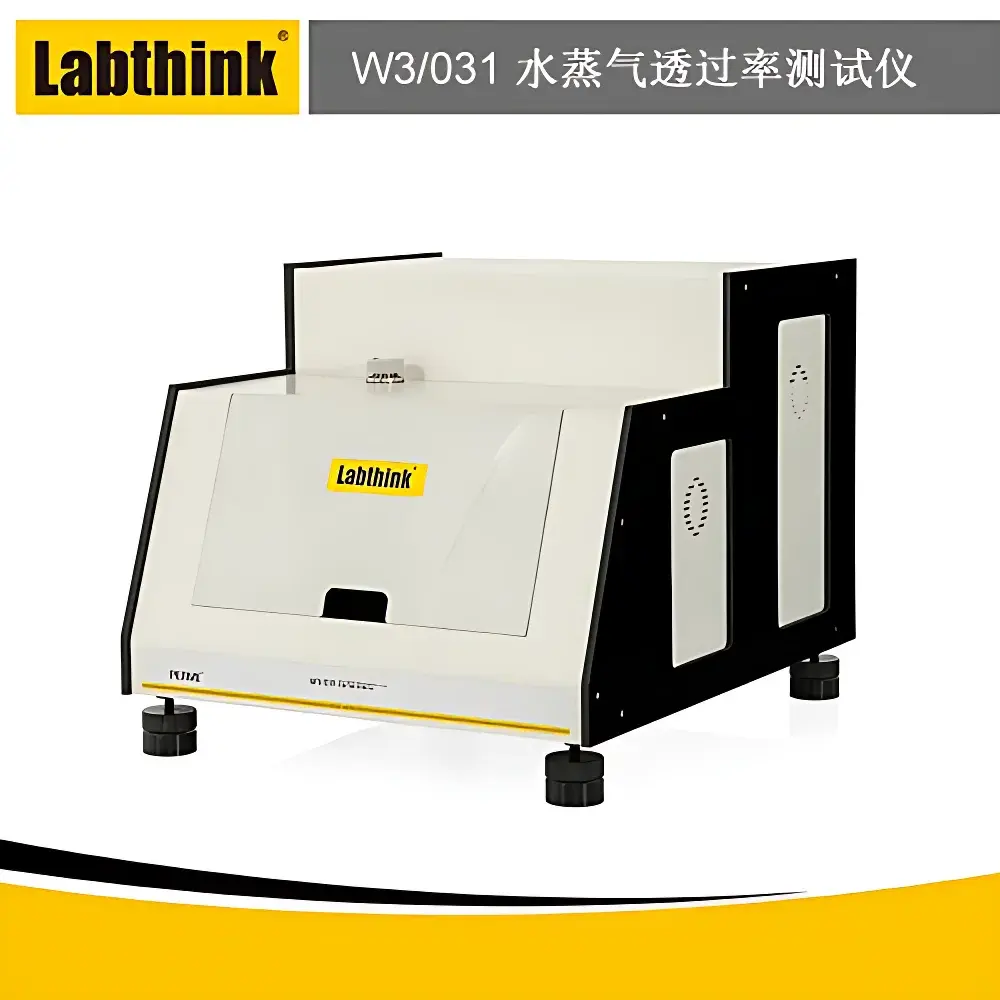
Labthink W3/031 Gravimetric Water Vapor Transmission Rate (WVTR) Tester
| Brand | Labthink |
|---|---|
| Origin | Shandong, China |
| Manufacturer Type | OEM Manufacturer |
| Region | Domestic (China) |
| Model | W3/031 |
| Price Range | USD 28,000 – 56,000 |
| Test Principle | Gravimetric Cup Method |
| Test Range | 0.1–10,000 g/m²·24h |
| Resolution | 0.01 g/m²·24h |
| Temperature Control | 15–55 °C (±0.1 °C) |
| Humidity Control | 10–98 %RH (±1 %RH) |
| Test Area | 33 cm² |
| Specimen Thickness | ≤3 mm |
| Specimen Size | Φ74 mm |
| Number of Test Stations | 3 independent cups |
| Chamber Volume | 27 L |
| Purge Air Velocity | 0.5–2.5 m/s |
| Power Supply | AC 85–264 V, 47–63 Hz |
| Power Consumption | 600 W |
| Net Weight | 83 kg |
| Dimensions (L×W×H) | 580×680×470 mm |
Overview
The Labthink W3/031 Gravimetric Water Vapor Transmission Rate (WVTR) Tester is an ISO- and ASTM-compliant benchtop instrument engineered for precise, reproducible measurement of water vapor permeation through flexible barrier materials. It operates on the gravimetric cup method—also known as the desiccant or inverted cup method—where a defined humidity gradient is established across a planar specimen sealed over a test cup. Under controlled temperature and relative humidity conditions, water vapor migrates through the sample into the cup (or from the cup into the environment), inducing a measurable mass change over time. This mass differential—recorded continuously via high-resolution analytical balances integrated into each of the three independent test stations—is converted into WVTR (g/m²·24h) using standardized calculation algorithms per ISO 2528, ASTM E96, GB/T 1037, and other globally recognized protocols. The system’s architecture eliminates manual intervention in weighing cycles, environmental stabilization, and data logging—ensuring full traceability and compliance with GLP and GMP laboratory practices.
Key Features
- Triple independent test stations: Each of the three precision-machined stainless-steel permeation cups operates autonomously, enabling parallel testing of heterogeneous samples under identical or divergent climate conditions (e.g., 37°C/90%RH vs. 23°C/50%RH).
- Patented mechanical balance suspension system: Labthink’s proprietary anti-vibration isolation and zero-drift compensation mechanism guarantees ±0.01 g resolution stability over multi-day tests—critical for low-permeability films (<1 g/m²·24h) where microgram-level mass shifts determine result validity.
- Embedded Linux-based control platform: Replaces legacy microcontroller architectures with a real-time embedded OS, supporting deterministic timing control for humidity ramping, purge airflow modulation, and synchronized data acquisition at 10 Hz sampling frequency.
- Modular climate control: Dual-zone Peltier-driven thermoelectric modules regulate chamber temperature (15–55°C, ±0.1°C); saturated salt solutions or NIST-traceable humidity generators maintain RH setpoints from 10% to 98% (±1% RH) with active feedback control.
- Configurable test modes: Supports standard desiccant (weight gain), inverted cup (weight loss), and ambient reference configurations—all selectable via software without hardware reconfiguration.
Sample Compatibility & Compliance
The W3/031 accommodates rigid and flexible planar specimens up to 3 mm thick and 74 mm in diameter—including polymer films (PET, PE, PP, PVDC), metallized laminates, paperboard, coated papers, solar backsheet substrates, OLED encapsulation layers, medical packaging foils, breathable nonwovens, and hydrogel dressings. All test methodologies conform to regulatory and industrial standards including ASTM E96 (desiccant and water methods), ISO 2528, GB/T 1037, JIS Z0208, DIN 53122-1, TAPPI T464, and YBB 00092003. Data audit trails, user access logs, electronic signatures, and calibration history records comply with FDA 21 CFR Part 11 requirements when operated with optional Lystem™ Laboratory Data Management System.
Software & Data Management
Control and analysis are executed via Labthink’s Lystem™ v3.0 software—a Windows-native application featuring intuitive workflow navigation, real-time curve visualization (mass vs. time), automatic linear regression fitting per ASTM E96 Annex A4, and configurable pass/fail thresholds. Raw mass data, environmental logs, and metadata (operator ID, sample ID, test date/time, calibration certificate ID) are stored in encrypted SQLite databases. When deployed on a secure LAN, the system integrates with the optional Lystem™ Enterprise Server for centralized result archiving, cross-instrument trend analysis, automated PDF report generation (with customizable templates), and role-based permissions aligned with ISO/IEC 17025 quality management systems.
Applications
Primary applications span R&D, QC, and regulatory submission workflows across packaging, medical device, photovoltaic, and pharmaceutical sectors. Typical use cases include: evaluating moisture barrier integrity of blister foil lidding; validating shelf-life models for sterile barrier systems; benchmarking vapor transmission performance of biodegradable mulch films; assessing delamination risk in multilayer food pouches; characterizing encapsulation efficacy for flexible OLED displays; and quantifying breathability of surgical gowns and wound contact layers. The instrument supports both routine QC release testing and advanced research into humidity-dependent diffusion kinetics and activation energy modeling.
FAQ
What standards does the W3/031 directly support?
ASTM E96 (Procedure A–D), ISO 2528, GB/T 1037, GB/T 16928, JIS Z0208, DIN 53122-1, TAPPI T464, and YBB 00092003.
Can the system perform both weight-gain and weight-loss measurements?
Yes—via interchangeable cup configurations: desiccant-filled cups (gain mode) or water-filled inverted cups (loss mode), both supported natively in Lystem™ software.
Is external compressed air required?
Yes—a clean, oil-free air supply at 0.6 MPa is mandatory for purge airflow control; Labthink recommends pairing with an optional integrated air dryer and filter unit.
How is calibration verified?
Using certified stainless-steel reference weights (included) and NIST-traceable hygrometers; full calibration reports are generated and archived within Lystem™.
Does the system support 21 CFR Part 11 compliance?
Yes—when configured with Lystem™ Enterprise Server, it provides electronic signatures, audit trails, and role-based access control meeting FDA requirements.





