
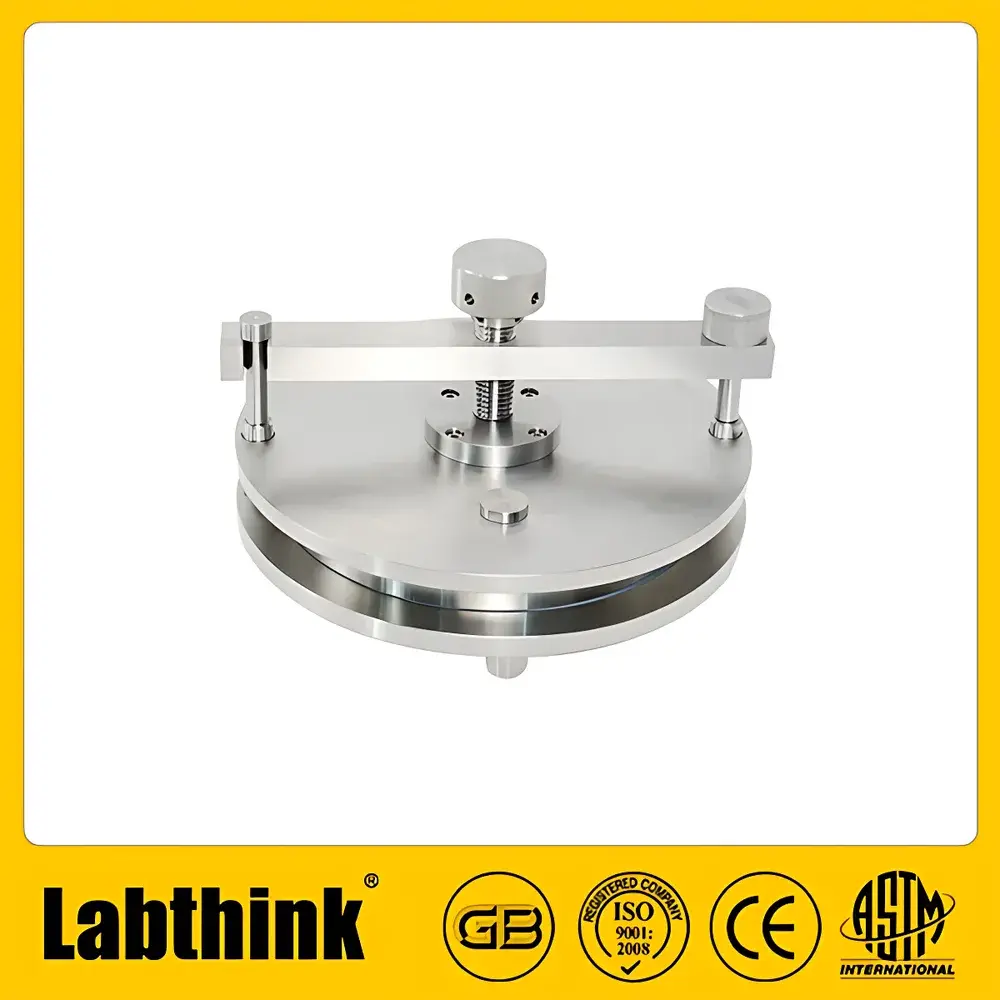
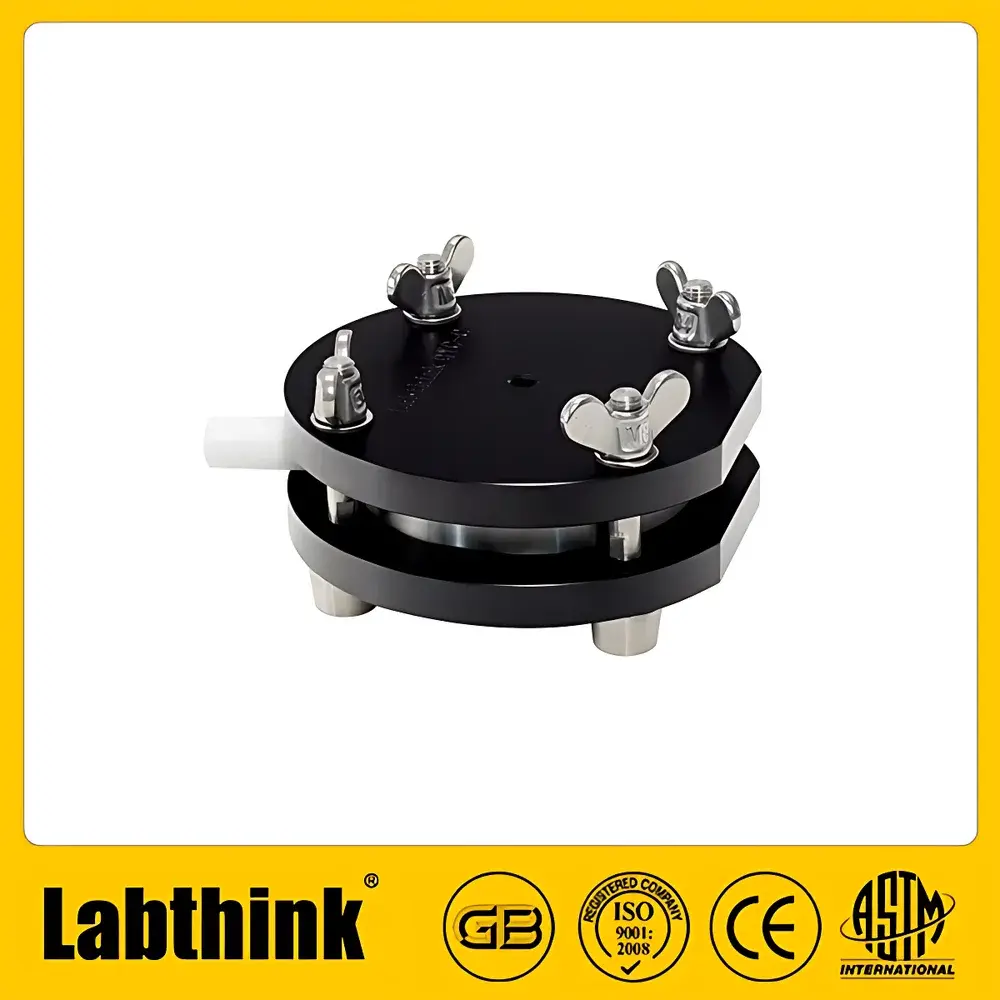
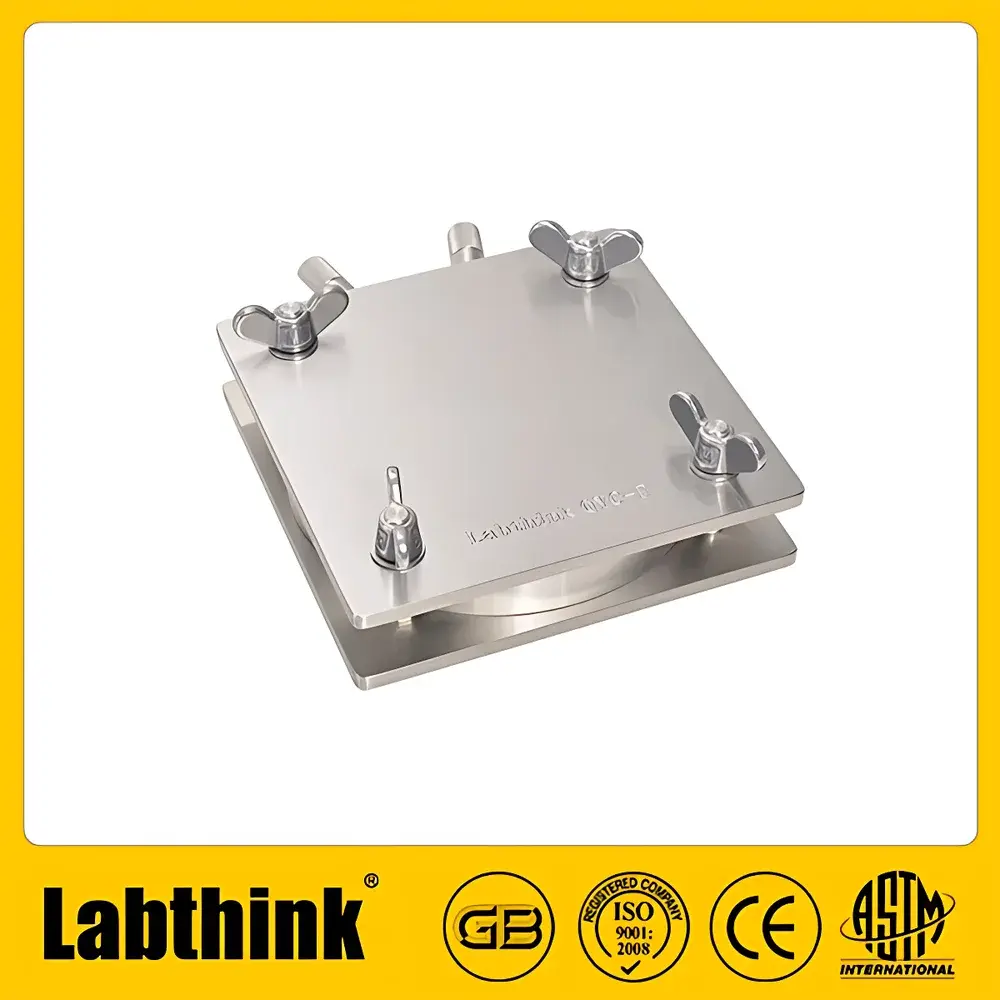
Labthink QYC-B / QYC-C / QYC-E Food Contact Material Migration Test Cells
| Brand | Labthink |
|---|---|
| Model | QYC-B, QYC-C, QYC-E |
| Compliance | GB 5009.156-2016, GB 31604.1-2015, EN 13130-1:2004 |
| Construction Material | ASTM F86-compliant austenitic stainless steel (equivalent to UNS S30400) |
| Sealing Mechanism | Precision-machined threaded compression seal (QYC-B), dual-face elastomeric gasket seal (QYC-C & QYC-E) |
| Contact Surface Area | QYC-B: 196 cm² (single-face) |
| QYC-C | 51.5 cm² (single-face) / 103 cm² (dual-face) |
| QYC-E | 100 cm² (single-face) / 200 cm² (dual-face) |
| Maximum Simulant Volume | QYC-B: 390 mL |
| QYC-C | 120 mL |
| QYC-E | 200 mL |
| Operating Temperature Range | Ambient to 100 °C (dependent on simulant and seal compatibility) |
| Surface Finish | Ra ≤ 0.8 µm electro-polished interior |
Overview
The Labthink QYC Series Migration Test Cells are precision-engineered laboratory fixtures designed for standardized migration testing of food contact materials (FCMs) in accordance with international regulatory frameworks. These test cells serve as controlled sample-holding assemblies that securely mount flat or flexible packaging specimens—such as plastic films, laminates, coated papers, and metallic foils—and enable reproducible exposure to food simulants under defined time–temperature conditions. Each model implements a distinct geometrical configuration and sealing architecture aligned with normative diagrams specified in GB 5009.156–2016 (China), GB 31604.1–2015 (China), and EN 13130–1:2004 (European Union). The cells do not perform analytical detection themselves; rather, they constitute the primary physical interface between the test specimen and the simulant prior to subsequent quantification (e.g., via HPLC, GC-MS, or ICP-MS) of migrated substances. Their design prioritizes dimensional fidelity, material inertness, and leak-tight integrity—critical prerequisites for GLP-compliant migration studies required by regulatory submissions to NMPA, EFSA, FDA, and Health Canada.
Key Features
- Three standardized configurations (QYC-B, QYC-C, QYC-E) each conforming to specific annex figures in GB 5009.156–2016 or EN 13130–1:2004, enabling direct comparability across laboratories and jurisdictions.
- Body constructed from high-purity, low-carbon austenitic stainless steel (UNS S30400 equivalent), electropolished to Ra ≤ 0.8 µm surface roughness—certified per ASTM F86 for biocompatibility and corrosion resistance, eliminating risk of metal ion leaching into aqueous or acidic simulants.
- QYC-B employs a center-loaded, coarse-threaded compression rod system ensuring uniform radial force distribution and zero permeation at single-face exposure (196 cm² area, 390 mL volume).
- QYC-C and QYC-E utilize dual-face silicone-free fluorosilicone or FKM gaskets rated for continuous use up to 120 °C, offering chemical resistance to ethanol, acetic acid, isooctane, and synthetic gastric fluid simulants.
- All models feature chamfered inlet/outlet ports compatible with standard PTFE tubing (¼” OD), facilitating integration into automated incubation racks or circulating water baths.
- Metric-threaded fasteners and alignment pins ensure repeatable assembly torque (±5% deviation) and positional repeatability across hundreds of test cycles without gasket deformation.
Sample Compatibility & Compliance
The QYC Series accommodates rigid and semi-rigid flat specimens up to 0.5 mm thickness and flexible films ≥12 µm thick. Specimen clamping does not require adhesives or solvents—mechanical retention only. All models support full compliance with:
- GB 5009.156–2016 Annex B (Migration Test Cell Preconditioning Requirements)
- GB 31604.1–2015 General Principles for Migration Testing
- EN 13130–1:2004 Annex D (Test Cell Geometry for Overall Migration and Specific Migration)
- Regulation (EU) No 10/2011 Annex IV (Requirements for Migration Testing Apparatus)
- US FDA 21 CFR §177.1520 & §177.2600 (Testing Conditions for Polyolefins and Polyesters)
No calibration certificate is issued, as these are passive mechanical fixtures—not measuring instruments—though dimensional verification reports (per ISO/IEC 17025-accredited metrology) are available upon request.
Software & Data Management
As non-electronic, non-sensing devices, the QYC Series requires no embedded firmware or proprietary software. However, their geometric consistency enables seamless integration into LIMS and electronic lab notebook (ELN) workflows. Each unit is serialized and supplied with a traceable Certificate of Conformance listing batch-specific material certifications (mill test reports), surface finish validation data, and dimensional inspection records. For laboratories operating under 21 CFR Part 11, all documentation—including digital copies of test cell schematics, usage logs, and maintenance histories—can be archived with audit-trail enabled metadata tagging.
Applications
- Overall migration testing (OML) of multilayer packaging films exposed to 10% ethanol, 3% acetic acid, olive oil, or synthetic gastric juice.
- Specific migration testing (SML) of additives (e.g., antioxidants, slip agents, photoinitiators) from printed or laminated substrates.
- Temperature-dependent migration profiling (e.g., 40 °C × 10 days, 70 °C × 2 hours) per EU Commission Regulation 10/2011.
- Validation of barrier performance in active packaging systems containing oxygen scavengers or antimicrobial agents.
- Interlaboratory method transfer studies coordinated under ISO/IEC 17043 proficiency testing schemes.
FAQ
Are the QYC test cells suitable for volatile organic compound (VOC) migration studies?
Yes—when used with appropriate cold traps and sealed under inert atmosphere (e.g., nitrogen purge), QYC-C and QYC-E configurations support VOC collection protocols per ISO 17974:2015.
Can I use the same test cell for both aqueous and fatty simulants without cross-contamination?
Yes—provided thorough cleaning per ASTM D2622 (solvent rinse sequence: water → acetone → hexane → nitrogen dry) and visual inspection for residual film or discoloration between uses.
Do you provide third-party validation reports for migration cell geometry?
Yes—dimensional verification reports issued by CNAS-accredited metrology labs are available for each production lot, including tolerance mapping against GB 5009.156–2016 Annex B figures.
Is sterilization required before first use?
No—electropolished stainless steel surfaces are supplied passivated per ASTM A967 and certified free of endotoxins; autoclaving is unnecessary and may degrade gasket integrity.
What is the expected service life under routine GLP use?
With proper cleaning and torque-controlled assembly, gasket replacement every 200 cycles and body inspection every 500 cycles ensures >5 years of compliant operation.





