
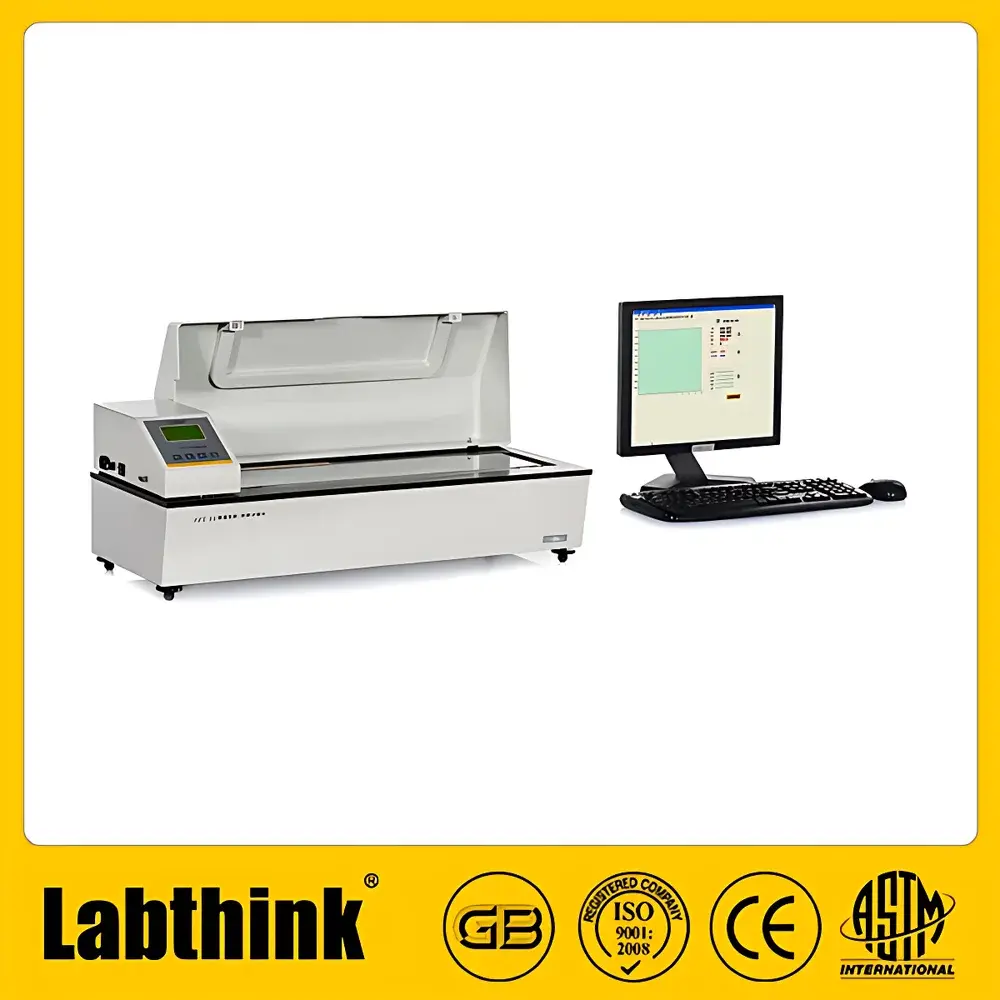
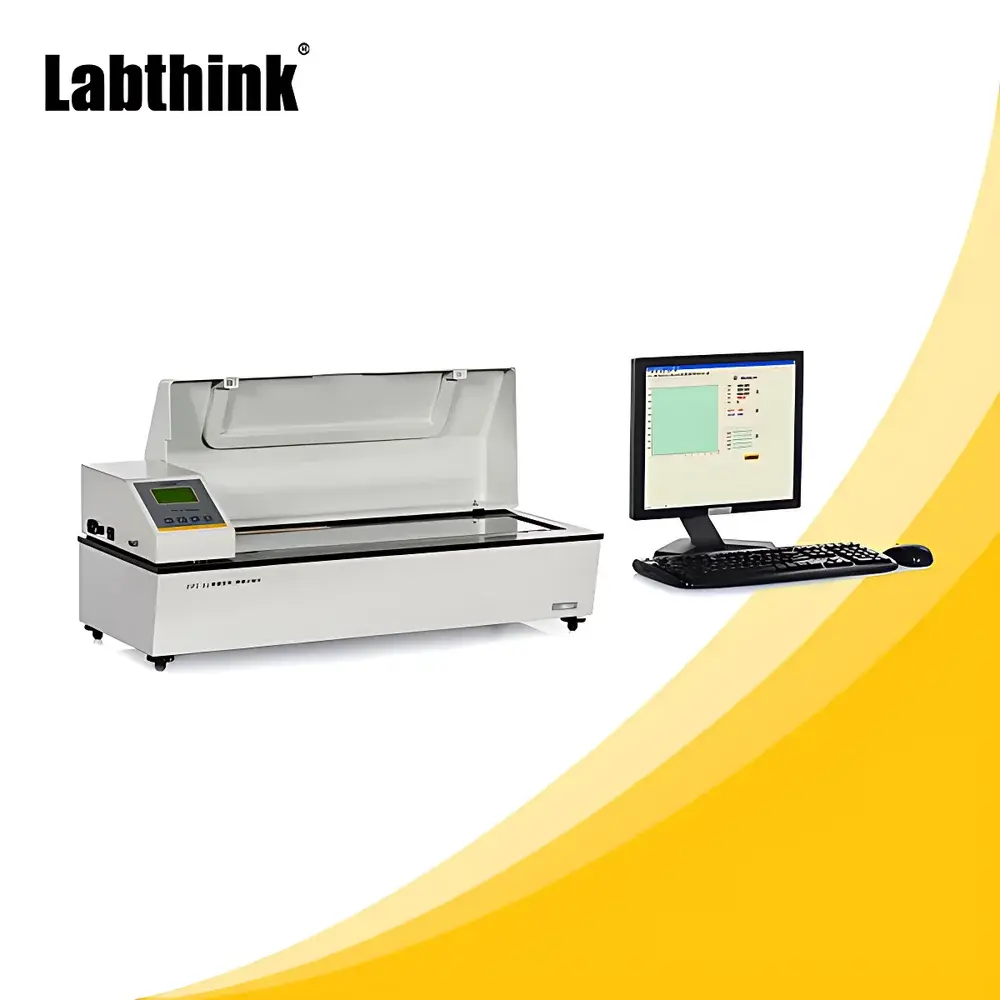
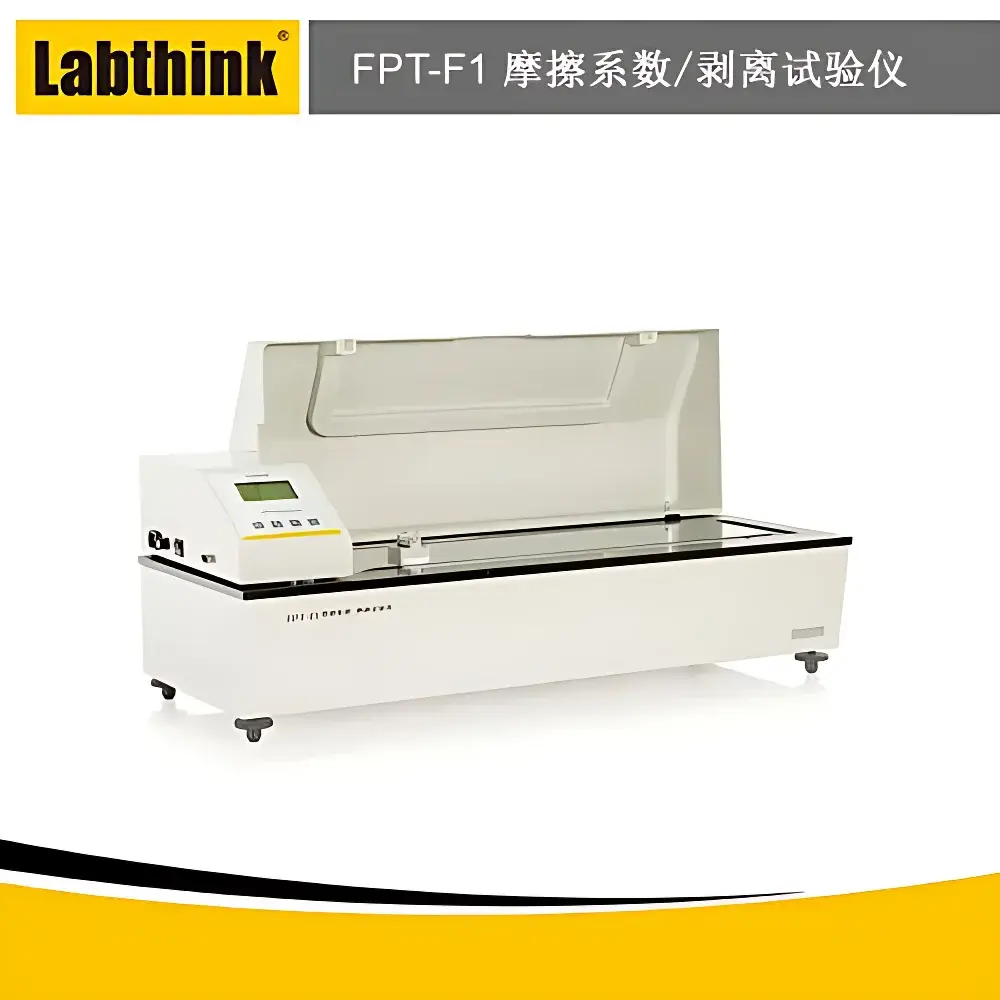
Labthink FPT-F1 Universal Coefficient of Friction and Peel Strength Tester
| Brand | Labthink |
|---|---|
| Model | FPT-F1 |
| Origin | Shandong, China |
| Manufacturer Type | Direct Manufacturer |
| Country of Origin | China |
| Price Range | USD 7,000 – 14,000 |
| Test Modes | Static & Kinetic COF, 180° Peel |
| Load Capacity | 0–5 N / 0–10 N / 0–30 N |
| Accuracy | Class 0.5 |
| Slider Masses | 200 g, 500 g (optional: 100 g, 1000 g, 1814 g, 2000 g) |
| Test Speeds | 50, 100, 150, 200, 250, 300, 500 mm/min |
| Temperature Range | Ambient to 99.9 °C |
| Power Supply | AC 220 V 50 Hz / AC 120 V 60 Hz |
| Dimensions (L×W×H) | 850 × 350 × 290 mm |
| Net Weight | 30 kg |
| Compliance | ISO 8295, ISO 8510-2, GB 10006, GB/T 2790, GB/T 2791, GB/T 2792, ASTM D1894, ASTM D4917, ASTM D3330, TAPPI T816, TAPPI T549 |
Overview
The Labthink FPT-F1 Universal Coefficient of Friction and Peel Strength Tester is an electromechanical testing platform engineered for precision measurement of interfacial mechanical properties in flexible packaging, medical adhesives, release liners, protective films, and composite laminates. It operates on two standardized physical principles: the horizontal plane method for coefficient of friction (COF) per ISO 8295 and ASTM D1894, and the 180° peel angle method per ISO 8510-2, ASTM D3330, and GB/T 2790. The instrument integrates a servo-controlled drive system, high-resolution load cell technology, and thermally stabilized test zones to ensure repeatability across variable environmental conditions—critical for quality control in GMP-aligned packaging production and R&D laboratories.
Key Features
- Dual-mode operation: Simultaneous support for static/kinetic coefficient of friction testing and controlled-angle (180°) peel strength evaluation on a single platform.
- Multi-range force sensing: Three interchangeable load cell modules (0–5 N, 0–10 N, 0–30 N), each calibrated to Class 0.5 accuracy per ISO 376, enabling traceable measurement across low-force adhesive systems and high-strength laminates.
- Thermally regulated test zone: Peltier-assisted temperature control from ambient to 99.9 °C with ±0.3 °C stability, facilitating material behavior analysis under accelerated aging or real-world storage conditions.
- Seven programmable test speeds (50–500 mm/min): Compliant with regulatory requirements for both slow-speed peel validation (e.g., USP for sterile barrier systems) and high-throughput QC screening.
- Demagnetized mechanical components: Test bed surface and standard sliders (200 g, 500 g) undergo certified degaussing and residual magnetism verification (<0.2 mT), eliminating electromagnetic interference with strain gauge signal integrity.
- Modular accessory architecture: Optional non-standard sliders (100 g to 2000 g), custom clamping fixtures, and substrate-specific test plates (e.g., stainless steel, anodized aluminum, glass) extend applicability to ASTM D4917 (metal foil composites) and TAPPI T549 (paper-based release systems).
Sample Compatibility & Compliance
The FPT-F1 accommodates specimens up to 150 mm wide and 300 mm long, including plastic films (PET, BOPP, PE), silicone-coated release liners, pressure-sensitive acrylic and rubber-based adhesives, medical transdermal patches, cable shielding tapes, and fiber-reinforced composites. All test configurations adhere to internationally harmonized standards—including ISO 8295 (plastic film COF), ISO 8510-2 (peel resistance of laminates), ASTM D1894 (COF of plastic film), ASTM D3330 (peel adhesion of pressure-sensitive tapes), and GB/T 2792 (180° peel for label adhesives). Instrument design supports GLP/GMP audit readiness: hardware-level calibration traceability, electronic signature-capable software, and full 21 CFR Part 11 compliance when paired with Labthink’s validated data acquisition suite.
Software & Data Management
Controlled via Labthink’s proprietary WinTest v4.2 software, the FPT-F1 delivers automated test sequencing, real-time force/displacement curve visualization, and statistical post-processing (mean, SD, CV%, min/max, pass/fail thresholds). Raw data exports to CSV, PDF, and XML formats; overlay plots enable comparative analysis across batches, temperatures, or substrate types. Audit trail functionality logs all user actions, parameter changes, and calibration events with timestamps and operator IDs. USB 2.0 interface ensures plug-and-play integration with Windows-based laboratory PCs; optional Ethernet module enables networked deployment in centralized QC environments.
Applications
- Quality assurance of smartphone screen protectors: Quantifying peel initiation force and steady-state adhesion retention after thermal cycling.
- Release liner qualification for pharmaceutical blister packaging: Measuring silicone migration effects on peel consistency per ISO 15378 Annex A.
- Development of low-tack medical adhesives: Correlating COF values with skin-slip performance and 180° peel energy absorption under hydrated conditions.
- Validation of cable jacket-to-metal foil adhesion in telecom infrastructure: Assessing delamination resistance per ASTM D4917 at elevated service temperatures.
- Comparative benchmarking of biodegradable film formulations: Evaluating moisture-induced COF shifts and peel decay kinetics during shelf-life studies.
FAQ
Does the FPT-F1 support both static and kinetic COF measurements?
Yes. The instrument automatically detects the breakaway point (static COF) and maintains constant velocity to calculate kinetic COF per ISO 8295 Section 6.2.
Can test parameters be locked to prevent unauthorized modification in production environments?
Yes. WinTest v4.2 includes role-based access control (operator, supervisor, administrator) with password-protected parameter editing and electronic signature enforcement.
Is third-party calibration certification available?
Labthink provides NIST-traceable calibration certificates issued by CNAS-accredited laboratories, valid for 12 months and aligned with ISO/IEC 17025 requirements.
What is the minimum specimen thickness the FPT-F1 can reliably test?
The system accommodates specimens as thin as 12 µm (e.g., PET carrier films) using low-mass sliders and optimized clamping pressure to prevent buckling or slippage.
How does the instrument handle data integrity during power interruption?
All active test sessions are auto-saved every 2 seconds to non-volatile memory; resumed tests retain original timestamps and metadata upon recovery.






