
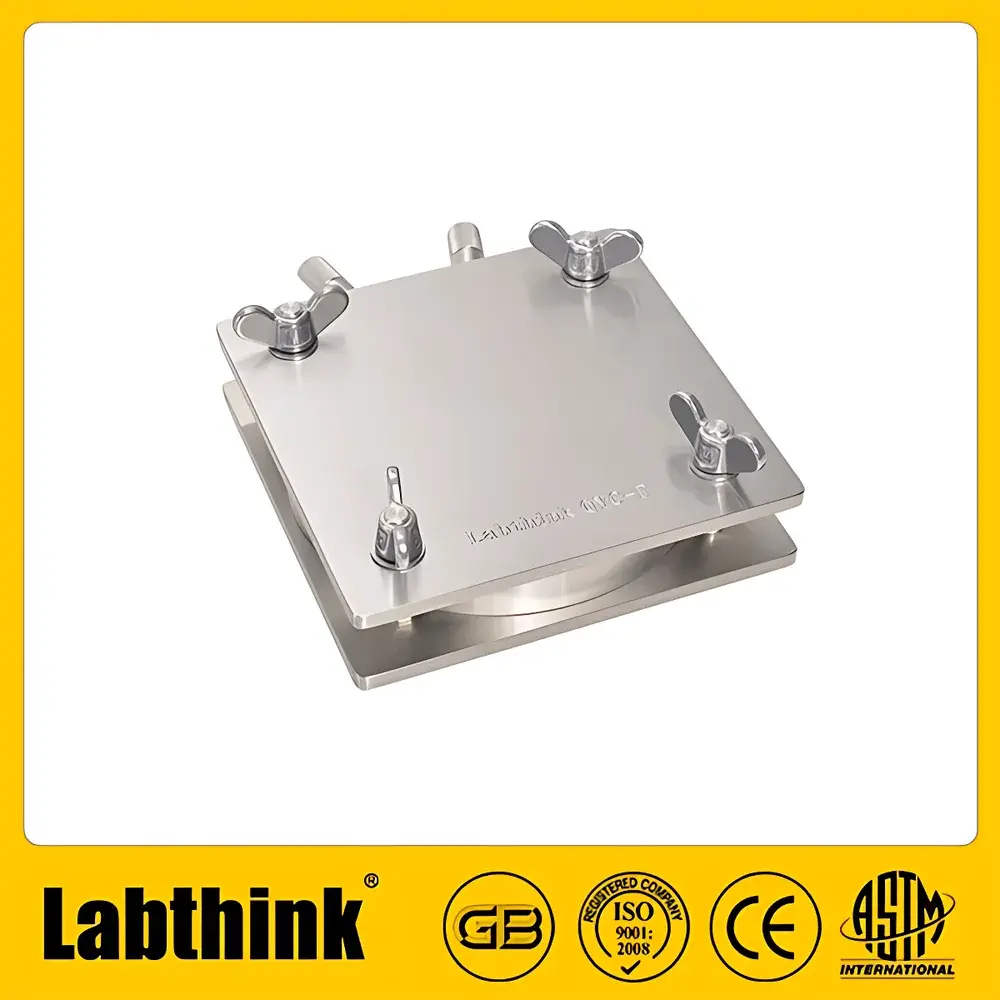
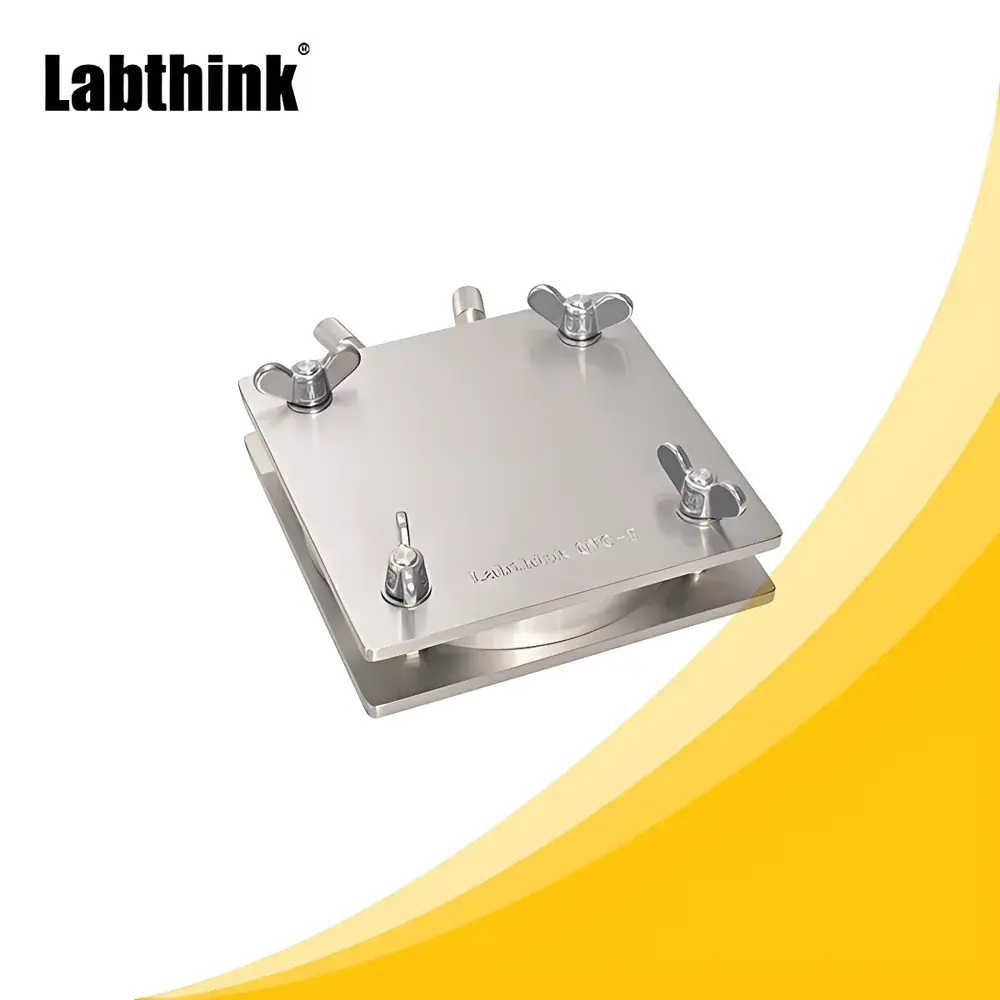
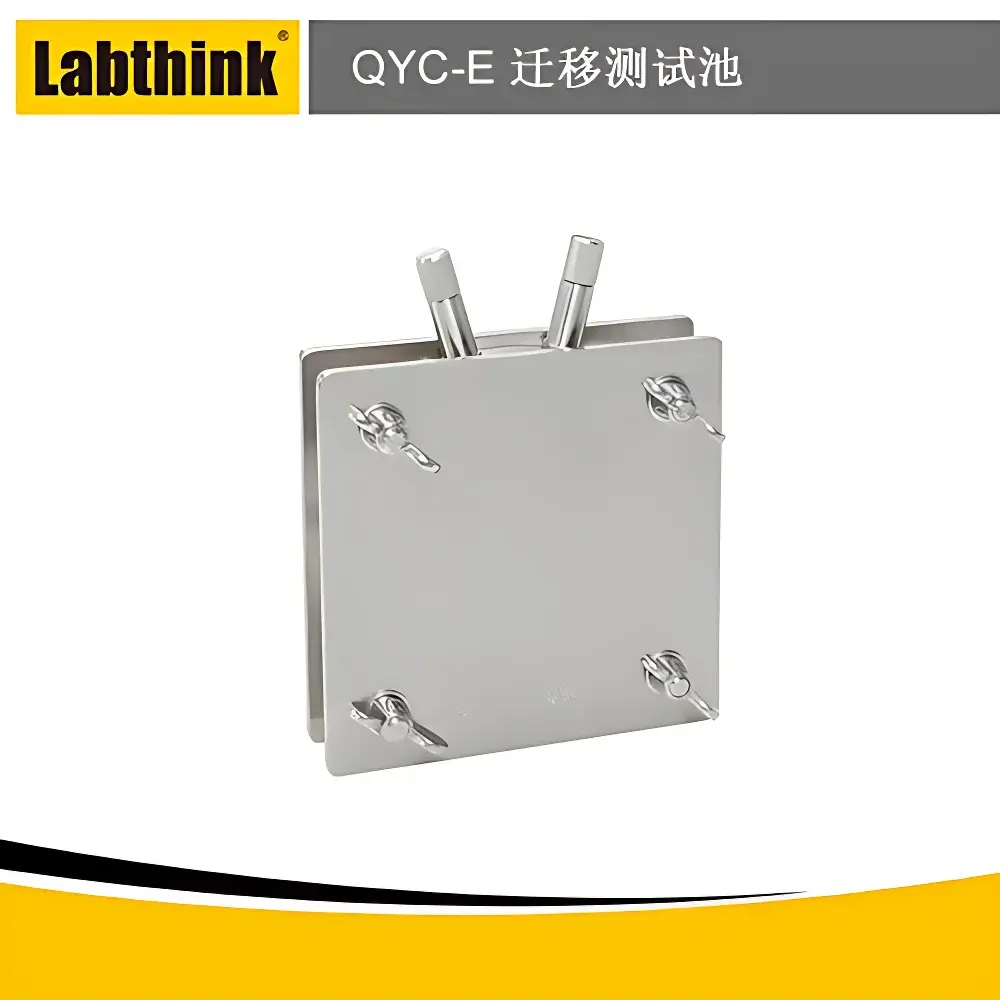
Labthink QYC-E Stainless Steel Migration Cell for Food Contact Materials Testing
| Brand | Labthink |
|---|---|
| Model | QYC-E |
| Material | ASTM F86-Compliant 316L Stainless Steel |
| Design Compliance | EN 13130-1:2004 Annex D, Figure D.6 (Migration Test Cell C) |
| Standard Conformance | GB 31604.1-2015, GB 5009.156-2016 |
| Contact Configuration | Single- or Double-Sided Exposure |
| Single-Side Exposure Area | 100 cm² (Ø112.8 mm) |
| Double-Side Exposure Area | 200 cm² |
| Chamber Volume | 200 mL |
| Operating Temperature Range | 5 °C to 180 °C |
| Dimensions (L×W×H) | 175 × 140 × 63 mm |
| Net Weight | 2.3 kg |
| Sealing System | High-Temperature Resistant, Chemically Inert Fluoroelastomer (FKM) Gasket |
Overview
The Labthink QYC-E Stainless Steel Migration Cell is a precision-engineered test chamber designed exclusively for controlled migration testing of food contact materials (FCMs) in compliance with international regulatory frameworks. It operates on the principle of static immersion exposure—where a defined surface area of packaging material is brought into direct, sealed contact with standardized food simulants under specified time–temperature conditions. This method enables quantitative assessment of chemical substances that may migrate from packaging into foodstuffs, supporting safety evaluation per FDA, EFSA, and China’s National Food Safety Standards. The QYC-E cell is not a standalone analytical instrument but a critical sample preparation and exposure module used upstream of chromatographic (e.g., GC-MS, HPLC-UV) or spectroscopic analysis. Its geometry, material composition, and sealing architecture are rigorously aligned with EN 13130-1:2004 Annex D (Figure D.6, Test Cell C), ensuring inter-laboratory reproducibility and eliminating uncontrolled variables such as edge effects, simulant leakage, or metallic leaching.
Key Features
- Body and structural components fabricated from ASTM F86-certified 316L stainless steel—passivated and electropolished to eliminate trace metal ion release and ensure inertness across acidic, alcoholic, and fatty simulants.
- Dual-exposure capability: accommodates both single-sided (100 cm²) and double-sided (200 cm²) sample configurations, enabling comparative diffusion studies and accelerated testing protocols without altering chamber volume.
- Hermetic sealing system utilizing high-purity fluoroelastomer (FKM) gaskets rated for continuous operation up to 180 °C—resistant to hydrolysis, oxidation, and swelling in aqueous, ethanolic (10–95%), acetic acid (3–10%), and aliphatic hydrocarbon simulants (e.g., hexane, heptane, isooctane).
- Geometrically constrained exposure zone: only the central circular area (Ø112.8 mm) contacts simulant; peripheral clamping surfaces remain isolated, guaranteeing precise, documented test area per ISO/IEC 17025 and GLP audit requirements.
- Modular footprint (175 × 140 × 63 mm) optimized for compatibility with standard laboratory ovens, water baths, and thermal stability chambers—enabling simultaneous multi-cell testing under identical environmental conditions.
Sample Compatibility & Compliance
The QYC-E cell supports flat, rigid, or semi-rigid specimens—including plastic films, laminates, coated papers, metal foils, and molded thermoplastics—provided they meet dimensional tolerance requirements (thickness ≤ 3 mm; flatness deviation < 0.1 mm). It is validated for use with all food simulants specified in GB 31604.1-2015 and EU Regulation (EC) No 10/2011, including distilled water, 3% and 10% acetic acid, 10–95% ethanol, olive oil, and synthetic gastric/intestinal fluids. Regulatory alignment includes full traceability to GB 5009.156-2016 (pre-treatment methodology), EN 13130-1:2004 (test cell design), and ASTM F2707-21 (standard guide for migration testing of food packaging). Each unit ships with a Certificate of Conformance referencing material certifications (mill test reports), dimensional inspection records, and passivation validation data.
Software & Data Management
As a passive exposure device, the QYC-E requires no embedded firmware or software interface. However, its design integrates seamlessly into digital quality management systems (QMS) and electronic lab notebooks (ELN). Labthink provides optional CSV-compatible test record templates aligned with 21 CFR Part 11 requirements—including fields for operator ID, lot number, simulant batch ID, exposure duration, temperature log reference, and post-test sample identification. When used in conjunction with Labthink’s TS21 series temperature-controlled ovens or custom-built incubation racks, full thermal profile logging (±0.2 °C accuracy) can be exported for audit-ready documentation. All mechanical specifications and calibration-relevant dimensions are documented in the accompanying Technical Data Sheet (TDS), revision-controlled per ISO 9001:2015 Clause 7.5.3.
Applications
- Regulatory pre-compliance screening of multilayer flexible packaging prior to full-scale migration testing per EU Plastics Regulation (EU) 10/2011.
- Diffusion coefficient estimation for primary aromatic amines (PAAs), photoinitiators, or oligomers migrating from PET, PS, or polyolefin structures into fatty simulants.
- Validation of barrier coating integrity on paperboard or aluminum foil composites under elevated temperature stress (e.g., 70 °C for 2 h, mimicking hot-fill conditions).
- Comparative migration kinetics studies—e.g., evaluating the effect of ink formulation changes on migration of benzophenone analogues into 95% ethanol at 40 °C over 10 days.
- Supporting extractables and leachables (E&L) assessments for pharmaceutical secondary packaging per USP and ICH Q5C guidelines.
FAQ
Is the QYC-E cell suitable for volatile organic compound (VOC) migration testing?
Yes—its hermetic seal and low-permeability FKM gasket minimize simulant evaporation and VOC loss during extended exposures, particularly when operated in closed-loop thermal chambers with condensate recovery.
Can it be autoclaved for reuse between tests?
No—autoclaving exceeds the gasket’s thermal limit. Sterilization is achieved via ethanol wipe-down and UV-C exposure; repeated thermal cycling above 150 °C requires gasket replacement per maintenance schedule.
Does Labthink provide installation qualification (IQ) or operational qualification (OQ) documentation?
Yes—custom IQ/OQ protocols compliant with ISO/IEC 17025 and FDA GLP are available upon request, including dimensional verification, leak integrity testing (helium mass spectrometry), and temperature uniformity mapping.
What is the recommended maximum number of reuses for a single QYC-E cell?
Under proper handling and cleaning (non-abrasive detergent, deionized water rinse, nitrogen drying), the stainless steel body has indefinite service life; gaskets are rated for ≥50 thermal cycles at ≤121 °C or ≥20 cycles at 180 °C.
How does the QYC-E differ from the older QYC-A model?
The QYC-E introduces enhanced gasket retention geometry, tighter dimensional tolerances (±0.05 mm on exposure diameter), and dual-certified material traceability (ASTM F86 + GB/T 20878), addressing evolving requirements in GB 5009.156-2016 Annex A.



