
FP100 Chlorophyll Fluorescence Automatic Monitoring System
| Origin | Czech Republic |
|---|---|
| Manufacturer Type | Authorized Distributor |
| Origin Category | Imported Instrument |
| Model | FP100 |
| Price | Upon Request |
Overview
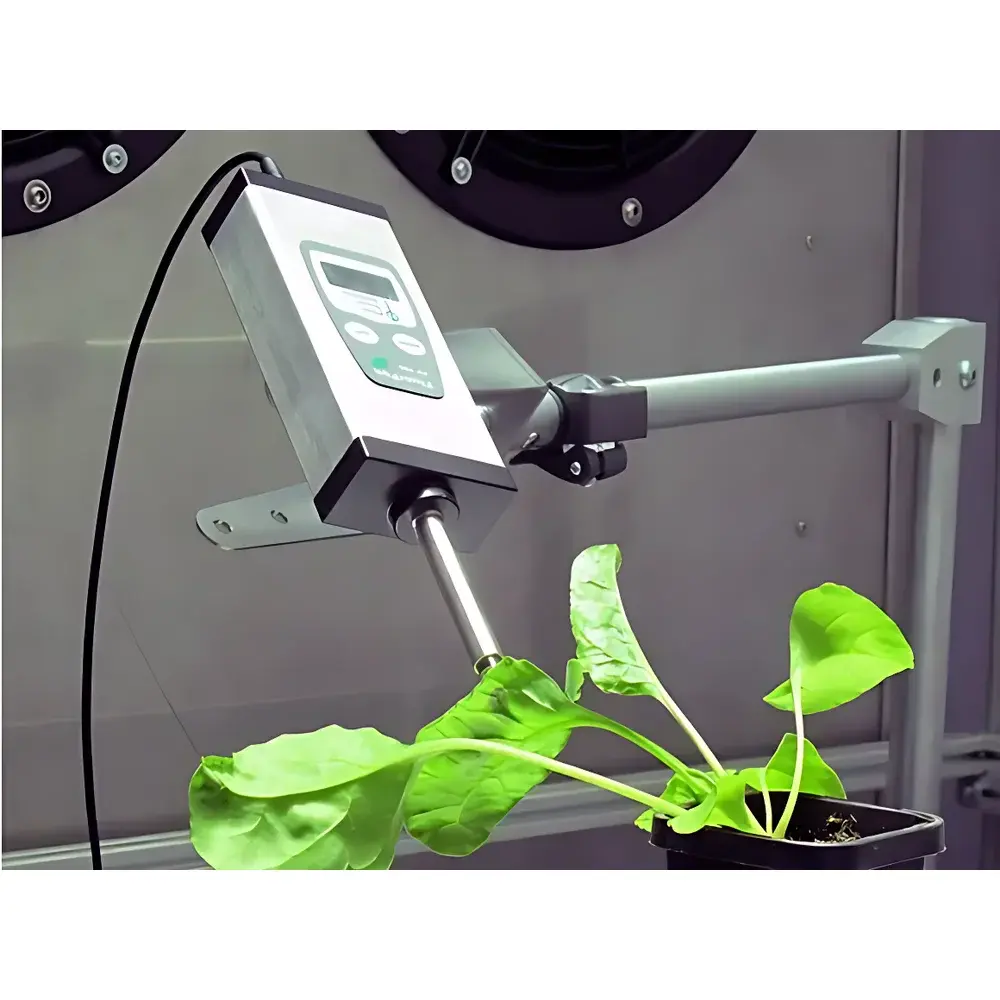
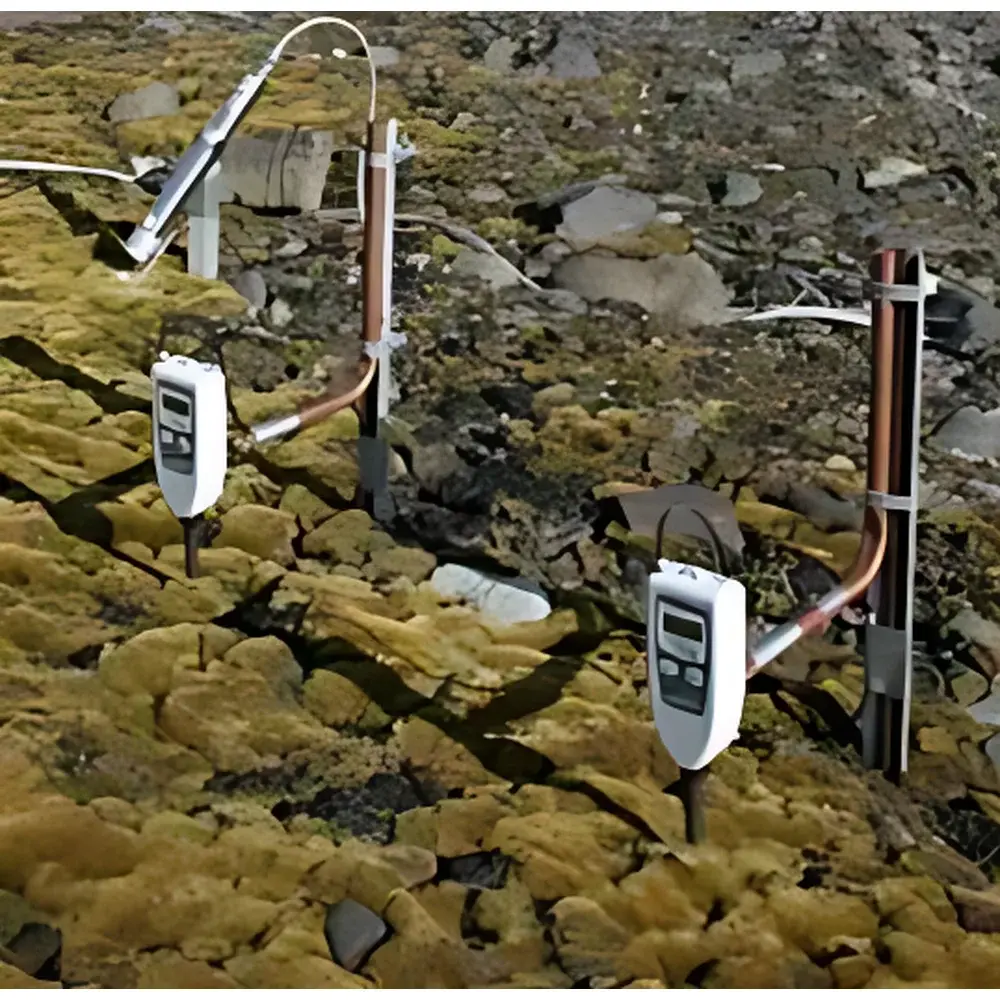
The FP100 Chlorophyll Fluorescence Automatic Monitoring System is a field-deployable, high-resolution instrument engineered for non-invasive, real-time assessment of photosynthetic performance in higher plants and algae. It operates on the principle of pulse-amplitude modulated (PAM) fluorometry, enabling precise quantification of chlorophyll a fluorescence kinetics under controlled light regimes. By measuring transient fluorescence induction curves (OJIP), quenching dynamics (NPQ, qP), and quantum yields (ΦPSII, Fv/Fm), the FP100 delivers quantitative physiological insights into photosystem II (PSII) functionality, electron transport efficiency, photoprotective capacity, and stress-induced metabolic adjustments. Its compact architecture, integrated PAR sensor, and programmable illumination protocols make it suitable for long-term unattended monitoring in greenhouse, field, and controlled-environment research settings—supporting studies in plant ecophysiology, abiotic stress response, breeding program phenotyping, and climate change impact assessment.
Key Features
- High-temporal-resolution OJIP analysis with 10 µs time step (100,000 measurements per second), yielding 26 standardized biophysical parameters including F0, Fj, Fi, Fm, Vj, Mo, Area, Sm, PIAbs, ABS/RC, and TR0/RC
- Three configurable actinic light programs for constructing light-response curves (ΦPSII vs. PAR), supporting up to 20+ derived fluorescence parameters per curve
- Two dedicated fluorescence quenching protocols (light- and dark-induced) for NPQ, qP, Rfd, and ΦNO derivation
- Adjustable measuring light intensity and saturating pulse range (0–3000 µmol photons·m−2·s−1) with programmable flash duration and frequency
- Integrated broadband PAR sensor (400–700 nm) with calibrated output in µmol photons·m−2·s−1, co-registered with fluorescence data
- Onboard data storage capacity of 100,000 measurement records in non-volatile memory (4 MB)
- Robust environmental sealing: IP65-rated enclosure, operational at 0–55 °C and 0–95% RH (non-condensing)
- Low-power design powered by four AAA alkaline or rechargeable batteries, delivering up to 70 hours of continuous operation with auto-shutdown after 5 minutes of inactivity
Sample Compatibility & Compliance
The FP100 is validated for use with intact leaves of angiosperms, gymnosperms, ferns, mosses, and macroalgae. Its contactless optical head accommodates leaf thicknesses from 0.1 to 5 mm without clamping or compression artifacts. Measurement geometry conforms to standard PAM fluorometry conventions (excitation at ~450 nm, detection at 697–750 nm). The system complies with ISO 14001 environmental management principles for field instrumentation and supports GLP-compliant data traceability through timestamped, GPS-georeferenced logging (via FluorPen 2.0 software). While not FDA-regulated, its parameter definitions align with internationally accepted conventions published in Photosynthesis Research, Journal of Experimental Botany, and the Minimal Reporting Standards for Chlorophyll Fluorescence (MRS-CF) framework.
Software & Data Management
FluorPen 2.0 (Windows 2000/XP/7 compatible) serves as the primary desktop interface for device configuration, real-time remote control, live waveform visualization, and post-acquisition analysis. It enables synchronized plotting of fluorescence transients against PAR readings, automated parameter extraction using standardized algorithms (e.g., Strasser’s OJIP model), and export to CSV or Excel formats for statistical modeling. The software supports batch processing of multi-sample datasets, generation of comparative heatmaps for spatial phenotyping, and integration with GIS platforms via embedded GPS metadata. All raw time-series data are stored with full audit trail—including operator ID, protocol version, firmware revision, and environmental metadata—ensuring reproducibility and regulatory readiness for academic publication or industry R&D reporting.
Applications
- Long-term diurnal monitoring of PSII photochemical efficiency in response to drought, salinity, heavy metal exposure, or temperature extremes
- High-throughput screening of crop germplasm for photosynthetic resilience traits in breeding pipelines
- In situ validation of remote-sensing vegetation indices (e.g., PRI, NDVI) using ground-truth fluorescence metrics
- Ecological studies of forest understory light acclimation, alpine plant photoinhibition thresholds, or wetland macrophyte stress gradients
- Controlled-environment experiments assessing LED spectral quality effects on electron transport partitioning
- Teaching laboratories demonstrating fundamental concepts of energy dissipation, photoprotection, and chloroplast redox signaling
FAQ
What is the minimum leaf thickness the FP100 can reliably measure?
The optical design accommodates leaves as thin as 0.1 mm (e.g., epidermal peels or young cotyledons) without signal saturation or excitation leakage.
Does the FP100 support compliance with FDA 21 CFR Part 11 for regulated environments?
While the FP100 itself is not a medical device, FluorPen 2.0 supports electronic signature logging and audit-trail generation; full Part 11 compliance requires site-specific validation and IT infrastructure alignment.
Can the firmware be updated in the field?
Yes—firmware upgrades are delivered via USB or Bluetooth and installed through FluorPen 2.0; BOIS (Basic Operating Instruction System) is field-upgradable.
Is calibration required before each measurement session?
No routine recalibration is needed; factory calibration remains stable over the instrument’s operational lifetime under standard environmental conditions.
How does the FP100 handle variable ambient light during field measurements?
The integrated PAR sensor continuously monitors background irradiance, and the software applies correction algorithms to isolate actinic-light-induced fluorescence signals—enabling robust measurements even under partial cloud cover or canopy shade.
Related Products



