
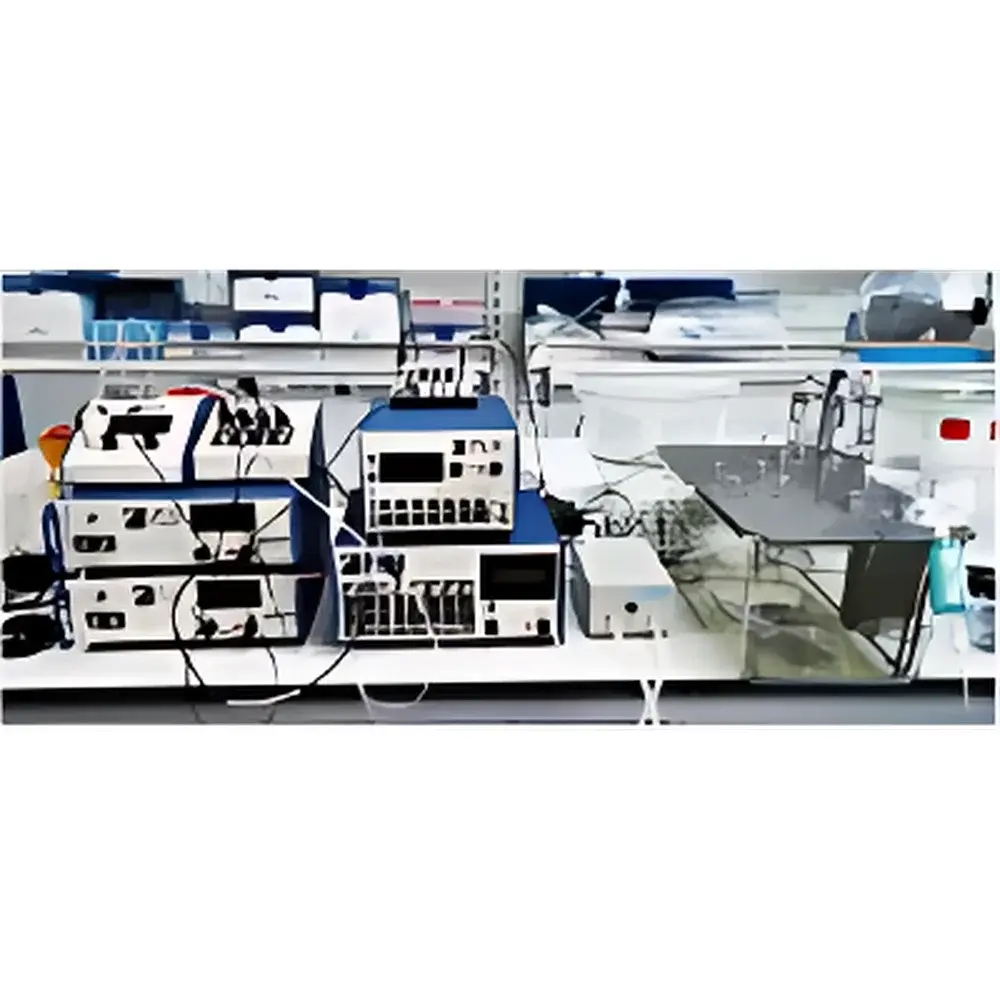
EcoTech SSI-ET Modular Animal Energy Metabolism Measurement System
| Brand | EcoTech |
|---|---|
| Origin | Beijing, China |
| Manufacturer Type | Authorized Distributor |
| Country of Assembly | China |
| Model | SSI-ET Modular |
| Instrument Type | Research-grade rodent (mouse/rat) metabolic phenotyping system |
| Channel Configurations | 4-, 8-, 16-, or scalable multi-channel (up to 24+) |
| Gas Analytes | CO₂ (0–5% / 0–15%, dual-range NDIR), O₂ (0–100%, paramagnetic), H₂O (RH 0.2–100%, dew point −40 to +40°C) |
| Flow Control | Precision mass flow controllers (5–2000 mL/min), thermal-mass flow meters (±2% accuracy) |
| Data Acquisition | 12-channel DAQ (8 × 16-bit analog, 4 × dedicated thermistor inputs, 100 Hz sampling) |
| Software | EcoMetab v5.x with real-time RQ, VO₂, VCO₂, EE calculation |
| Compliance | Designed for ISO/IEC 17025-aligned lab environments |
| Optional Modules | Implantable telemetry (E-mitter compatible), infrared thermography integration, activity monitoring (beam-break/PIR), environmental control (T/RH/O₂/CO₂ regulation), cage-integrated load cells & fat temperature sensors |
Overview
The EcoTech SSI-ET Modular Animal Energy Metabolism Measurement System is a research-grade, open-circuit indirect calorimetry platform engineered for high-fidelity quantification of whole-animal energy expenditure in rodents, avian models, and other small-to-medium-sized laboratory animals. It operates on the fundamental principle of stoichiometric gas exchange analysis: by precisely measuring inspired and expired O₂ consumption (VO₂), CO₂ production (VCO₂), and H₂O vapor output (VH₂O) under controlled airflow conditions, the system computes metabolic rate (EE), respiratory exchange ratio (RER), and substrate utilization patterns in real time. Its modular architecture enables rigorous experimental flexibility—supporting both chronic, low-stress measurements in ventilated metabolic cages (pull-mode, ≥24 h continuous operation) and acute, high-temporal-resolution studies using push-mode sealed chambers or facemasks. The system is widely deployed in peer-reviewed metabolic phenotyping workflows where reproducibility, traceable calibration, and compliance with preclinical data integrity standards (e.g., NIH Rigor and Reproducibility guidelines, GLP Annex 11) are essential.
Key Features
- Modular scalability: Standard 8-channel configuration (7 animal channels + 1 baseline reference), expandable to 16 or 24 channels via synchronized multiplexer units with <50 ms switching latency.
- Multi-analyte gas sensing: Dual-wavelength NDIR CO₂ analyzer (0–5%/0–15% range, 0.1 ppm resolution, <1 s response); paramagnetic O₂ analyzer (0–100%, 0.0001% resolution, <7 s T₉₀, <0.01% 24-h drift); capacitive RH/dew-point H₂O analyzer (0.2–100% RH, 0.001% RH resolution, ±0.002°C dew-point accuracy).
- Integrated environmental compensation: Onboard temperature (0–60°C, 0.001°C res.) and barometric pressure (30–110 kPa, 0.0001 kPa res.) measurement for STPD correction of gas volumes.
- High-fidelity data acquisition: 12-channel DAQ unit with 8 × 16-bit analog inputs (±5.12 V), 4 dedicated thermistor channels (−5 to +60°C), 100 Hz sampling, USB interface, and hardware-triggered synchronization.
- Physiological telemetry compatibility: Native support for implantable E-mitter and similar FDA-classified telemetry devices (e.g., TA-F10, HD-XL) for concurrent core body temperature and heart rate monitoring without external field excitation.
- Activity-metabolism correlation: Optional beam-break or PIR-based locomotor activity modules synchronized at 10 Hz to enable time-resolved analysis of movement–energy coupling.
- Gas modulation capability: Add-on O₂/CO₂ blending units with mass flow controllers permit hypoxic, hypercapnic, or normoxic challenge protocols under closed-loop feedback control.
Sample Compatibility & Compliance
The SSI-ET accommodates standard mouse (C57BL/6, BALB/c), rat (Sprague-Dawley, Wistar), gerbil, hamster, and juvenile avian models (e.g., zebra finch) within custom-engineered metabolic cages, head-out chambers, or face-mask interfaces. All gas analyzers undergo factory calibration against NIST-traceable standards (O₂: certified air mixtures; CO₂: gravimetrically prepared blends; H₂O: chilled mirror dew-point references). The system architecture aligns with ISO 9001 quality management practices and supports implementation of ALARA principles and OECD Test Guideline 443 (Extended One-Generation Reproductive Toxicity Study) requirements. When configured with role-based user accounts, electronic audit trails, and immutable raw-data archiving, it meets foundational criteria for 21 CFR Part 11 readiness—enabling use in regulated nonclinical safety studies where data integrity is subject to FDA or EMA inspection.
Software & Data Management
EcoMetab v5.x software provides a unified interface for instrument control, real-time visualization (VO₂, VCO₂, RER, EE, activity counts), and automated calculation of energy equivalents using Weir’s equation (kcal/h = [3.941 × VO₂ + 1.106 × VCO₂] × 1.44). Raw sensor outputs (analog voltages, timestamps, channel IDs) are stored in binary format with embedded metadata (cage ID, animal ID, operator, protocol version, calibration date). Export options include timestamp-synchronized CSV, MATLAB (.mat), and HDF5 formats suitable for downstream analysis in Python (Pandas, SciPy), R (metabomxtr), or MATLAB-based metabolic modeling toolboxes. Software logs all parameter changes, calibration events, and user actions with ISO 8601 timestamps and SHA-256 hash verification for data provenance tracking.
Applications
The SSI-ET system serves as a core platform in diverse preclinical research domains: metabolic phenotyping of genetically modified mice (e.g., ob/ob, db/db, UCP1-KO); circadian rhythm studies of energy homeostasis; nutritional interventions (high-fat diet, caloric restriction, ketogenic feeding); toxicological assessment of endocrine disruptors and pharmaceutical compounds; thermoregulatory physiology in ecological adaptation models; and longitudinal monitoring of disease progression in obesity, diabetes, and cachexia models. Published applications span journals including Journal of Experimental Biology, Poultry Science, Frontiers in Physiology, and Science Advances, reflecting its adoption in studies requiring quantitative, longitudinal, and multi-parameter physiological profiling.
FAQ
What species and size ranges are supported?
The system is validated for mice (15–40 g), rats (150–500 g), gerbils, hamsters, and small birds (e.g., zebra finches, ~15 g). Custom respiratory chambers accommodate larger subjects up to 2 kg with recalibrated flow rates and chamber volume adjustments.
Can the system operate unattended for >48 hours?
Yes—when configured with stable power supply, temperature-controlled room environment (20–24°C, <60% RH), and calibrated gas sources, continuous 72-hour measurements are routinely performed with <0.5% cumulative drift in VO₂/VCO₂ baselines.
Is remote monitoring or cloud data backup available?
Local network streaming (TCP/IP) is supported; secure cloud upload requires on-premise IT infrastructure integration (e.g., SFTP, HTTPS POST) and is implemented per institutional cybersecurity policy—no vendor-hosted cloud storage is provided by default.
How is calibration maintained during long-term studies?
Daily zero/span checks using certified span gases (e.g., 20.9% O₂ in N₂, 0.5% CO₂ in air) are recommended; full 3-point calibration every 7 days ensures adherence to ASTM D6245-22 (Standard Practice for Calibration of Respirometers).
Does the system comply with GLP documentation requirements?
Yes—when operated with enabled audit trail, electronic signatures, and version-controlled SOPs, the SSI-ET meets OECD GLP Principles (Section 5.2.2, Data Handling) and supports inspection-ready documentation packages including instrument qualification (IQ/OQ/PQ) templates and calibration certificates.
Related Products






