
PSI PlantScreen Conveyor-Based High-Throughput Plant Phenotyping Imaging System
| Brand | PSI (Czech Republic) |
|---|---|
| Origin | Czech Republic |
| Model | PlantScreen Conveyor Edition |
| Compliance | CE-marked, ISO 9001-certified manufacturing |
| Application Domain | Automated plant phenotyping, non-invasive physiological & structural imaging |
| Imaging Modalities | Chlorophyll fluorescence, RGB 3D, thermal IR, NIR water status, VNIR/SWIR hyperspectral |
| Throughput Capacity | Up to 200+ plants per day (standard tray configuration) |
| Enclosure Dimensions | 150 × 150 × 220 cm (L×W×H), light-isolated |
| Data Management | MySQL-based relational database with audit-trail logging, GLP-compliant metadata tagging |
Overview
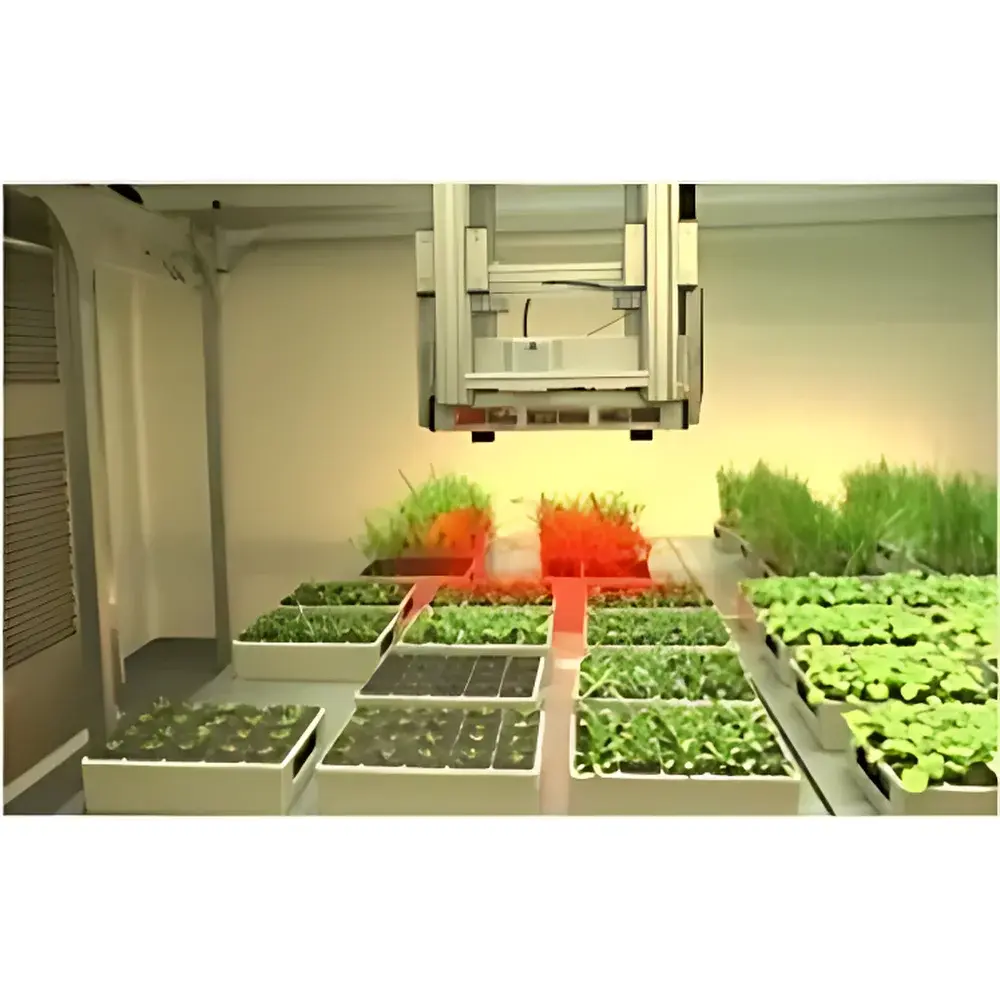
The PSI PlantScreen Conveyor-Based High-Throughput Plant Phenotyping Imaging System is an integrated, fully automated platform engineered for quantitative, non-destructive, multi-modal phenotypic characterization of plants under controlled environmental conditions. Developed by Photon Systems Instruments (PSI), the world’s first commercial manufacturer of chlorophyll fluorescence imaging systems, PlantScreen implements a modular architecture combining precision robotics, spectral imaging, and real-time physiological sensing within a single coordinated workflow. Its core measurement principle relies on spatially resolved, time-synchronized acquisition across complementary optical domains: pulse-amplitude-modulated (PAM) chlorophyll fluorescence kinetics for photosynthetic efficiency; calibrated RGB photogrammetry for morphometric 3D reconstruction; thermal infrared radiometry for stomatal conductance inference; near-infrared (NIR) reflectance at 1450–1600 nm for tissue water status quantification; and push-broom hyperspectral imaging across visible-near-infrared (VNIR: 380–1000 nm) and short-wave infrared (SWIR: 900–2500 nm) ranges for biochemical trait mapping. All modules operate within a light-isolated, climate-stabilized environment, enabling reproducible measurements compliant with OECD, FAO, and EPPN (European Plant Phenotyping Network) standard protocols.
Key Features
- Fully automated conveyor-driven sample handling with barcode/RFID tracking, supporting up to 30 × 30 cm trays and individual pot-level identification.
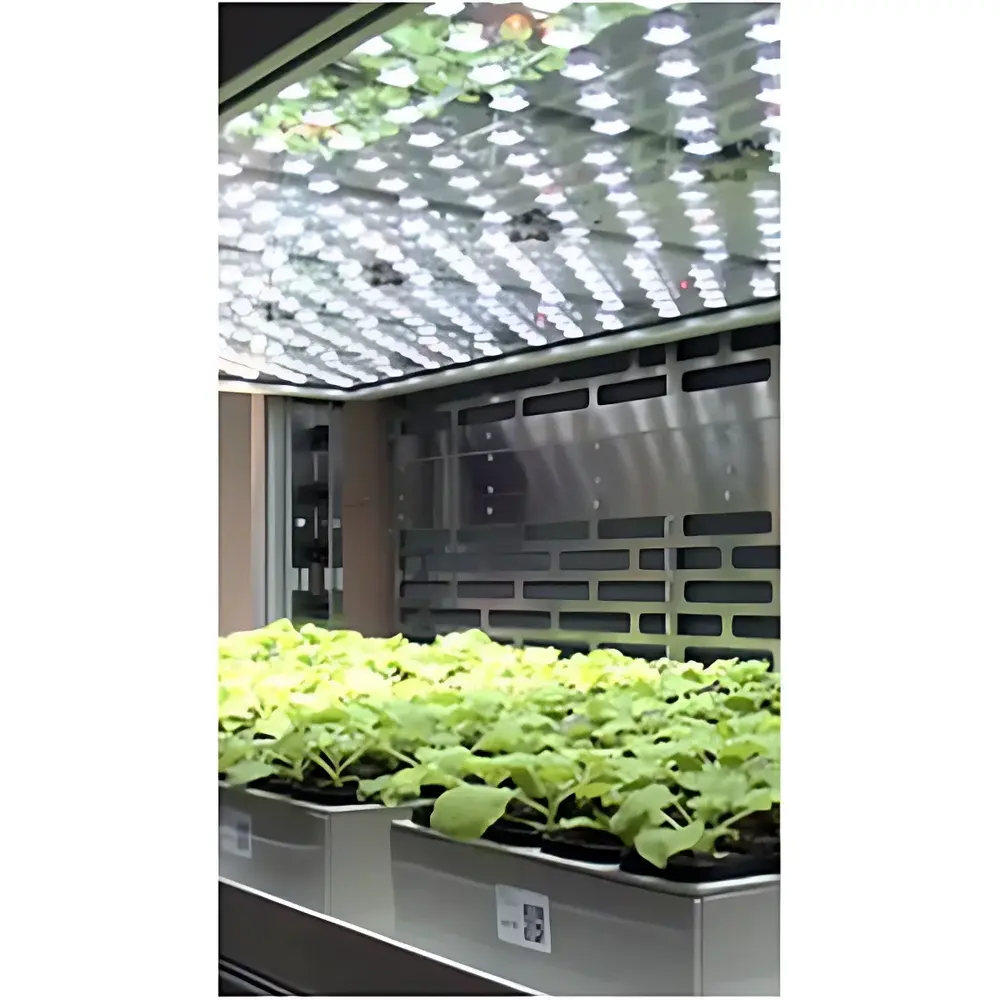
- Integrated LED growth chamber (1000 µmol·m⁻²·s⁻¹ PAR, 0–100% dimmable, thermally neutral) with programmable photoperiods and optional climate-controlled growth room (9.5 m² footprint, ±1°C stability).
- Chlorophyll fluorescence imaging module: 35 × 35 cm field-of-view, dual-wavelength actinic illumination (620 nm orange + white), saturating flash (white/blue), and full kinetic parameter extraction (Fo, Fm, Fv/Fm, ΦPSII, NPQ, qP, Rfd, etc.) using 8-bit green-band filter wheel.
- RGB 3D imaging system: Triple-camera setup (top + two lateral views), 4008 × 2672 resolution sensors (12-bit depth), motorized focus, cold-white LED illumination, sub-10 s scan cycle, and automated thresholding for 17 morphometric parameters including leaf area, solidity, eccentricity, roundness, internodal distance, centroid position, and relative growth rate.
- Hyperspectral imaging: Dual-lens configuration (VNIR + SWIR), F/0.2 optics, 25 µm slit width, configurable frame rates (12–236 fps VNIR; 60–100 fps SWIR), and support for 17 vegetation indices (NDVI, MCARI, OSAVI, PRI, NPCI, ZMI, SIPI, etc.) via embedded spectral processing engine.
- NIR water-status imaging: Targeted acquisition at 1450–1600 nm band, enabling pixel-wise quantification of foliar hydration state and dynamic drought-recovery profiling.
- Thermal imaging: 640 × 480 microbolometer sensor, NETD < 0.05°C @ 30°C, 20–120°C range, full-field (150 × 150 cm) temperature mapping with false-color export to MATLAB or native visualization.
- Automated irrigation & weighing: Five-channel precision dosing (±1 g accuracy), IP66-rated load cells (7–20 kg options), auto-zero and reference-weight recalibration, and protocol-driven drought imposition or nutrient delivery (e.g., N-fertilization).
Sample Compatibility & Compliance
PlantScreen accommodates a broad taxonomic range—from Arabidopsis thaliana seedlings and rice tillers to maize vegetative rosettes and woody cuttings—across standard pot sizes (5–20 cm diameter) and tray formats (e.g., 6-, 12-, or 24-well). All imaging modules are calibrated against NIST-traceable standards, and hardware interfaces comply with IEC 61000-6-2/4 for electromagnetic compatibility. The system meets ISO/IEC 17025 requirements for test equipment validation and supports 21 CFR Part 11-compliant electronic records when deployed in regulated environments (e.g., agrochemical efficacy trials, breeding program GLP audits). Full traceability is enforced through synchronized timestamping, unique plant ID registration, and immutable metadata embedding (growth stage, light history, irrigation regime) into the MySQL database.
Software & Data Management
The PlantScreen Control Suite provides a touch-enabled, role-based GUI for experiment design, real-time monitoring, and post-acquisition analysis. Users define measurement protocols via drag-and-drop workflow builder, specifying sequence, timing, modality activation, and hardware triggers. All raw images, processed metrics, and metadata are stored in a normalized relational schema with referential integrity—enabling complex queries across thousands of plants and hundreds of timepoints. Batch analysis modules include ROI-based fluorescence quenching parameter extraction, 3D skeletonization for architectural modeling, spectral unmixing for pigment quantification, and multivariate correlation engines linking thermal dissipation patterns with NIR hydration gradients. Export formats include TIFF (16-bit), CSV, HDF5, and direct MATLAB/Python API integration. Audit trails record user actions, software version, calibration events, and instrument status logs—fully aligned with ALCOA+ (Attributable, Legible, Contemporaneous, Original, Accurate, Complete, Consistent, Enduring, Available) data integrity principles.
Applications
PlantScreen serves as a foundational infrastructure for academic and industrial research in plant functional genomics, abiotic stress physiology (drought, heat, salinity), nutrient use efficiency screening, herbicide mode-of-action studies, and high-resolution QTL mapping. Its capacity to generate >100 quantitative phenotypic descriptors per plant per timepoint enables robust statistical modeling of genotype–phenotype–environment interactions. Key use cases include: longitudinal monitoring of photosynthetic acclimation during progressive drought; comparative analysis of stomatal conductance proxies via thermal/NIR coupling; 3D canopy architecture modeling for yield prediction; hyperspectral discrimination of early-stage disease symptoms prior to visual onset; and validation of CRISPR-edited traits under controlled stress regimes. Deployed at institutions including IRRI, CSIRO Plant Phenomics Centre, BASF CropDesign, and Monsanto, the system supports FAO Sustainable Development Goal 2 (Zero Hunger) through accelerated development of climate-resilient cultivars.
FAQ
What plant species and growth stages are compatible with PlantScreen?
PlantScreen supports seedlings, vegetative rosettes, tillering cereals, and early reproductive stages across dicots and monocots. Optimal imaging occurs between 14–42 days post-germination depending on species and growth rate; custom tray inserts accommodate root-box systems or hydroponic setups.
Is remote operation and data access supported?
Yes—the system operates over secure Ethernet (100 Mb/s), allowing remote protocol execution, live camera feeds, and database queries via authenticated web interface or dedicated client application. TLS 1.2 encryption ensures data-in-transit security.
How is calibration maintained across long-term deployments?
Fluorescence modules undergo daily dark-adaptation verification; RGB cameras feature automated white-balance referencing; thermal sensors include blackbody drift compensation; and NIR/SWIR units perform periodic spectral flat-field correction using integrated reference panels.
Can PlantScreen integrate with existing greenhouse or field trial infrastructure?
The conveyor system is modular and can be docked to climate chambers or connected via standardized API to LIMS or breeding management platforms (e.g., BreedBase, Fieldbook). Optional weather station and soil moisture sensor inputs enable hybrid lab-field phenotyping workflows.
What training and technical support does PSI provide?
PSI delivers on-site installation commissioning, 5-day operator certification, annual preventive maintenance contracts, and 24/7 remote diagnostics with SLA-governed response times. Documentation includes ISO 9001-aligned SOPs, validation templates, and GxP-ready IQ/OQ/PQ protocols.
Related Products





