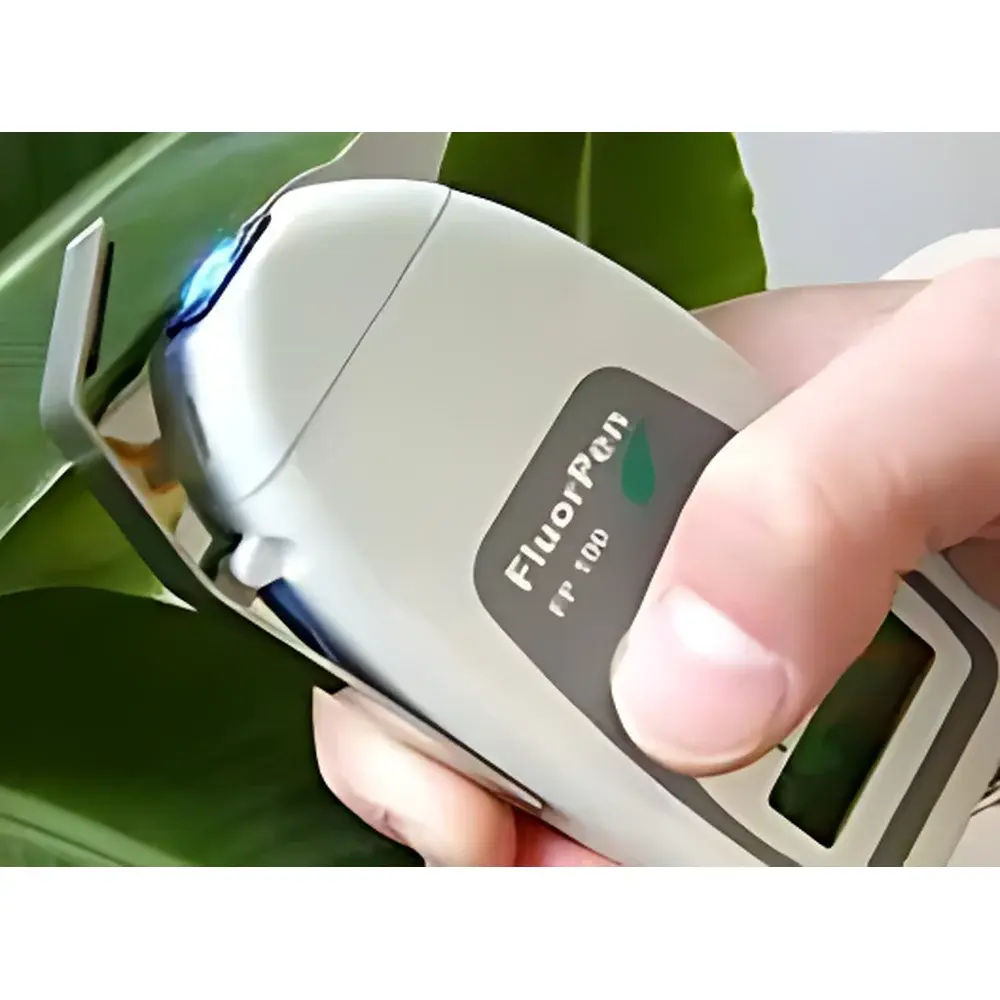
Photon Systems Instruments FluorPen FP 100 Fixed-Leaf-Clip Handheld Chlorophyll Fluorometer
| Origin | Czech Republic |
|---|---|
| Manufacturer Type | Authorized Distributor |
| Origin Category | Imported Instrument |
| Model | FluorPen FP 100 Fixed-Leaf-Clip |
| Price | Upon Request |
| Measurement Resolution | 10 µs (100,000 Hz) |
| Fluorescence Detection Range | 697–750 nm |
| Excitation Wavelength | 470 nm (blue LED), optional multi-wavelength modules available |
| PAR Sensor Range | 400–700 nm, resolution ±1 µmol(photon)·m⁻²·s⁻¹ |
| Data Storage Capacity | 4 MB (~100,000 data points) |
| Operating Temperature | 0–55 °C |
| Relative Humidity | 0–95% RH (non-condensing) |
| Power Supply | 4 × AAA batteries (70 h typical runtime) |
| Dimensions | 120 × 57 × 30 mm |
| Weight | 180 g |
| Communication Options | USB or Bluetooth 4.0 |
| GPS Module | Optional, time-stamped georeferenced output |
Overview
The Photon Systems Instruments FluorPen FP 100 Fixed-Leaf-Clip Handheld Chlorophyll Fluorometer is a field-deployable, high-temporal-resolution instrument engineered for non-invasive, quantitative assessment of Photosystem II (PSII) photochemical efficiency in higher plants, algae, and lichens. It employs modulated chlorophyll fluorescence (MCF) methodology—based on the principle of pulse-amplitude modulation (PAM)—to isolate and quantify variable fluorescence signals from background noise under ambient light conditions. The fixed-leaf-clip configuration ensures rapid, reproducible leaf positioning with minimal operator-induced variability, making it especially suitable for dark-adapted measurements conducted during nocturnal sampling campaigns or controlled-environment studies. Its core architecture integrates a 470 nm blue LED excitation source, a calibrated silicon PIN photodiode detector with 697–750 nm bandpass filtering, and real-time signal processing firmware capable of resolving fluorescence transients at 10 µs intervals. This enables full acquisition and parametric analysis of the OJIP transient, fluorescence quenching kinetics, and light-response curves—functions traditionally reserved for benchtop fluorometers—within a palm-sized, battery-operated platform.
Key Features
- Compact, rugged handheld design (120 × 57 × 30 mm; 180 g) optimized for extended field use and classroom instruction
- Fixed-leaf-clip mechanism enabling consistent leaf contact pressure and precise spatial alignment across repeated measurements
- Ultra-high temporal resolution: 10 µs sampling interval (100 kHz), supporting accurate reconstruction of OJIP kinetics and detection of sub-millisecond physiological transitions
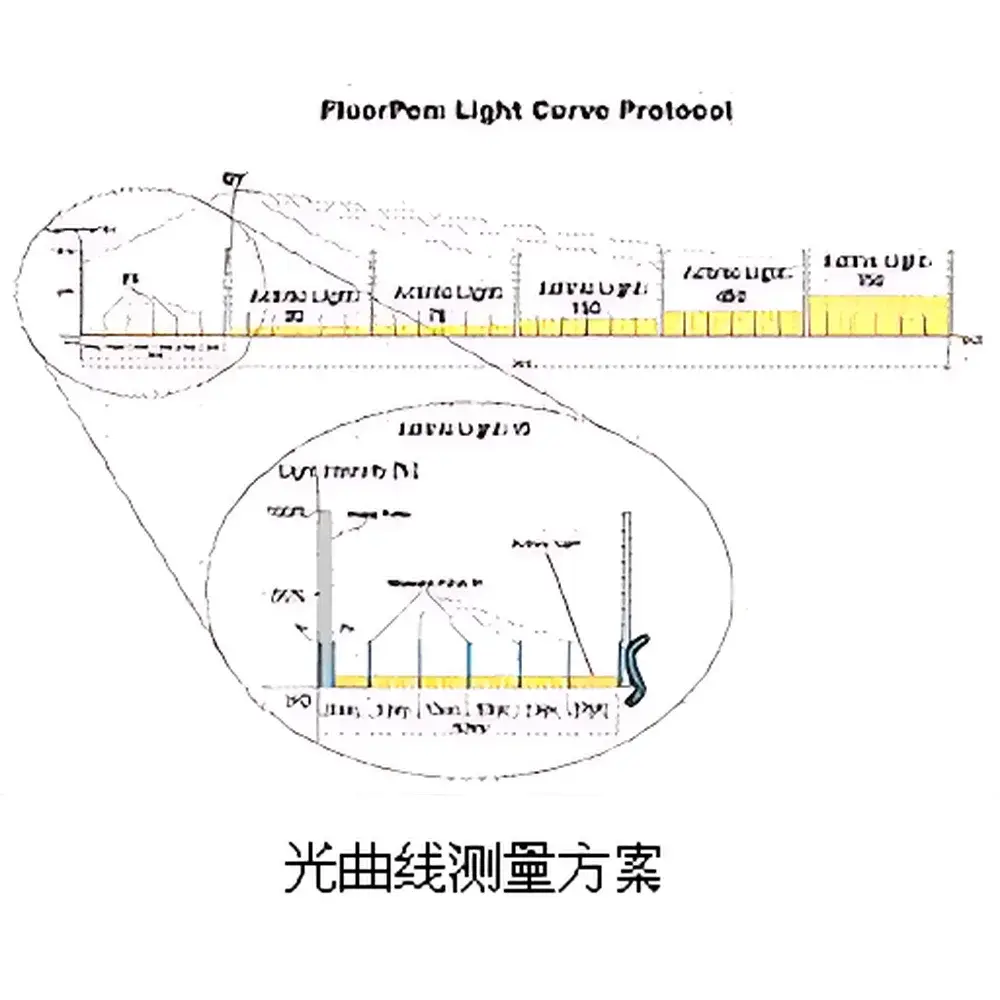
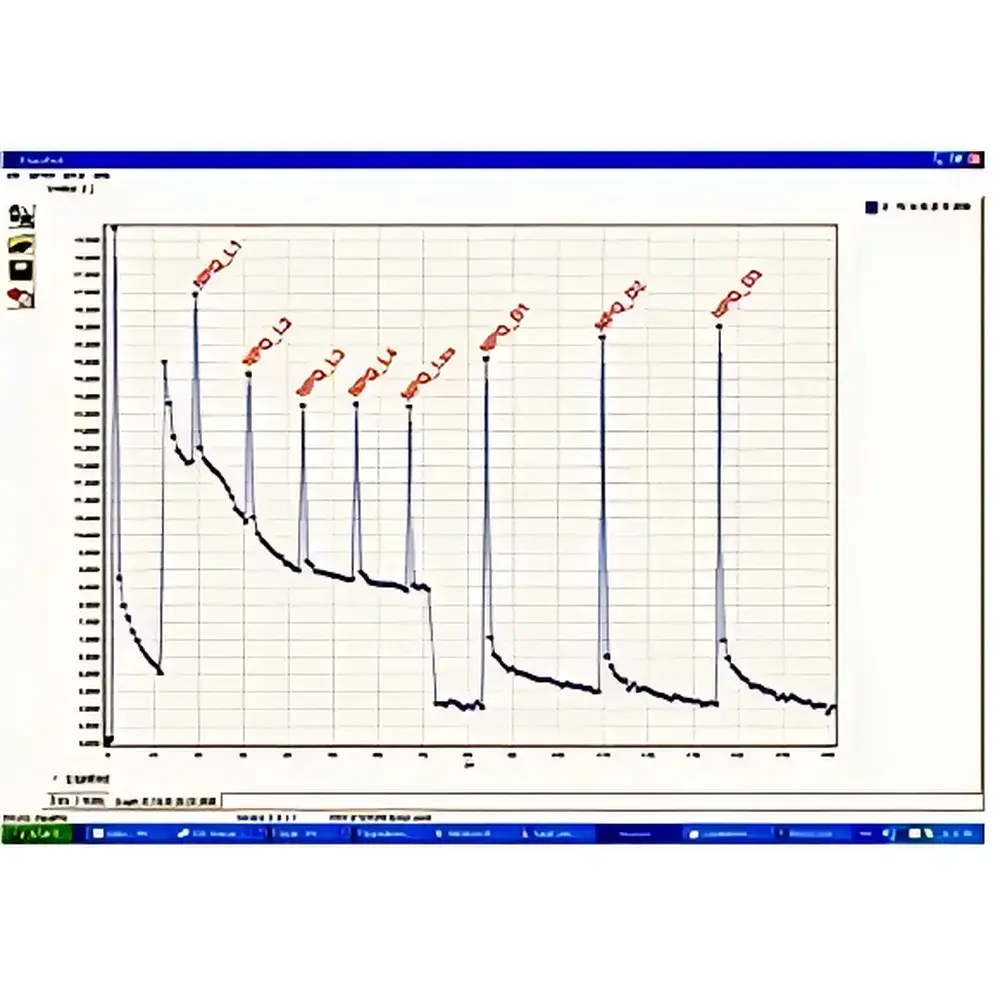
- Built-in standardized protocols: dual fluorescence quenching analysis (QY_Ln, QY_Dn, NPQ, qP, Rfd), three distinct light-response curve programs (including rapid PAR ramping), and full OJIP-test implementation with automated parameter extraction
- Integrated PAR sensor (400–700 nm) providing concurrent photosynthetic photon flux density (PPFD) readings, with 20-point averaging capability
- On-device storage of up to 100,000 discrete data points (4 MB flash memory); configurable auto-save intervals and measurement tagging
- Dual communication interface support: USB 2.0 for direct PC connection and Bluetooth 4.0 for wireless synchronization with mobile or laptop platforms
- Optional GPS module delivering georeferenced, time-stamped datasets compliant with FAO and IAEA field-data metadata standards
Sample Compatibility & Compliance
The FluorPen FP 100 is validated for use with intact, attached leaves of angiosperms, gymnosperms, ferns, mosses, and macroalgae. Its fixed-leaf-clip design accommodates leaf thicknesses from 0.1 to 2.5 mm without mechanical compression artifacts, preserving natural stomatal conductance and vascular continuity during measurement. The instrument meets ISO 17025:2017 general requirements for competence of testing and calibration laboratories when operated within specified environmental limits (0–55 °C, ≤95% RH non-condensing). All fluorescence parameters—including Fo, Fm, Fv/Fm, ΦPSII, NPQ, qP, Rfd, PIAbs, ABS/RC, TRo/RC, and ETo/RC—are calculated using algorithms aligned with the widely adopted JIP-test formalism (Strasser et al., 2004) and referenced against peer-reviewed literature cited in the device’s technical documentation. Data export formats (CSV, TXT) support interoperability with GLP-compliant laboratory information management systems (LIMS) and facilitate audit trails required under FDA 21 CFR Part 11 for regulated agricultural biotechnology trials.
Software & Data Management
FluorPen Professional Software (v4.2+) provides full post-acquisition analysis, visualization, and reporting capabilities. It supports batch import of multiple measurement sessions, overlay of OJIP transients for comparative kinetic profiling, and statistical evaluation of parameter distributions across treatment groups. The software implements automated baseline correction, background subtraction, and normalization routines traceable to NIST-traceable reference standards. Export options include publication-ready vector graphics (SVG, EPS), tabular reports with metadata headers (sample ID, timestamp, GPS coordinates, PAR, temperature), and structured JSON files compatible with Python-based ecological modeling pipelines (e.g., EcoPy, scikit-learn). Remote operation mode allows real-time parameter adjustment and live fluorescence trace monitoring via Bluetooth link—enabling synchronized multi-instrument deployments in large-scale phenotyping experiments. Audit logs record all user actions, firmware updates, and calibration events, satisfying GLP/GMP documentation requirements for long-term environmental monitoring programs.
Applications
The FluorPen FP 100 serves as a primary tool in plant stress physiology, crop phenotyping, ecotoxicology, and functional genomics. Its validated applications include: early detection of abiotic stressors (drought, salinity, heavy metal exposure, UV-B irradiation) through quantification of ΦPSII decline and NPQ induction kinetics; screening of herbicide mode-of-action and resistance mechanisms via differential quenching responses; validation of CRISPR/Cas9-edited photosynthetic mutants using OJIP-derived performance indices (e.g., PIAbs, Mo); assessment of symbiotic efficiency in mycorrhizal or rhizobial associations via PSII stability metrics under nutrient limitation; and development of bioindicator species for soil and water quality monitoring based on dose-dependent fluorescence inhibition thresholds. It is routinely deployed in USDA ARS field trials, EU Horizon 2020 agroecology projects, and IAEA coordinated research programs on climate-resilient agriculture.
FAQ
What is the minimum leaf thickness compatible with the fixed-leaf-clip configuration?
The clip accommodates leaves from 0.1 mm (e.g., young Arabidopsis rosettes) to 2.5 mm (e.g., mature maize or banana leaves) without requiring manual adjustment.
Can the instrument operate under full sunlight without saturating the detector?
Yes—the modulated measurement technique combined with active background subtraction enables reliable Fm and ΦPSII determination even at ambient PAR > 2000 µmol·m⁻²·s⁻¹.
Is firmware upgrade supported in the field?
Yes—over-the-air updates via FluorPen Professional Software preserve backward compatibility with legacy datasets while extending protocol libraries and calibration routines.
Does the device meet CE and FCC electromagnetic compatibility requirements?
Yes—certified to EN 61326-1:2013 (EMC for laboratory equipment) and FCC Part 15 Subpart B (Class B digital device).
How is dark adaptation achieved for OJIP measurements?
The fixed-leaf-clip includes an integrated opaque shutter that fully blocks incident light for ≥20 min prior to measurement initiation—no external leaf clips or dark chambers are required.