
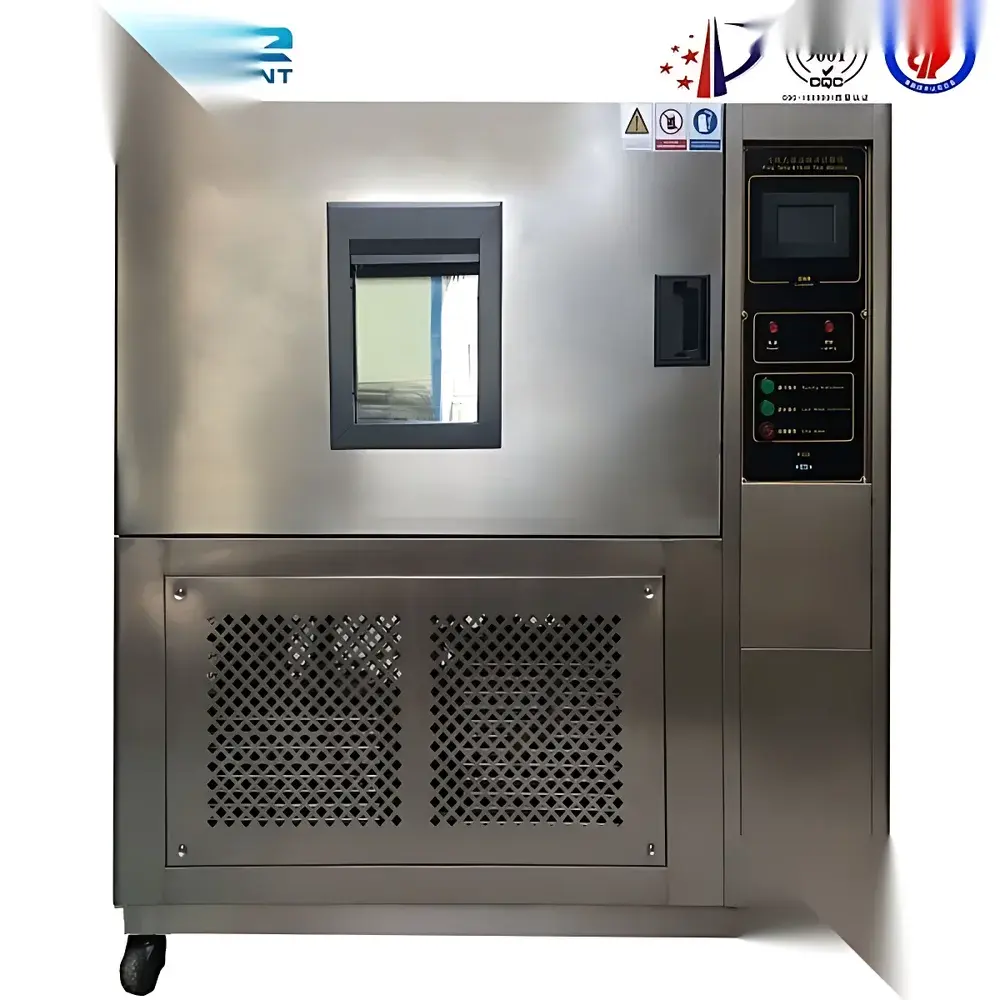
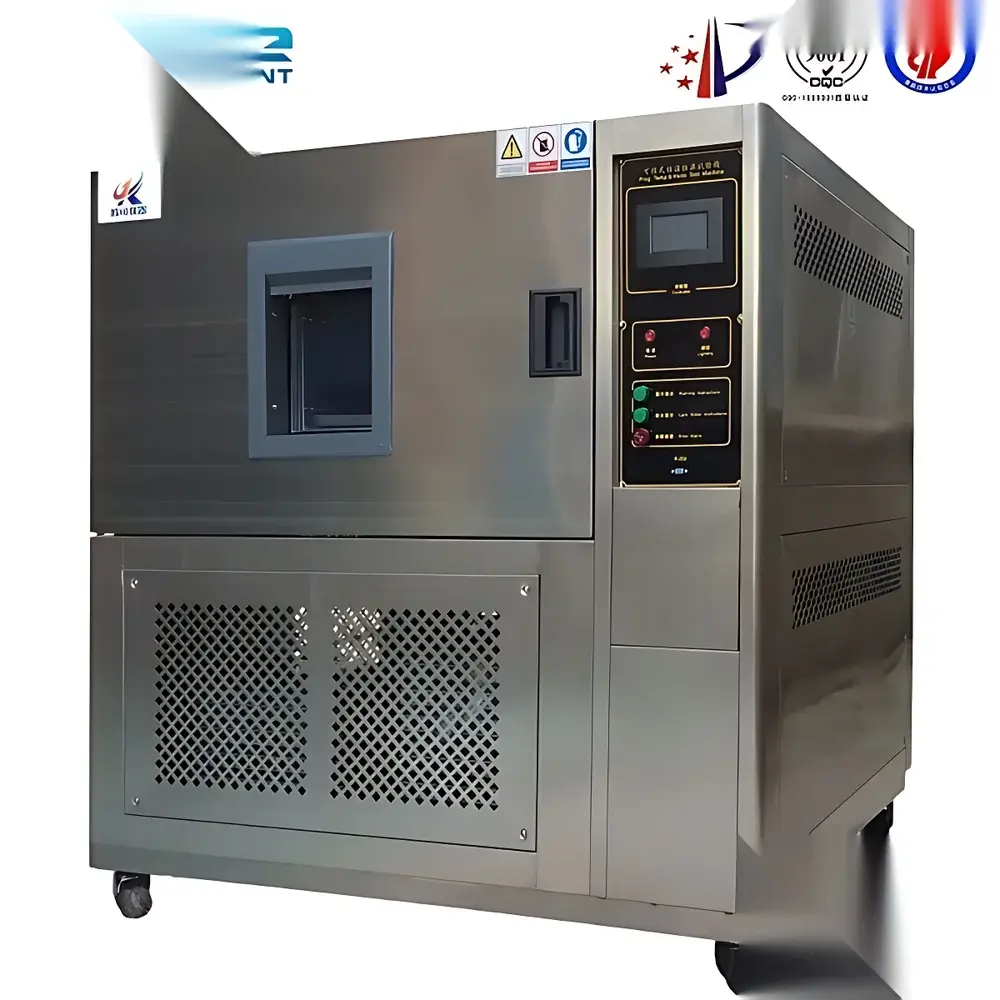
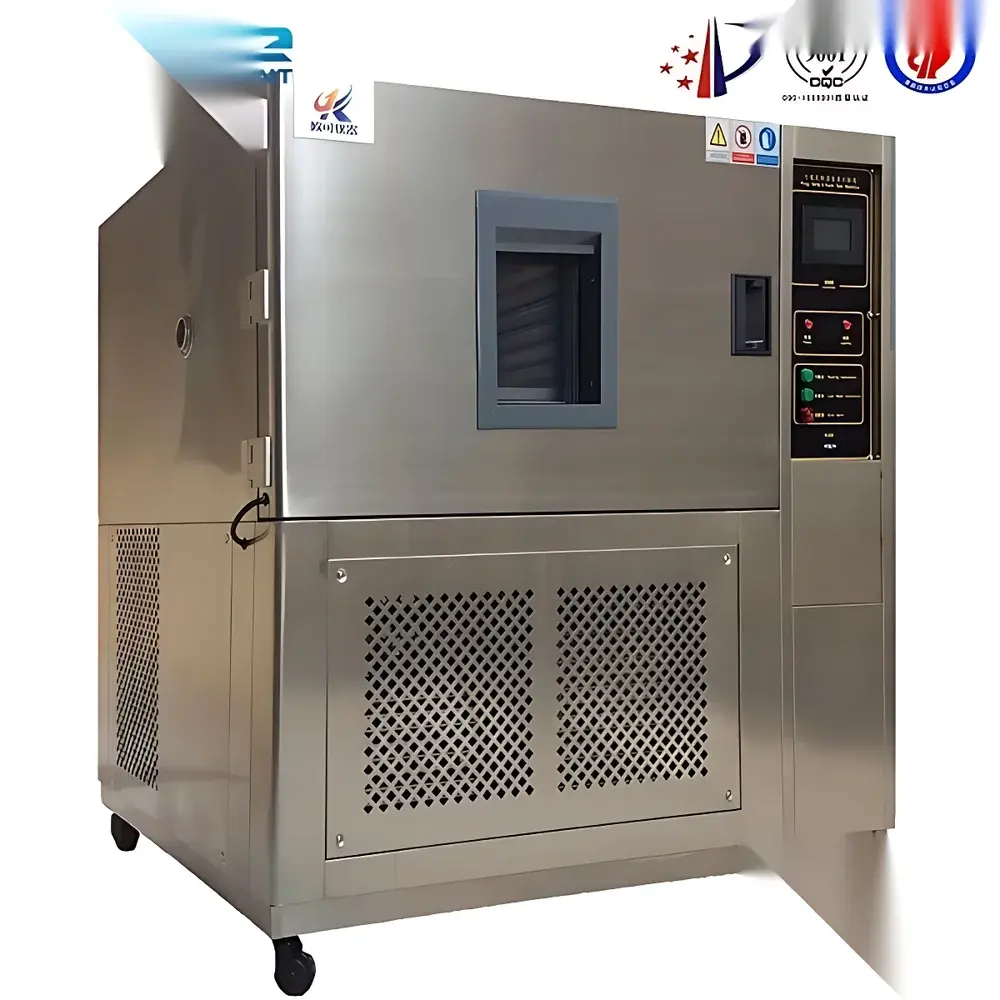
Environmental Test Chamber – Temperature and Humidity Controlled Chamber (OEM/ODM Supply)
No specifications available.
Overview
The Environmental Test Chamber – Temperature and Humidity Controlled Chamber is a precision-engineered system designed for reliable, repeatable simulation of defined climatic conditions in laboratory and industrial quality assurance environments. It operates on the principle of balanced temperature and humidity control (BTHC), integrating refrigeration, electric heating, steam or ultrasonic humidification, and forced-air circulation to maintain stable setpoints across wide operational ranges. Unlike single-stress thermal chambers, this dual-parameter system enables concurrent application of temperature and relative humidity (RH) profiles—critical for evaluating material stability, packaging integrity, electronic component reliability, and accelerated aging behavior under real-world environmental exposure scenarios.
Key Features
- Robust safety architecture including dry-run protection for humidifiers, independent over-temperature cutoffs, low-water-level interlocks, compressor overload/overheat/overcurrent protection, high-pressure refrigerant switches, molded-case circuit breakers, and residual-current devices (RCDs).
- Advanced BTHC control logic implemented via PID algorithms driving solid-state relays (SSRs), ensuring dynamic equilibrium between thermal/humidification input and chamber heat/moisture loss—enabling long-duration stability without drift.
- Full capillary tube-based refrigerant flow regulation with auto-load capacity adjustment, delivering superior temperature ramping linearity and uniformity compared to traditional thermostatic expansion valve (TXV) systems.
- Ergonomic curved cabinet design with high-gloss finish and flat, non-reactive door handles for intuitive operation and reduced mechanical wear.
- Touchscreen controller supporting programmable multi-step profiles, real-time data logging, and seamless integration with external monitoring networks.
- Modular construction allows customization of internal dimensions, port configurations, and mounting interfaces per customer specifications—without compromising structural integrity or thermal sealing performance.
Sample Compatibility & Compliance
This chamber accommodates a broad range of test specimens—including PCB assemblies, polymer components, pharmaceutical packaging, automotive sensors, and aerospace composites—within standard or user-defined load configurations. All performance specifications (e.g., temperature range, humidity range, ramp rates) are validated under no-load, ambient reference conditions (25 °C ±6 °C). Actual thermal/humidity response will vary based on specimen mass, thermal mass distribution, surface emissivity, and internal airflow obstruction.
The system complies with internationally recognized environmental stress screening (ESS) and qualification testing standards, including: GB/T 2423.1–2023 (Cold Testing), GB/T 2423.2–2023 (Dry Heat Testing), IEC 60068-2-1 (Cold), IEC 60068-2-2 (Dry Heat), GJB 1032A–2021 (Environmental Stress Screening for Electronic Equipment), MIL-STD-2164A (ESS for Electronic Systems), and GJB 234–2022 (Quantitative ESS Methodology). Calibration traceability follows ISO/IEC 17025 requirements, and documentation supports GLP/GMP audit readiness.
Software & Data Management
The integrated controller provides local HMI operation with password-protected parameter access, event logging, and alarm history retention. Optional Ethernet or RS-485 interfaces enable remote supervision via SCADA platforms or LIMS integration. Data export formats include CSV and PDF reports compliant with FDA 21 CFR Part 11 requirements when paired with optional electronic signature and audit trail modules. All recorded parameters—including chamber setpoints, actual values, deviation alarms, and system status flags—are time-stamped with UTC synchronization capability.
Applications
- Accelerated life testing of consumer electronics under combined thermal-humidity cycling
- Stability assessment of active pharmaceutical ingredients (APIs) and final dosage forms per ICH Q1 guidelines
- Validation of moisture barrier performance in flexible packaging materials
- Environmental stress screening (ESS) of avionics and military-grade connectors
- Qualification of lithium-ion battery enclosures under thermal shock and damp heat conditions (per UN 38.3 Section 4.4)
- Material compatibility testing for adhesives, sealants, and elastomers exposed to tropical or desert climate profiles
FAQ
What is the meaning of “air average temperature change rate” in the specification sheet?
This refers to the mean rate at which air temperature within the working volume transitions between setpoints—not the surface or core temperature of the test specimen. Actual specimen response depends on thermal diffusivity, geometry, and mounting method.
Is cooling water required for operation?
Yes. Sustained cooling performance requires chilled water supply at 10–28 °C and pressure between 0.1–0.3 MPa. Water quality must meet ASTM D1193 Type IV specifications to prevent scaling or corrosion in the condenser circuit.
Can the chamber be customized for non-standard internal dimensions?
Yes. Structural modifications—including height, width, depth, and viewport placement—are available upon engineering review and thermal modeling validation to ensure uniformity and compliance with IEC 60068-3-5.
How are temperature and humidity uniformity verified?
Uniformity is assessed using calibrated Class A PT100 sensors arranged in a 3×3×3 grid per IEC 60068-3-5 Annex B. Results are documented in the Factory Acceptance Test (FAT) report, showing maximum deviation from setpoint across the usable volume.



