
KSV NIMA Roll-to-Roll Flexible Langmuir-Blodgett Trough System
| Brand | KSV NIMA |
|---|---|
| Origin | Finland |
| Manufacturer Type | Original Equipment Manufacturer (OEM) |
| Category | Imported Instrument |
| Model | Roll-to-Roll |
| Price Range | USD 13,500 – 27,000 |
Overview
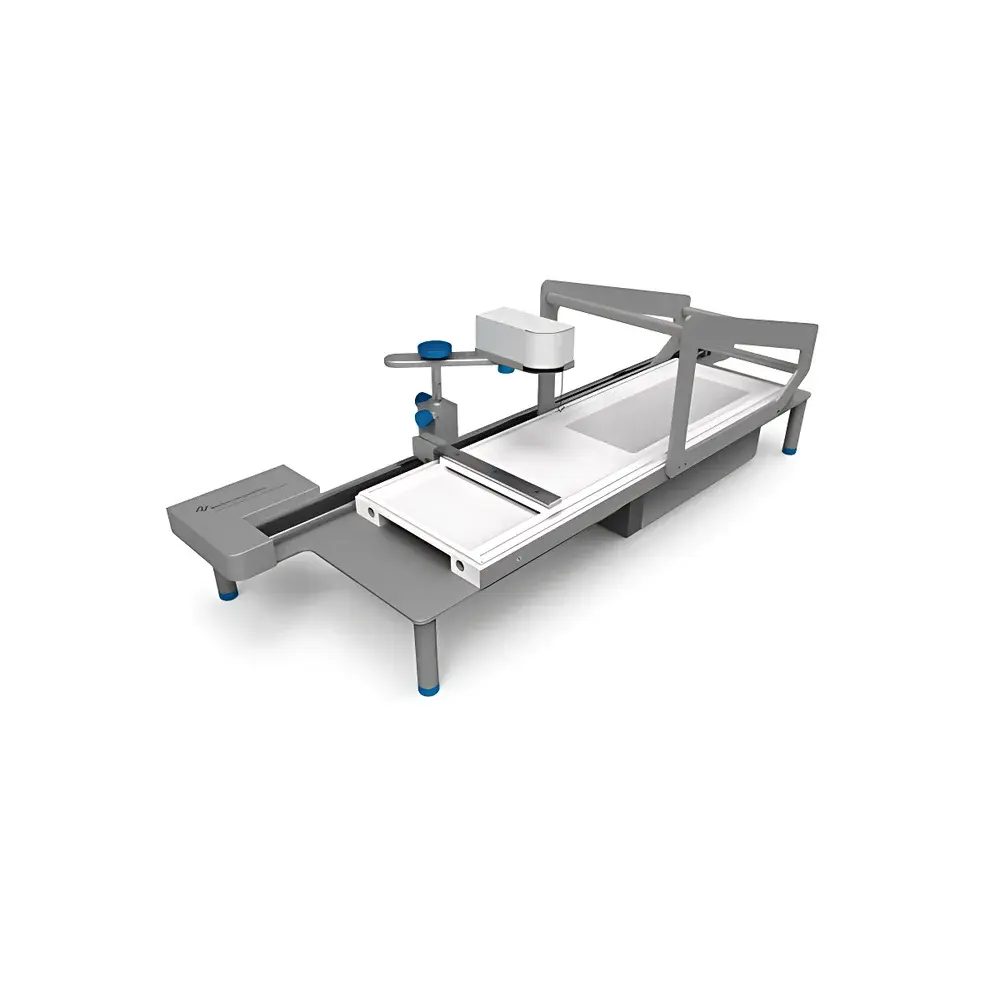
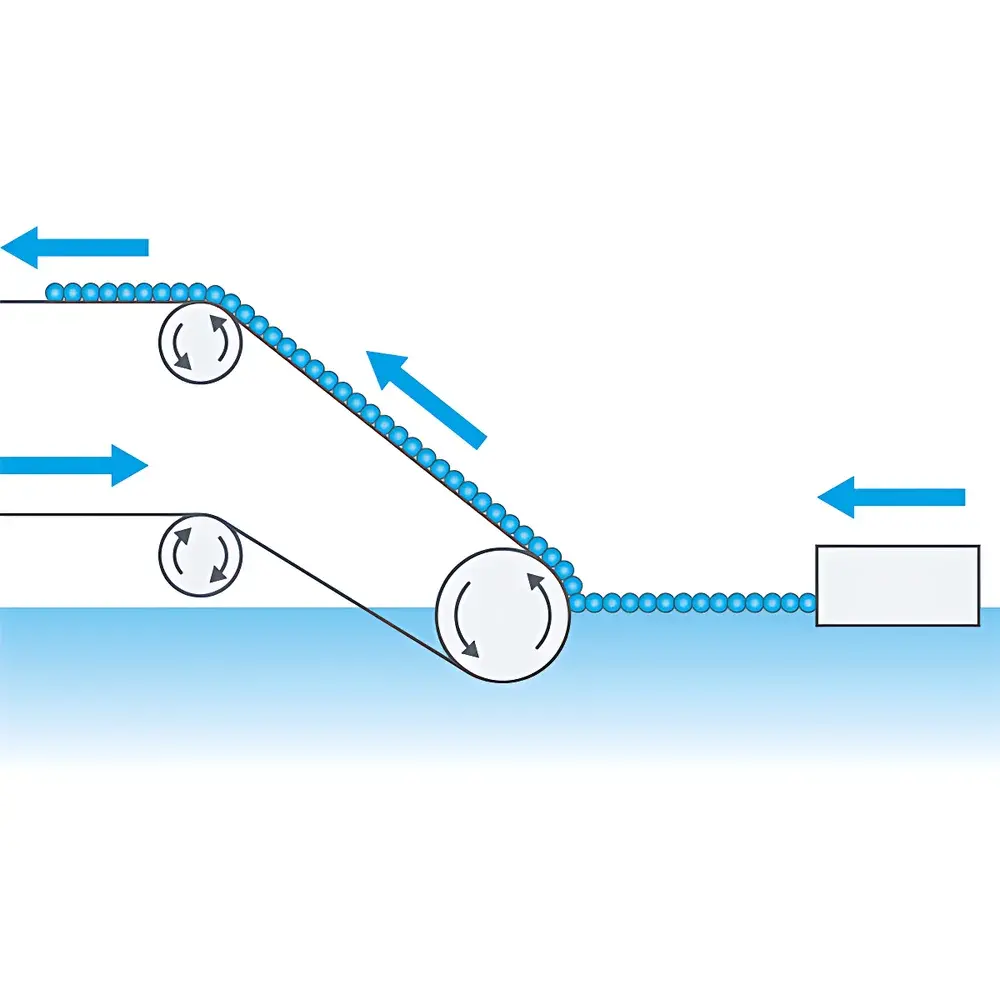
The KSV NIMA Roll-to-Roll Flexible Langmuir-Blodgett Trough System is an engineered solution for the semi-continuous, large-area fabrication of highly ordered monolayers and multilayer thin films at the air–liquid interface. Unlike conventional Langmuir troughs designed for static or dip-coating protocols, this system integrates precision-controlled web handling with real-time surface pressure monitoring to enable scalable deposition onto flexible substrates—such as polymer foils, metal tapes, or conductive textiles—without compromising molecular-level control. Its operational principle relies on the fundamental physics of two-dimensional interfacial self-assembly: amphiphilic molecules or colloidal nanoparticles are spread on a subphase (typically aqueous buffer), compressed into a defined surface pressure using motorized barriers, and then transferred onto a continuously moving substrate via vertical (Langmuir-Blodgett, LB) or horizontal (Langmuir-Schaefer, LS) deposition. This architecture bridges the gap between laboratory-scale monolayer science and pilot-scale functional coating development—particularly relevant for emerging applications in flexible electronics, biosensor arrays, anti-fouling membranes, and energy-harvesting interfaces.
Key Features
- Modular roll-to-roll architecture supporting substrate widths from 1 mm to 200 mm and linear speeds adjustable between 1 mm/min and 100 mm/min
- High-resolution surface pressure measurement using dual Wilhelmy plate sensors (0–300 mN/m range, 0.03 mN/m resolution) with platinum or disposable paper plate options
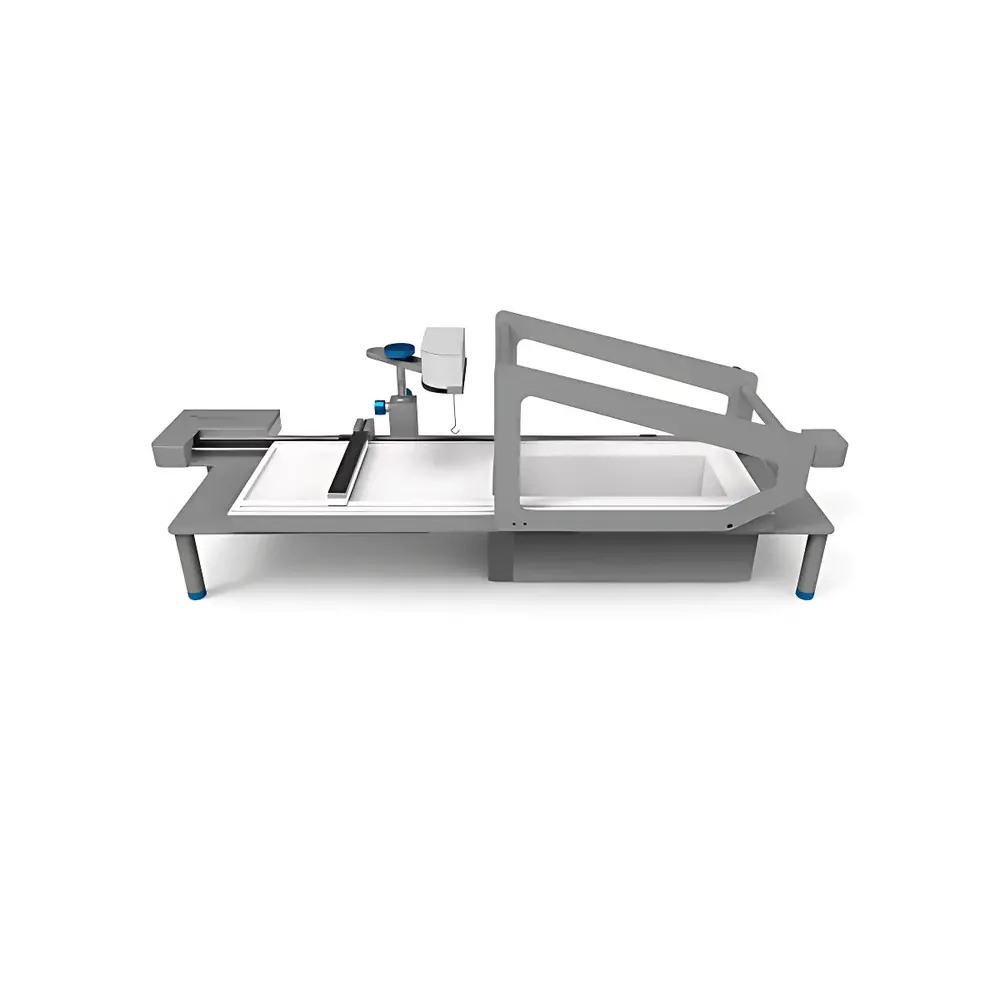
- PTFE-coated single-body trough (685 × 340 × 4 mm internal dimensions; 2330 cm² active area; 5430 mL subphase volume) designed for chemical inertness and rapid cleaning—no adhesives or coatings that could leach contaminants
- Computer-controlled barrier movement (0.1–270 mm/min speed range) with POM barrier material ensuring low friction and dimensional stability
- Integrated immersion well (300 × 300 × 50 mm) accommodating variable substrate thicknesses and enabling precise meniscus control during vertical transfer
- Adjustable film-lifting angle (30°–90°) to optimize transfer ratio and minimize shear-induced defects
- Rugged, fully enclosed housing integrating all motion controllers, load cells, and environmental interfaces for electromagnetic compatibility and long-term repeatability
Sample Compatibility & Compliance
The system accommodates a broad spectrum of amphiphilic and colloidal materials—including phospholipids, block copolymers, graphene oxide dispersions, quantum dots, metallic nanoparticles (Au, Ag), and peptide amphiphiles—across diverse subphases (buffered saline, acidic/basic solutions, organic-aqueous mixtures). Substrate compatibility spans silicon wafers, ITO/glass, PET/PEN foils, stainless steel ribbons, and hydrophobic/hydrophilic functionalized surfaces. All mechanical and sensing components comply with CE directives for laboratory equipment. The software architecture supports audit trails, user access levels, and electronic signatures per FDA 21 CFR Part 11 requirements when configured with optional GLP/GMP modules. Temperature control integration (via external recirculating chiller or built-in Peltier channels) enables isothermal compression studies aligned with ISO 9001-compliant calibration workflows.
Software & Data Management
KSV NIMA LB Software v6.x provides unified control of barrier motion, substrate transport, pressure acquisition, and environmental parameters within a deterministic real-time kernel. It implements standardized experimental templates—including LB/LS transfer mode, compression isotherms, surface potential tracking, interfacial rheology (barrier oscillation), and adsorption kinetics—with full metadata logging (timestamp, operator ID, instrument configuration, subphase composition). Data export supports CSV, HDF5, and MATLAB-native formats; graphical overlays allow direct comparison of transfer ratios, hysteresis loops, and phase transition thresholds across batches. Integration APIs permit synchronization with third-party characterization tools: MicroBAM (Brewster angle microscopy), PM-IRRAS spectrometers, and SPOT surface potential analyzers—all triggered automatically upon reaching target surface pressures. Raw sensor streams are stored losslessly at ≥100 Hz sampling rates, ensuring traceability for post-acquisition reprocessing.
Applications
- Scalable fabrication of nanostructured electrodes for flexible supercapacitors and printed batteries
- Deposition of biomimetic lipid bilayers on stretchable substrates for organ-on-chip platforms
- Controlled assembly of plasmonic nanoparticle arrays for tunable optical filters and SERS substrates
- Multi-layered anti-reflective and oleophobic coatings on polymer optics and touchscreens
- Functionalization of microporous membranes with zwitterionic monolayers to reduce biofouling in water purification
- High-throughput screening of surfactant–nanoparticle co-assembly behavior under varying ionic strength and pH conditions
- Interface-resolved studies of enzymatic hydrolysis kinetics at confined monolayer interfaces
FAQ
What distinguishes the roll-to-roll LB system from standard Langmuir troughs?
Standard troughs operate batch-wise with static substrates; this system introduces continuous web transport synchronized with barrier dynamics and real-time surface pressure feedback—enabling meter-long uniform films without stitching artifacts.
Can the system perform both LB and LS deposition modes?
Yes—vertical immersion (LB) and horizontal contact (LS) heads are interchangeable and software-configurable, allowing sequential or alternating deposition of dissimilar monolayers within one experiment.
Is temperature control integrated or external?
The trough includes embedded thermal channels compatible with external chillers or heaters; optional Peltier-based modules provide ±0.1 °C stability over 20–60 °C ranges.
How is subphase evaporation managed during extended runs?
An optional subphase evaporation compensation module dynamically adjusts reservoir volume using gravimetric feedback, maintaining constant subphase depth for experiments exceeding 24 hours.
What level of training and application support is provided?
KSV NIMA offers on-site installation, SOP development workshops, and remote troubleshooting via secure VNC—backed by a global network of field application scientists with domain expertise in soft matter, biointerfaces, and nanomaterials engineering.



