
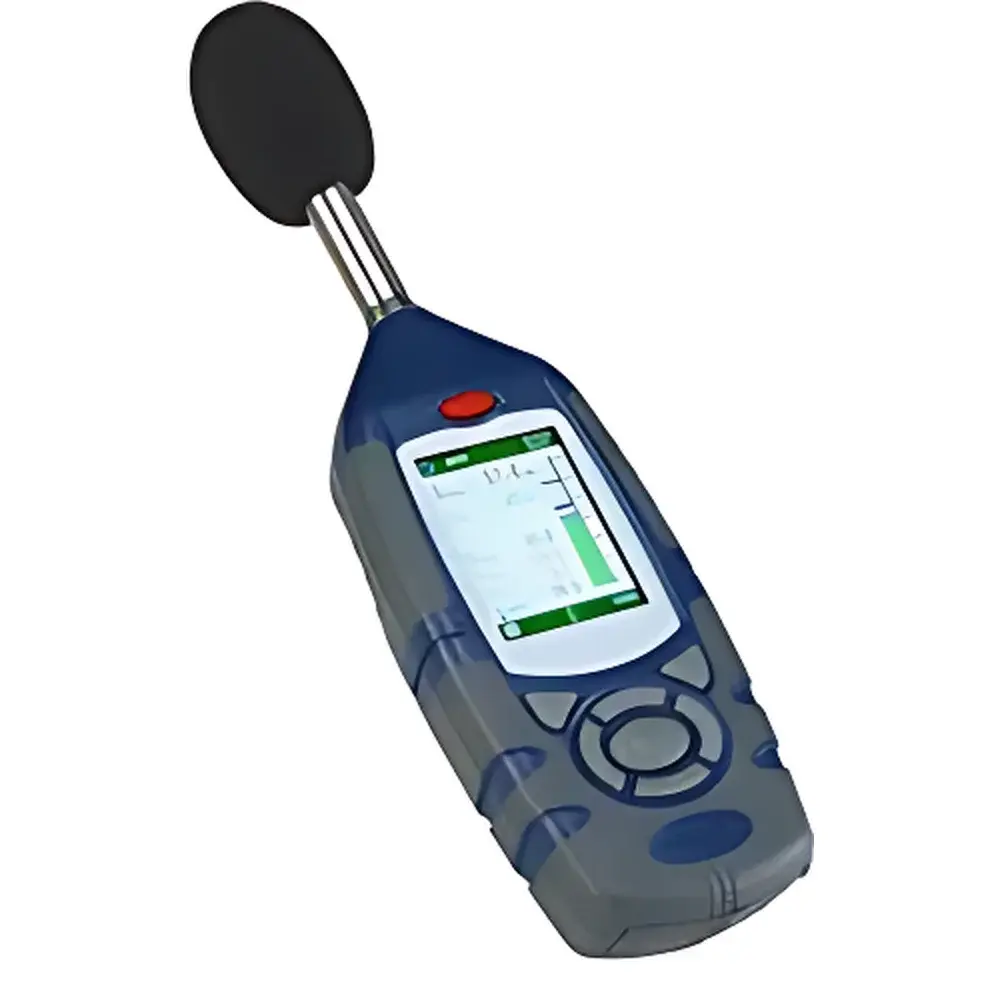
Casella CEL-620 Precision Integrating Sound Level Meter
| Brand | Casella |
|---|---|
| Origin | United Kingdom |
| Model | CEL-620 |
| Compliance | IEC 61672-1:2013 Class 1, IEC 61260-1:2014 Class 0 (for CEL-620B), ANSI S1.4-2014, ANSI S1.43-2020 |
| Measurement Range | 20–140 dB RMS (single full scale), 143 dB peak |
| Frequency Weightings | Simultaneous A-, C-, and Z-weighting |
| Time Weightings | Simultaneous Fast, Slow, and Impulse |
| Integrated Metrics | L<sub>XY</sub>, L<sub>XY,max</sub>, L<sub>XY,min</sub>, L<sub>X,eq</sub>, L<sub>avg</sub>, L<sub>C−A</sub>, L<sub>AE</sub>, L<sub>TM3–TM5</sub> |
| Octave Band Analysis | 11 bands (16 Hz–16 kHz, CEL-620B only) |
| Display | 320 × 240 pixel TFT color LCD |
| Data Storage | 100 measurement sessions with full metadata |
| Power | 3 × AA alkaline or rechargeable batteries (11 h with backlight, 20 h without) |
| Operating Temperature | −10 °C to +50 °C (Class 1), 0 °C to +40 °C (Class 2) |
| Dimensions | 72 × 229 × 31 mm |
| Weight | 295 g |
Overview
The Casella CEL-620 Precision Integrating Sound Level Meter is a Class 1-certified, microprocessor-controlled instrument engineered for high-fidelity occupational and environmental noise assessment in compliance with international metrological standards. Designed around the principles of true RMS detection and real-time digital signal processing, the CEL-620 delivers traceable acoustic measurements across a single 20–140 dB dynamic range—eliminating range-switching artifacts and ensuring continuity in time-history analysis. Its dual-mode architecture supports both basic sound pressure level (SPL) quantification and advanced integrated metrics including Leq, Lavg, LC−A, and time-weighted exposure indices (LAE, LTM3–TM5). The instrument adheres strictly to IEC 61672-1:2013 (Class 1), IEC 61260-1:2014 (Class 0 for octave band analysis on CEL-620B variants), and relevant ANSI S1 series standards—making it suitable for regulatory reporting under OSHA 1910.95, EU Directive 2003/10/EC, and HSE L108 requirements.
Key Features
- Single full-scale dynamic range (20–140 dB RMS) with 143 dB peak capability ensures seamless capture of impulsive and steady-state noise without manual range adjustment.
- Simultaneous real-time application of A-, C-, and Z-frequency weightings alongside Fast, Slow, and Impulse time weightings—enabling concurrent evaluation against multiple regulatory criteria.
- Integrated physical weighting options (Q3, Q4, Q5) applied to Lavg calculations support dose-based hearing conservation protocols aligned with ISO 1999 and NIOSH criteria.
- TFT color display (320 × 240 pixels) with adjustable backlight provides high-contrast visualization of live spectra, time histories, and statistical distributions—even under variable ambient lighting.
- Onboard memory stores up to 100 complete measurement sessions, each retaining full metadata: timestamps, calibration records, operator ID, location tags, and configuration settings.
- CEL-620B variant includes real-time 11-band 1:1 octave analysis (16 Hz–16 kHz), fully compliant with IEC 61260 Class 0 and ANSI S1.11, supporting spectral source identification and engineering control validation.
- Seven-language menu system (English, French, German, Spanish, Italian, Portuguese, Dutch) facilitates multinational deployment without firmware modification.
- Automatic calibration verification logs pre- and post-calibration levels, date/time stamps, and reference calibrator serial numbers—supporting GLP-compliant audit trails.
Sample Compatibility & Compliance
The CEL-620 is designed for direct air-coupled sound field measurement using its integrated ½-inch electret condenser microphone (Type 2371 or equivalent). It is compatible with standard IEC 60942-compliant acoustic calibrators (e.g., Casella dBadge2 Calibrator or SV 33) and accepts windscreen accessories (included) for outdoor use per IEC 61672 Annex D. All configurations meet Class 1 performance specifications per IEC 61672-1:2013 across the stated operating temperature (−10 °C to +50 °C) and humidity (5–90% RH, non-condensing) ranges. Device firmware and data export routines are structured to support 21 CFR Part 11-aligned workflows when paired with Casella’s OMNI software—providing electronic signatures, audit logs, and immutable record retention.
Software & Data Management
Data transfer occurs via USB 2.0 (Type-A to mini-B) to Windows-based OMNI software, which provides full traceability, report generation (PDF/CSV), and spectral visualization. OMNI enforces role-based access control, versioned configuration templates, and automated validation checks against user-defined pass/fail thresholds. Exported datasets include raw time-series waveforms (at 48 kHz sampling), integrated metrics, and octave band energy distributions—with embedded calibration history and GPS-tagged location metadata where enabled. All stored records maintain cryptographic integrity and support third-party integration via standardized XML schema compliant with ISO/IEC 17025 laboratory information management systems (LIMS).
Applications
- Workplace noise exposure assessment for compliance with OSHA, HSE, and EU Physical Agents (Noise) Directive requirements.
- Selection and verification of hearing protection devices (HPDs) using LC−A and real-time spectral feedback.
- Quantification of daily personal noise exposure levels (LEX,8h) and weekly exposure action values (EAVs).
- Machine noise emission testing per ISO 3744 and ISO 9614-2 for CE marking and product certification.
- Environmental noise monitoring near industrial sites, construction zones, and transportation corridors—aligned with ISO 1996-2:2017 methodology.
- Acoustic troubleshooting in HVAC, manufacturing, and power generation facilities using octave band analysis to isolate dominant frequency contributors.
FAQ
What is the difference between CEL-620A and CEL-620B models?
The CEL-620B includes real-time 1:1 octave band analysis (11 bands, 16 Hz–16 kHz) compliant with IEC 61260 Class 0 and ANSI S1.11, while the CEL-620A supports only broadband metrics.
Does the CEL-620 support 21 CFR Part 11 compliance?
When used with OMNI software v4.2+, the system supports electronic signatures, audit trails, and record integrity controls required for FDA-regulated environments.
Can the instrument perform long-term unattended logging?
Yes—internal memory supports up to 100 sessions; external logging via USB tethering to a PC enables continuous acquisition for extended periods.
Is calibration traceability documented per ISO/IEC 17025?
Each unit ships with a UKAS-accredited calibration certificate (valid for 12 months), and all field calibrations are timestamped and stored onboard with reference to the calibrator’s certificate number.
What battery type is recommended for extended field use?
High-capacity NiMH AA rechargeables are recommended for multi-shift deployments; alkaline cells provide optimal stability in low-temperature conditions (−10 °C).
Related Products







