
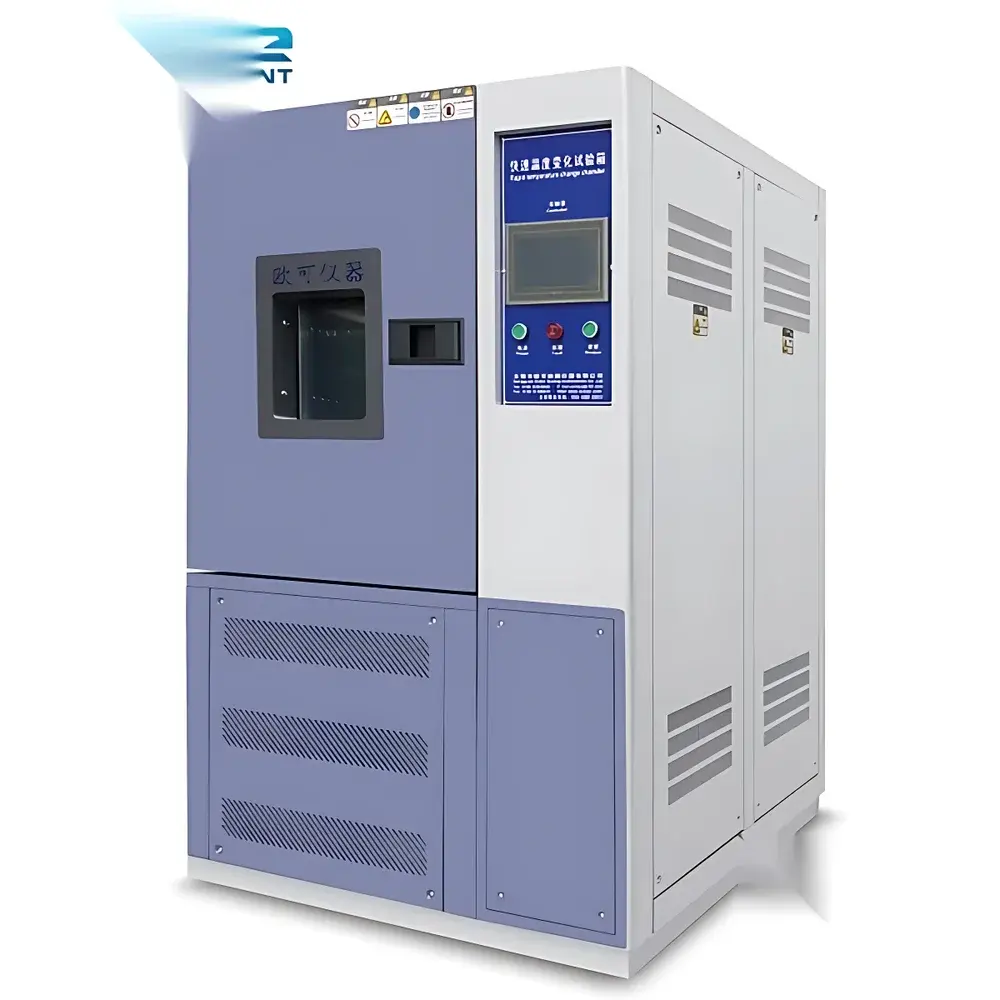
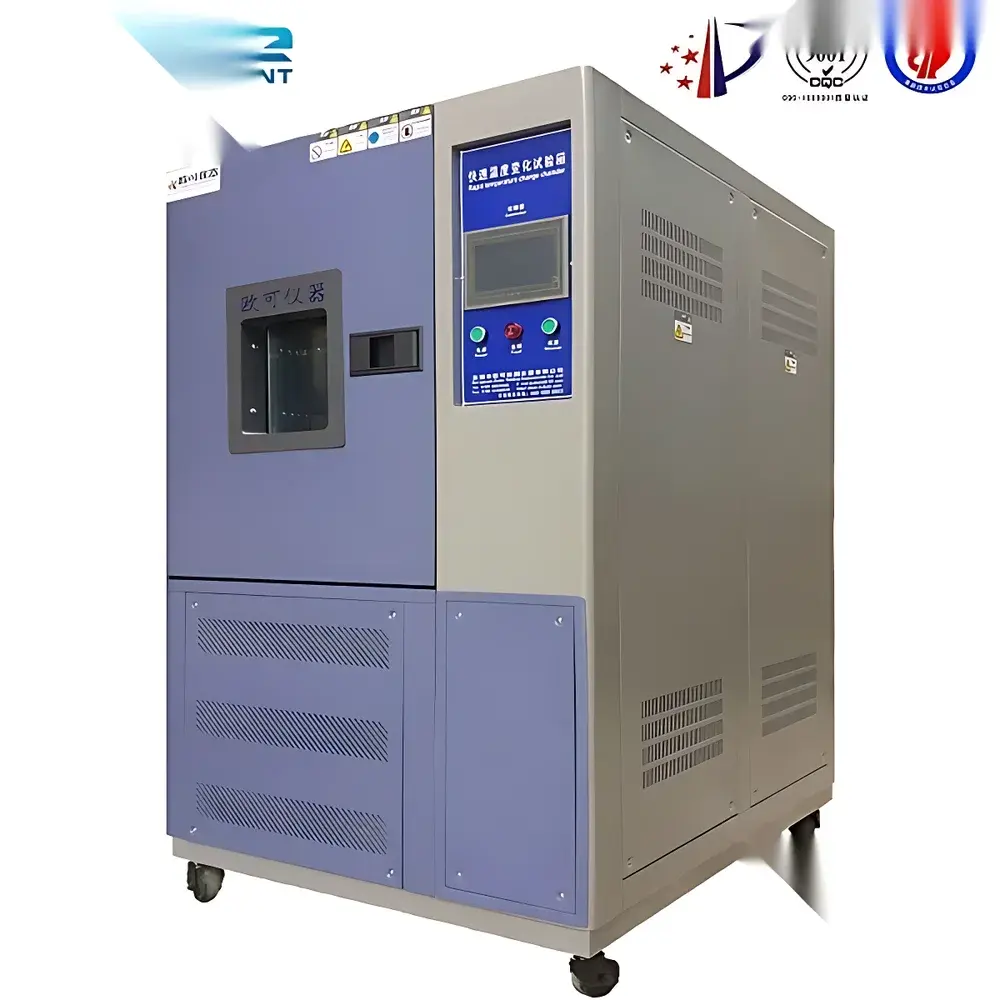
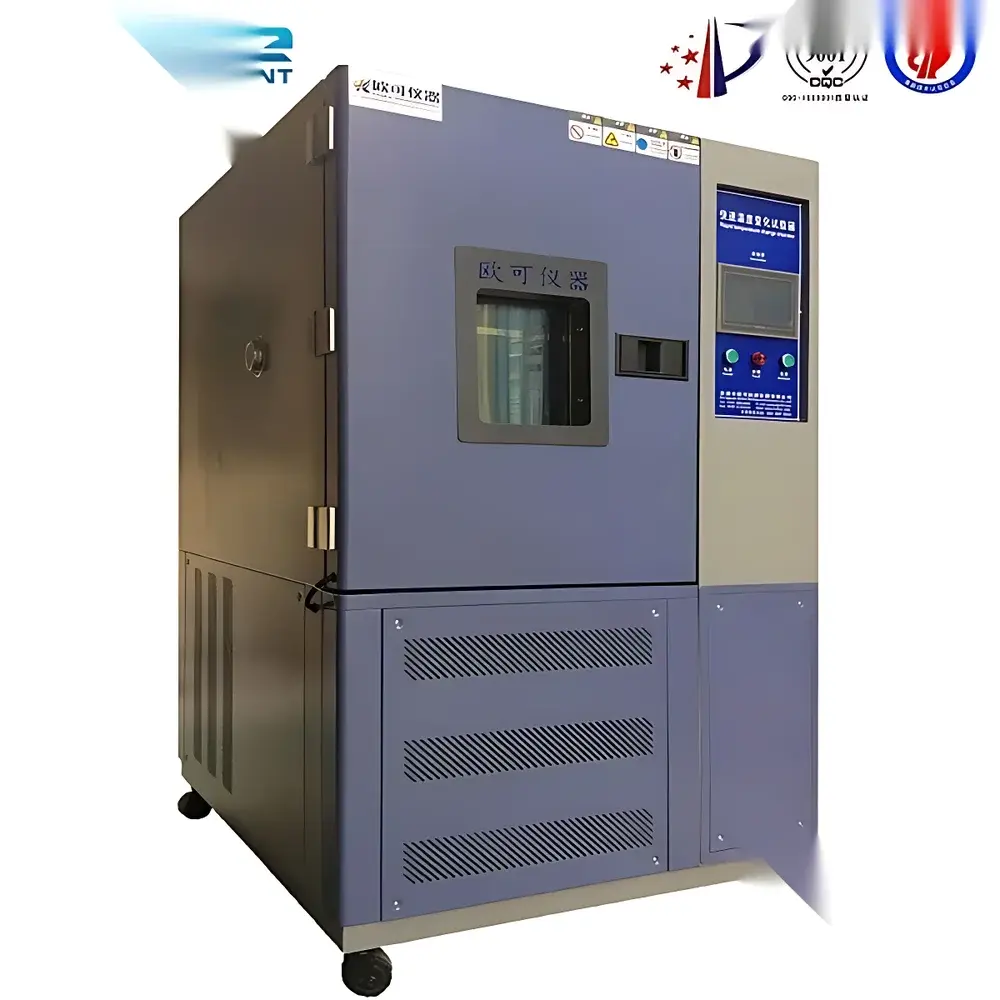
OKE Non-Standard High-Low Temperature Rapid Thermal Cycling Chamber
| Brand | OKE |
|---|---|
| Origin | Imported |
| Manufacturer Type | Authorized Distributor |
| Price | USD 2,650 (FOB) |
| Temperature Range | -70°C to +180°C |
| Ramp Rate | Up to 15°C/min (typical, model-dependent) |
| Control Method | Balanced Thermal Regulation via PID-Controlled Heating + Compressor-Based Refrigeration |
| Air Circulation | Forced Internal Convection |
| Compliance | Designed per IEC 60068-2-1, IEC 60068-2-2, and ISO 16750-4 environmental testing standards |
Overview
The OKE Non-Standard High-Low Temperature Rapid Thermal Cycling Chamber is an engineered environmental test system designed for precise, repeatable, and accelerated thermal stress evaluation of electronic components, automotive modules, aerospace subsystems, and advanced materials. It operates on the principle of balanced thermal regulation—integrating high-efficiency resistive heating with cascade or single-stage mechanical refrigeration—and employs real-time PID feedback control to maintain dynamic equilibrium between heat input and thermal loss. Unlike static temperature chambers, this system supports programmable rapid transitions between extreme thermal setpoints, enabling simulation of operational thermal shock, storage extremes, and lifecycle thermal cycling per international reliability protocols. Its architecture prioritizes thermal uniformity (±1.5°C within working volume), stability (±0.3°C at steady state), and reproducibility across repeated cycles—critical for qualifying products under MIL-STD-810H, JEDEC JESD22-A104, and AEC-Q200 conditions.
Key Features
- Programmable rapid thermal ramping: Achieves up to 15°C/min cooling and heating rates (dependent on chamber volume and load configuration)
- Dual-mode thermal control logic: Automatically selects between heater-dominant (for targets ≥ ambient +15°C) and refrigeration-dominant (for targets < ambient +15°C) operation
- Forced internal convection system with optimized airflow distribution to minimize spatial temperature gradients
- Integrated digital controller with touch interface: Displays real-time chamber temperature, setpoint, elapsed time, heating power output, compressor status, and fan speed
- Auto-tuning PID functionality with user-accessible parameter adjustment for application-specific optimization
- Comprehensive safety architecture: Independent over-temperature cut-off, refrigerant pressure monitoring, door interlock, and phase-failure protection
- Self-diagnostic firmware that logs fault codes, initiates audible/visual alarms, and records event timestamps for traceability
Sample Compatibility & Compliance
The chamber accommodates non-powered and powered-under-test (PUT) samples up to specified internal dimensions (customizable upon inquiry). For PUT applications, users must declare maximum device power dissipation (W) and required voltage/current interfaces to ensure adequate thermal capacity and electrical feedthrough integrity. The system complies with core environmental test standard frameworks—including IEC 60068-2-1 (cold), IEC 60068-2-2 (dry heat), IEC 60068-2-14 (change of temperature), and ISO 16750-4 (road vehicles)—and supports validation documentation aligned with GLP and internal quality management systems. While not inherently humidity-capable, optional integrated dehumidification or purge gas inlets can be specified for specialized corrosion or condensation studies.
Software & Data Management
The embedded controller supports full-cycle program storage (up to 100 multi-step profiles), real-time curve visualization, and USB data export in CSV format for post-processing in MATLAB, Excel, or statistical analysis platforms. Optional Ethernet or RS-485 connectivity enables remote supervision via SCADA-compatible protocols (Modbus RTU/TCP). Audit trail functionality meets basic traceability requirements; for regulated environments requiring FDA 21 CFR Part 11 compliance, third-party validated software packages with electronic signatures and user access controls are available as add-on solutions.
Applications
- Thermal cycling qualification of PCBAs, sensors, and semiconductor packages per JEDEC JESD22-A104 and IPC-9701
- Pre-conditioning of automotive ECUs prior to vibration or EMC testing (AEC-Q100, ISO 16750-4)
- Material coefficient-of-thermal-expansion (CTE) screening and solder joint fatigue modeling
- Reliability stress screening (RSS) and highly accelerated life testing (HALT) pre-phase development
- Storage stability assessment of medical device electronics under climatic extremes
- Calibration verification of temperature-sensitive instrumentation under controlled thermal transients
FAQ
What information is required to configure an accurate quotation?
Required inputs include internal chamber volume (L), required temperature range (min/max), target ramp rate (°C/min), whether samples will be powered during testing and their maximum heat dissipation (W), electrical feedthrough requirements (voltage/current), and any additional options such as viewing windows, data logging frequency, or network integration.
Does this chamber support humidity control?
No—this is a dry thermal cycling chamber. Humidity capability requires a separate high-low temperature/humidity combined chamber model.
Can the system operate unattended for extended cycles?
Yes, with built-in alarm suppression delay, automatic recovery from brief power interruptions, and continuous event logging—suitable for overnight or weekend thermal cycling campaigns.
Is calibration certification included?
A factory-as-tested temperature uniformity report is provided. NIST-traceable calibration certificates with uncertainty budgets are available as a configurable option.
What maintenance intervals are recommended?
Refrigeration oil and filter replacement every 24 months; annual verification of sensor accuracy and PID performance; quarterly inspection of air filters and gasket integrity.
Related Products



