
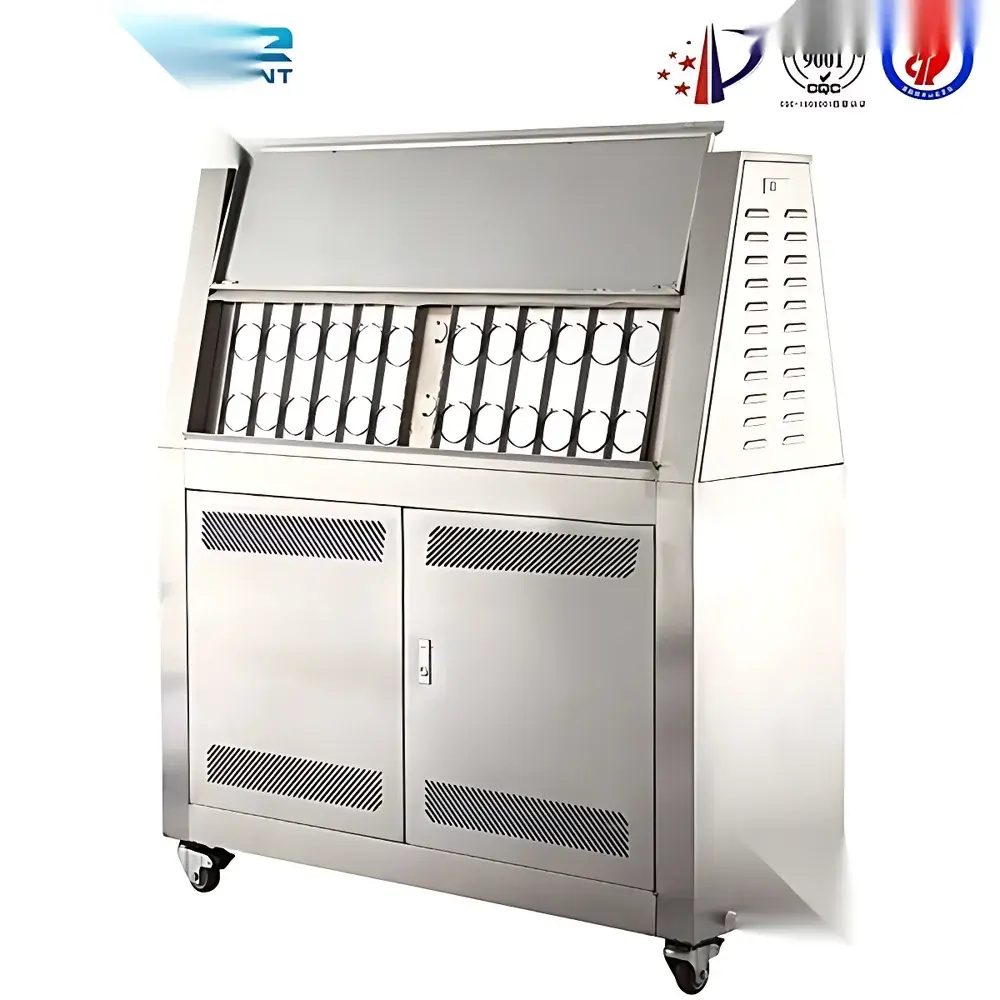
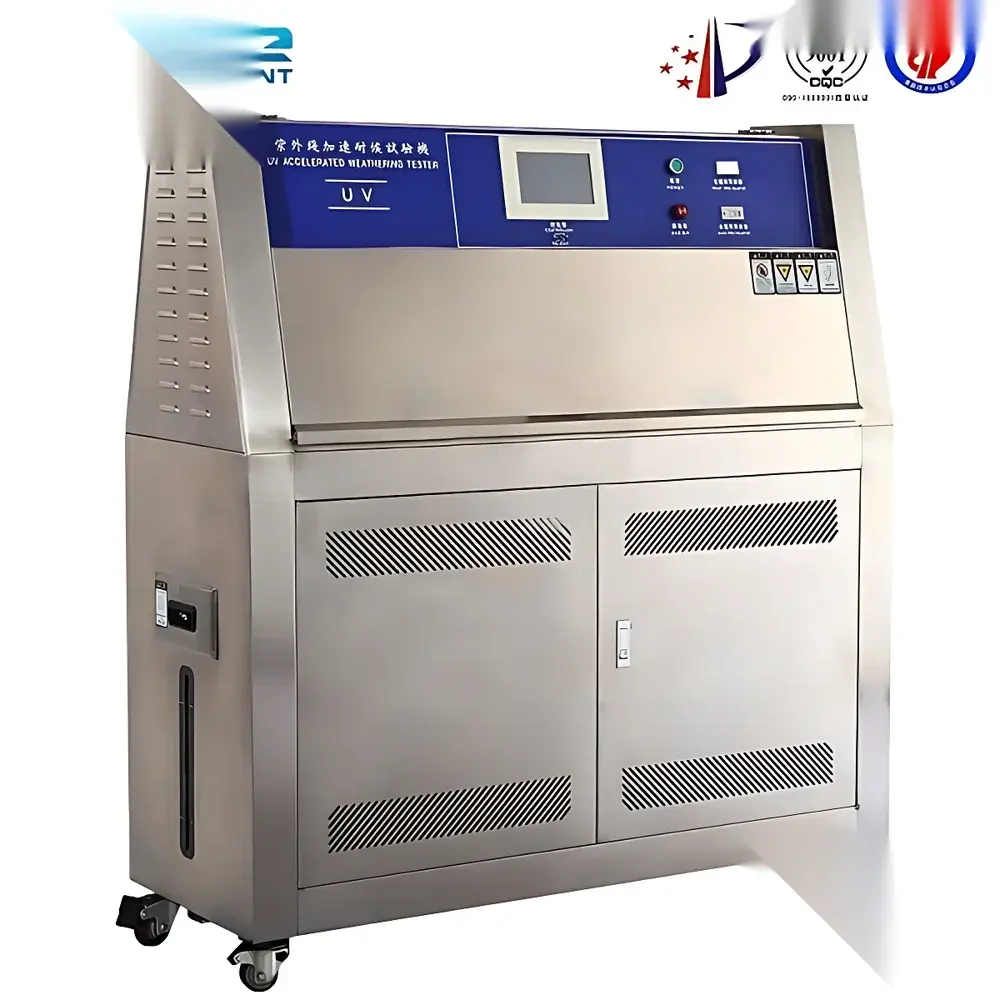
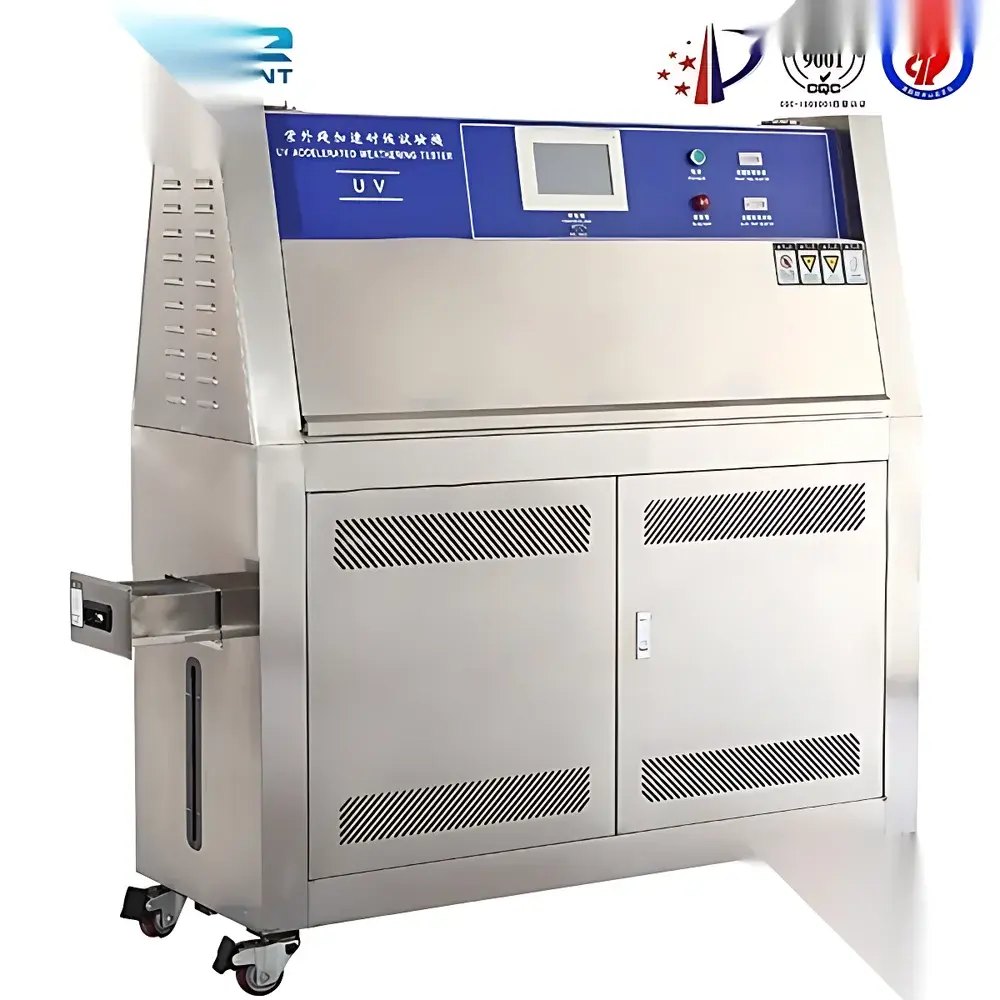
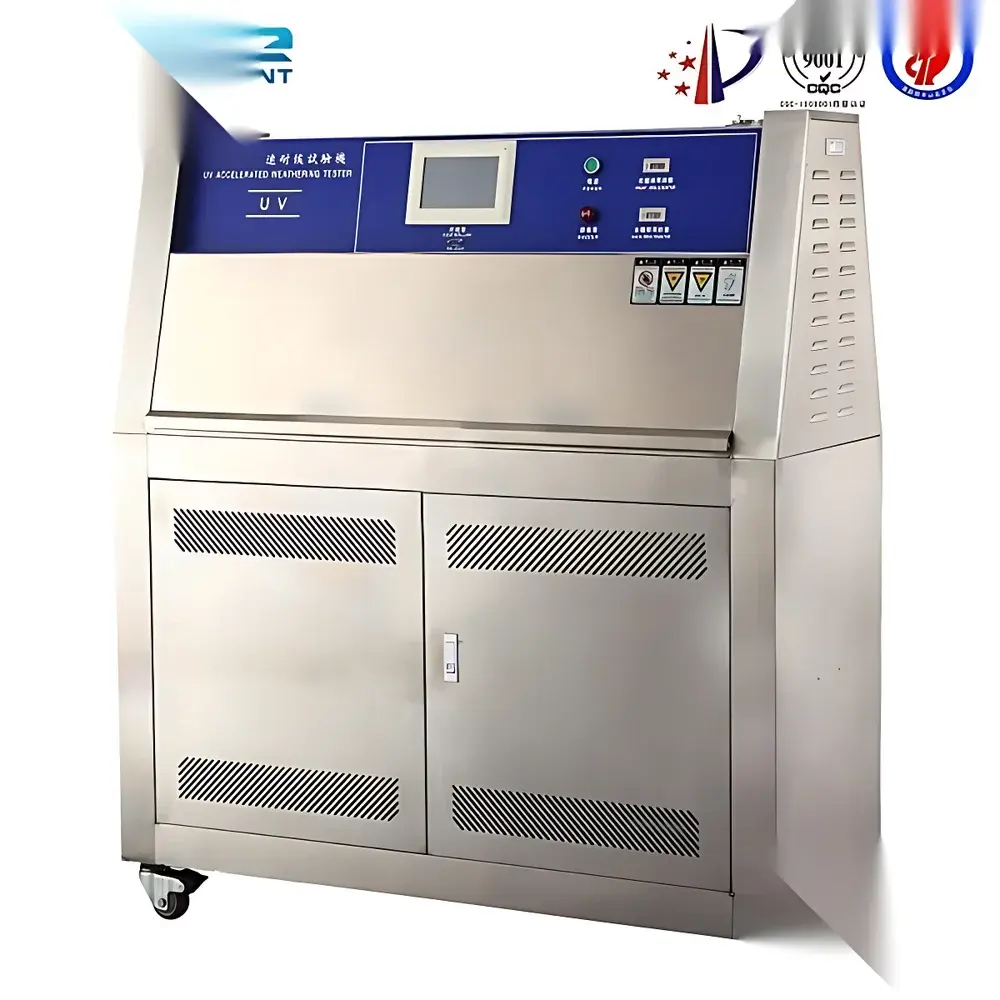
UV Aging Test Chamber – Fluorescent UV Accelerated Weathering Chamber
| Brand | Other Brands |
|---|---|
| Origin | Imported |
| Manufacturer Type | General Distributor |
| Price | USD 2,650 (Reference Only) |
| UV Lamp Type | UVA-340 or UVB-313 |
| Temperature Range | 40–70°C (Controlled) |
| Humidity Control | Condensation Cycle (Non-saturated) |
| Irradiance Control | Yes (Optional) |
| Spray Function | Integrated Water Spray System |
| Compliance | ASTM G154, ISO 4892-3, SAE J2020, GB/T 14522 |
Overview
The UV Aging Test Chamber is an accelerated weathering instrument engineered for precision simulation of solar ultraviolet (UV) radiation and moisture-induced degradation mechanisms. It employs fluorescent UV lamps—primarily UVA-340 (mimicking terrestrial sunlight down to 295 nm) or UVB-313 (extending into shorter, more aggressive wavelengths)—to deliver controlled, repeatable UV exposure. Simultaneously, the chamber integrates a condensation cycle that replicates nocturnal dew formation by maintaining elevated humidity and surface cooling, enabling realistic hygrothermal stress. Unlike broad-spectrum xenon arc testers, this system isolates UV-driven photochemical degradation pathways, making it especially suitable for evaluating polymer photostability, coating durability, and pigment resistance to UV-induced chain scission, oxidation, and chromophore breakdown. Typical test durations range from 24 to 1,000 hours, compressing years of outdoor exposure into days under standardized irradiance and thermal cycling conditions.
Key Features
- Fluorescent UV lamp array with selectable spectral output (UVA-340 or UVB-313), compliant with ASTM G154 Class I and II irradiance profiles
- Integrated condensation mechanism via controlled water reservoir heating and specimen surface cooling—no humidifier required
- Programmable multi-step cycles combining UV irradiation, condensation, and optional water spray phases per ISO 4892-3 Annex A
- Black panel thermometer (BPT) or black standard thermometer (BST) for precise radiant temperature monitoring at specimen level
- Stainless steel interior chamber with seamless welds and corrosion-resistant hardware for long-term chemical and moisture exposure
- Digital PID temperature control with ±0.5°C stability across 40–70°C operational range
- Front-access viewing window with UV-blocking glass and interlocked safety cutoff to prevent operator exposure during operation
- Standard 120-min UV + 60-min condensation cycle; customizable sequences up to 999 hours with up to 10 program steps
Sample Compatibility & Compliance
The chamber accommodates flat or low-profile specimens up to 75 mm in thickness and 150 × 75 mm in planar dimension on rotating sample holders (optional). Compatible substrates include thermoplastics (e.g., PP, ABS, PC), coatings (automotive clearcoats, architectural paints), textiles, adhesives, and elastomers. All operational protocols align with internationally recognized standards: ASTM G154 (Practice for Operating Fluorescent Ultraviolet (UV) Lamp Apparatus for Exposure of Nonmetallic Materials), ISO 4892-3 (Plastics — Methods of exposure to laboratory light sources — Part 3: Fluorescent UV lamps), SAE J2020 (Laboratory Weathering of Automotive Exterior Materials), and China’s GB/T 14522. Data traceability supports GLP-compliant testing when paired with audit-ready software (see Software & Data Management).
Software & Data Management
Equipped with embedded controller firmware supporting real-time logging of irradiance (mW/cm²), chamber air temperature, black panel temperature, and cycle phase status. Optional PC-based software enables remote monitoring, automated report generation (PDF/CSV), and full audit trail functionality—including user login history, parameter change logs, and timestamped event records—designed to meet FDA 21 CFR Part 11 requirements for electronic records and signatures where applicable. Calibration certificates for UV sensor and temperature probes are provided annually upon request, traceable to NIST standards.
Applications
- Evaluation of UV stabilizers and HALS (hindered amine light stabilizers) in polyolefin formulations
- Qualification of automotive interior trim materials against SAE J2020 color shift (ΔE) and gloss retention thresholds
- Validation of aerospace sealant adhesion loss after simulated 10-year tropical exposure
- Comparative ranking of roof membrane polymers for solar reflectance maintenance (ASTM E1918)
- Regulatory pre-screening of medical device packaging films per ISO 11607-1 accelerated aging protocols
- Root cause analysis of yellowing in optical lenses and LED encapsulants
FAQ
What UV lamp types are supported, and how do they differ?
UVA-340 lamps replicate solar UV down to 295 nm and are recommended for general-purpose weathering. UVB-313 lamps emit shorter wavelengths (down to 280 nm) and induce faster, more severe degradation—used primarily for quality control screening or highly stabilized materials.
Is condensation achieved via humidification or surface cooling?
Condensation is generated exclusively through surface cooling of specimens while ambient humidity remains unsaturated—per ASTM G154 Section 7.2. No steam generator or humidifier is used, minimizing mineral deposit risks.
Can the chamber be integrated into a LIMS or MES environment?
Yes—RS-232 and optional Ethernet interfaces support Modbus RTU/TCP protocol for bidirectional data exchange with laboratory information management systems.
What safety measures prevent operator UV exposure?
The chamber features dual interlocks: door switch disengagement halts UV emission instantly, and the viewing window incorporates laminated borosilicate glass with >99.9% UV-B/C absorption. Safety instructions mandate use of ANSI Z87.1-rated UV-blocking goggles during specimen loading.
How often does the UV sensor require recalibration?
Annual recalibration is recommended; lamp output degrades ~10–15% per 1,000 hours—sensor drift correction ensures irradiance accuracy within ±5% of setpoint.



