
English Product Name
| Brand | OK Instruments |
|---|---|
| Origin | Imported |
| Supplier Type | Authorized Distributor |
| Price | USD 21,000 (FOB) |
| Max Load Capacity | 75 kg |
| Frequency Range | 1–5000 Hz |
| Max Acceleration | 0–15 g (0–147 m/s²) |
| Max Displacement (p-p) | 0–4 mm |
| Max Sinusoidal Force | 2000 kgf |
| 台面尺寸 (L×W×H) | 500 × 500 × 5 mm |
| 台体尺寸 (L×W×H) | 500 × 500 × 450 mm |
| Frequency Resolution | 0.01 Hz (accuracy ±0.1 Hz) |
| Degrees of Freedom | 4-axis simultaneous (X, Y, Z, rotational coupling via synchronized actuation) |
| Compliance | Designed to support ISO 16750-3, SAE J1211, GB/T 28046.3, and IEC 60068-2-64 test profiles |
Overview
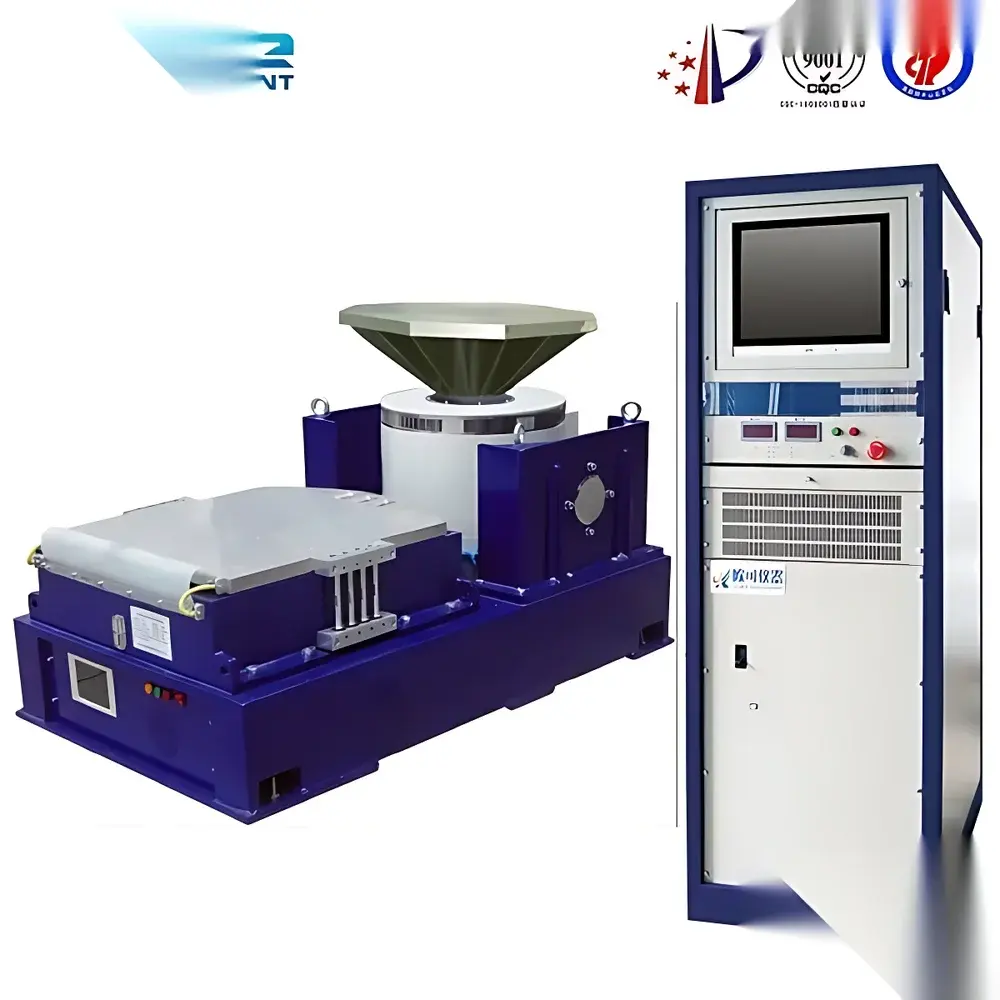
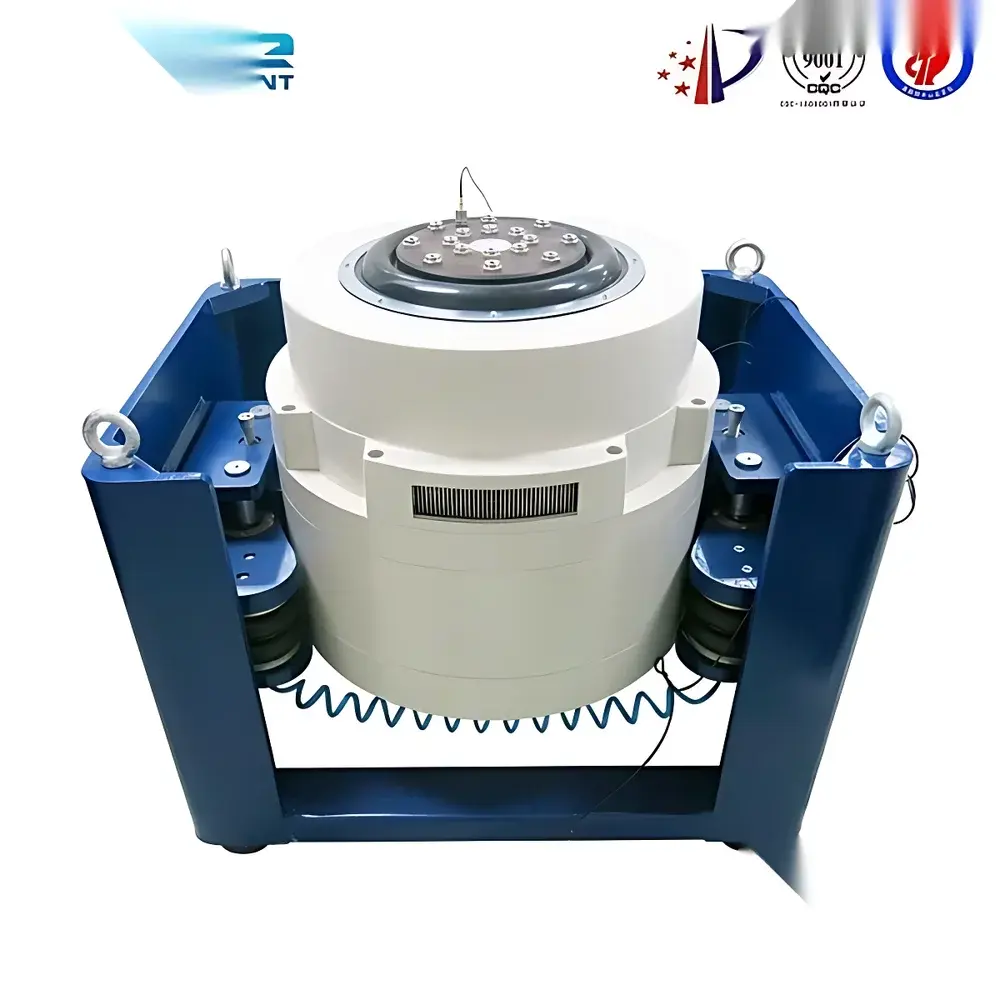
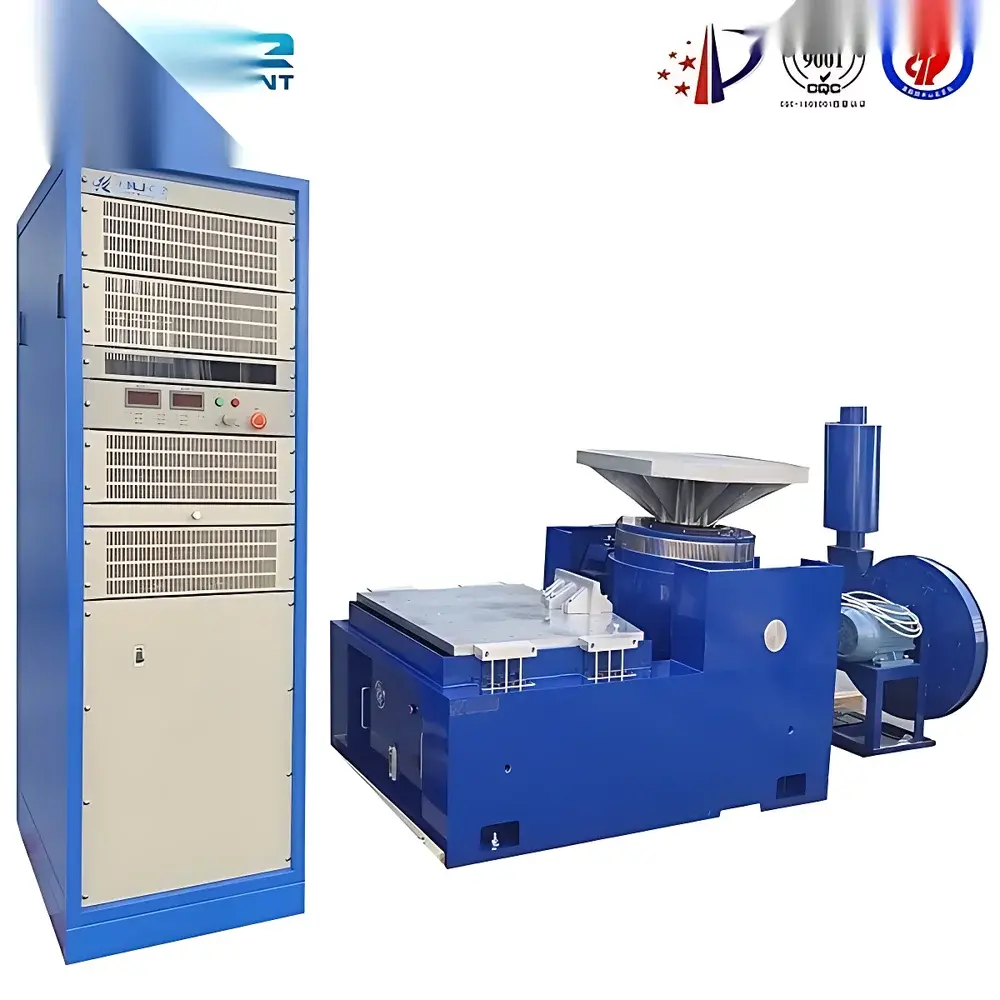
The OK-ES-5 Automotive Electrodynamical Vibration Test System is a high-fidelity, four-degree-of-freedom (4-DOF) electrodynamic shaker platform engineered for rigorous mechanical durability validation across automotive components, subassemblies, and complete electronic control units (ECUs). It operates on the principle of electromagnetic force generation—where controlled current through voice-coil actuators interacts with permanent magnetic fields to produce precise, repeatable inertial excitation. Unlike hydraulic or servo-hydraulic alternatives, this system delivers superior linearity, low harmonic distortion (<2% THD at rated output), and zero fluid maintenance—making it ideal for laboratory-based R&D, production-line screening, and third-party certification testing. Its integrated architecture enables true simultaneous multi-axis vibration (vertical + horizontal + coupled motion), replicating real-world road-induced excitations—including pothole impacts, chassis flex, and suspension resonance—with fidelity compliant with international automotive reliability standards.
Key Features
- Four-axis synchronized excitation capability: Independent yet coordinated control of vertical (Z), lateral (Y), longitudinal (X), and torsional coupling modes—all executed on a single rigid test table (500 × 500 × 5 mm aluminum honeycomb surface).
- Comprehensive waveform generation: Programmable sine (half/full cycle), random vibration (user-defined PSD profiles), swept-sine (linear/logarithmic), resonant dwell, and multi-segment time-history replay.
- Advanced control architecture: 15-segment programmable profile memory with independent frequency/time/acceleration setpoints per segment; exponential and logarithmic sweep modes with bidirectional reversal and dwell options.
- Real-time monitoring interface: High-resolution digital display showing instantaneous frequency (0.01 Hz resolution, ±0.1 Hz accuracy), acceleration (g), displacement (mm p-p), and velocity (mm/s); all data logged with timestamped metadata.
- Mechanically robust test table: 25 × M10 threaded mounting holes (pitch 25 mm grid) plus eight reinforced hook-mounting slots (70 mm length, centered on each edge) for secure fixture integration and load distribution.
- Thermal and structural stability: Air-cooled voice coils with integrated temperature sensors; closed-loop feedback ensures consistent force output across extended test durations (up to 72 h continuous operation at ≤80% capacity).
Sample Compatibility & Compliance
The OK-ES-5 accommodates test specimens up to 75 kg with center-of-gravity height ≤200 mm above the table surface. Fixture design must comply with ISO 5344 mechanical interface guidelines to avoid modal interference. The system supports full compliance verification against automotive OEM-specific requirements—including Ford WSS-M99P1111-A, GMW 14872, BMW GS 95024-2, and VW 80000—as well as harmonized international standards: ISO 16750-3 (road vehicle environmental conditions), IEC 60068-2-64 (random vibration testing), and SAE J1211 (vibration durability of automotive electronics). All test reports generated via optional software include audit-ready traceability logs aligned with GLP and ISO/IEC 17025 documentation frameworks.
Software & Data Management
Control and analysis are performed using OK-VibraSuite™ v4.2—a Windows-based application supporting real-time spectrum analysis (FFT up to 64 k lines), PSD calculation (per IEEE 1003.1), and automated pass/fail evaluation against user-defined thresholds. Raw time-history data is exported in ASAM MDF4 format for downstream integration with MATLAB, LabVIEW, or AVL CRETA. The software includes FDA 21 CFR Part 11-compliant user access control, electronic signature capability, and immutable audit trails for all parameter changes, test starts/stops, and report generations—ensuring full regulatory readiness for GMP and IATF 16949 environments.
Applications
- Structural fatigue assessment of battery enclosures, ADAS sensor housings, and infotainment modules under combined-axis road-simulation profiles.
- Detection of latent solder joint fractures, connector fretting corrosion, and MEMS accelerometer drift during accelerated life testing.
- Resonance mapping of HVAC actuators, powertrain control units, and lighting assemblies to inform damping strategy and mounting optimization.
- Pre-shipment validation of Tier-1 supplier components per OEM-specific release protocols (e.g., PPAP Level 3 submission support).
- Correlation of physical test results with multi-body simulation (MBS) outputs using measured transmissibility functions and FRF datasets.
FAQ
What standards does the OK-ES-5 natively support for automotive vibration testing?
It provides built-in test templates for ISO 16750-3, IEC 60068-2-64, SAE J1211, and GB/T 28046.3, with customizable PSD profiles for OEM-specific specifications.
Can the system perform real-time closed-loop control during random vibration tests?
Yes—using digital signal processing (DSP) with 128 kS/s sampling and adaptive feedback compensation to maintain target PSD tolerances within ±1.5 dB across the 1–5000 Hz bandwidth.
Is fixture design assistance available from OK Instruments?
Yes—application engineers provide free modal analysis review and fixture stiffness recommendations based on finite element pre-checks prior to test execution.
Does the system meet electromagnetic compatibility (EMC) requirements for lab installation?
The OK-ES-5 complies with CISPR 11 Group 2 Class A emissions limits and includes filtered power input stages to prevent interference with adjacent measurement equipment.
What is the warranty coverage and service response time for international customers?
Standard warranty is 24 months parts-and-labor; technical support is available 24/5 via remote diagnostics, with on-site engineer dispatch achievable within 72 hours in EMEA and APAC regions upon contract activation.



