PLD-0165A Vacuum Distillation Apparatus for High-Boiling Petroleum Products
| Origin | Shaanxi, China |
|---|---|
| Manufacturer Type | Authorized Distributor |
| Origin Category | Domestic (China) |
| Model | PLD-0165A |
| Price | USD 1,890 (FOB China) |
| Power Supply | 220 V ±10%, 50 Hz |
| Main Heater Power | 0–1000 W (continuously adjustable) |
| Air Bath Heater Power | 0–400 W |
| Air Bath Temperature Range | Ambient to 100 °C |
| Air Bath Temperature Stability | ≤ ±1 °C |
| Operating Ambient | 5–35 °C, <85% RH |
Overview
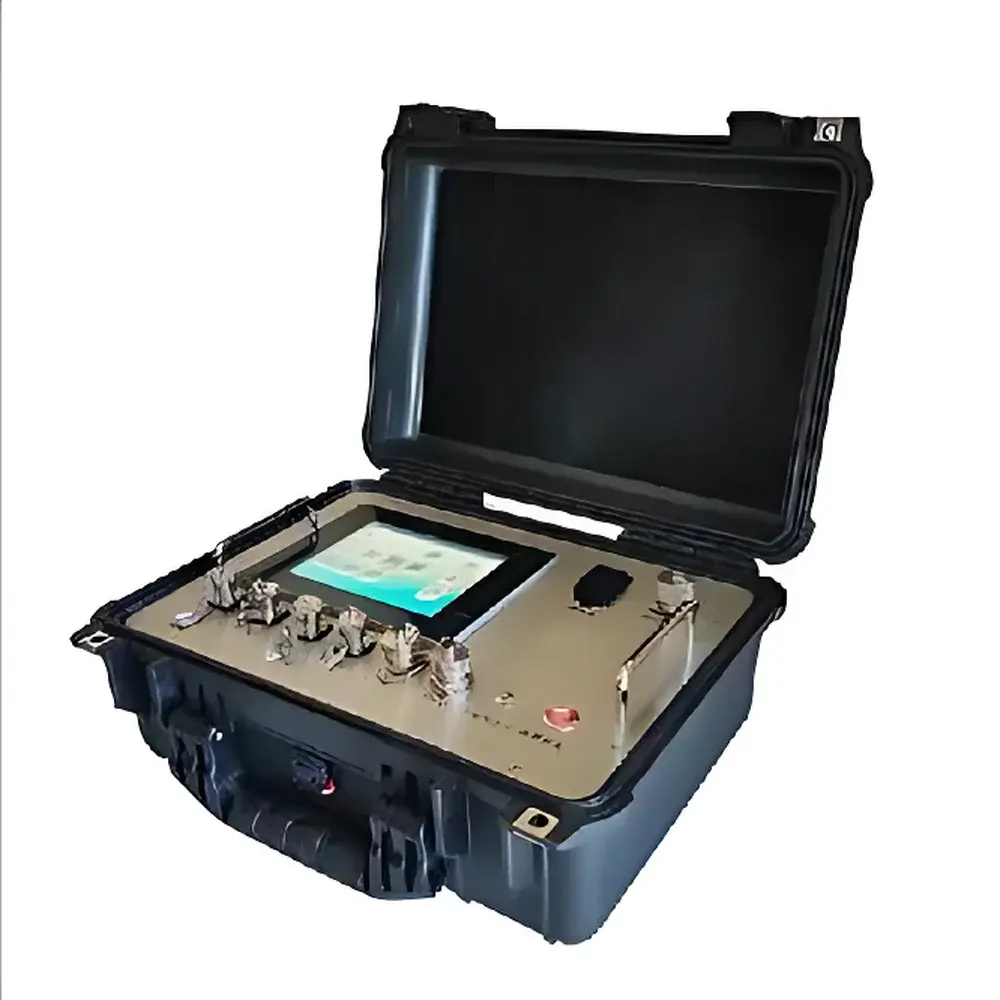
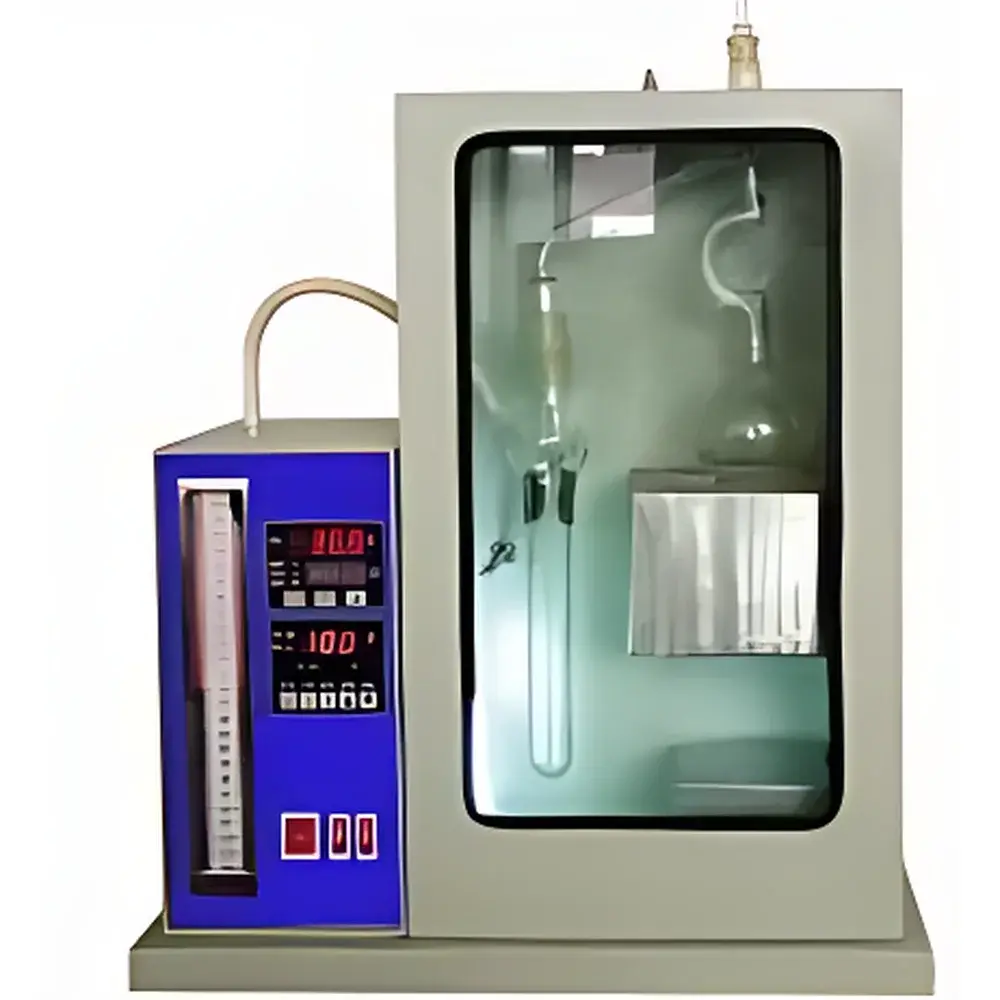
The PLD-0165A Vacuum Distillation Apparatus is a precision-engineered system designed specifically for the determination of distillation characteristics of high-boiling petroleum fractions under reduced pressure. It operates in strict compliance with SH/T 0165–92, the Standard Test Method for High-Vacuum Distillation of High-Boiling Petroleum Products issued by the Standardization Committee of Sinopec. This method is functionally aligned with ASTM D1160 (Standard Test Method for Distillation of High-Boiling Petroleum Fractions at Atmospheric and Reduced Pressures) and ISO 3405 (Petroleum Products — Determination of Distillation Characteristics), enabling cross-referenced data reporting in international refinery QA/QC workflows. The apparatus employs a controlled vacuum environment—typically maintained between 1 mmHg and 5 mmHg absolute pressure—to lower boiling points and prevent thermal cracking during distillation of heavy feedstocks such as crude oil residues, vacuum gas oils, lubricating oil base stocks, and waxy distillates. Its core architecture integrates a calibrated high-vacuum distillation flask, a precision-manufactured condenser assembly, and a volumetric receiver graduated to ASTM E100 specifications.
Key Features
- Integrated high-vacuum system featuring a stainless-steel buffer tank and mercury vacuum manometer (calibrated traceably to NIM standards) for stable, repeatable pressure control within ±0.1 mmHg
- Dual-zone heating architecture: independent main furnace (0–1000 W, continuously variable) and thermostatically regulated air bath (ambient to 100 °C, ±1 °C stability) to ensure uniform thermal gradient across the distillation column
- Microcontroller-based timing and event logging module synchronized with ASTM D86/D1078 trigger logic for automatic endpoint detection and hold-time recording
- Forced-air circulation within the air bath chamber via internal fan-assisted stirring, eliminating thermal stratification and improving reproducibility (RSD < 0.8% for T90 across replicate runs)
- Optically enhanced viewing system with LED illumination and heat-resistant borosilicate glass viewport for real-time observation of reflux behavior and foam formation
- Structural compliance with SH/T 0165–92 mechanical specifications—including flask geometry, neck length, and receiver placement—ensuring metrological equivalence to reference instrumentation
Sample Compatibility & Compliance
The PLD-0165A is validated for use with petroleum samples exhibiting initial boiling points above 250 °C and final boiling points exceeding 550 °C under atmospheric conditions. It accommodates sample volumes of 100 mL ± 0.5 mL per test, conforming to SH/T 0165–92 volumetric requirements. All wetted components—including the distillation flask, condenser, and receiver—are fabricated from low-thermal-expansion borosilicate glass (e.g., Pyrex®-grade), certified free of catalytic impurities that could promote cracking. The system supports GLP-compliant operation when paired with external audit-trail-capable data loggers; its temperature and pressure readouts meet the minimum resolution requirements of ISO/IEC 17025:2017 for accredited petroleum testing laboratories. Routine verification includes calibration against NIST-traceable mercury manometers and PT100 reference thermometers.
Software & Data Management
While the PLD-0165A operates as a stand-alone analog-digital hybrid instrument, its digital control interface provides RS-232 output for integration into LIMS environments. Time-stamped temperature, pressure, and volume data can be exported in CSV format for post-processing in ASTM D1160-compliant spreadsheet templates or third-party chromatography/data analysis platforms. Optional firmware upgrades support 21 CFR Part 11–compliant electronic signatures and audit trail generation when deployed with validated PC-based acquisition software. All firmware revisions are version-controlled and documented per IEC 62304 software lifecycle standards.
Applications
- Distillation curve generation (IBP, 10%, 50%, 90%, FB) for vacuum residue characterization in refinery process optimization
- Volatility assessment of base oil fractions prior to hydrofinishing or solvent extraction
- Quality conformance testing of marine fuel blends (ISO 8217 Annex A) and heavy fuel oils (ASTM D396)
- Research-scale evaluation of thermal stability limits in synthetic lubricants and bio-derived heavy distillates
- Supporting ASTM D2872 (Ramsbottom Carbon Residue) sample preparation through controlled fractionation
FAQ
What vacuum level range does the PLD-0165A support?
The system achieves and maintains absolute pressures between 0.5 mmHg and 10 mmHg, with optimal performance verified at 2.0 ± 0.2 mmHg for SH/T 0165–92 compliance.
Is the instrument compatible with ASTM D1160 test procedures?
Yes—the mechanical configuration, pressure control fidelity, and thermal management meet all mandatory apparatus requirements specified in ASTM D1160, enabling direct method equivalency validation.
Can the air bath temperature be programmed for ramp profiles?
No; the air bath operates in PID-regulated steady-state mode only. Ramp functionality is not implemented, as SH/T 0165–92 mandates isothermal bath conditions during distillation.
What maintenance intervals are recommended for the vacuum system?
Mercury manometer fluid should be inspected quarterly; vacuum pump oil must be replaced every 500 operational hours or semiannually—whichever occurs first—per ISO 8573-1 Class 4 purity requirements.
Does the unit include certification documentation for metrological traceability?
Each shipment includes a Factory Calibration Certificate referencing CNAS-accredited verification of temperature sensors and vacuum transducers, with uncertainty budgets stated per GUM (JCGM 100:2008).