
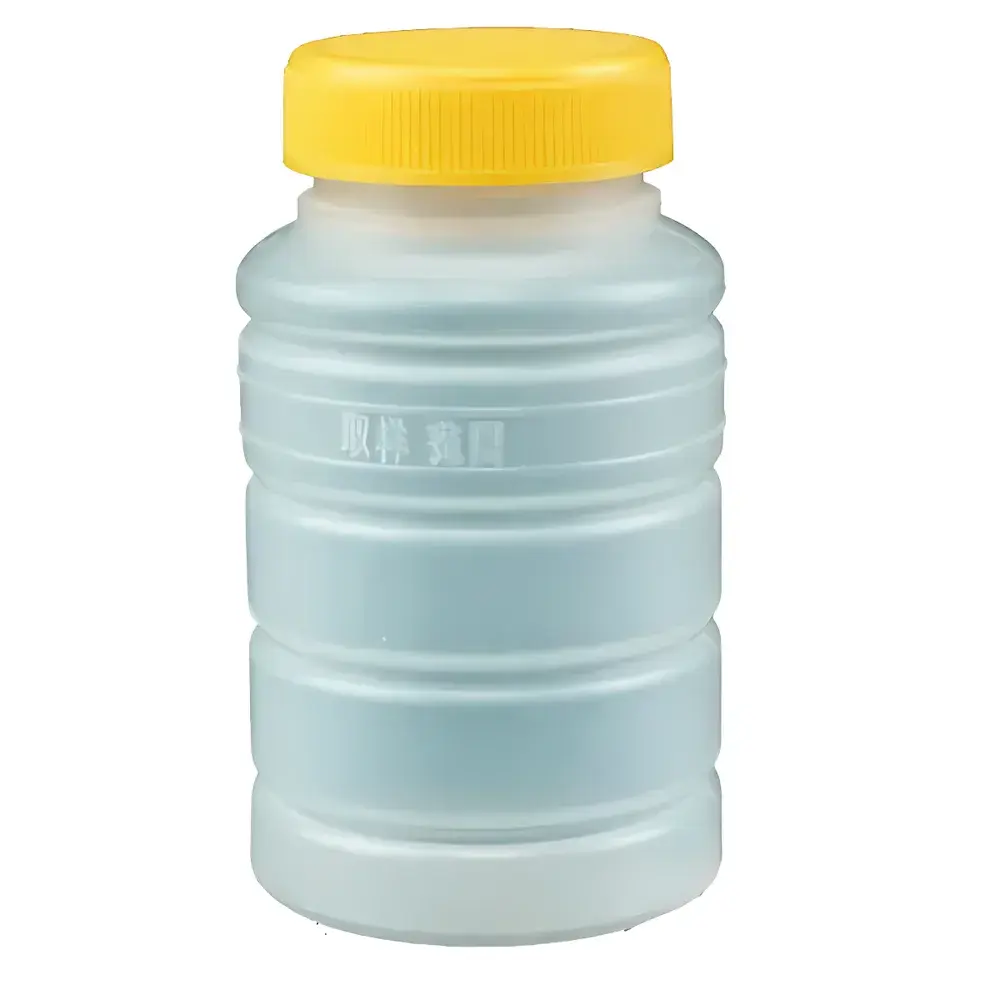
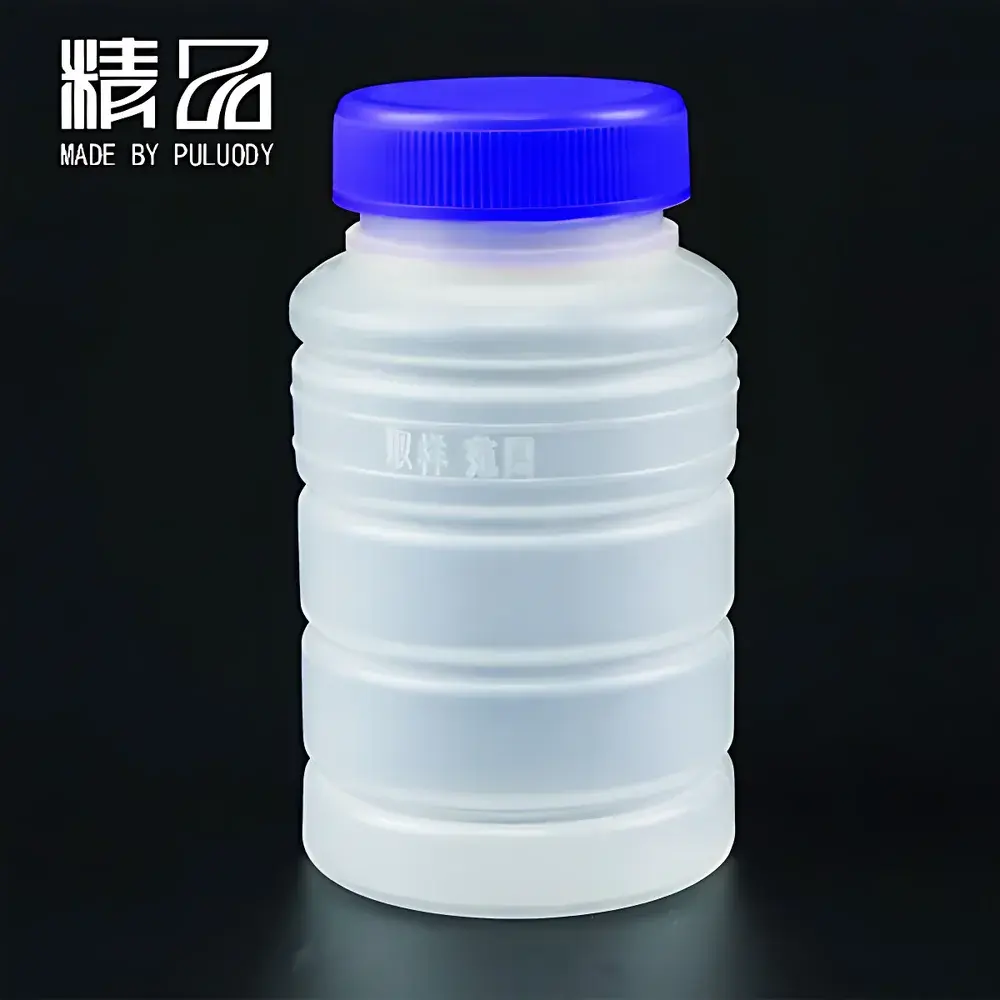
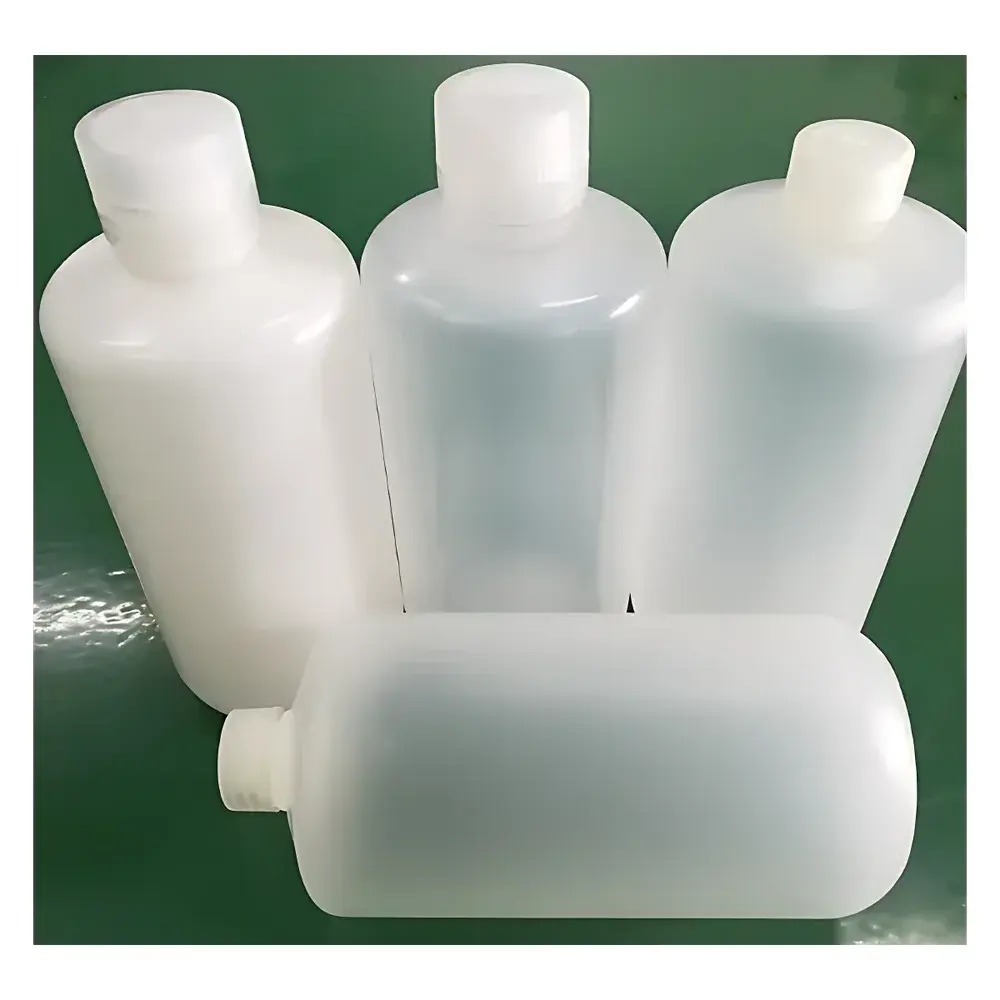
PULL PS8011 Certified Clean Sampling Vial for Particle Counters
| Brand | PULL |
|---|---|
| Origin | Shaanxi, China |
| Manufacturer Type | Authorized Distributor |
| Origin Category | Domestic |
| Model | PS8011 |
| Pricing | Upon Request |
| Dispersion Method | Dry & Wet Dispersion |
| Measurement Range | 0.01–3500 µm |
| Repeatability | ±1% RSD |
| Measurement Time | ≤10 seconds |
Overview
The PULL PS8011 Certified Clean Sampling Vial is a precision-engineered container specifically designed for liquid particle contamination analysis in hydraulic, lubricating, aviation fuel, transformer oil, and pharmaceutical fluid systems. Unlike generic laboratory vials, the PS8011 is manufactured under controlled cleanroom conditions (ISO Class 7 / Class 10,000) and validated to meet stringent international standards for particulate cleanliness—ensuring zero background interference during automated particle counting. Its core function is to preserve sample integrity from point-of-collection through instrument aspiration, eliminating false positives caused by container-borne contaminants. The vial operates as a critical pre-analytical component in ISO 4406, NAS 1638, and GJB 420B-compliant particle counting workflows, where measurement traceability begins with certified container cleanliness—not just instrument calibration.
Key Features
- Ultra-clean manufacturing: Triple-stage cleaning process—including high-frequency ultrasonic agitation in purified solvents, laminar-flow cleanroom (ISO Class 7) air showering, and nitrogen-purged thermal drying—ensures consistent NAS 00–4 class cleanliness (per NAS 1638), verified via laser particle counter baseline testing.
- Chemically inert construction: Made from borosilicate glass (high-silica content ≥80%), resistant to thermal shock up to 150 °C and compatible with aggressive cleaning agents including concentrated H₂SO₄/K₂Cr₂O₇ chromic acid solution, NaOH, and organic solvents (e.g., isopropanol, acetone).
- Leak-proof sealing system: Integrated O-ring gasket (FDA-grade silicone) and externally threaded polypropylene cap provide positive torque retention and prevent droplet leakage during handling or vacuum aspiration in automated counters.
- Dimensional consistency: Precision-molded geometry ensures repeatable fill volume (110 mL and 250 mL variants available) and reliable positioning in autosampler trays across major particle counter platforms (e.g., HIAC, Pamas, MET ONE, Particle Measuring Systems).
- Visual traceability: Cap color-coding (blue, orange, pink) enables procedural differentiation—e.g., blue for routine calibration verification, orange for field-collected samples, pink for ultra-clean reference blanks—supporting GLP/GMP documentation practices.
Sample Compatibility & Compliance
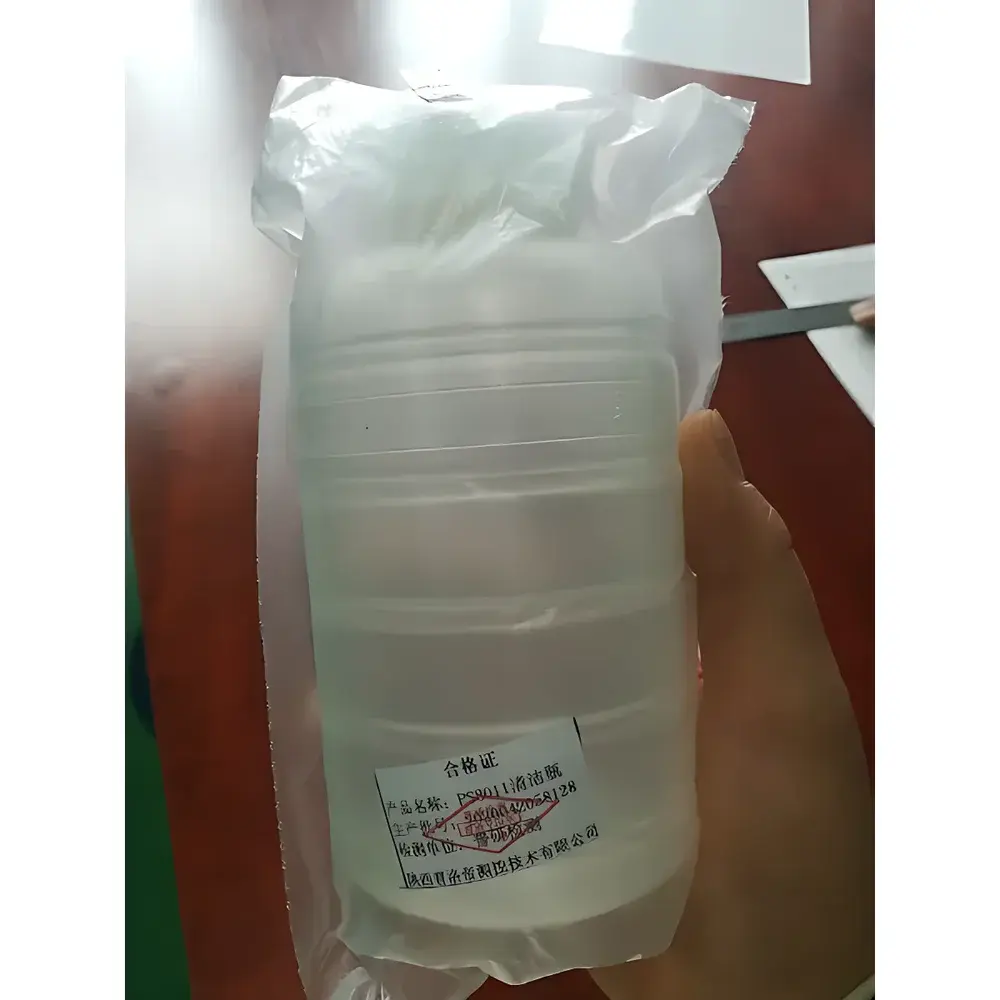
The PS8011 vial is validated for use with all standard liquid-phase optical particle counters employing light extinction or light scattering detection principles. It complies fully with ISO 3722:2019 “Hydraulic fluid power — Validation of cleaning methods for sampling containers”, serving as both a test article and reference container in method qualification studies. Regulatory alignment includes ASTM D6716 (for aviation turbine fuels), ISO 4406:2017 (fluid contamination coding), NAS 1638 (U.S. aerospace standard), GJB 420B-2006 (Chinese military specification), GB/T 14039–2002 (national standard for hydraulic fluid cleanliness), and DL/T 1096–2008 (power industry transformer oil testing). Each production lot undergoes batch-certified cleanliness verification per ISO 11171 Annex C and is supplied with a Certificate of Conformance listing NAS class, particle count per mL at ≥4 µm(c) and ≥6 µm(c), and sterilization validation data.
Software & Data Management
While the PS8011 is a passive consumable, its integration into digital quality workflows is supported through traceable lot documentation. Each carton includes a QR-coded label linking to an online portal containing full cleanliness assay reports, raw particle count histograms, and ISO 3722 validation summaries. For laboratories operating under FDA 21 CFR Part 11 requirements, electronic records are timestamped, digitally signed, and archived with audit trail functionality. The vial’s standardized dimensions and cap torque profile ensure compatibility with LIMS-integrated autosamplers that log container ID, lot number, and usage timestamp automatically upon loading.
Applications
- Hydraulic system condition monitoring in aerospace, wind turbine, and heavy machinery OEMs
- Transformer oil cleanliness verification per IEC 60296 and IEEE C57.106
- Pharmaceutical parenteral fluid particulate testing (USP , ) using membrane filtration or direct counting methods
- Calibration verification of particle counters using NIST-traceable reference suspensions
- Baseline blank preparation for ISO 8573-4 compressed air particulate testing
- Field-deployable sampling for remote maintenance teams requiring pre-validated, sterile-ready containers
FAQ
What NAS class is guaranteed for each PS8011 vial lot?
Each production lot is certified to NAS 00–4 class (per NAS 1638), with actual reported values provided on the CoC. NAS 00 represents ≤12 particles/mL ≥4 µm(c); NAS 4 represents ≤12,800 particles/mL ≥4 µm(c). Custom NAS 00 certification is available upon request.
Can PS8011 vials be autoclaved?
No. While borosilicate glass withstands 150 °C dry heat, the silicone O-ring and PP cap are not rated for saturated steam autoclaving (121 °C, 15 psi). Sterilization must be performed via dry-heat oven (150 °C, 2 h) or ethylene oxide gas—both validated in our cleanroom protocol.
Is the PS8011 compatible with HIAC 9703 and MET ONE 8301 instruments?
Yes. The 110 mL and 250 mL variants match standard HIAC tray footprints and MET ONE bottle-height tolerances. Cap thread pitch (22 mm) and O-ring diameter (20.5 mm) conform to ISO 8573-4 mechanical interface specifications.
Do you provide end-to-end validation support for GMP audits?
Yes. We supply full validation packages including IQ/OQ protocols, ISO 3722 test reports, particle count chromatograms, and raw data files—all formatted for inclusion in regulatory submissions (e.g., FDA IND, EMA Annex 15).



