
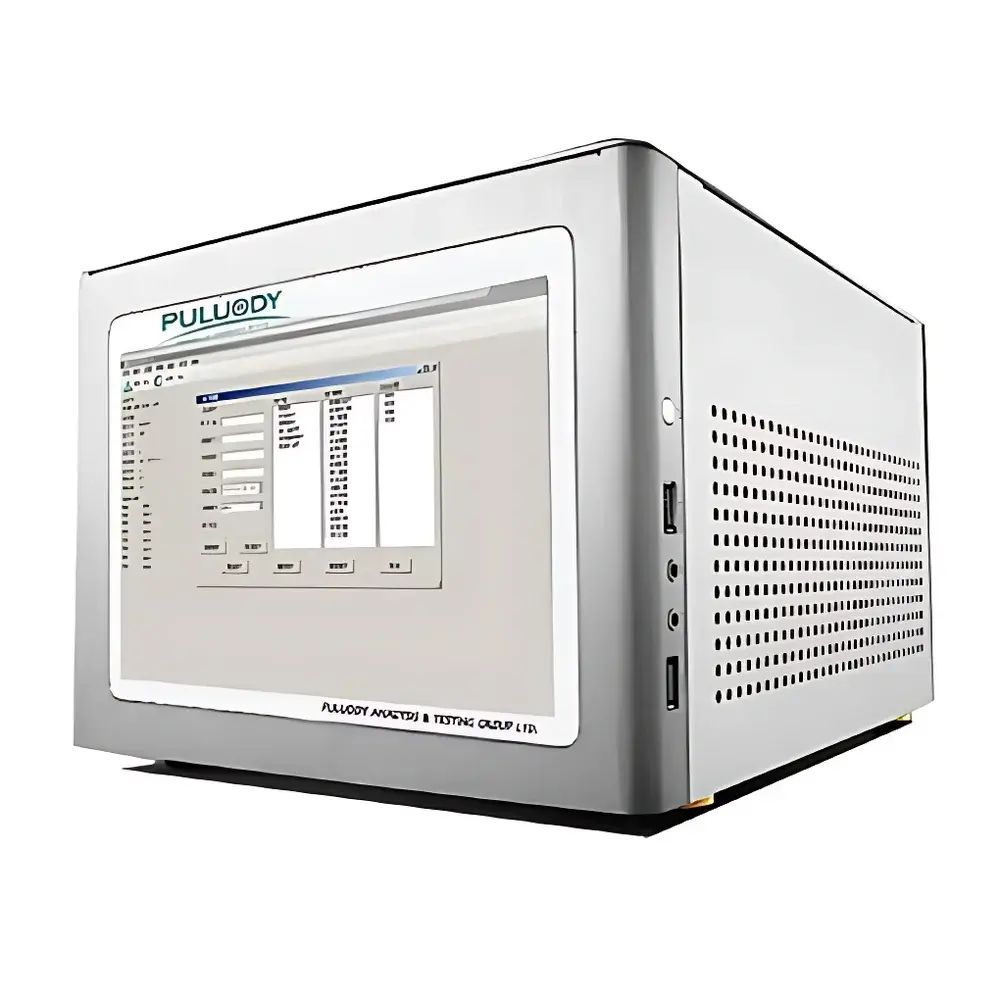
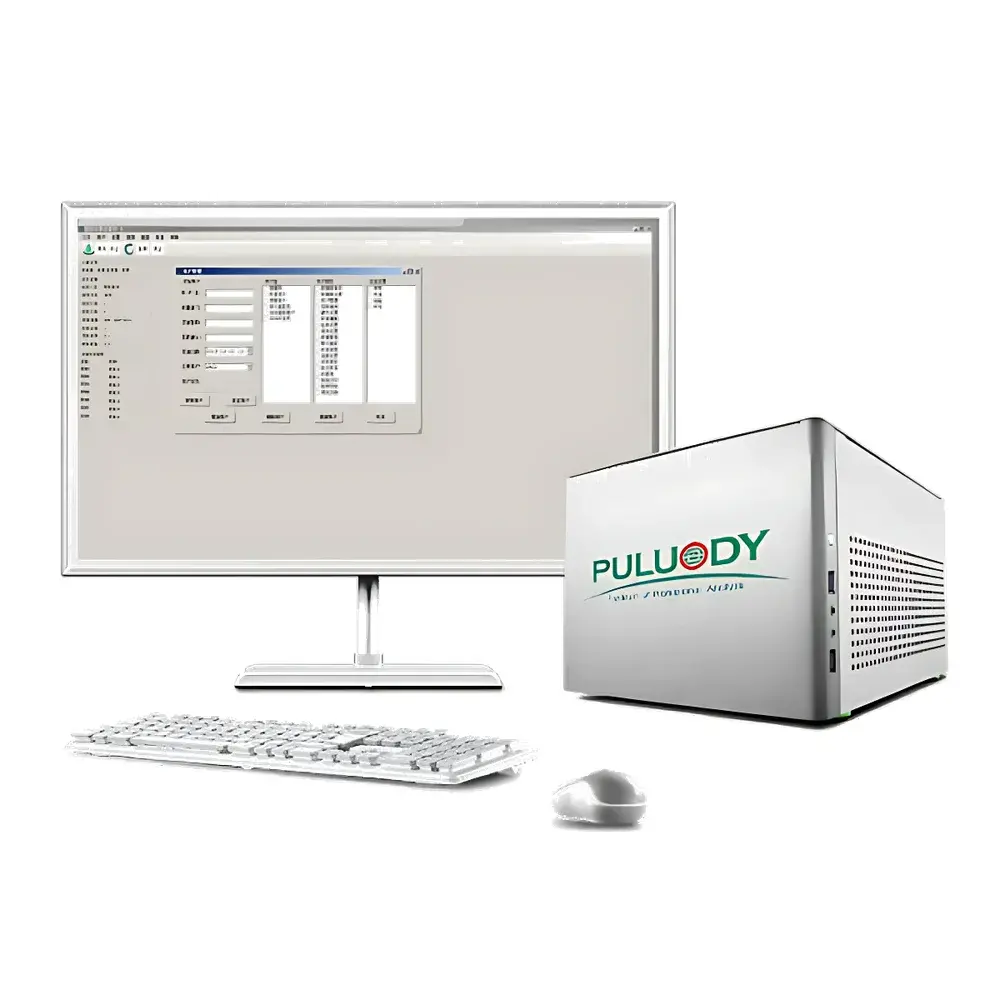
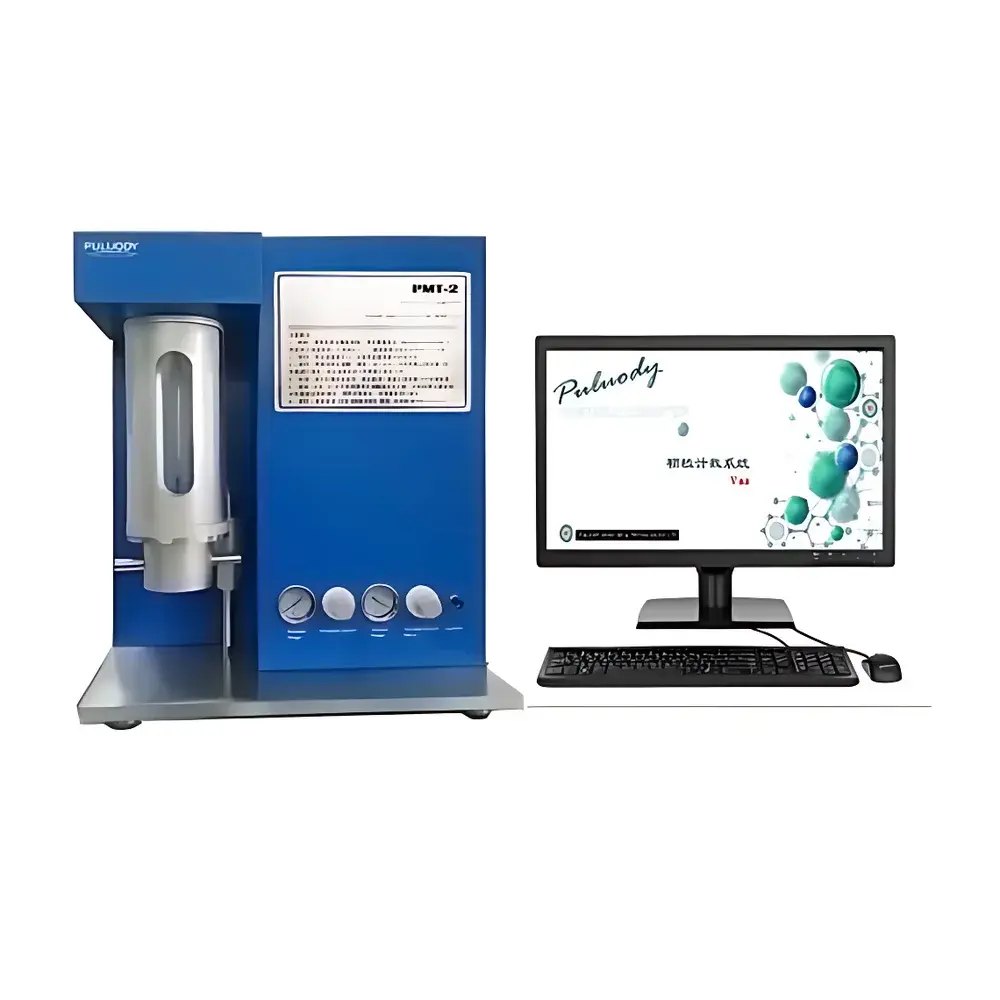
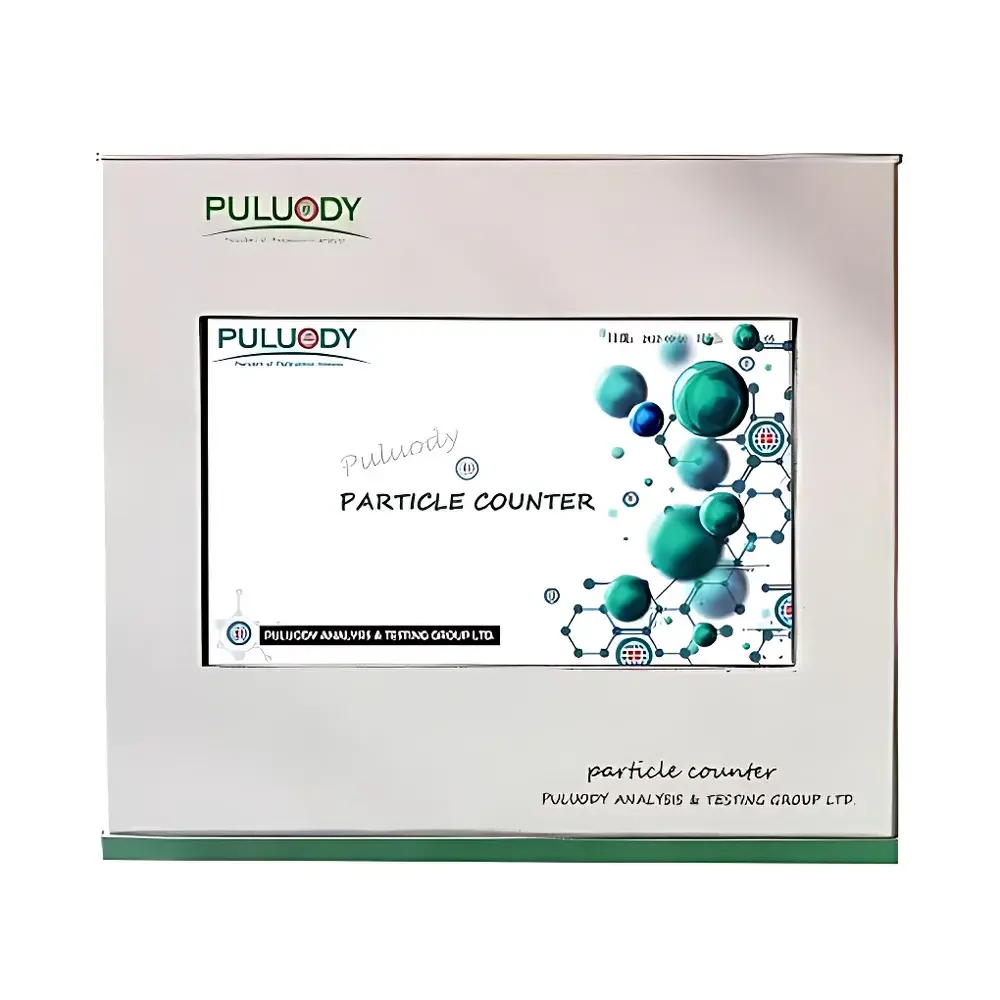
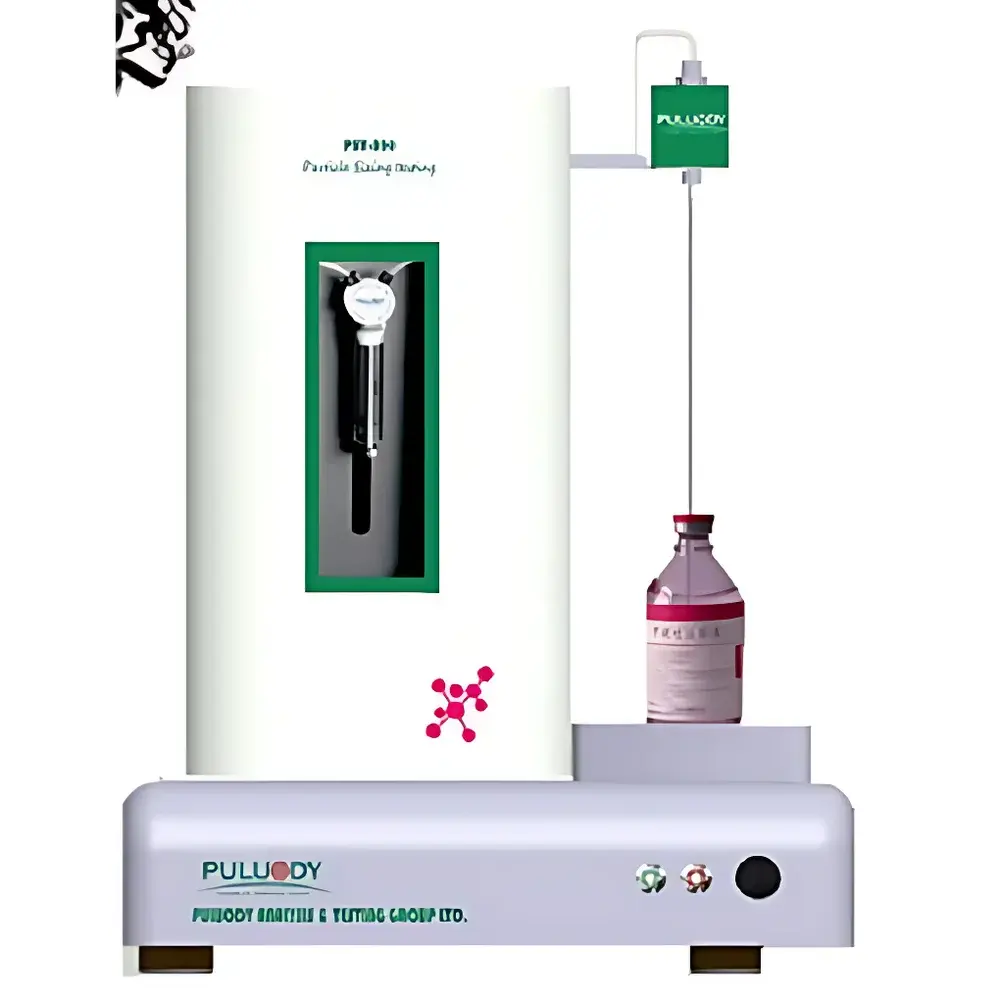
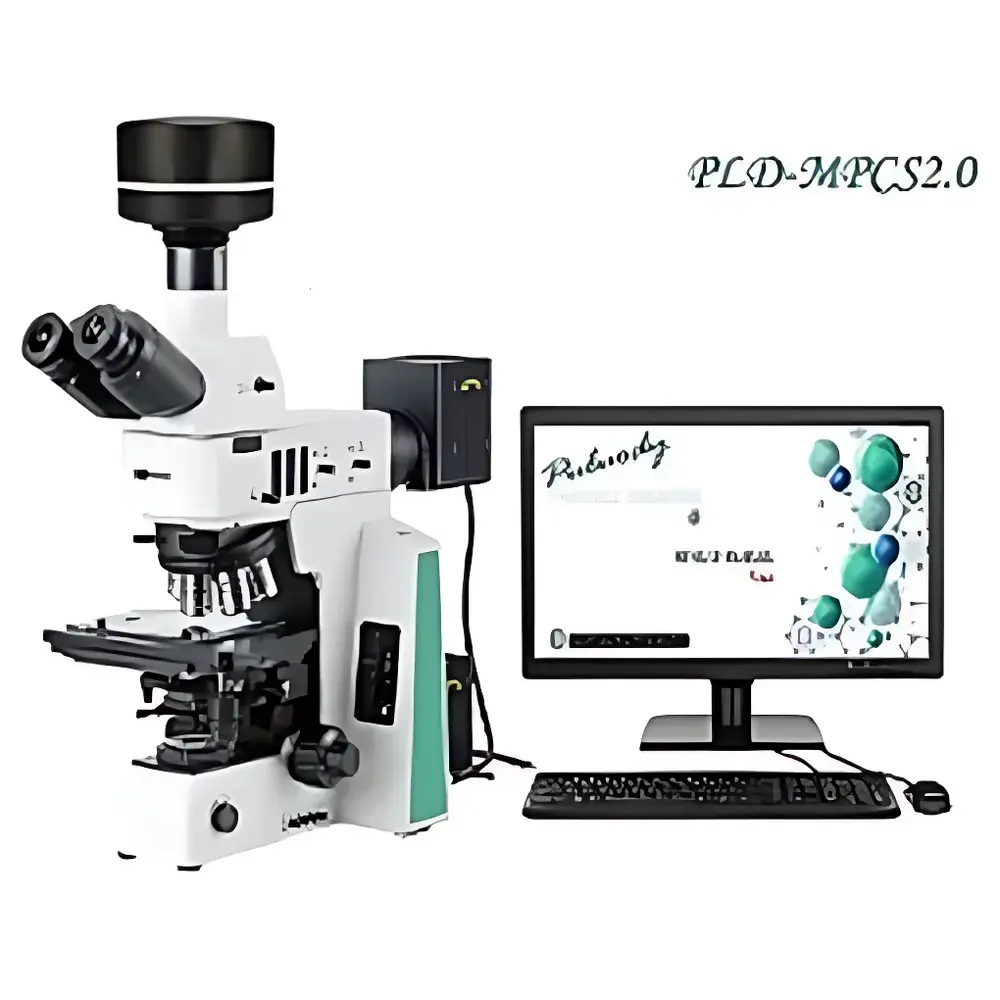
PULUODY PMT-2 Liquid Laser Particle Counter
| Brand | PULUODY |
|---|---|
| Model | PMT-2 |
| Type | Optical Liquid Particle Counter |
| Detection Principle | Dual-Laser Narrow-Beam Light Scattering |
| Measurement Range | 0.1–100 µm (customizable sub-ranges: 0.1 µm(c), 4–70 µm(c)) |
| Accuracy | ±3% typical |
| Sampling Precision | <±1% |
| Coincidence Limit | 1000 particles/mL (2.5% coincidence error) |
| Flow Control | Precision Piston Pump + Electromagnetic Flow Regulation |
| Compliance | USP <788>, USP <789>, EP 2.9.19, BP 2.9.19, ChP 2015/2020, GB 8368, ISO 21501-4, JJG 1061 |
| Data Output | 4–20 mA analog interface, iPad-compatible wireless acquisition |
| Display & Control | Color LCD touchscreen + optional wireless keyboard/mouse |
| Power Input | 100–265 VAC, 50–60 Hz |
| Software | PULUODY V8.3 Integrated Analysis & Calibration Software (PC & embedded) |
Overview
The PULUODY PMT-2 Liquid Laser Particle Counter is an advanced optical particle counter engineered for high-sensitivity, real-time monitoring and offline analysis of insoluble particulate contamination in ultra-pure and process-critical liquids. Based on dual-laser narrow-beam light scattering technology—the eighth-generation sensor platform developed by PULUODY Analytical Testing Group (UK)—the instrument delivers trace-level detection down to 0.1 µm(c) with calibrated linearity across customizable size channels (e.g., 4–70 µm(c) or user-defined 1–100 µm bins). Its core architecture integrates a precision piston metering pump and electromagnetic flow regulation to ensure volumetric sampling repeatability better than ±1%, minimizing flow-induced bias during high-resolution counting. Designed specifically for industries where particle-induced failure is non-negotiable—including semiconductor wet processing, pharmaceutical water systems, flat-panel display manufacturing, and nanofiltration validation—the PMT-2 operates under both online continuous-monitoring and offline portable configurations, supporting GMP-aligned data integrity through hardware-level audit trail readiness.
Key Features
- Dual-laser narrow-beam optical sensing platform with independent wavelength alignment for enhanced signal-to-noise ratio and reduced Mie scattering interference in low-refractive-index media (e.g., ultrapure water, solvents).
- Modular flow path design accommodating both oil-based and aqueous matrices without cross-contamination—validated for use with cleaning agents, polymer solutions, and organic solvents.
- V8.3 integrated software suite with physically segregated calibration and measurement modules, eliminating software-induced drift during long-term deployment.
- Real-time analog output (4–20 mA) with programmable alarm thresholds for integration into SCADA or DCS environments; supports automated shutdown or alert escalation upon exceedance.
- Touchscreen HMI with embedded diagnostics, pump status monitoring, and on-device report generation compliant with ALCOA+ principles (Attributable, Legible, Contemporaneous, Original, Accurate, Complete, Consistent, Enduring, Available).
- Hardware-level timestamping and user-access logging aligned with FDA 21 CFR Part 11 requirements for electronic records and signatures.
Sample Compatibility & Compliance
The PMT-2 is validated for direct analysis of low-conductivity, low-viscosity liquids including Type I ultrapure water (UPW), semiconductor-grade rinse solutions, photoresist developers, and medical-grade irrigation fluids. It meets the physical detection criteria specified in USP (Particulate Matter in Injections), USP (Particulate Matter in Ophthalmic Solutions), European Pharmacopoeia 2.9.19, British Pharmacopoeia 2.9.19, and Chinese Pharmacopoeia 2015/2020 editions. Calibration traceability follows ISO 21501-4 (Calibration of liquid-borne particle counters) and national metrological verification JJG 1061, using NIST-traceable polystyrene latex (PSL) standards. Instrument qualification includes Installation Qualification (IQ), Operational Qualification (OQ), and Performance Qualification (PQ) protocols compatible with GLP and GMP laboratory audits.
Software & Data Management
The V8.3 software platform provides dual-mode operation: embedded firmware for standalone field use and full PC-based analysis with extended statistical tools (e.g., cumulative/differential histograms, trend analysis over time, batch comparison, and ISO 4406/ISO 11171 coding). All raw count data are stored in encrypted binary format with immutable metadata (operator ID, timestamp, environmental conditions, calibration certificate ID). Export options include CSV, PDF reports with digital signature fields, and XML-compatible structured output for LIMS integration. Audit trail functionality logs every parameter change, report generation, and calibration event—with read-only archive mode preventing post-acquisition modification.
Applications
- Continuous monitoring of UPW loops in semiconductor fabs, with automatic alarm triggering at ISO Class 1 or Class 2 particle excursions.
- In-process verification of filter integrity in pharmaceutical water-for-injection (WFI) distribution systems per EU Annex 1 and FDA guidance.
- Offline contamination assessment of silicon wafers post-CMP, pre-epitaxy, and after photolithography rinse steps.
- Validation of nano/microfiltration membrane performance in biopharmaceutical buffer preparation suites.
- Quality control of electronic-grade cleaning solvents used in TFT-LCD and OLED panel manufacturing lines.
- Research-grade quantification of agglomerates in polymer dispersions and colloidal suspensions for material science applications.
FAQ
Does the PMT-2 support pharmacopeial compliance for injectable product testing?
Yes—it is fully configured to meet USP , EP 2.9.19, and ChP 2020 requirements for particle count limits, sample volume accuracy, and reporting format.
Can the instrument be integrated into an existing PLC-controlled cleanroom utility system?
Yes—via its isolated 4–20 mA analog output and Modbus RTU option, enabling seamless connection to industrial automation platforms.
Is calibration traceable to international standards?
All factory calibrations are performed using NIST-traceable PSL standards and documented per ISO/IEC 17025; on-site recalibration services include certified reference materials and uncertainty budgets.
What is the minimum detectable particle size under standard configuration?
The base configuration achieves 0.1 µm(c) detection sensitivity in ultrapure water with optimized signal processing and background noise suppression.
Does the system support multi-user access with role-based permissions?
Yes—V8.3 software implements hierarchical user accounts (Administrator, Analyst, Viewer) with password enforcement and session timeout policies.



