
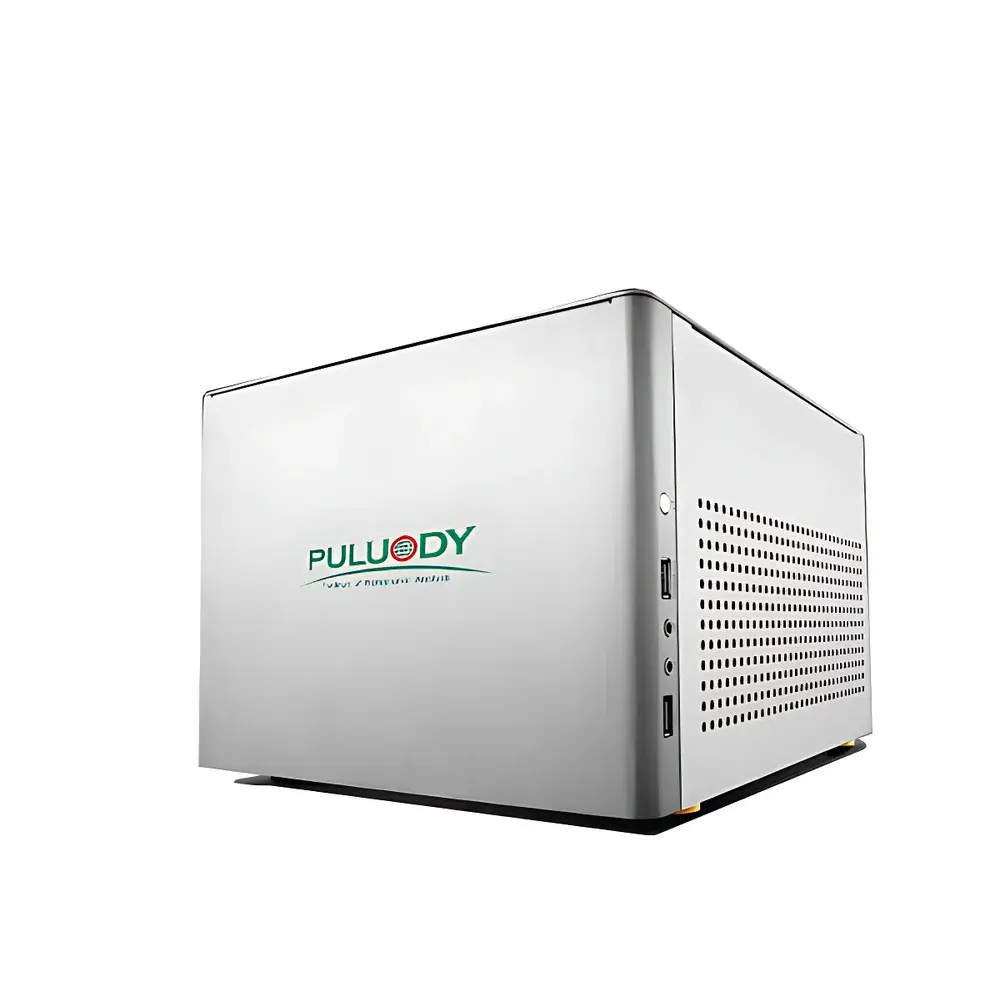
PULUODY PMT-2-T Ultra-Pure Water Liquid Particle Counter
| Brand | PULUODY |
|---|---|
| Origin | Shaanxi, China |
| Manufacturer Type | Authorized Distributor |
| Country of Origin | China |
| Model | PMT-2-T |
| Instrument Type | Optical Particle Counter |
| Detection Principle | Dual-Laser Narrow-Beam Light Scattering |
| Detection Range | 0.1–1.0 µm & 0.1–0.5 µm (standard) |
| Calibration Standards | ISO 21501-4, USP <788>, EP 2.9.19, ChP 2015/2020, GB 8368 |
| Flow Control | Precision Piston Pump + Electromagnetic Flow Regulation |
| Sampling Accuracy | < ±1% |
| Counting Accuracy | < ±3% (typical) |
| Coincidence Limit | 1000 particles/mL (2.5% coincidence error) |
| Output Interface | 4–20 mA analog output with configurable alarm threshold |
| Data Reporting | Particles per mL and ISO 4406 / NAS 1638 contamination grade |
| Power Input | 100–265 VAC, 50–60 Hz |
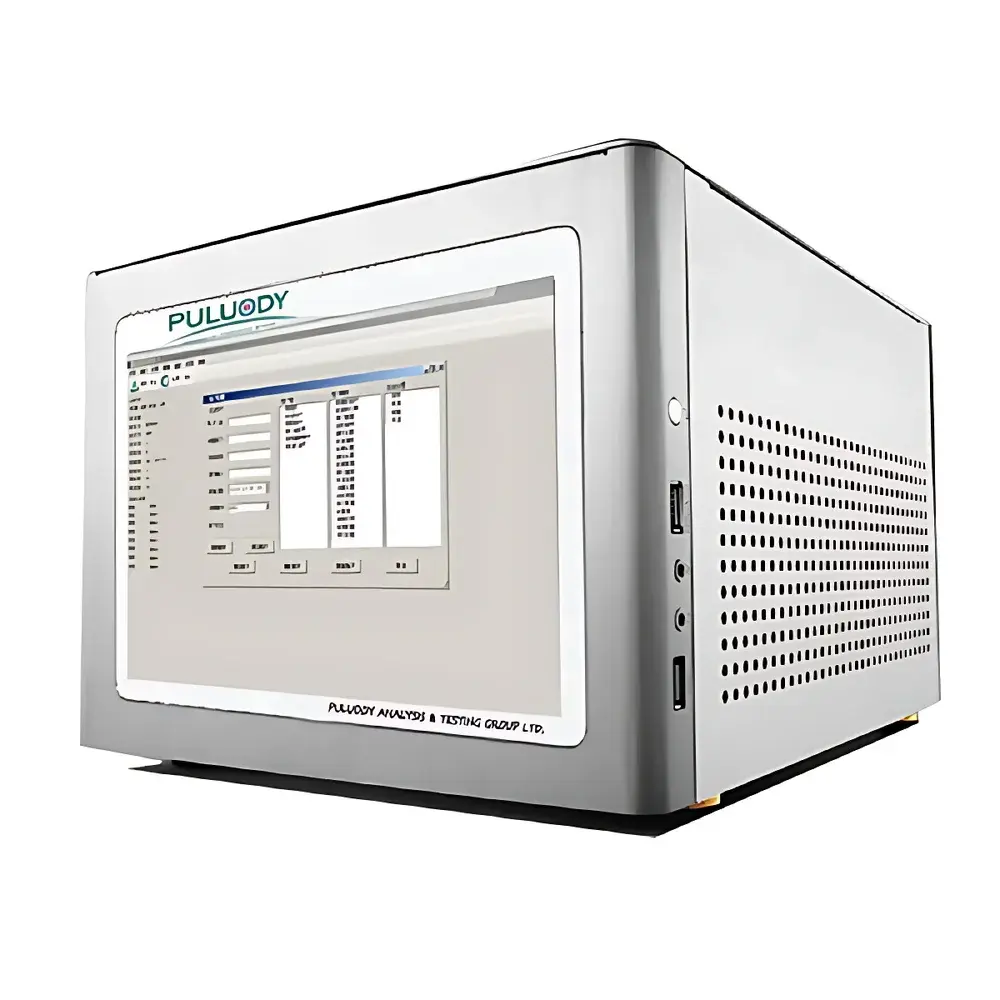
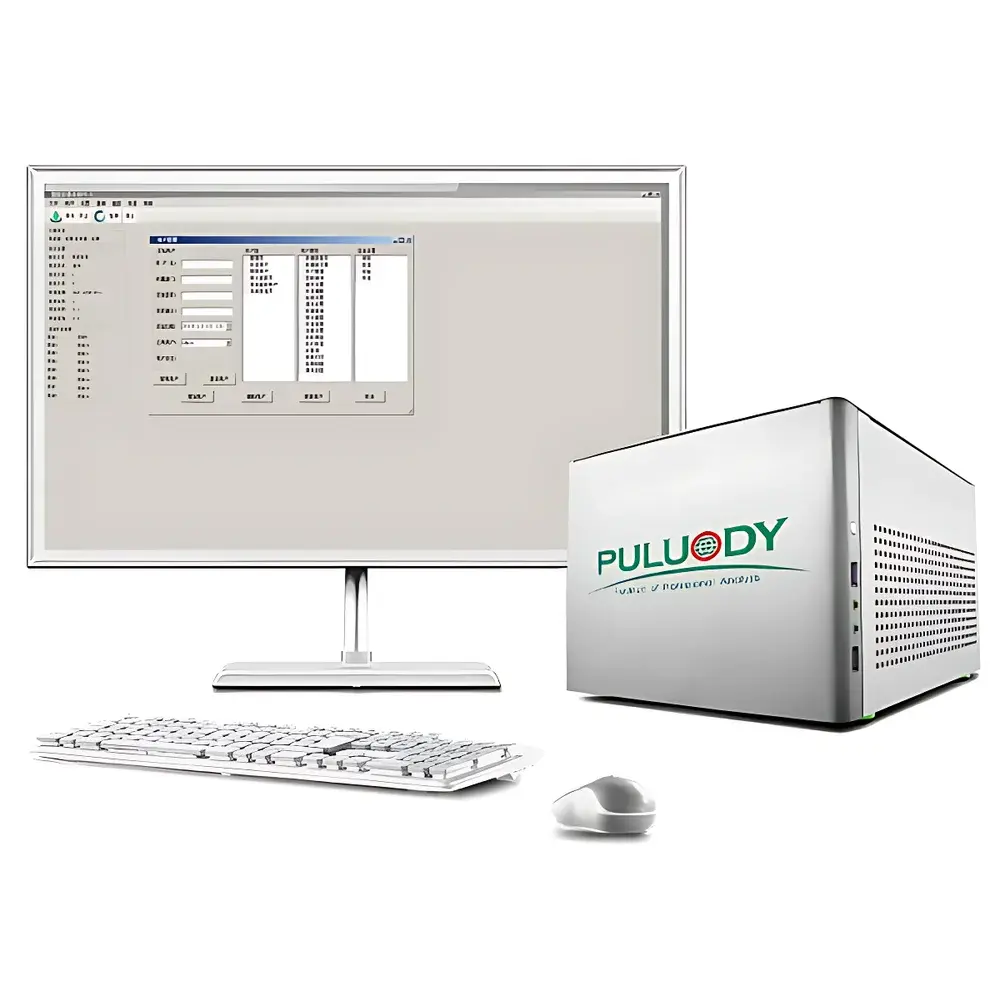
| Software | PULUODY V8.3 Integrated Analysis & Calibration Software (PC & Touchscreen Edition) |
| Compliance Support | FDA 21 CFR Part 11 audit trail ready (with optional configuration), GLP/GMP traceable operation |
Overview
The PULUODY PMT-2-T Ultra-Pure Water Liquid Particle Counter is an advanced optical particle counter engineered for high-sensitivity, real-time monitoring of sub-micron particulate contamination in ultra-pure water (UPW) and other low-conductivity, low-viscosity process liquids. It employs dual-laser narrow-beam light scattering technology—representing the eighth-generation sensor architecture developed by PULUODY Analytical Testing Group—to achieve stable, reproducible detection of particles as small as 0.1 µm (c) in aqueous and organic media. Unlike conventional single-wavelength systems, the dual-laser configuration enables simultaneous differential signal validation, significantly reducing false counts from refractive index anomalies and background noise. Designed specifically for semiconductor front-end fabrication, pharmaceutical water systems, flat-panel display manufacturing, and microelectronics cleaning validation, the PMT-2-T operates under stringent environmental control requirements and supports both online continuous sampling and offline portable analysis modes.
Key Features
- Dual-laser narrow-beam optical detection system with independent wavelength channels for enhanced signal discrimination and reduced coincidence error
- Precision piston pump combined with electromagnetic flow regulation ensures volumetric sampling accuracy better than ±1% and repeatable delivery across variable backpressures
- Configurable detection thresholds: standard ranges include 0.1–0.5 µm and 0.1–1.0 µm; extended custom bins support 1–100 µm or 4–70 µm(c) with user-defined lower cutoffs down to 0.1 µm(c)
- Integrated touchscreen HMI with intuitive workflow navigation and optional wireless keyboard/mouse support for laboratory-grade data entry and configuration
- 4–20 mA analog output with programmable alarm thresholds for integration into SCADA, DCS, or PLC-based facility monitoring systems
- V8.3 analysis software suite supporting dual-mode operation: separate calibration and measurement environments to eliminate software-induced interference during critical validation procedures
- FDA 21 CFR Part 11-compliant audit trail functionality (enabled via optional license), including electronic signatures, user access controls, and immutable record retention
Sample Compatibility & Compliance
The PMT-2-T is validated for use with ultrapure water (resistivity ≥18.2 MΩ·cm), semiconductor cleaning solvents (e.g., SC1, SC2, DI water rinses), photoresist developers, polymer solutions, and low-viscosity organic carriers. Its fluidic path is constructed from chemically inert, non-shedding materials—including fused silica capillaries and PFA tubing—to prevent leachables and minimize adsorption artifacts. The instrument meets the performance verification criteria outlined in ISO 21501-4 (Calibration and Verification of Liquid-Borne Particle Counters), USP (Particulate Matter in Injections), European Pharmacopoeia 2.9.19, Chinese Pharmacopoeia 2015/2020 Edition, and GB 8368 (Sterile Medical Devices). Calibration traceability is maintained through NIST-traceable polystyrene latex (PSL) standards or JJG 1061-certified reference materials.
Software & Data Management
PULUODY V8.3 software provides a modular architecture separating calibration management, raw data acquisition, statistical reporting, and compliance documentation. All measurement sessions are time-stamped and logged with operator ID, environmental parameters (temperature, pressure if connected), and system status flags. Reports export directly to PDF, CSV, or XML formats compliant with LIMS integration protocols. Batch-level summary statistics include particle concentration (particles/mL), cumulative/differential histograms, trend charts over time, and automatic classification per ISO 4406:2017 or NAS 1638 contamination codes. For regulated environments, optional Part 11 modules enforce role-based permissions, electronic signature workflows, and tamper-evident audit logs meeting GLP and GMP documentation requirements.
Applications
- Real-time UPW loop monitoring in semiconductor fabs (28 nm node and below), where >0.1 µm particles directly impact wafer yield and defect density
- In-line validation of point-of-use filtration integrity in pharmaceutical purified water (PW) and water-for-injection (WFI) distribution systems
- Offline cleanliness verification of silicon wafers, glass substrates, and MEMS components post-rinse or pre-packaging
- Quantitative assessment of insoluble microparticles in polymer solutions used in OLED encapsulation and photolithography processes
- Contamination diagnostics in nanofiltration and ultrafiltration membrane performance testing
- Process qualification of cleaning agents (e.g., hydrogen peroxide blends, citric acid formulations) prior to deployment in Class 1 cleanrooms
FAQ
What particle size ranges can the PMT-2-T detect in ultra-pure water?
The standard configuration supports detection from 0.1 µm (c) to 1.0 µm, with high-resolution binning at 0.1–0.5 µm. Custom configurations allow extension to 1–100 µm or 4–70 µm(c), with selectable lower detection limits as low as 0.1 µm(c) depending on fluid conductivity and refractive index.
Does the instrument comply with pharmacopeial standards for injectable water testing?
Yes—it satisfies USP , EP 2.9.19, ChP 2020, and JP 17 requirements for sub-visible particle enumeration when operated with validated sampling protocols, calibrated PSL standards, and documented environmental controls.
Can the PMT-2-T be integrated into a factory automation system?
It features industrial-grade 4–20 mA analog output with programmable alarm triggers, Modbus TCP support (optional), and native compatibility with common SCADA platforms for centralized particle trend monitoring and automated process intervention.
Is calibration traceable to international standards?
All calibrations follow ISO 21501-4 methodology using NIST-traceable PSL spheres or JJG 1061-certified reference suspensions, with full documentation provided per GLP/GMP requirements.
How does the dual-laser design improve measurement reliability?
By cross-validating scatter signals at two distinct wavelengths, the system discriminates true particle events from optical noise, bubble artifacts, or refractive index fluctuations—reducing false positives and improving counting reproducibility in low-particulate matrices like UPW.
Related Products



