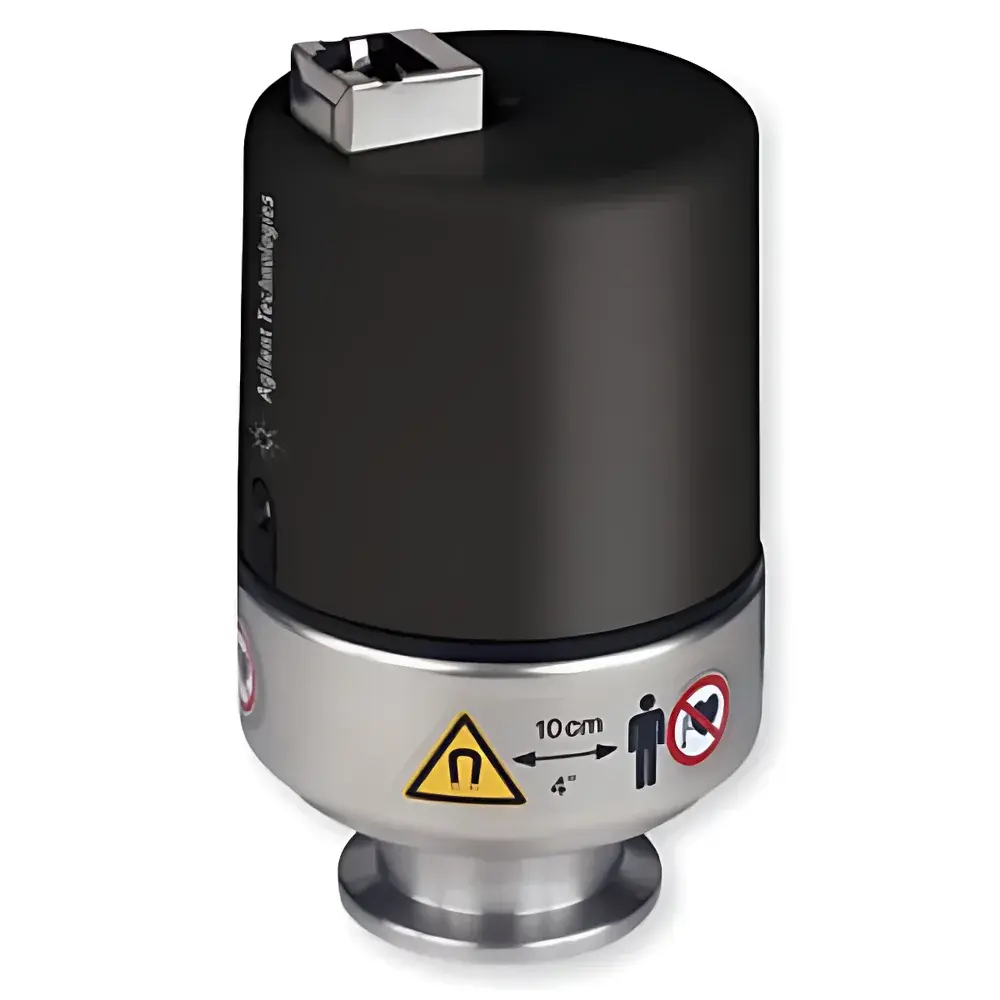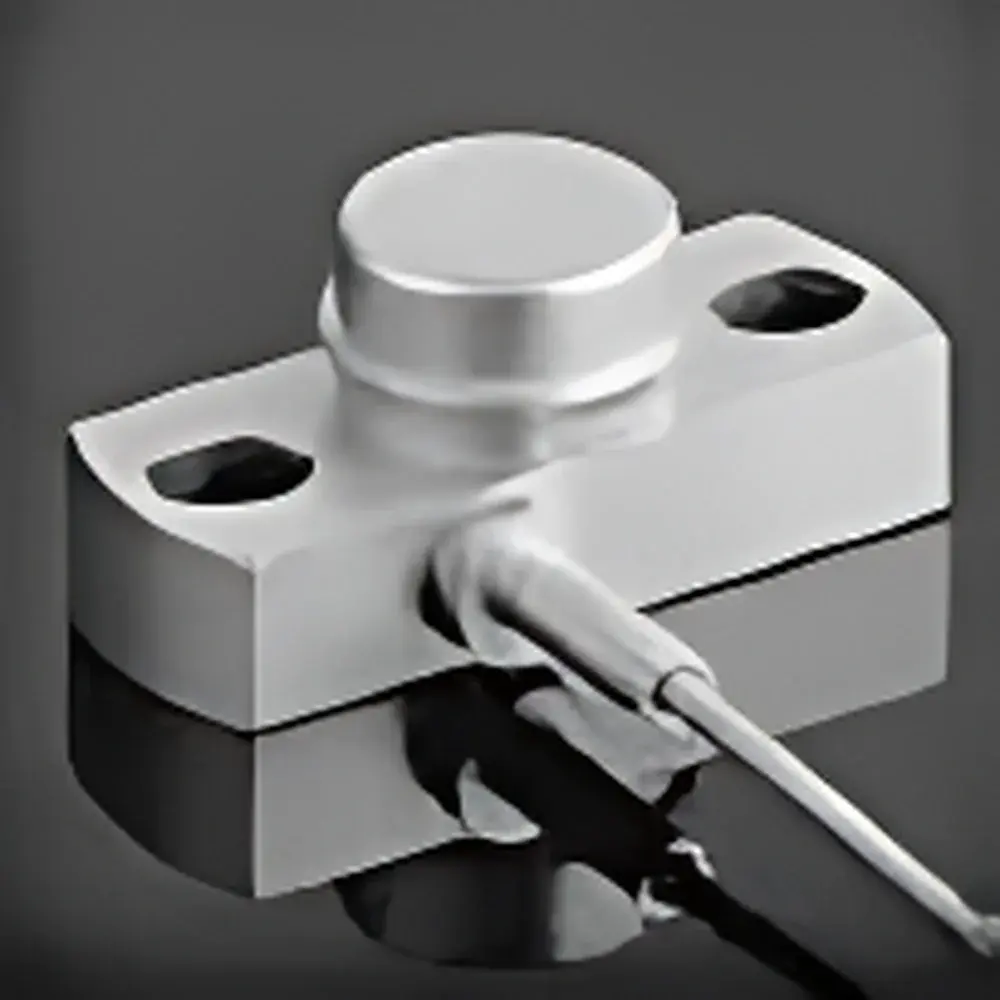
DJB A-Series Single-Axis Industrial Accelerometer
| Brand | DJB |
|---|---|
| Origin | Germany |
| Model | DJB A-Series Single-Axis Industrial Accelerometer |
| Sensitivity Range | 1.7–250 pC/g (IEPE/charge-output variants) |
| Mass | 20–150 g |
| Maximum Shock Resistance | 1000 g (peak) |
| Resonant Frequency | 8–18 kHz |
| Operating Temperature Range | −50 °C to +400 °C (HT variants) |
| Connector Options | Integrated hardwired cable, 2-pin 7/16 UNF, MIL-C-5015, or %-28 UNF |
| Mounting | Through-hole |
| Compliance | Designed for industrial vibration monitoring per ISO 5347, IEEE 1451.4 (TEDS-ready variants), and compatible with standard IEPE signal conditioners |
Overview
The DJB A-Series Single-Axis Industrial Accelerometer is a precision-engineered piezoelectric transducer designed for continuous, high-fidelity vibration measurement in demanding industrial environments. Based on charge-mode and integrated electronics piezoelectric (IEPE) sensing principles, these accelerometers convert mechanical acceleration into proportional electrical signals—either as charge output (pC/g) for use with external charge amplifiers or as low-impedance voltage output (mV/g) for direct connection to data acquisition systems. Engineered for long-term stability and thermal robustness, the A-Series accommodates extreme temperature gradients, high shock loads, and corrosive atmospheres commonly encountered in rotating machinery, power generation, aerospace ground support, and heavy process equipment. Each unit is calibrated traceable to national metrology institutes and conforms to the mechanical mounting and performance definitions outlined in ISO 5347 (Methods for the calibration of vibration and shock pick-ups).
Key Features
- Piezoelectric sensing architecture with quartz or ceramic sensing elements, delivering high linearity and low hysteresis across full dynamic range
- Multiple sensitivity configurations—from ultra-low-noise 1.7 pC/g for high-g applications to 250 pC/g for low-amplitude structural monitoring—ensuring optimal signal-to-noise ratio per use case
- Hermetically sealed stainless steel housings with optional high-temperature variants (up to +400 °C) certified for extended operation under thermal cycling stress
- Resonant frequencies ranging from 8 kHz to 18 kHz, enabling accurate measurement bandwidths up to 5 kHz (per ISO 10816 guidance for machine condition monitoring)
- Ruggedized mechanical design with through-hole mounting compatibility, minimizing base strain effects and ensuring repeatable installation repeatability
- Connector flexibility: factory-installed hardwired cables with overbraided stainless steel shielding; threaded 7/16 UNF, MIL-C-5015, or %-28 UNF interfaces compliant with MIL-STD-1344A environmental testing protocols
Sample Compatibility & Compliance
The A-Series is suitable for mounting on metallic surfaces including cast iron, steel, aluminum, and titanium substrates via stud, adhesive, or magnetic bases (with appropriate surface preparation). It meets electromagnetic compatibility requirements per EN 61326-1 (industrial environment) and exhibits immunity to EMI/RFI up to 30 V/m (10 MHz–2 GHz). Units equipped with TEDS (Transducer Electronic Data Sheet) per IEEE 1451.4 enable automatic sensor identification and configuration in networked DAQ systems. Calibration certificates include as-found/as-left data per ISO/IEC 17025-accredited laboratories, supporting GLP/GMP audit readiness and regulatory traceability for critical infrastructure monitoring.
Software & Data Management
While hardware-independent, the A-Series integrates seamlessly with industry-standard platforms including National Instruments DAQmx, Dewesoft X, Siemens Desigo CC, and SKF Enlight. Voltage-output models (e.g., A/172/VF, A/140 series) support direct analog input without external signal conditioning. Charge-output variants require low-noise charge amplifiers with adjustable gain, integration, and high-pass filtering—configurations validated against IEC 61000-4-3 immunity standards. All units support time-domain waveform capture, FFT spectral analysis, and envelope demodulation for bearing fault detection. Raw data export is supported in CSV, TDMS, and HDF5 formats for post-processing in MATLAB, Python (SciPy), or custom analytics pipelines.
Applications
- Continuous vibration monitoring of turbines, compressors, gearboxes, and electric motors in predictive maintenance programs
- Shock and transient response characterization during transportation and drop testing of industrial components
- Structural health monitoring (SHM) of bridges, wind turbine towers, and offshore platforms under operational loading
- High-temperature combustion chamber and exhaust manifold vibration analysis in energy and propulsion systems
- Calibration reference sensors in metrology labs accredited to ISO/IEC 17025 for accelerometer intercomparison
- Integration into OEM machinery control systems requiring SIL2-compliant feedback loops (when paired with certified signal conditioners)
FAQ
What is the difference between charge-output and IEPE (voltage-output) models?
Charge-output accelerometers require external charge amplifiers and offer superior high-temperature performance and lower noise floors. IEPE models integrate built-in electronics, simplifying cabling and power delivery (constant-current excitation), but are limited to ≤+125 °C unless specially rated.
Can these accelerometers be used in hazardous areas?
Standard A-Series units are not intrinsically safe certified. For Zone 1/21 applications, consult DJB’s Ex-certified variants (e.g., A/140-Exd) with ATEX/IECEx documentation.
Is TEDS functionality available across all models?
TEDS is optional and factory-configurable on select IEPE models (e.g., A/172/VF-TEDS); charge-output variants do not support embedded TEDS due to passive architecture.
What is the recommended calibration interval?
Annual recalibration is recommended for critical applications; biennial intervals may be justified under stable environmental conditions and documented usage history per ISO 10012.
Do you provide mounting kits or accessories?
Yes—DJB supplies matched stud kits (including M5, M6, and 10-32 UNC), isolation washers, adhesive mounts (epoxy and cyanoacrylate), and magnetic bases compliant with ISO 5347 Annex C for field verification.