
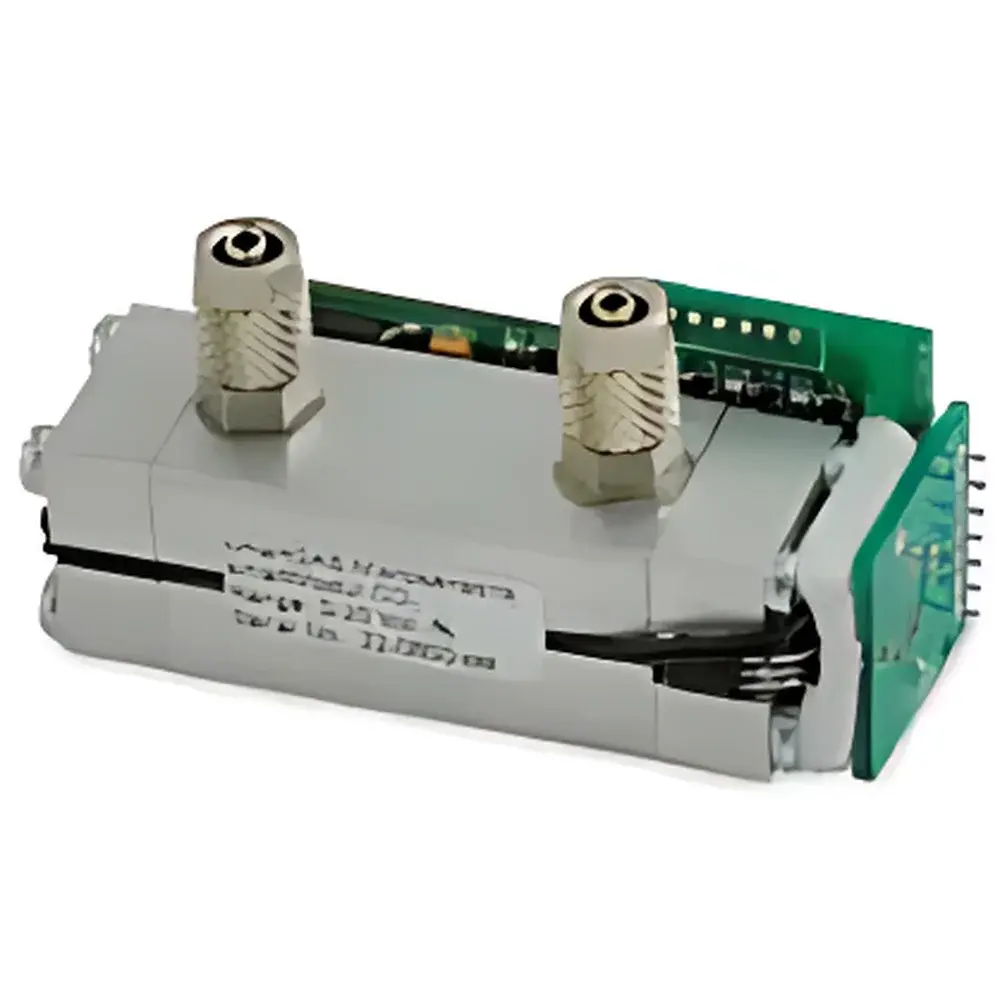
SmartGas C2H2 Ethyne Gas Sensor
| Brand | SmartGas |
|---|---|
| Origin | Germany |
| Manufacturer Type | Authorized Distributor |
| Origin Category | Imported |
| Model | C2H2 |
| Pricing | Upon Request |
Overview
The SmartGas C2H2 Ethyne Gas Sensor is a high-stability electrochemical or catalytic bead (depending on configuration) gas detection module engineered for continuous, real-time monitoring of acetylene (C₂H₂) in industrial, laboratory, and environmental safety applications. Designed in accordance with IEC 60079-29-1 and EN 45544-1 standards for toxic and combustible gas detection, this sensor operates on a diffusion-controlled principle—where ambient gas molecules permeate through a selective hydrophobic membrane and undergo quantifiable electrochemical oxidation at the working electrode. Its core architecture supports fixed-mount integration into standalone gas alarms, distributed control systems (DCS), or modular environmental monitoring stations. The sensor is calibrated for operation in ambient temperatures ranging from −20 °C to +50 °C and relative humidity up to 95 % RH (non-condensing), ensuring reliability across diverse site conditions including welding zones, acetylene cylinder storage areas, petrochemical process units, and inert gas blanketing systems.
Key Features
- Robust stainless steel or IP65-rated polymer housing engineered for mechanical durability and long-term stability in harsh industrial environments
- Integrated soft-tube inlet interface (standard 4–6 mm OD silicone or PTFE tubing) enabling flexible installation and minimal pressure drop
- Embedded bus functionality supporting RS-485 Modbus RTU or 4–20 mA analog output (configurable via DIP switches or software tool), facilitating seamless integration into SCADA and BMS platforms
- Factory-calibrated with traceable NIST-traceable reference gas (acetylene in nitrogen), delivering initial accuracy within ±3 % of reading (0–100 ppm range)
- Low-power consumption design (<120 mW typical), compatible with intrinsically safe barriers (e.g., Zener or galvanic isolators) for Zone 1/21 installations
- Onboard temperature compensation and zero-drift correction algorithms ensure measurement consistency over extended deployment cycles
Sample Compatibility & Compliance
The SmartGas C2H₂ sensor is optimized for detecting acetylene in clean, non-corrosive air matrices. It exhibits minimal cross-sensitivity to common interferents such as CO, H₂, CH₄, and C₂H₄ (cross-response <5 % at equivalent concentrations). For applications involving high particulate load, acidic vapors (e.g., HCl, SO₂), or silicone-based lubricants, optional particulate filters and chemical scrubbers are recommended upstream. The device complies with CE marking requirements under the ATEX Directive 2014/34/EU (Category 2G, II 2G Ex db IIB T4 Gb) and carries UKCA certification for post-Brexit market access. It meets functional safety requirements per IEC 61508 SIL 2 for use in safety instrumented systems (SIS) when deployed with certified logic solvers.
Software & Data Management
Configuration, diagnostics, and calibration logging are performed using SmartGas’ proprietary PC-based commissioning tool (SG-Config v3.2+), which supports firmware updates, span/zero adjustment, and alarm threshold definition. All calibration events—including date, operator ID, reference gas lot number, and pre/post-calibration readings—are stored locally with timestamped audit trails. When integrated into networked monitoring infrastructures, the sensor supports MQTT or OPC UA data publishing (via gateway), enabling alignment with ISO/IEC 17025-compliant QA workflows and FDA 21 CFR Part 11–aligned electronic record retention where applicable.
Applications
- Continuous leak detection in acetylene generation, compression, and distribution facilities
- Occupational exposure monitoring (OEL compliance) in metal fabrication shops utilizing oxy-acetylene torches
- Process safety interlocks for inerting systems in pharmaceutical dry powder handling
- Early fire precursor detection in transformer oil-gas analysis (DGA) auxiliary channels
- Environmental emissions verification at landfill gas upgrading plants and biogas purification units
FAQ
What is the typical response time (T90) for this sensor?
T90 is ≤30 seconds in still air at 23 °C and 50 % RH, per EN 45544-2 test protocol.
Does the sensor require periodic bump testing?
Yes—bump testing with certified 50 ppm C₂H₂ challenge gas is recommended before each shift in critical safety applications, per OSHA 1910.120 and IEC 62066 guidelines.
Can it be used in explosive atmospheres?
Yes—when installed with certified associated apparatus (e.g., barrier or isolator) and mounted in accordance with ATEX installation instructions, it is rated for use in Zone 1 (gas) and Zone 21 (dust) hazardous locations.
Is field calibration supported without specialized equipment?
Field zero calibration is possible using fresh ambient air; span calibration requires certified gas and a calibrated flow controller—both procedures are guided by SG-Config software.
What is the expected service life under normal operating conditions?
The electrochemical sensing element has a nominal operational lifetime of 24 months; catalytic bead variants typically exceed 36 months when operated below 60 % LEL exposure levels.







