ISOTECH Model 935 Precision Platinum Resistance Thermometer (PRT)
| Brand | ISOTECH |
|---|---|
| Origin | United Kingdom |
| Model | 935 |
| Temperature Range | –200 °C to +670 °C (variant-dependent) |
| Resistance at 0 °C (R₀) | 100 Ω |
| Temperature Coefficient α | 0.00385 Ω/Ω/°C (IEC 60751 compliant) |
| Accuracy Class | AA & A per IEC 60751 |
| Lead Configuration | 4-wire |
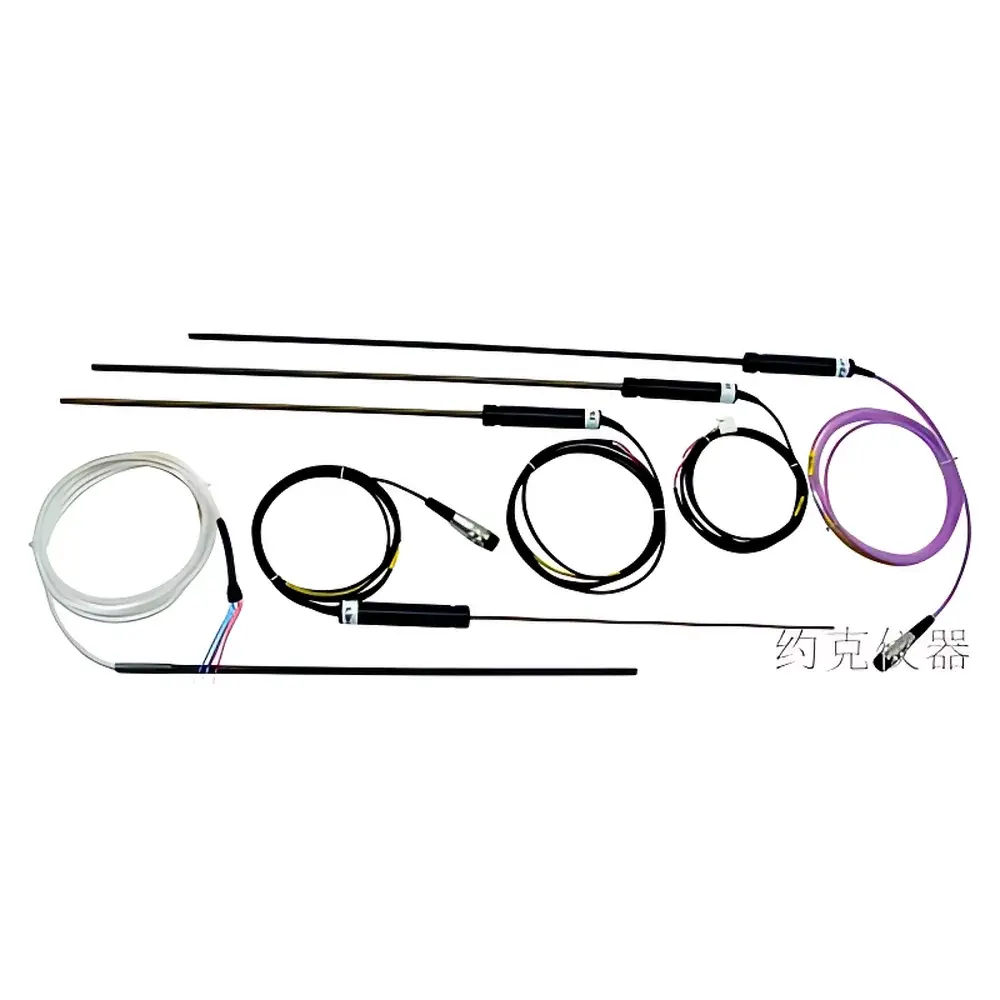
| Construction | Stainless steel sheath |
| Sensing Element Length | 6–25 mm |
| Probe Diameter | 3–6 mm |
| Probe Length | 165–480 mm |
| Optional Configurations | Straight, 45° angled, 90° right-angle probes |
| Enclosure/Handle Options | Handleless, Φ19×120 mm, Φ25×115 mm |
Overview
The ISOTECH Model 935 is a high-precision, laboratory- and industrial-grade platinum resistance thermometer (PRT) engineered for metrological traceability, long-term stability, and repeatable thermal measurement across demanding calibration, verification, and process monitoring applications. Based on the fundamental physical principle of platinum’s predictable and highly reproducible resistivity–temperature relationship—defined by the Callendar–Van Dusen equation—the Model 935 implements a Pt100 sensing element conforming strictly to IEC 60751:2022 for both Class AA (±(0.10 + 0.0017|t|) °C) and Class A (±(0.15 + 0.002|t|) °C) accuracy. Its design prioritizes low thermal drift (<0.05 K/year typical), fast thermal response (τ₉₀ < 1.5 s in air, < 0.8 s in stirred water), and mechanical robustness under repeated thermal cycling. Unlike generic industrial RTDs, the Model 935 integrates metrologically optimized lead wire geometry, hermetically sealed ceramic or glass-insulated platinum elements, and strain-relieved terminations to minimize self-heating error and mechanical stress-induced resistance shifts.
Key Features
- IEC 60751 Class AA and Class A compliance verified per individual unit calibration certificate (optional NIST-traceable or UKAS-accredited)
- Four-wire (Kelvin) connection architecture eliminating lead resistance influence with <0.02 Ω total lead resistance (typ.)
- Stainless steel 316L or Inconel 600 sheaths for corrosion resistance and thermal shock resilience
- Multiple probe geometries: straight, 45° angled, and 90° right-angle configurations for confined-space access
- Modular length and diameter options (Ø3–6 mm; overall lengths 165–480 mm; active sensing lengths 6–25 mm) supporting application-specific immersion depth and spatial constraints
- Low self-heating design: <0.03 K error at 1 mA excitation current (standard operation)
- Extended operational lifetime (>10 years under routine calibration lab use) supported by low-drift platinum wire winding and inert-gas backfilling
Sample Compatibility & Compliance
The Model 935 is compatible with standard PRT readouts, digital multimeters (DMMs) equipped with precision resistance measurement functions (e.g., Keysight 3458A, Fluke 8508A), and automated calibration systems (e.g., DH-Budenberg, Tinsley 5890). It meets essential requirements for ISO/IEC 17025-accredited temperature calibration laboratories, including documented uncertainty budgets, stability monitoring protocols, and traceable calibration intervals. The device supports compliance with ASTM E1137 (Standard Specification for Platinum Resistance Thermometers), USP (Thermometry), and FDA 21 CFR Part 11 when integrated into validated software-controlled calibration workflows. All variants are CE-marked and RoHS-compliant. For GxP environments, optional UKAS-certified calibration reports include full uncertainty analysis (k=2), reference standard traceability, and environmental condition logging.
Software & Data Management
While the Model 935 operates as a passive sensor, its integration into modern calibration management platforms—including ISOTECH’s own CalLab Suite, Fluke Metrology Software, or custom LabVIEW-based systems—is fully supported via standardized resistance-to-temperature conversion algorithms (ITS-90 polynomial coefficients provided per unit). Each delivered instrument includes a unique serial-number-matched calibration dataset (R vs. t) covering its specified range, enabling direct import into data acquisition and reporting tools. Audit trail functionality, electronic signature support, and version-controlled calibration records are maintained when used with 21 CFR Part 11–compliant software. Raw resistance values can be logged at up to 10 Hz sampling rate without signal degradation, facilitating dynamic thermal profiling during validation studies.
Applications
- Primary and secondary temperature calibration of thermocouples, liquid-in-glass thermometers, and infrared sensors in national metrology institutes and accredited labs
- In-process temperature verification of autoclaves, stability chambers, ovens, and environmental test chambers (per ISO 17025, ISO 13485, and EU GMP Annex 15)
- Reference-grade monitoring in pharmaceutical freeze-drying cycles, bioreactor control loops, and HVAC validation
- Thermal mapping of cleanrooms, cold chain logistics units, and cryogenic storage systems (–200 °C to +165 °C variant)
- High-temperature furnace uniformity surveys (up to +670 °C with Inconel-sheathed variants)
- Research-grade thermal characterization of materials, heat exchangers, and microfluidic devices
FAQ
What calibration certificates are available for the Model 935?
Standard delivery includes a manufacturer’s certificate of conformance. Optional NIST-traceable or UKAS-accredited calibration certificates (with full uncertainty budget, k=2) are available upon request.
Can the Model 935 be used in vacuum or inert gas environments?
Yes—stainless steel and Inconel variants are rated for operation under vacuum (10⁻⁴ mbar) and in nitrogen or argon atmospheres, provided thermal expansion differentials are accounted for in mounting design.
Is the 4-wire configuration mandatory for achieving Class AA accuracy?
Yes—Class AA and Class A tolerances assume 4-wire measurement to eliminate lead resistance contribution; 2-wire or 3-wire configurations introduce systematic errors exceeding the standard’s limits.
How often should the Model 935 be recalibrated?
Annual recalibration is recommended for routine metrological use; intervals may be extended to 2 years under documented stability monitoring per ISO/IEC 17025 clause 7.7.
Are custom probe geometries or cable lengths available?
Yes—ISOTECH offers OEM engineering support for application-specific modifications, including non-standard angles, reinforced cables, and connectorized terminations (e.g., LEMO, DIN 43760).